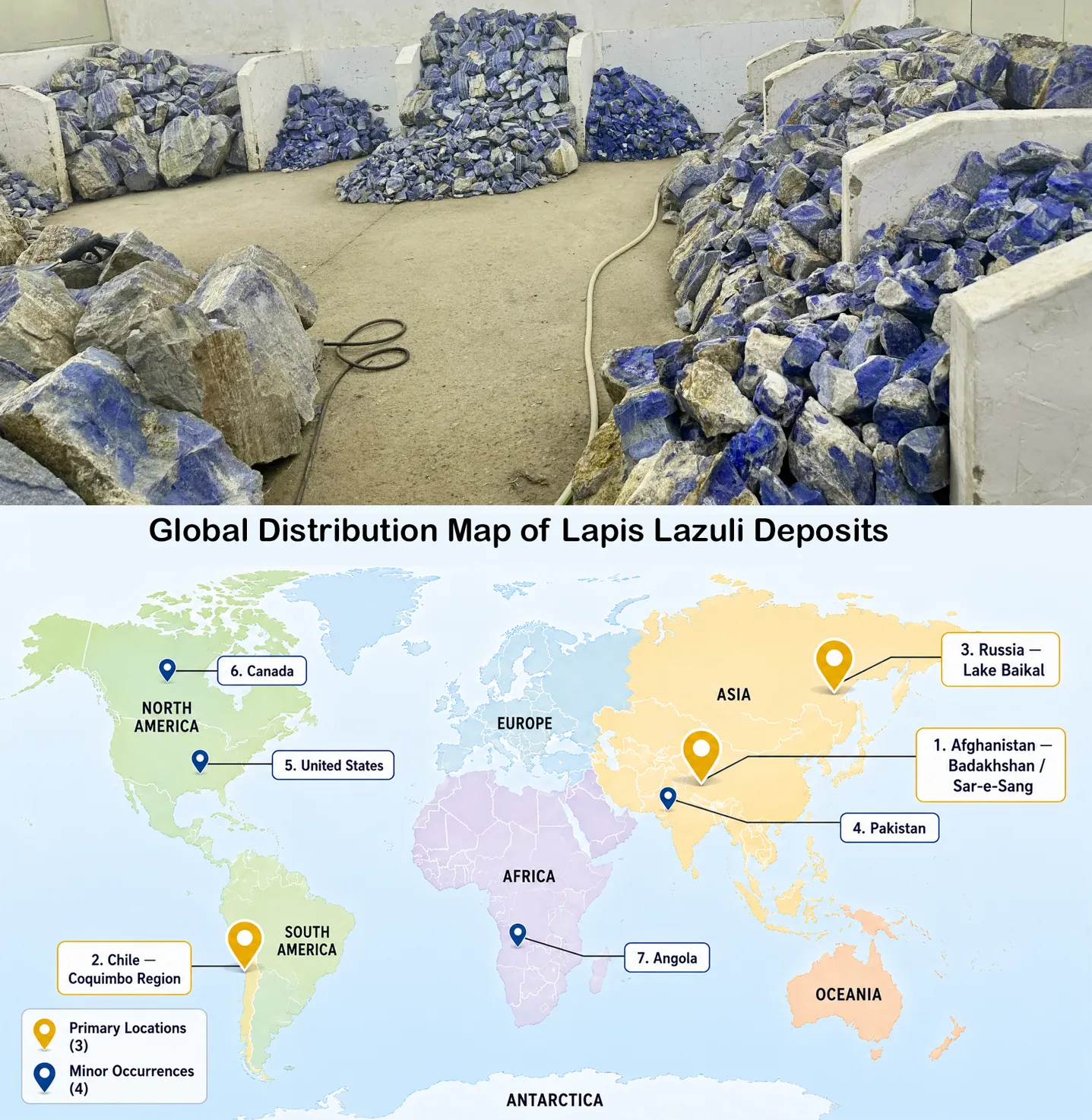
Lapis lazuli is found in only a limited number of geological regions around the world. The most famous source is Badakhshan in northeastern Afghanistan, especially the historic Sar-e-Sang deposits. Important deposits are also found in Chile and the Lake Baikal region of Russia, while smaller occurrences are known in countries including Pakistan, Canada, Angola and the United States.
But knowing where lapis lazuli occurs is only part of the story.
A stone described as “Afghan blue,” “Siberian,” or “Chilean” cannot automatically be assumed to come from that location. Geographic names are also used in the gem trade to describe appearances and quality styles. For buyers, this distinction matters because origin and quality are related questions—but they are not the same question.
Short answer: The best-known historic source of lapis lazuli is Afghanistan. Major deposits also occur in Chile and Russia, with smaller deposits in several other countries. Afghanistan is strongly associated with fine saturated blue material, but geographic origin alone does not determine the quality of an individual stone.
Where Is Lapis Lazuli Found in the World?
Gemological Institute of America (GIA) identifies the mountains of Afghanistan as the traditional source of the finest lapis lazuli. It also lists Chile and the Lake Baikal region of Siberia, Russia, as major sources, with smaller sources including Angola, Canada, Colorado in the United States, and Pakistan.
Rather than treating every occurrence as equally important, it is more useful to distinguish major commercial and historic sources from smaller deposits.
| Source | Importance | Common Trade Association | What Buyers Should Know |
| Afghanistan | Historic and major source | Saturated medium-dark to violetish blue | “Afghan” appearance does not by itself prove Afghan origin |
| Chile | Major source | Often more visible calcite or greenish areas | Fine Chilean material can also be very high quality |
| Russia / Lake Baikal | Major historic source | Various blue tones; pyrite and calcite may occur | Appearance overlaps with lapis from other regions |
| Pakistan | Smaller source | Variable | Origin should not be inferred from color alone |
| United States | Minor occurrences | Variable | Not a major source of commercial fine lapis |
| Canada / Angola / others | Minor occurrences | Variable | Generally less important in the jewelry market |
Afghanistan: The Historic Source of Fine Lapis Lazuli
The most famous lapis lazuli deposits are located at Sar-e-Sang in Badakhshan, northeastern Afghanistan, in the Hindu Kush mountains.
These deposits have supplied lapis lazuli since some of the earliest civilizations. GIA’s research on Sar-e-Sang describes lapis occurring in mineralized veins associated with carbonate rocks and minerals including calcite and dolomite. Lazurite provides the blue color, while other minerals contribute to the variations seen from one piece of rough to another.
Afghanistan also has a particularly strong reputation for fine-color material. GIA describes Afghanistan as both the world’s major source of lapis and a major source of its finest color.
That reputation, however, creates a terminology problem.
In the jewelry trade, stones with an intense, uniform, medium-dark to slightly violetish blue appearance may be described as “Afghan” quality even when geographic origin has not been established.
So these two statements should not be treated as equivalent:
“This lapis has an Afghan-style appearance.”
and
“This lapis was mined in Afghanistan.”
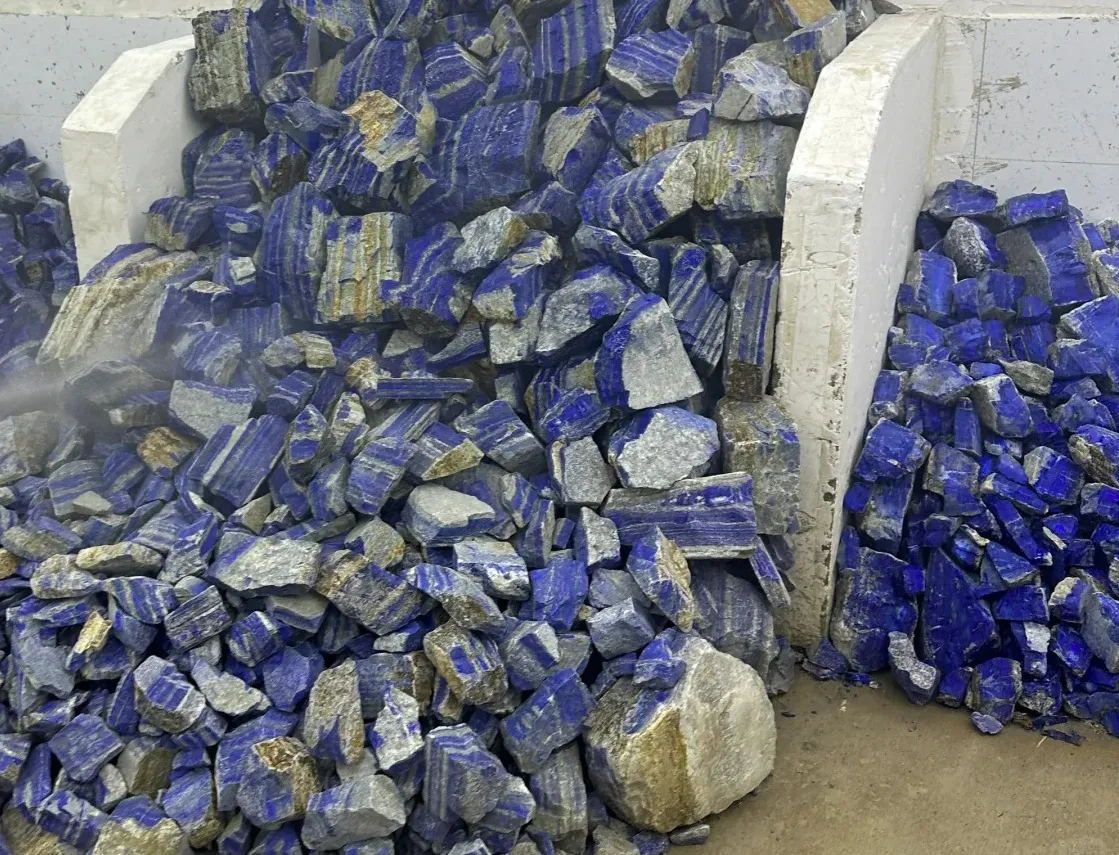
Chile: The Andes and Coquimbo Lapis Lazuli
Chile is another important lapis lazuli source, particularly the Coquimbo Region in the Andes.
A detailed GIA study of the deposit describes lapis lazuli occurring at approximately 3,500 meters elevation in limestone altered by contact metamorphism and later metasomatism. The Chilean material contains lazurite together with minerals such as calcite, wollastonite, diopside and pyrite.
Chilean lapis is often associated in the trade with more obvious white calcite or somewhat greener and less uniform blue material.
That association should not become a rule.
The same GIA study reported that some Chilean material approaches the quality of fine Afghan lapis lazuli.
So:
Chilean origin does not automatically mean low quality.
Quality still has to be evaluated on the actual material.
Russia: Lapis Lazuli from the Lake Baikal Region
The Lake Baikal region of Siberia is another major historical source of lapis lazuli.
Russian or Siberian material is commonly associated in the trade with a wider range of blue tones and may show visible pyrite or calcite. GIA includes Lake Baikal alongside Afghanistan and Chile as one of the important lapis-producing regions.
As with Chilean and Afghan trade descriptions, these characteristics are useful as general context but should not be used as a visual test for origin.
Is Lapis Lazuli Found in the United States?
Yes, lapis lazuli occurrences are known in the United States, although the country is not a major commercial source compared with Afghanistan, Chile or Russia.
GIA specifically lists Colorado among smaller sources.
For consumers, however, American occurrences are mainly relevant as geological information. Most lapis lazuli encountered in the international jewelry trade comes from better-established commercial source regions.
Other Lapis Lazuli Sources Around the World
Smaller or less commercially important lapis occurrences have also been reported in:
Pakistan, Canada, Angola and several other regions.
Not every geological occurrence becomes an important jewelry source.
A deposit can contain lapis lazuli without producing large quantities of material that combine desirable color, workable size, consistency, polish and commercial availability.
This is why a long list of countries can be technically correct but still misleading if it suggests that every deposit plays an equal role in the gemstone market.
Why Is Lapis Lazuli Found in Only Certain Places?
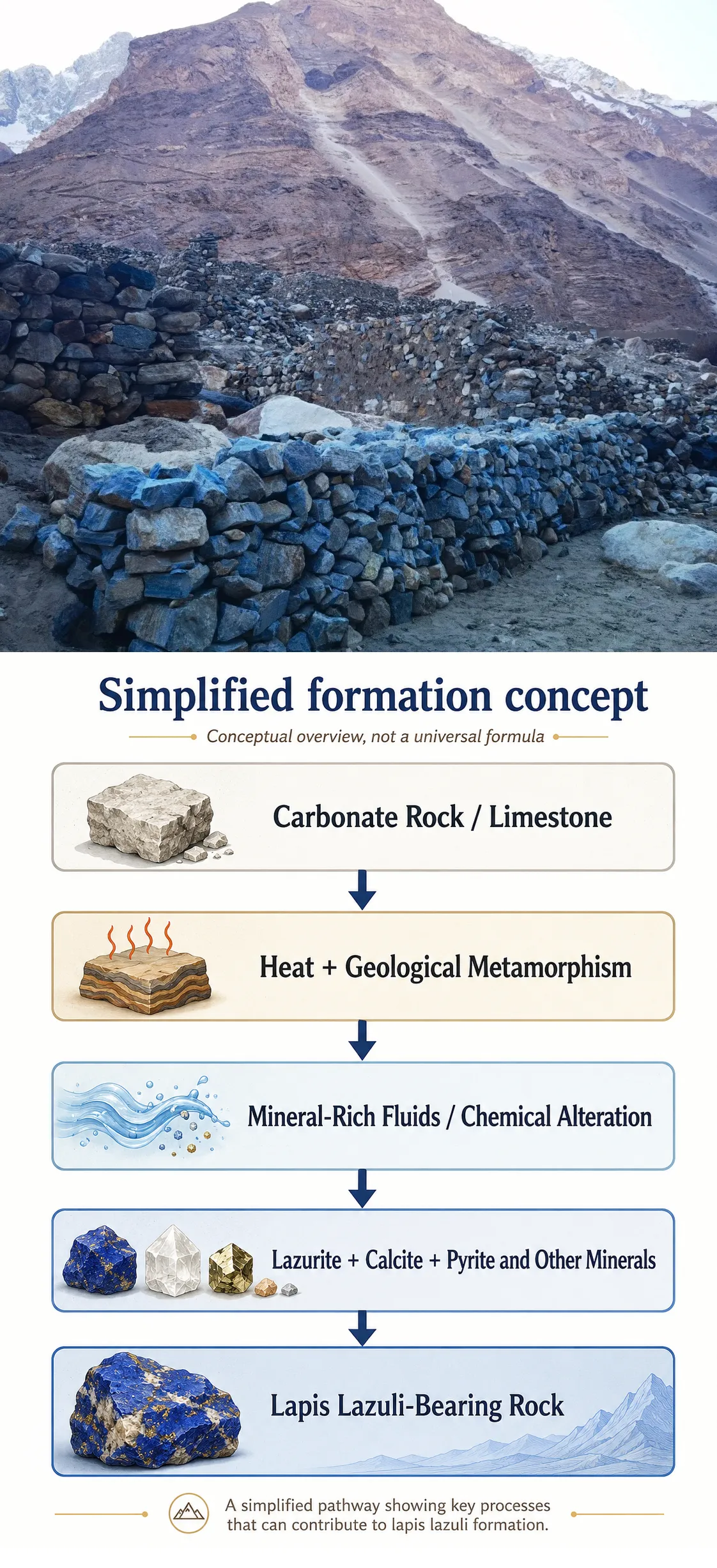
Lapis lazuli requires an unusual geological environment.
It is not a single crystal species but a rock composed of several minerals, commonly including lazurite, calcite and pyrite.
Important lapis deposits are commonly associated with carbonate rocks such as limestone or marble that have undergone metamorphism and chemical alteration.
Heat alone is not enough. The right mineral chemistry must also be present.
The Coquimbo deposit in Chile provides a clear example: limestone was altered by contact metamorphism and later affected by mineral-rich processes that introduced sulfur needed for lazurite formation.
Because this combination of rock type, heat and chemistry is uncommon, economically useful lapis deposits are geographically limited.
Does Origin Determine Lapis Lazuli Quality?
No.
Origin can provide historical and geological context, but quality should be judged from the actual stone.
GIA identifies color as the most important lapis lazuli quality factor. Highly valued material typically shows strong saturation and an attractive medium-dark to dark blue or violetish-blue appearance, while visible white calcite generally reduces commercial value. Small, attractively distributed pyrite flecks do not necessarily lower quality.
When evaluating jewelry, also consider:
- blue saturation
- visible calcite
- pyrite distribution
- polish
- consistency between stones
- treatment
- matching across a bracelet, necklace or earring pair
- workmanship
A beautiful stone should not be rejected simply because it lacks a prestigious geographic label, and a famous origin should not make the buyer ignore the actual appearance and workmanship.
Can You Identify Lapis Lazuli Origin by Color?
Not reliably.
Stones from different deposits can overlap significantly in color and mineral appearance.
GIA makes this distinction explicit.
A lapis specimen with visible white calcite and greenish areas may be commercially described as “Chilean,” but that trade description does not prove that the stone was actually mined in Chile.
Likewise:
- deep saturated blue does not prove Afghanistan;
- visible pyrite does not prove Russia;
- visible calcite does not prove Chile.
Color can describe a stone.
It cannot, by itself, establish provenance.
What Real Lapis Lazuli Variation Looks Like
Real lapis lazuli can vary substantially in:
- blue tone
- saturation
- visible calcite
- pyrite distribution
- mineral pattern
- consistency across multiple stones
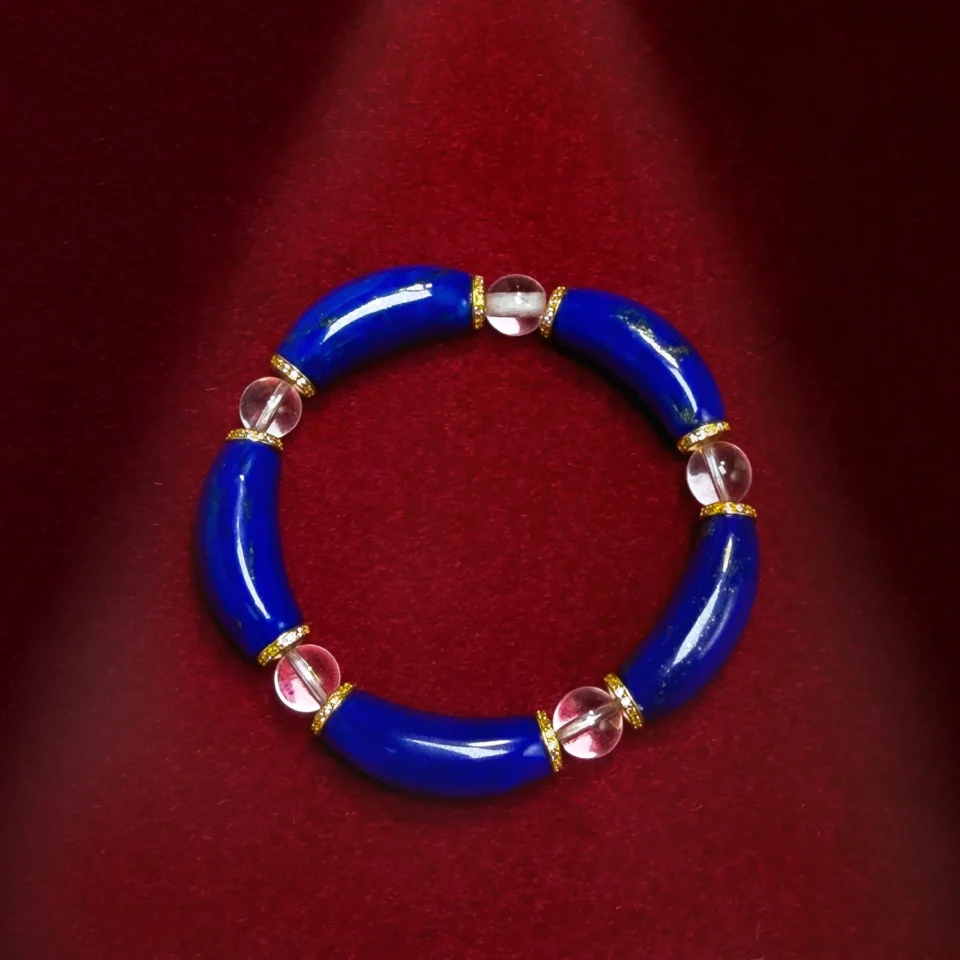
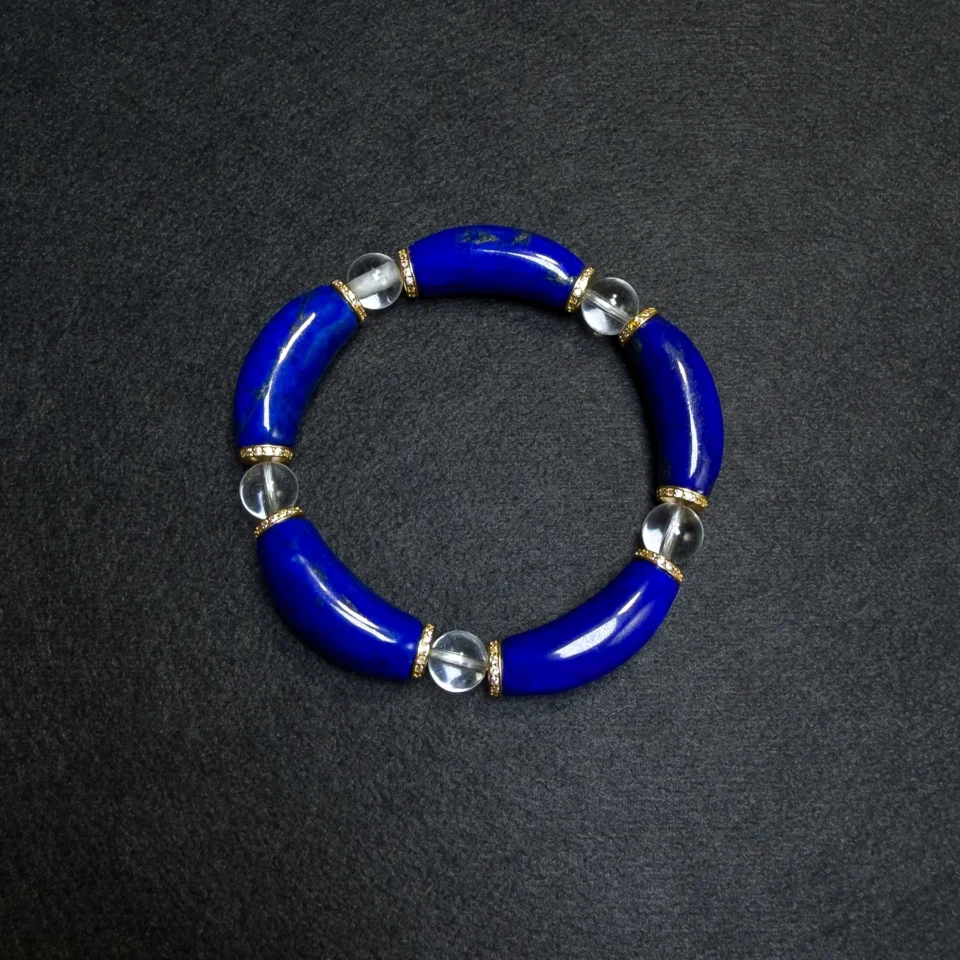
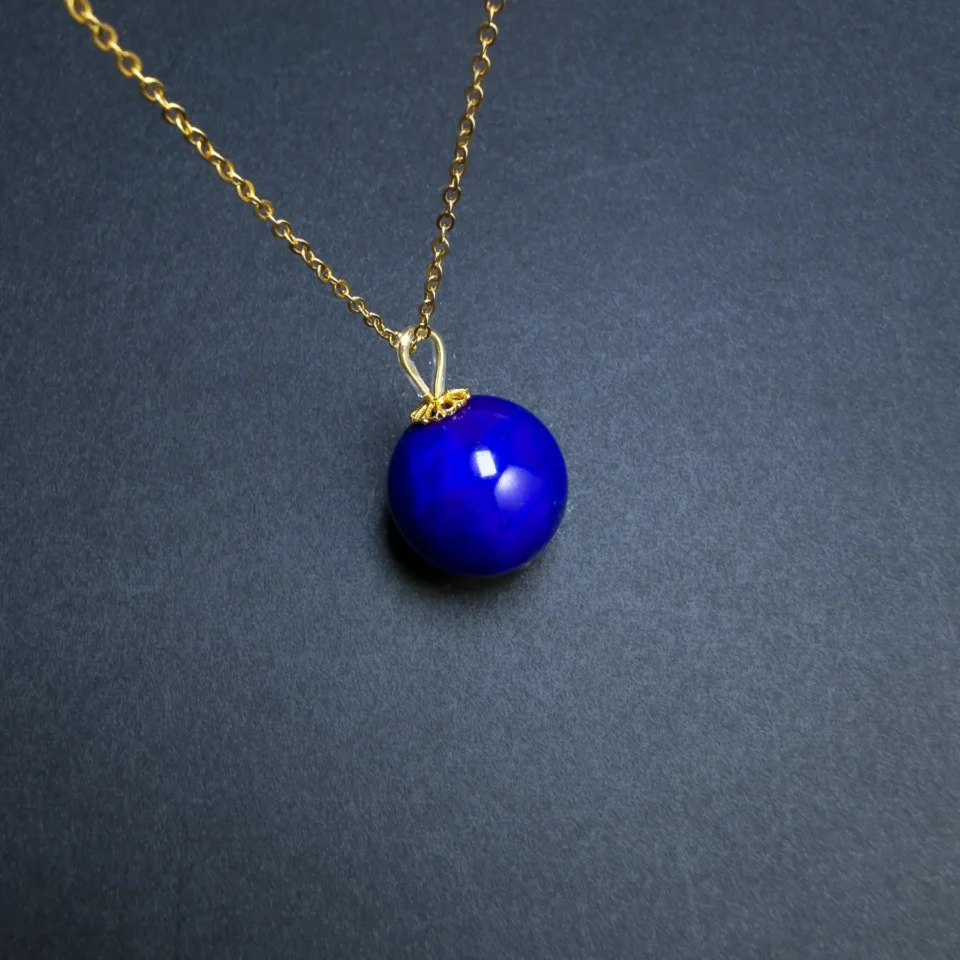
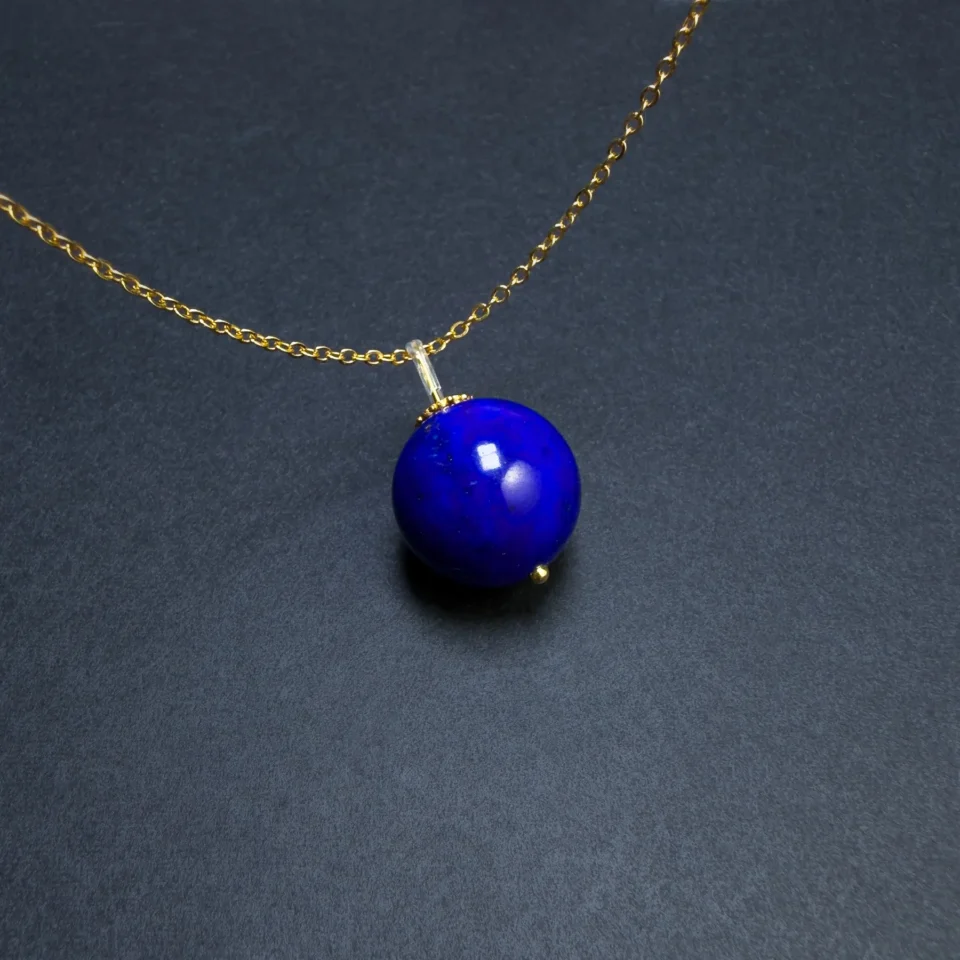
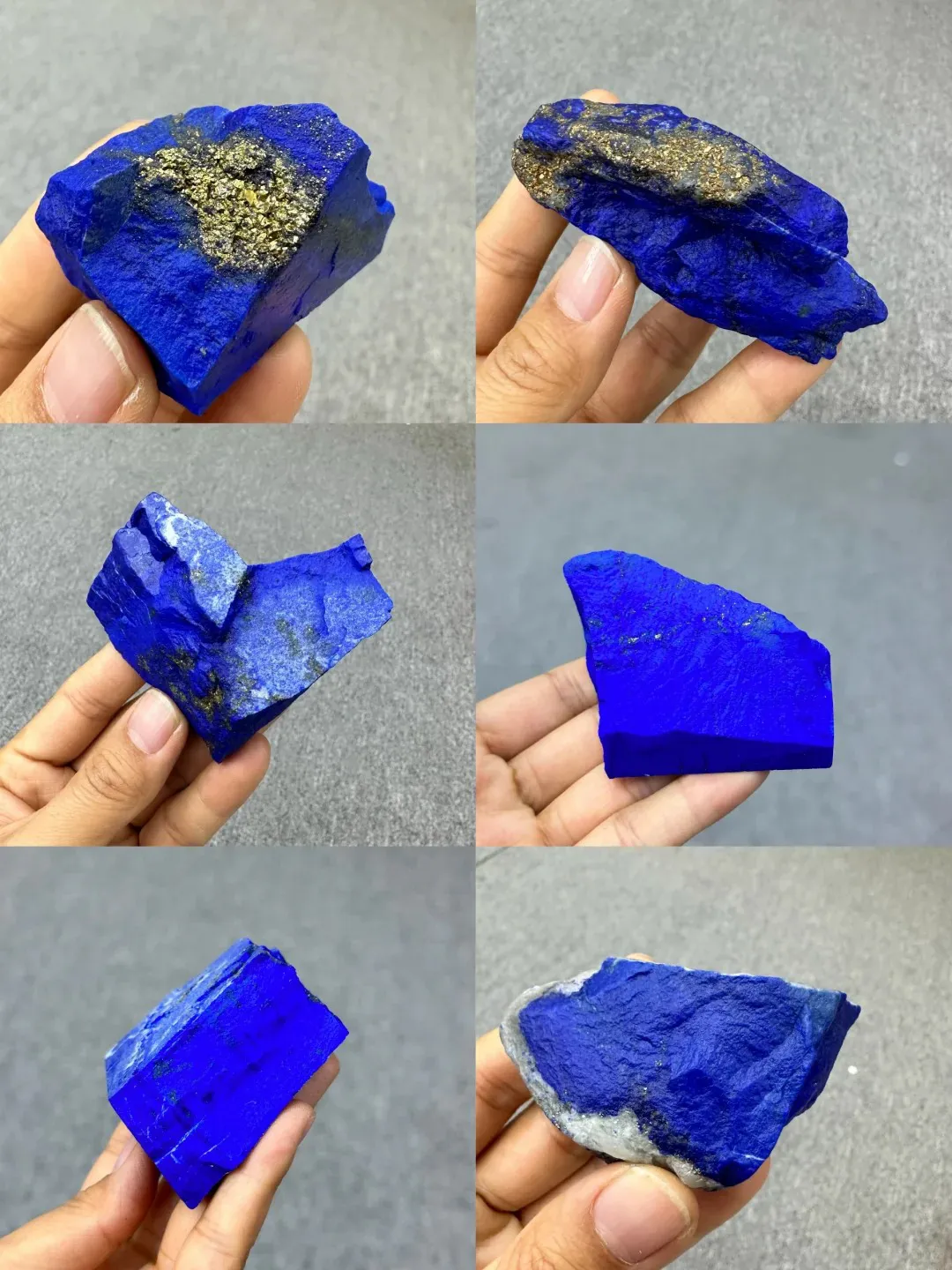
The examples below illustrate appearance variation, not geographic origin.
In the samples photographed for this guide, one piece shows a deeper, more even blue with scattered metallic flecks, while another shows lighter blue and more visible pale mineral areas. These are useful differences when comparing the appearance of lapis lazuli, but they do not establish where the stones were mined.
Can Laboratories Determine Where Lapis Lazuli Came From?
Researchers can sometimes investigate lapis lazuli provenance using methods far more sophisticated than visual inspection.
Studies have compared material from known deposits using elemental composition, spectroscopy and other analytical techniques.
One non-destructive provenance study analyzed samples from Afghanistan, Lake Baikal, Chile and the Ural Mountains using Prompt Gamma Activation Analysis (PGAA). Some source groups could be separated through elemental patterns, although Afghan and Baikal samples showed some overlap.
More recent provenance research has continued to compare archaeological lapis with geological reference samples from major source regions.
Laboratory provenance work depends on reference material, analytical methods and interpretation.
Frequently Asked Questions
Where is the best lapis lazuli found?
Afghanistan, particularly the Badakhshan region, has the strongest historic reputation for very fine lapis lazuli and remains an important source of highly saturated blue material. However, high-quality lapis can also occur elsewhere, including Chile. The quality of an individual stone should be evaluated directly rather than assumed from origin alone.
Is all lapis lazuli from Afghanistan?
No. Important deposits also occur in Chile and Russia, while smaller sources are known in Pakistan, the United States, Canada, Angola and other regions.
Is lapis lazuli found in the USA?
Yes. Colorado is listed by GIA as a smaller lapis source. The United States is not one of the world’s major commercial suppliers of fine lapis.
Does Chile produce real lapis lazuli?
Yes. Chile has a well-documented lapis lazuli deposit in the Coquimbo Region of the Andes. Although some Chilean material is associated with more visible calcite or greener tones, GIA research has documented Chilean material capable of approaching fine Afghan quality.
Can you tell Afghan lapis lazuli by looking at it?
Not reliably. Strong, saturated blue with little visible calcite is often associated with Afghan-quality lapis in the trade, but appearance alone does not prove geographic origin.
Origin Matters—but the Stone Still Matters More
Afghanistan has earned its reputation as the historic home of fine lapis lazuli, while Chile, Russia and several smaller deposits show that this blue material belongs to more than one geological region.
Knowing the source can add historical and geological context.
But when choosing lapis lazuli jewelry, origin should not replace evaluation of the actual material.
A country name cannot tell you everything about color, calcite, pyrite, matching, polish, treatment or workmanship.
The most useful principle is therefore simple:
Origin provides context. Quality is visible in the stone itself.
For readers who want to compare lapis lazuli in finished jewelry, explore our Lapis Lazuli Jewelry Collection.
Professional References
Gemological Institute of America (GIA)
Lapis-Lazuli from Sar-E-Sang, Badakhshan, Afghanistan
Lapis Lazuli from the Coquimbo Region, Chile
Zöldföldi, J., Richter, S., Kasztovszky, Z. & Mihály, J.
Where Does Lapis Lazuli Come From? Non-Destructive Provenance Analysis by PGAA.
Recent provenance research: