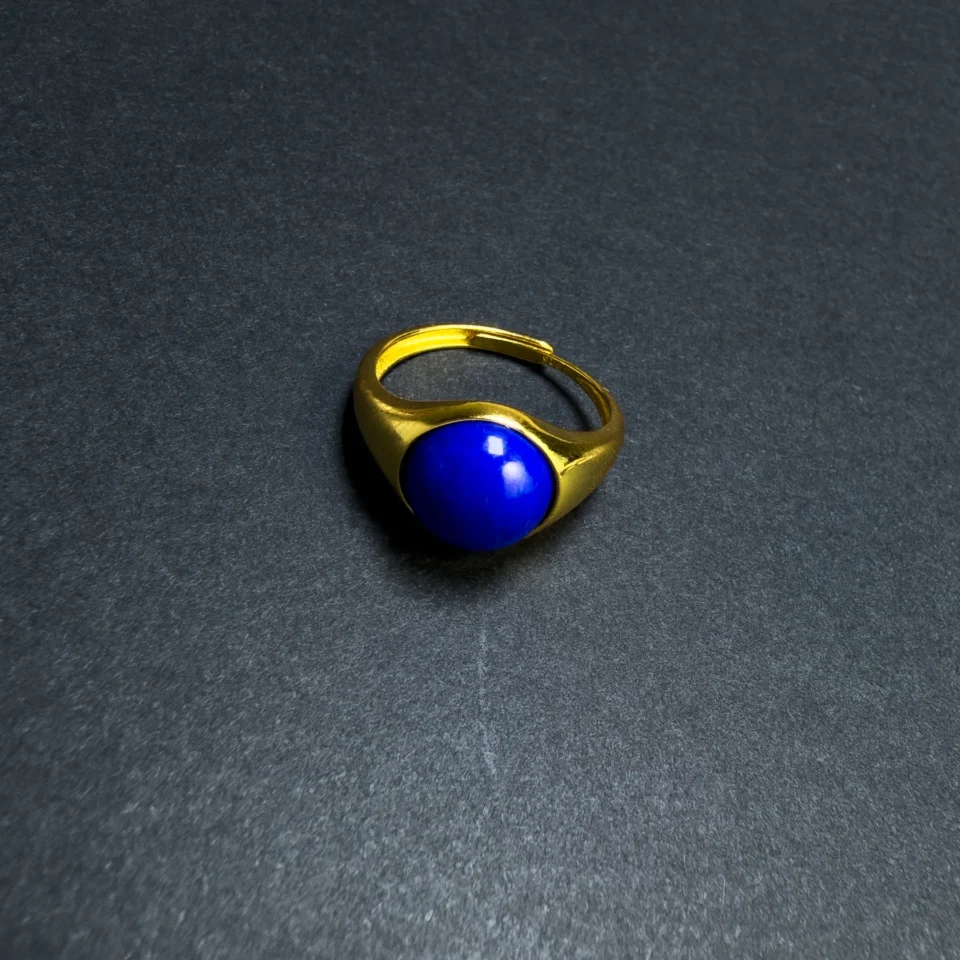
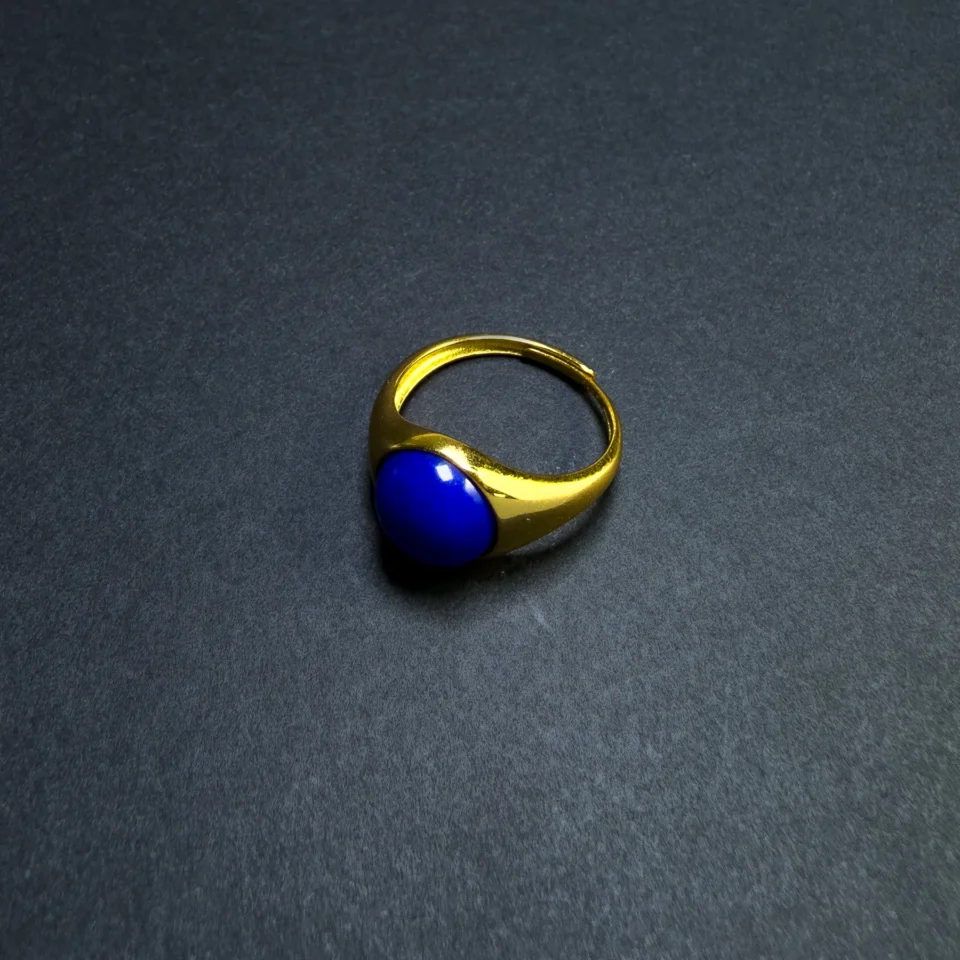
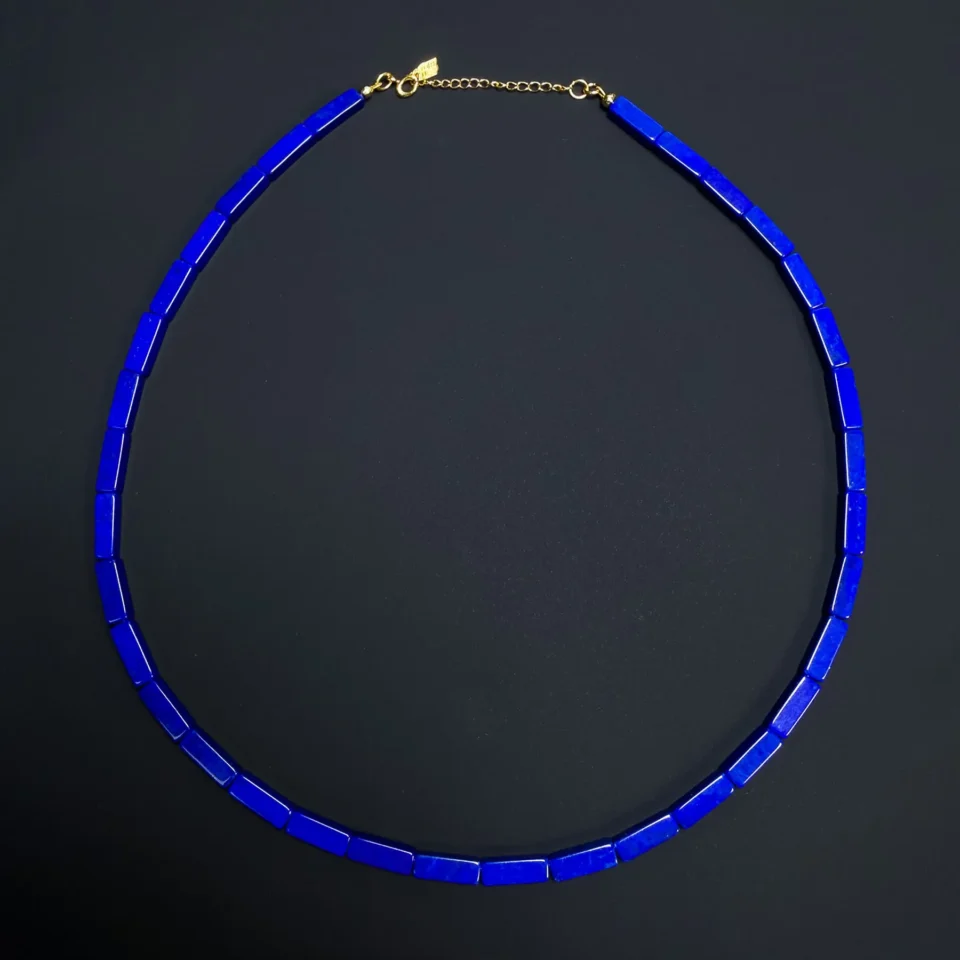
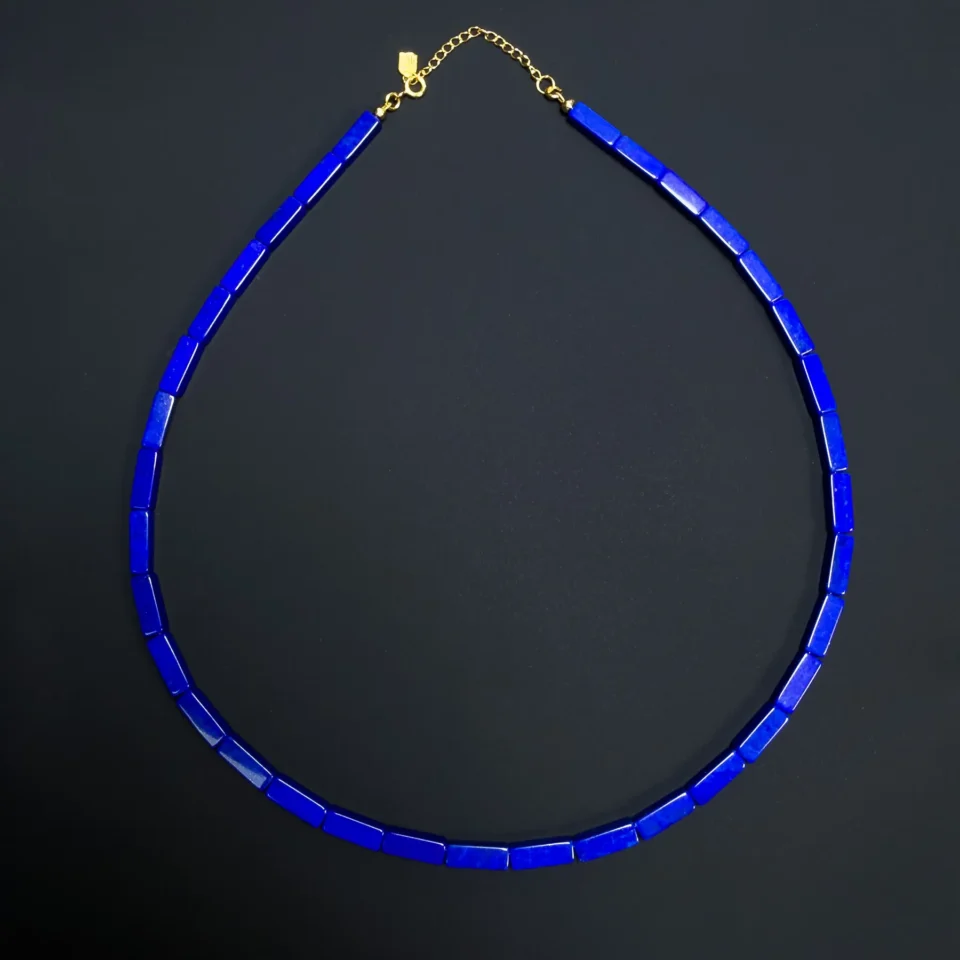
There is no single answer to “how much is lapis lazuli worth?” A kilogram of low-grade material and a kilogram of fine, evenly blue lapis are not the same product just because the weight is the same. In the bead trade, factories commonly quote material by weight, but price per gram only becomes meaningful after quality is understood.
The most important starting point is the stone itself. GIA describes color as the most important quality factor in lapis lazuli, and notes that the most valued material is intense, uniform blue to slightly violetish blue with no visible calcite; small, attractively scattered pyrite can be acceptable, while obvious calcite and excessive pyrite reduce value.
The eight examples below are arranged from lower to higher visual quality so you can compare them directly with the lapis lazuli you already own or are considering buying. By comparing the blue color, visible calcite, pyrite, texture and polish, you can get a practical sense of where your piece may sit in the market.
Price basis: All value ranges below assume natural-color lapis lazuli that has not been dyed or otherwise treated. The approximate trade ranges reflect our market experience as of September 2026. Although these value ranges are not an official GIA grading standard or formal appraisal, they are based on our years of hands-on experience sourcing, selecting, comparing, and evaluating lapis lazuli for jewelry. Exact trade prices can still vary with batch quality, matching, purchase volume and supply.
1. Heavy calcite + heavy pyrite: the lowest-value end
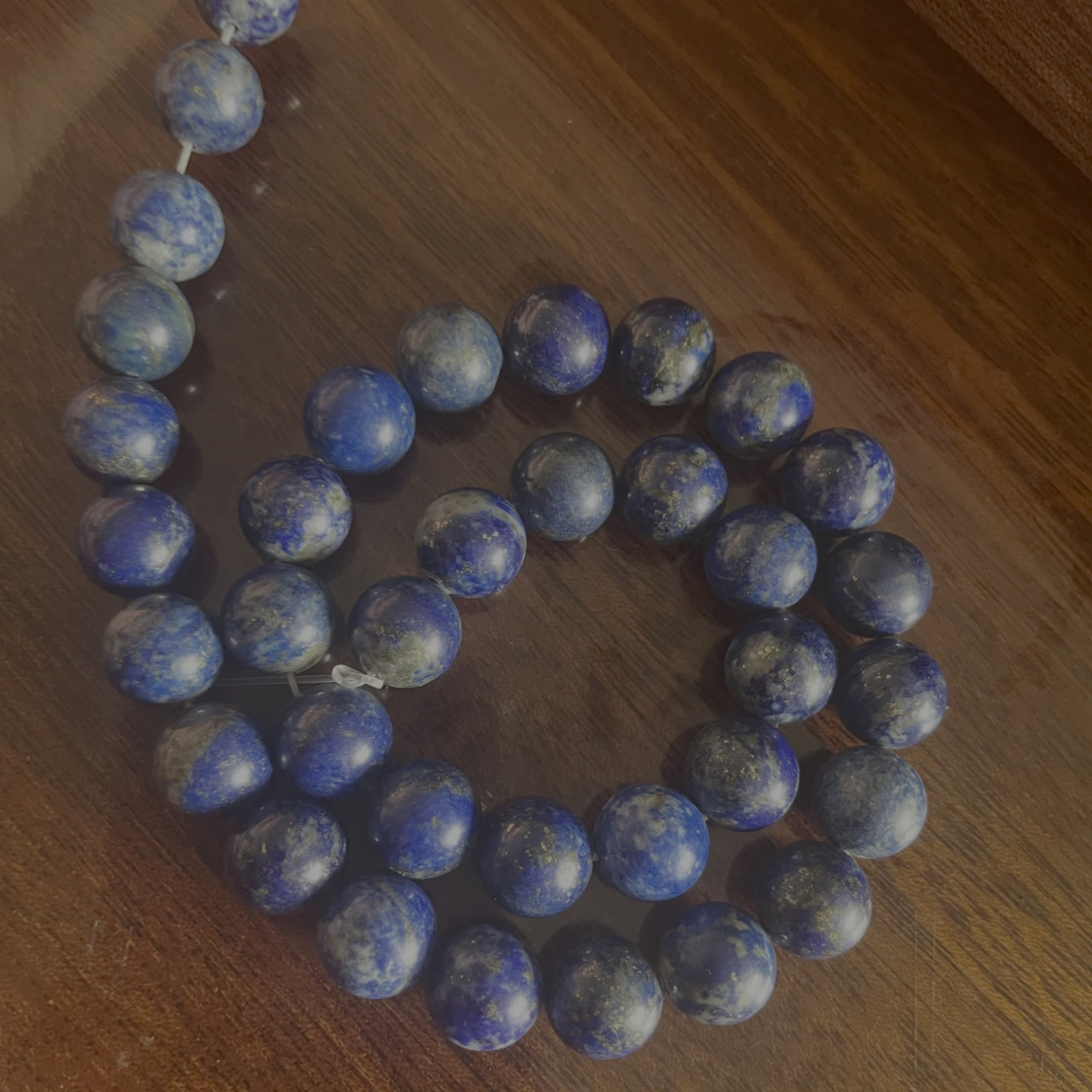
The white calcite and metallic pyrite occupy so much of the surface that the blue is no longer the dominant visual feature. Material like this is usually used for inexpensive beads, craft material or lower-end decorative goods. It can still be natural lapis, but “natural” does not make it high quality.
Approx. trade reference: $0.7-2/g
2. Large calcite patches: very low jewelry value
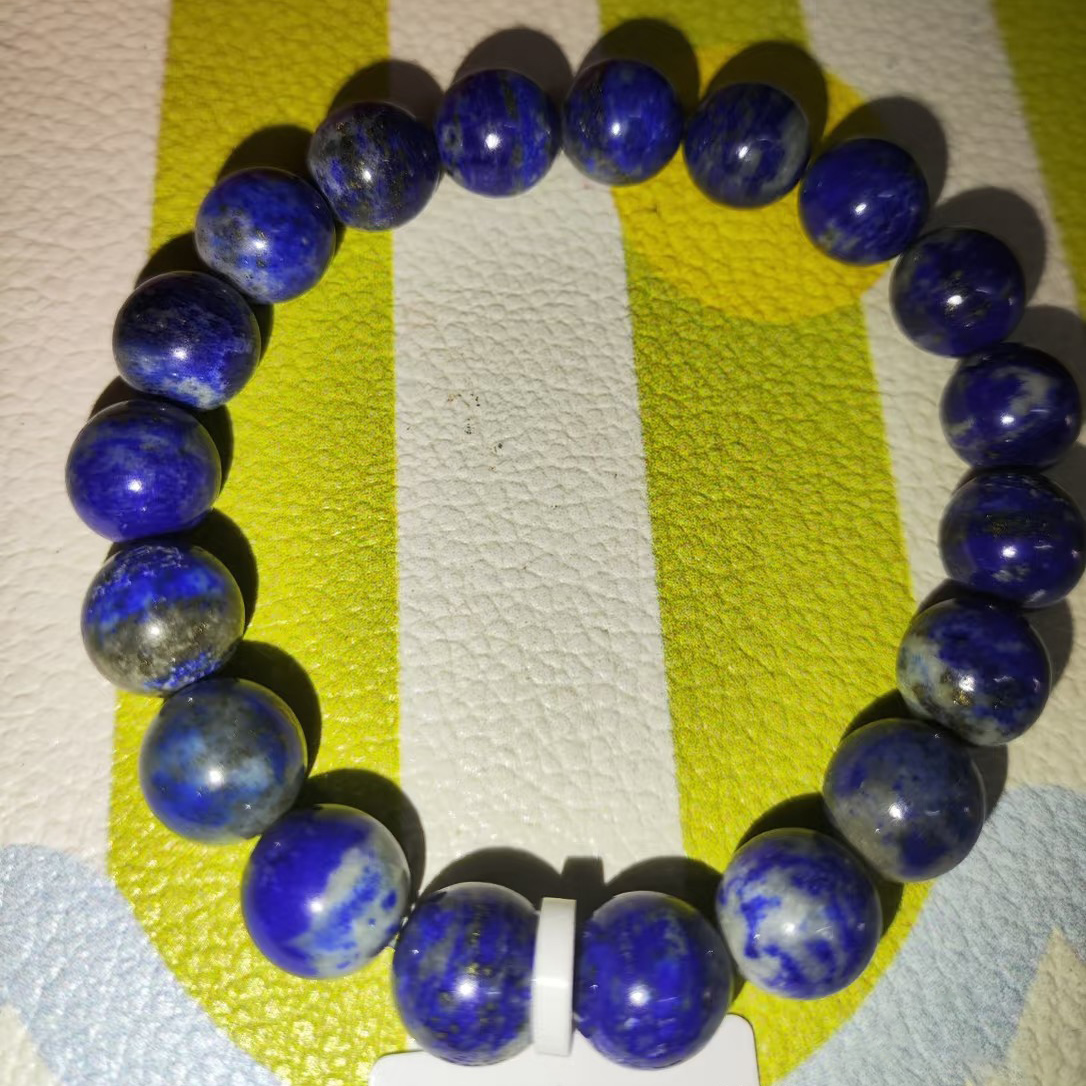
The blue is stronger in places, but large white calcite areas break up the color across many beads. For higher-quality jewelry production, a batch like this normally requires heavy sorting and may be rejected for cleaner strands. Large calcite patches generally depress value more than a few small natural traces.
Approx. trade reference: $1-2.5/g
3. Little white, but pyrite forms large patches
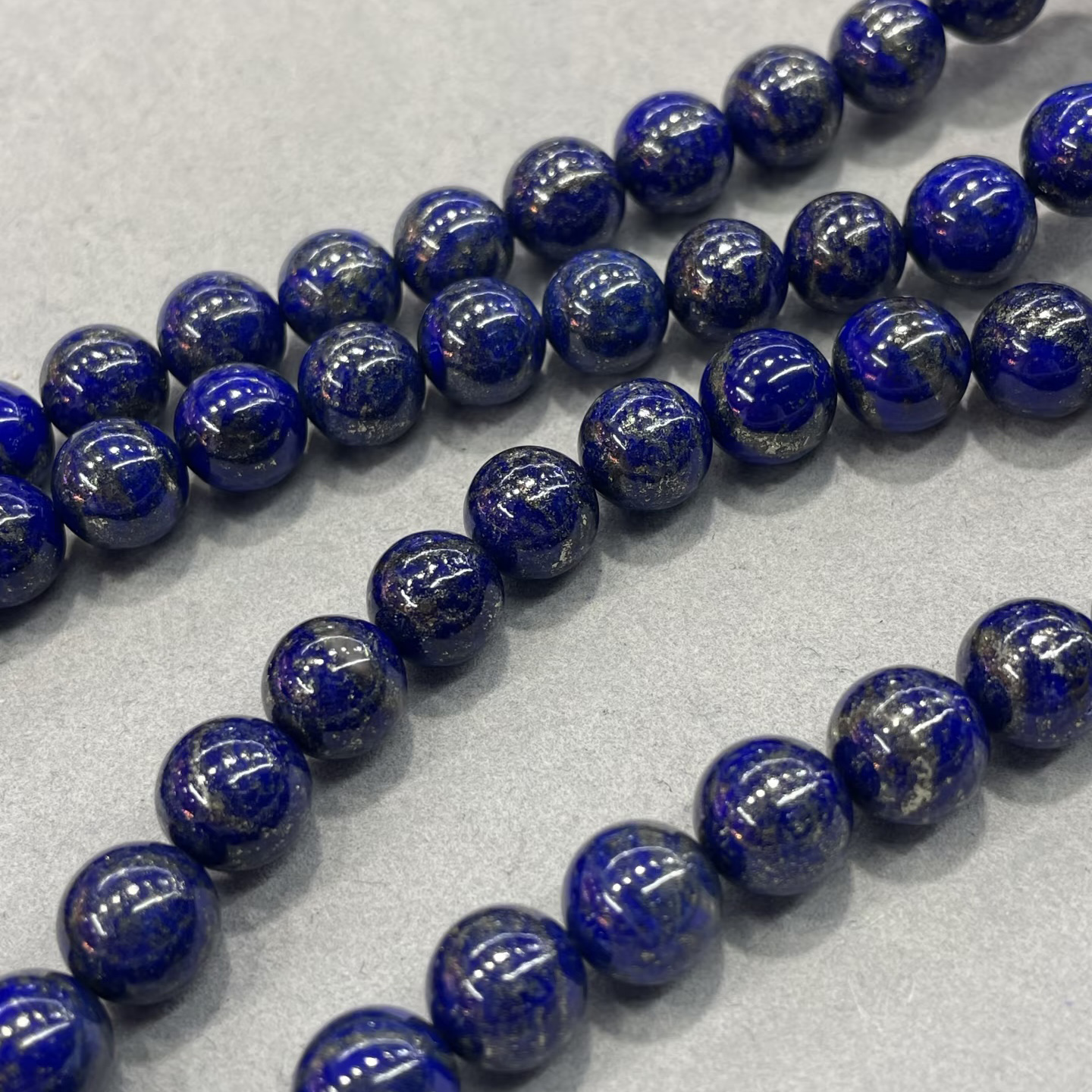
This example shows why “more gold means better lapis” is misleading. There is less obvious calcite, but pyrite occurs in large, dense metallic areas. Small scattered pyrite can be attractive; large aggregates compete with the blue and usually keep the material in a lower value tier.
Approx. trade reference: $3-6/g
4. Dense mixed calcite and pyrite: inexpensive commercial material
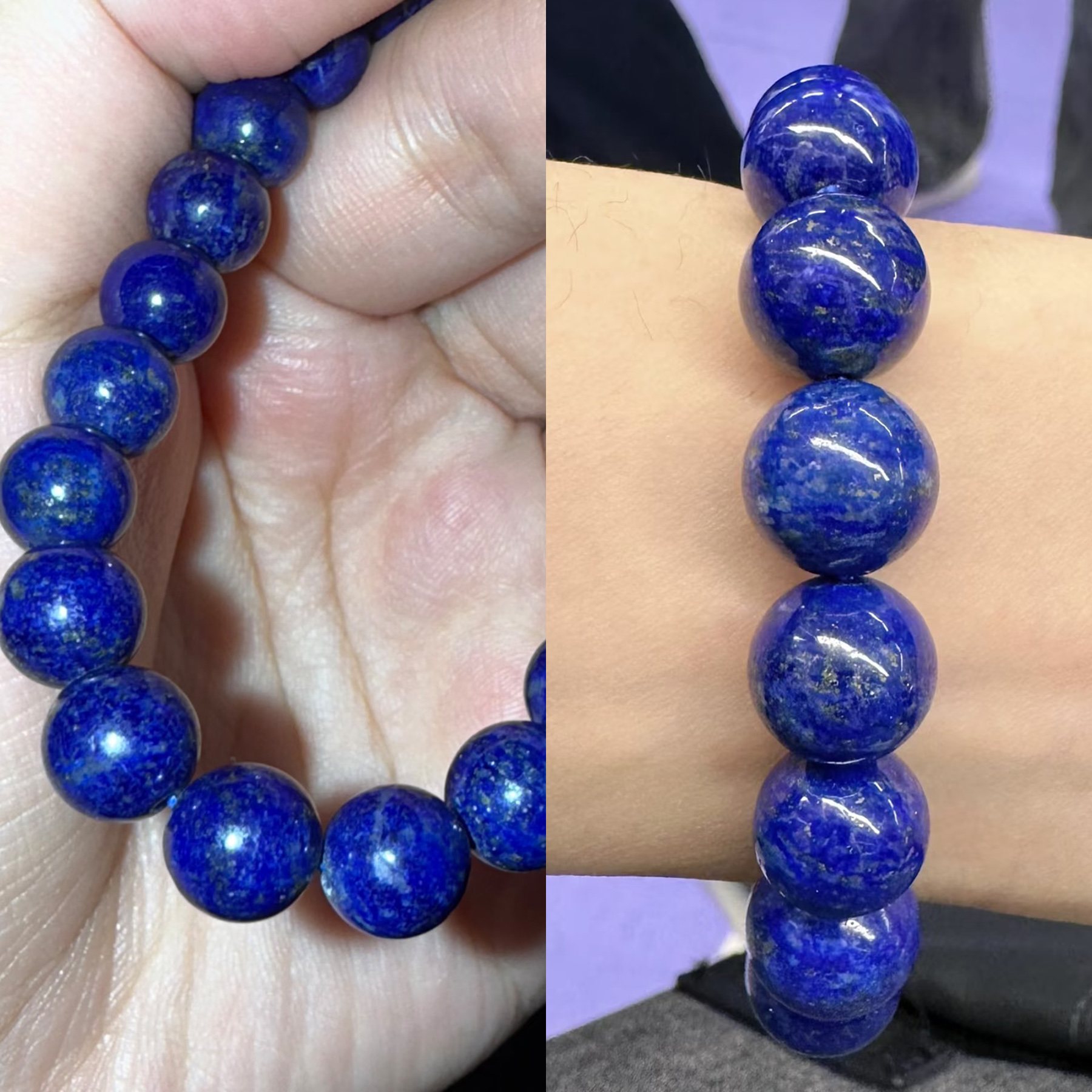
The blue is more visible than in the first examples, but calcite and pyrite remain widely distributed through the beads. The overall appearance is busy rather than clean. This is common commercial material: usable for affordable jewelry, but far from the cleaner blue expected in fine lapis.
Approx. trade reference: $5-8/g
5. Fine mineral dispersion can still make the material look “dirty”
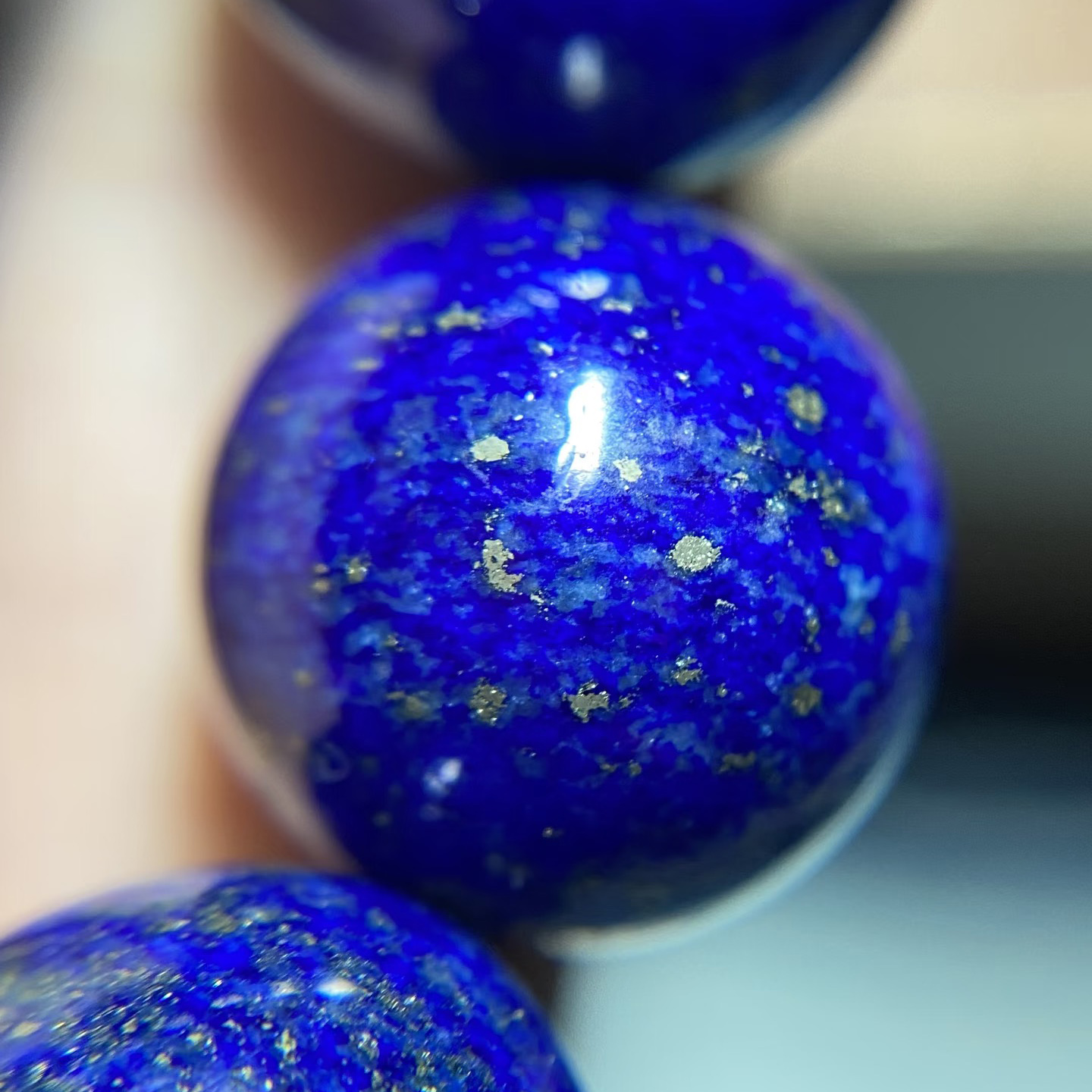
From a distance the bead is blue, yet magnification reveals many fine pyrite particles and pale mineral areas distributed through the body. The surface therefore looks less clean and the blue less luminous. This is an important value difference that ordinary product photos often fail to show.
Approx. trade reference: $7-11/g
6. Blue-dominant material with more pyrite but little calcite
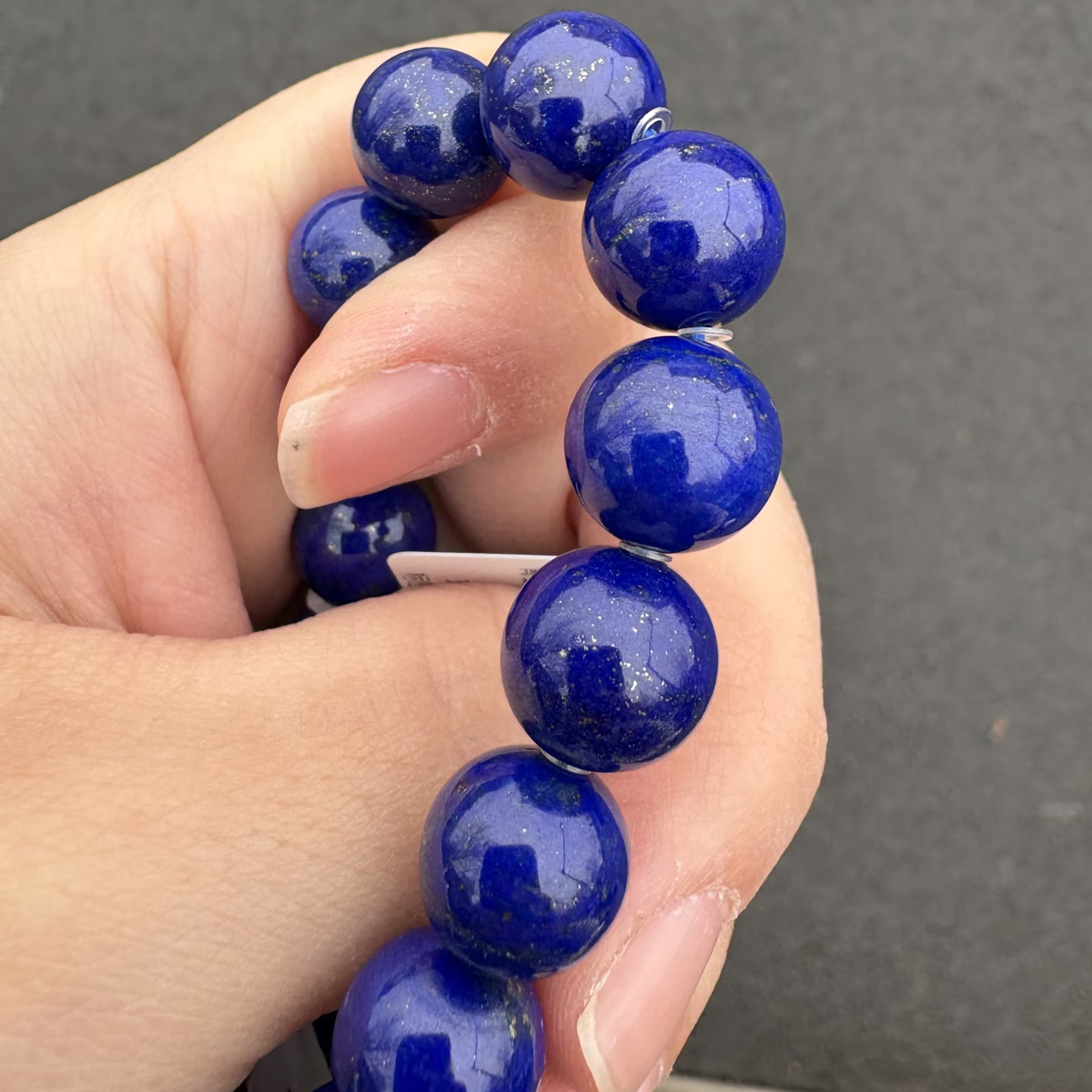
Here the blue becomes the main visual field and obvious white calcite is limited. Pyrite is still present in noticeable amounts, so the material is not at the cleanest end of the market, but the balance is substantially better than the lower grades above.
Approx. trade reference: $9-15/g
7. Sparse pyrite + very little calcite: higher-quality material
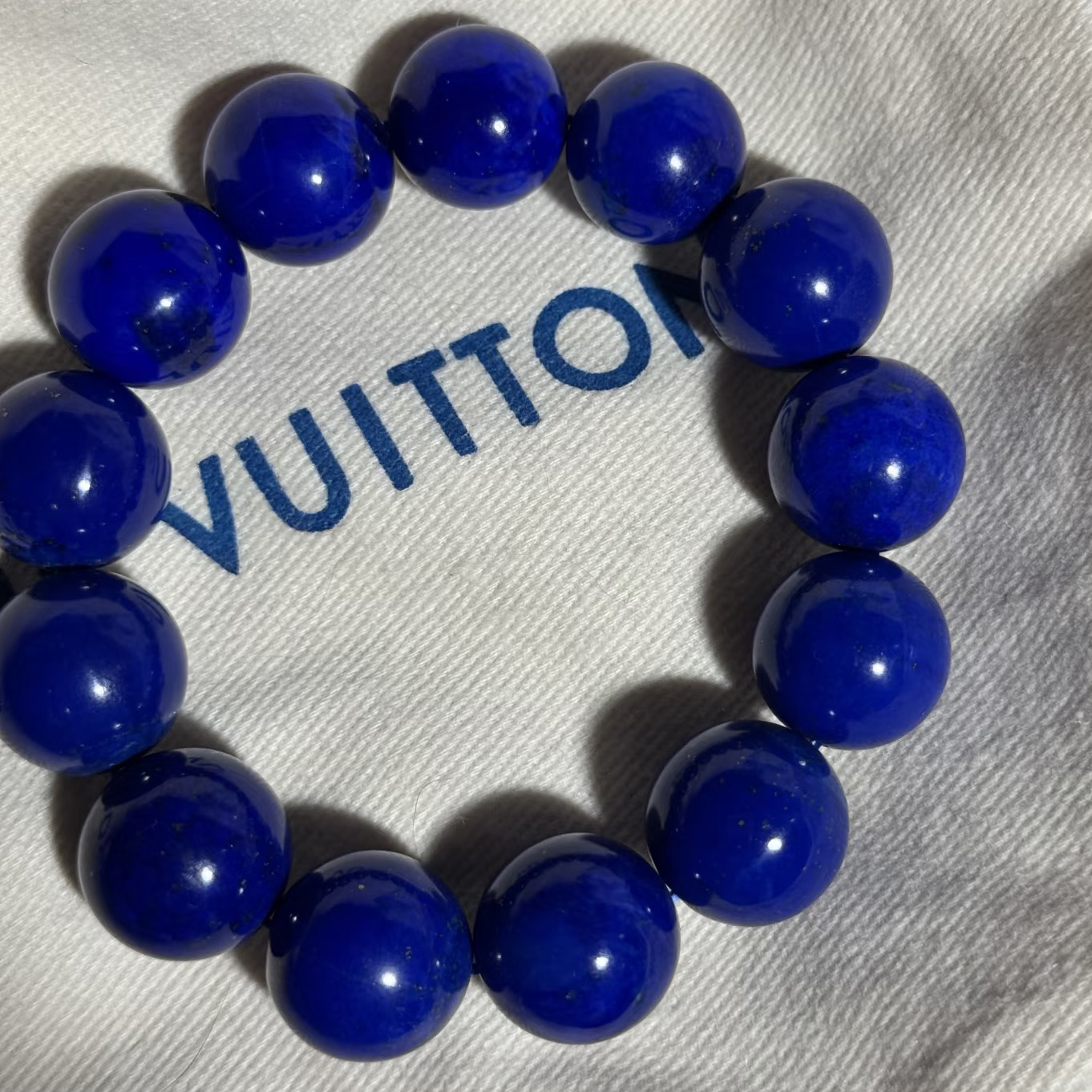
The blue is richer and more continuous, with only small scattered pyrite and very little visible white calcite. At this level, matching also starts to matter more: a full strand needs beads with similar color, texture, mineral distribution and polish, not just individually good pieces.
Approx. trade reference: $20-35/g
8. No obvious visible calcite or pyrite, fine texture and strong luster
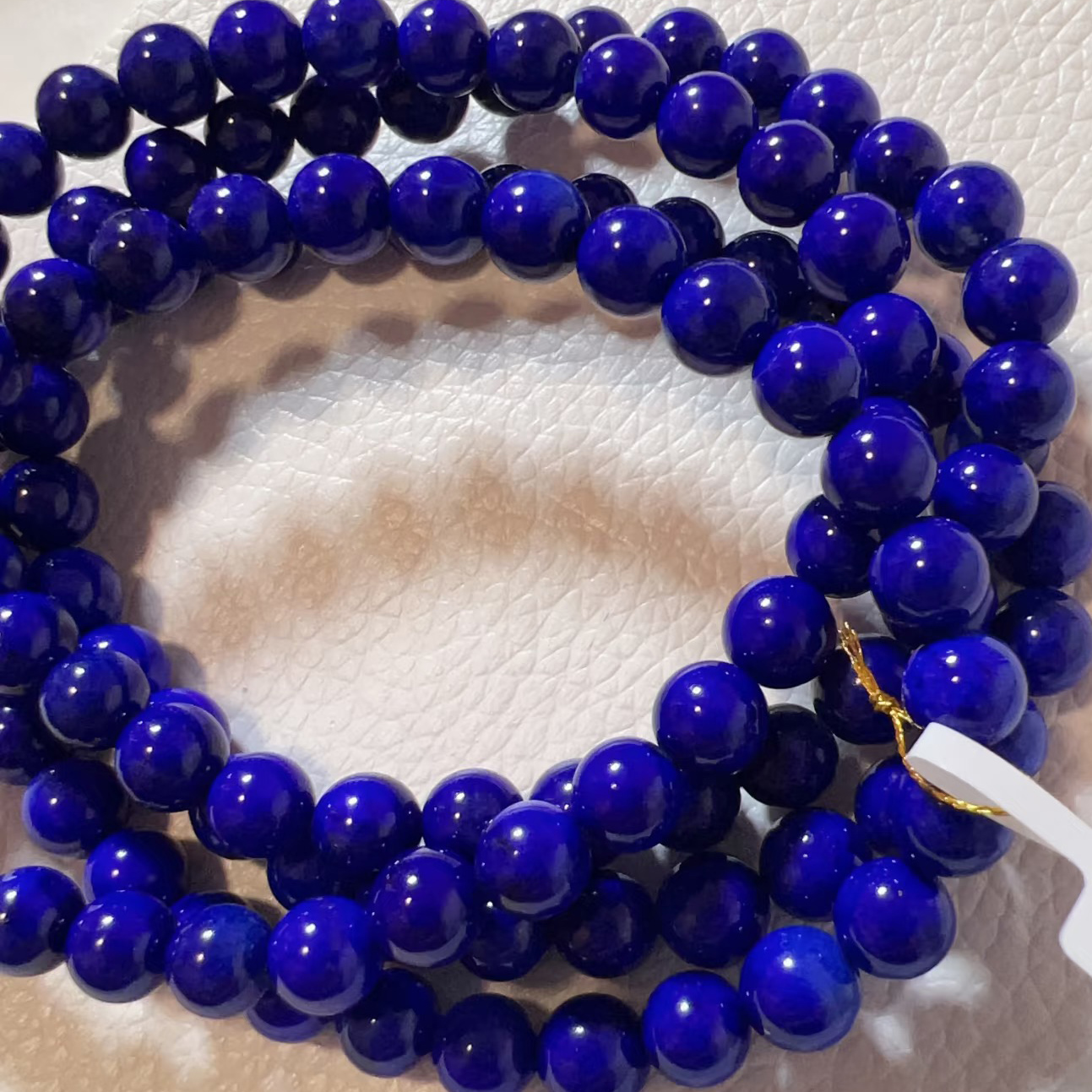
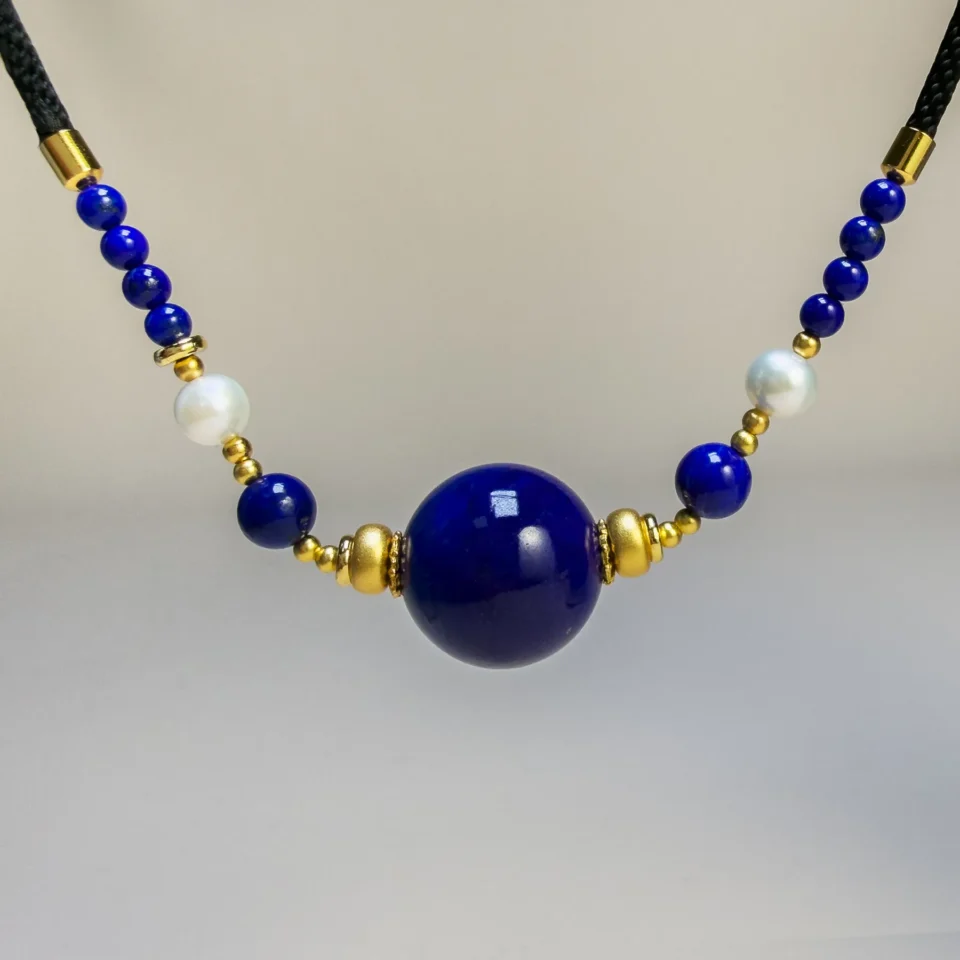
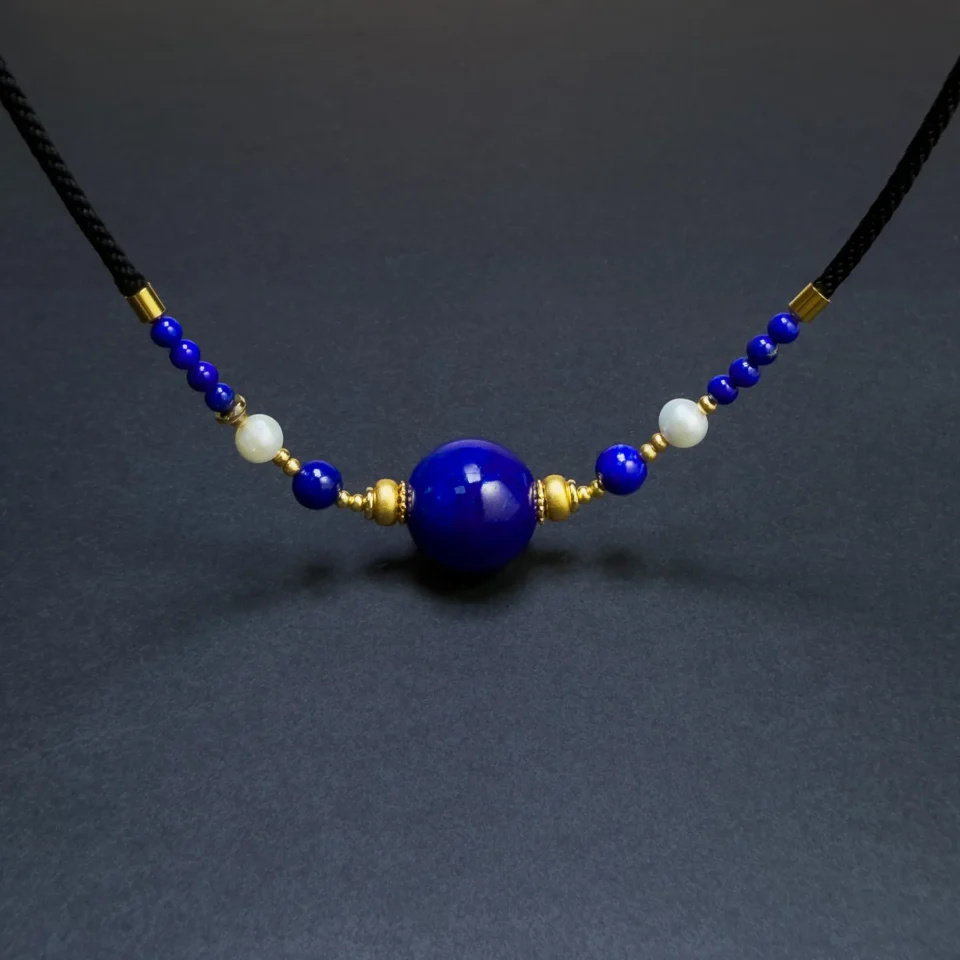
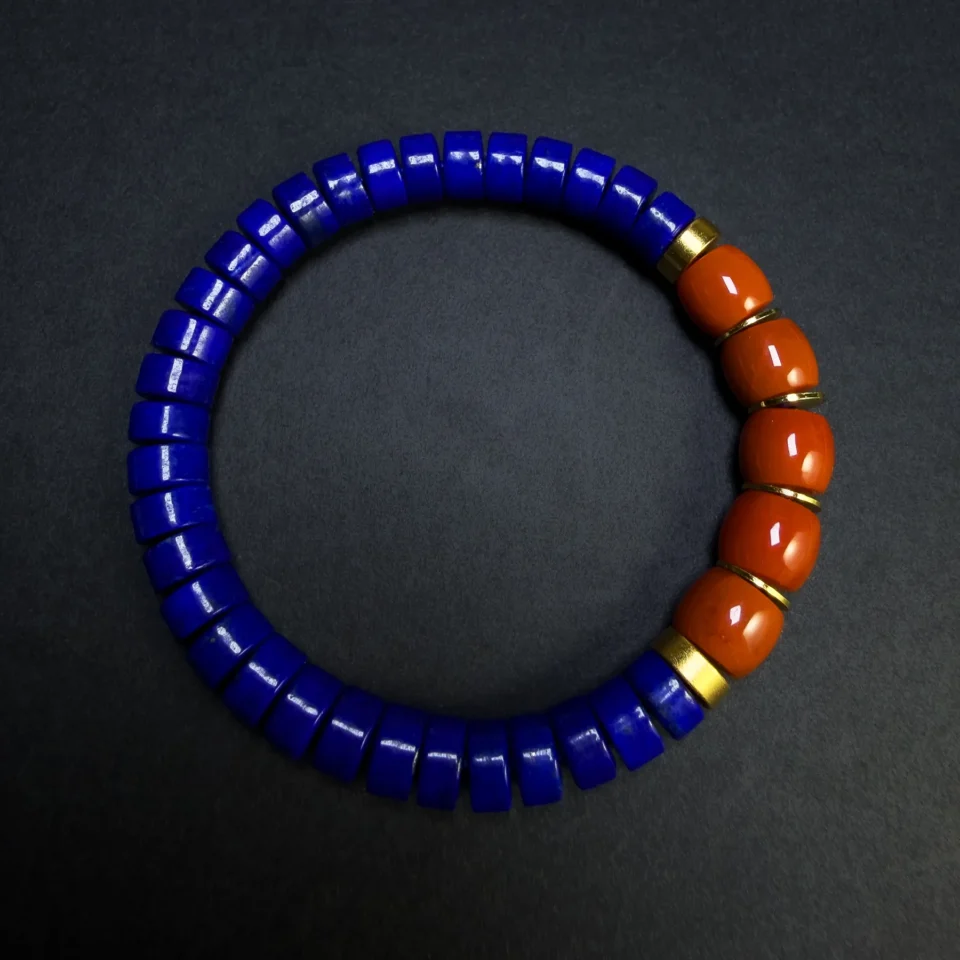
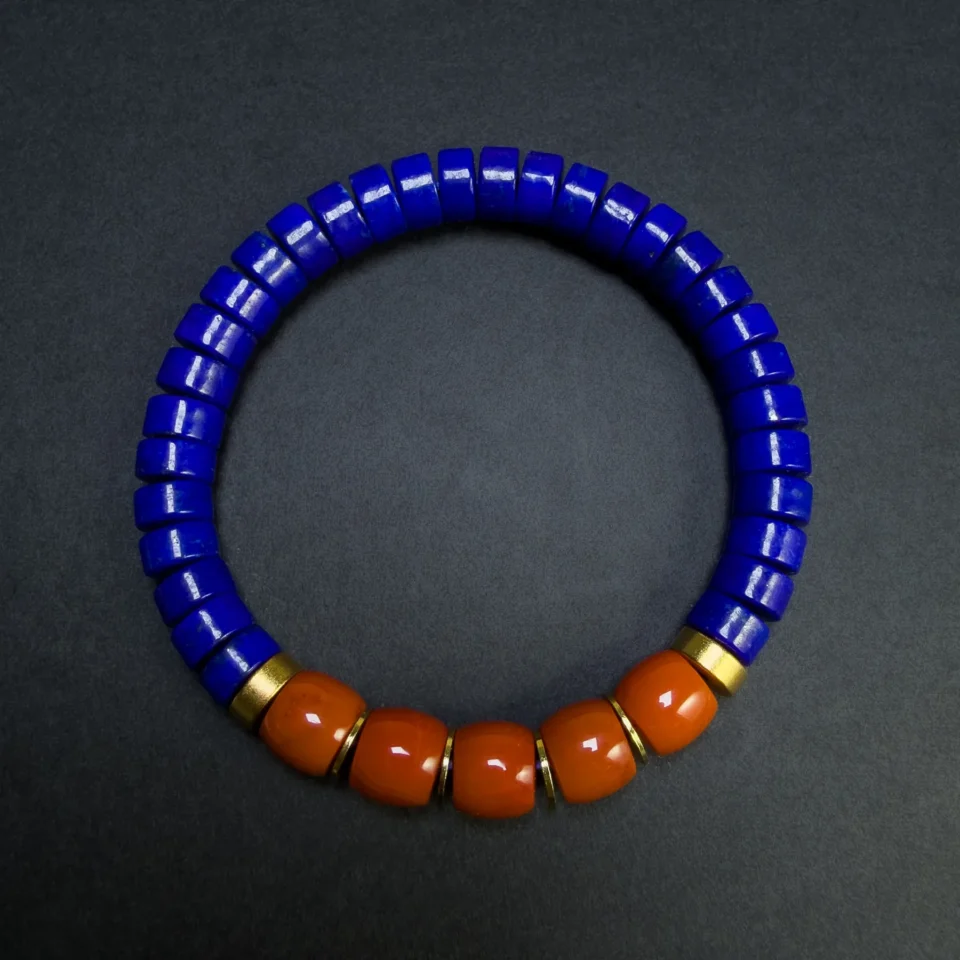
This is the rarest visual category in the set. The beads show highly saturated blue, very little to no obvious visible calcite or pyrite, a fine-looking body and smooth, coherent luster. GIA likewise identifies intense, uniform blue with no visible calcite and little or no pyrite as the most highly valued lapis type. Truly well-matched material of this appearance is scarce.
Approx. trade reference: $50-100+/g
What Do A, AA and AAA Mean in the Lapis Trade?
A, AA, AAA, 4A and 5A are widely used as an easy trade language for relative quality, but they are not a universal laboratory grading system. GIA explicitly states that it does not grade lapis lazuli. In practice, one supplier may use AAA for material another supplier would call AA or 4A.
That does not make the labels useless. Within one supplier’s own stock, they can be a convenient shorthand for differences in blue saturation, visible calcite, pyrite, texture and polish. The safe rule is: use the letter grade to understand the seller’s internal hierarchy, but use the actual stone to judge value.
Two Things That Can Move the Price Outside These Ranges
Treatment. Lapis can be dyed, or impregnated with wax or oil to improve color and luster. GIA notes these treatments can be detected by a gemologist. A very blue appearance therefore should not be priced as fine untreated material until treatment is understood.
Matching. A high-quality bracelet or necklace is not just a pile of individually good beads. The beads must also match in blue, visible mineral content, texture, diameter, drilling and polish. The cleaner the material, the harder it can be to assemble a visually consistent strand from a larger batch.
How to Use This Guide When Buying
Start with the blue, then look at calcite, pyrite, texture and polish. If you want a deeper visual explanation of the color range, see what color is lapis and which blues are most valued. For origin and cutting context, see how Afghan lapis moves from rough stone to finished jewelry.
For finished examples, browse LAKAZUR lapis lazuli jewelry. We evaluate lapis by the material first, not by how many A’s are printed on a label.
At LAKAZUR, we begin with the blue.