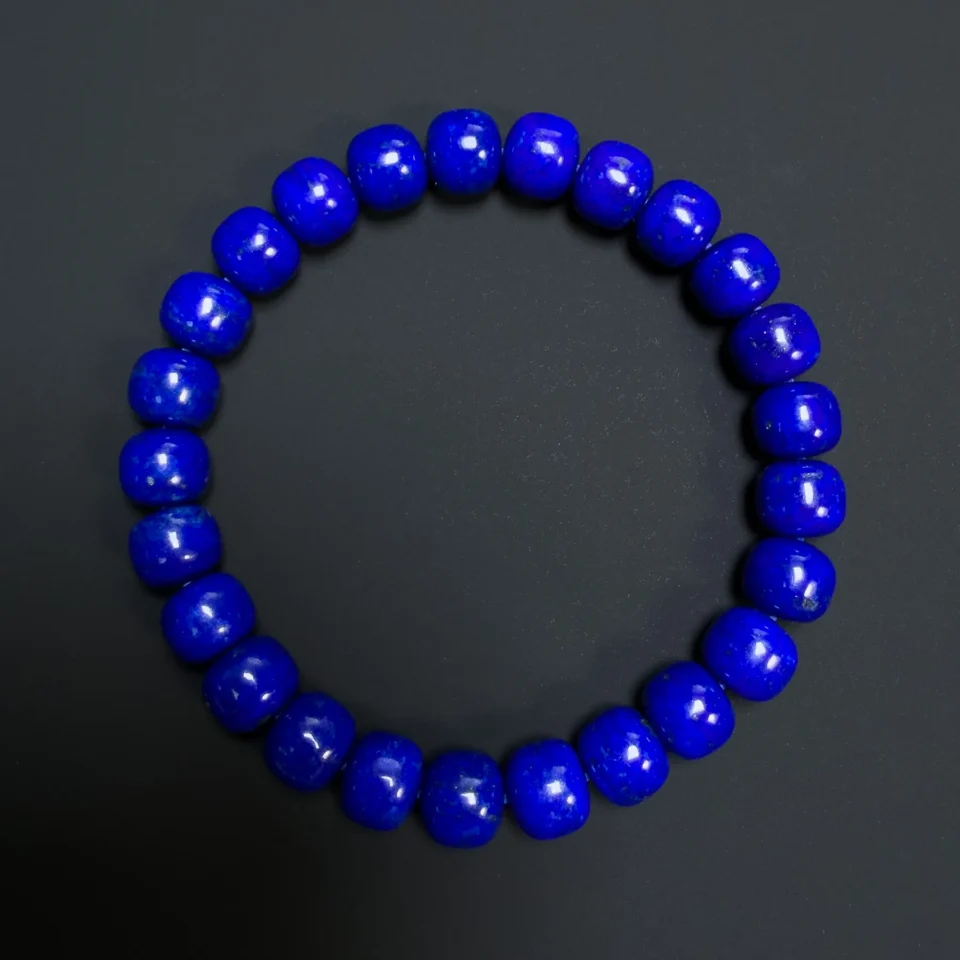
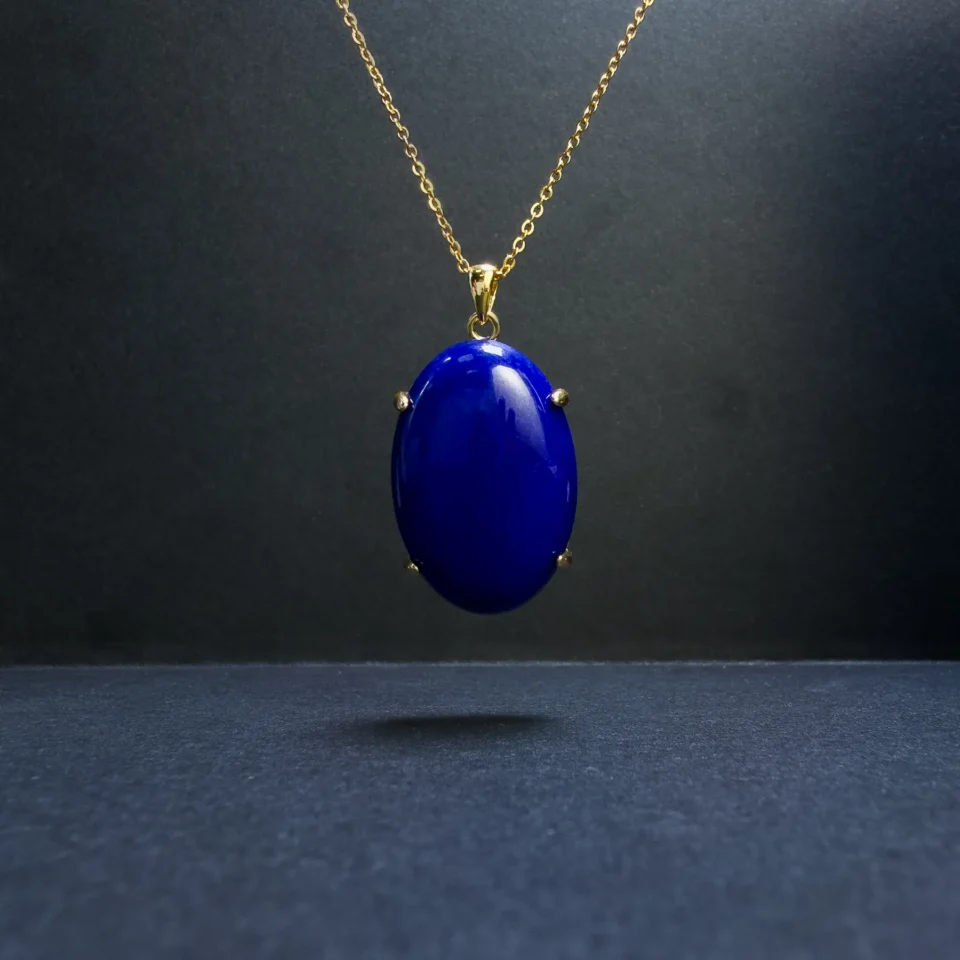
Lapis lazuli is instantly recognizable for its rich blue color, often accompanied by tiny gold-colored flecks and occasional white mineral areas. It has been used in jewelry, carvings, decorative objects, and pigments for thousands of years, yet one basic question still causes considerable confusion:
Is lapis lazuli actually a crystal?
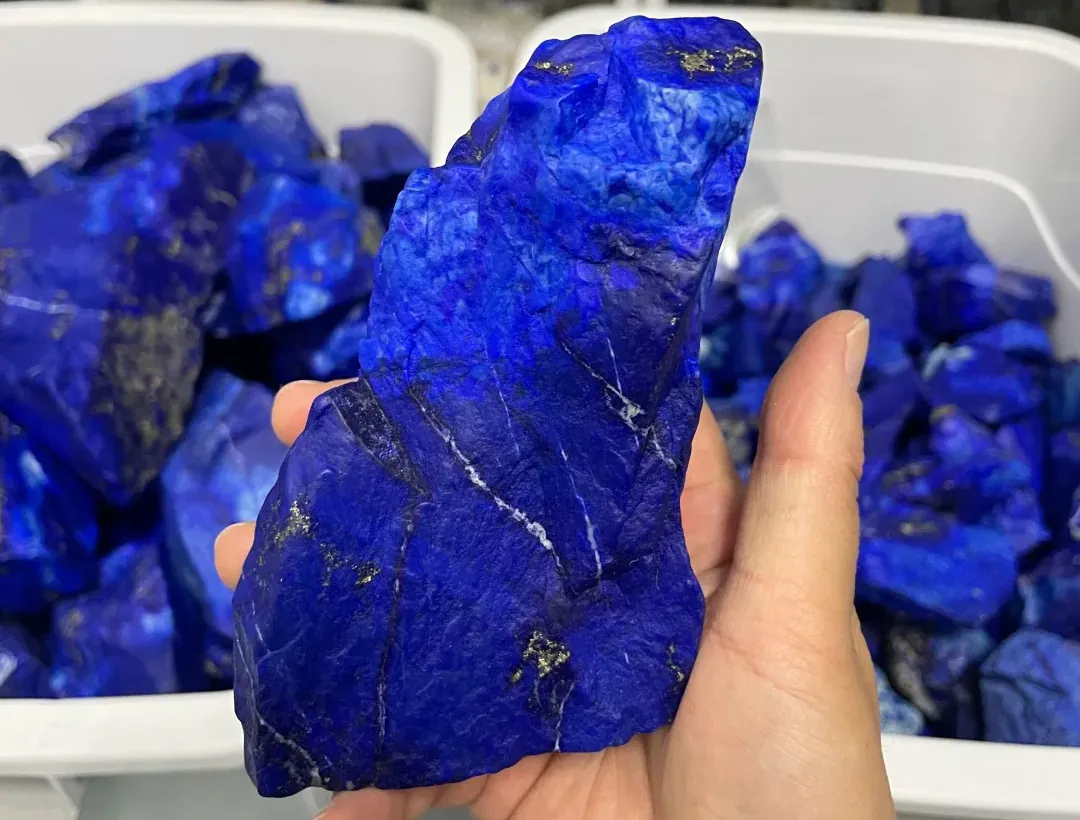
The short answer is not in the strict geological sense.
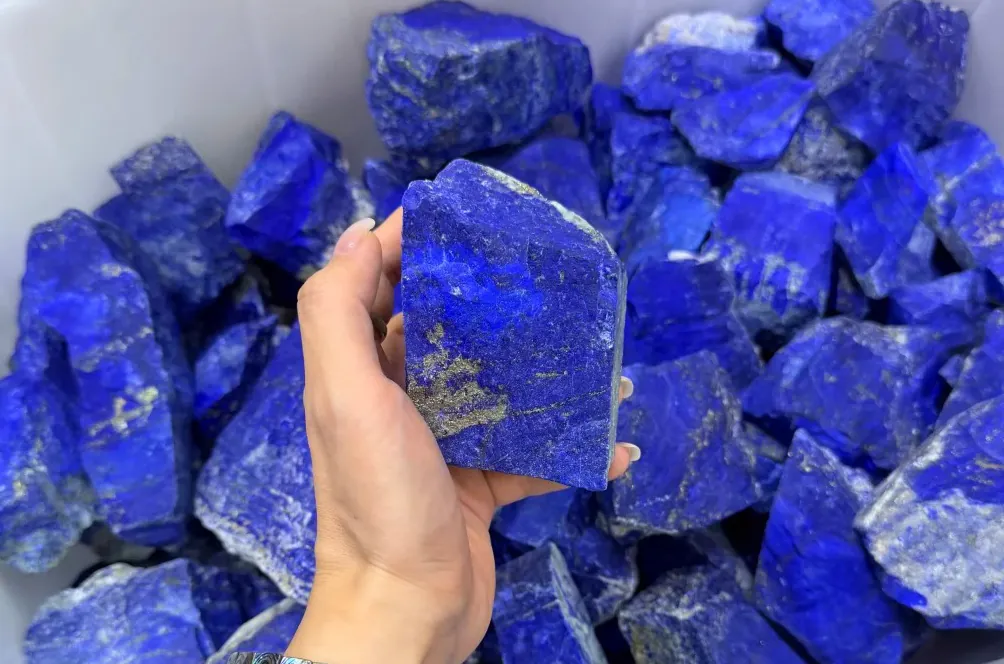
Although the phrase “lapis lazuli crystal” is widely used in jewelry, crystal collecting, and modern spiritual communities, lapis lazuli is technically a rock composed of several minerals rather than a single mineral crystal.
That distinction matters if you are trying to understand what lapis lazuli is, how to evaluate its quality, how to recognize natural variation, or what to look for when buying lapis lazuli jewelry.
In this guide, we will look beyond the blue color and explain the material itself—from lazurite, pyrite, and calcite to quality, treatments, jewelry uses, identification, and care.
What Is Lapis Lazuli Crystal?
Lapis lazuli is a naturally occurring rock composed of several minerals.
The Gemological Institute of America describes lapis lazuli as an aggregate whose principal components commonly include lazurite, calcite, and pyrite, although other minerals may also occur.
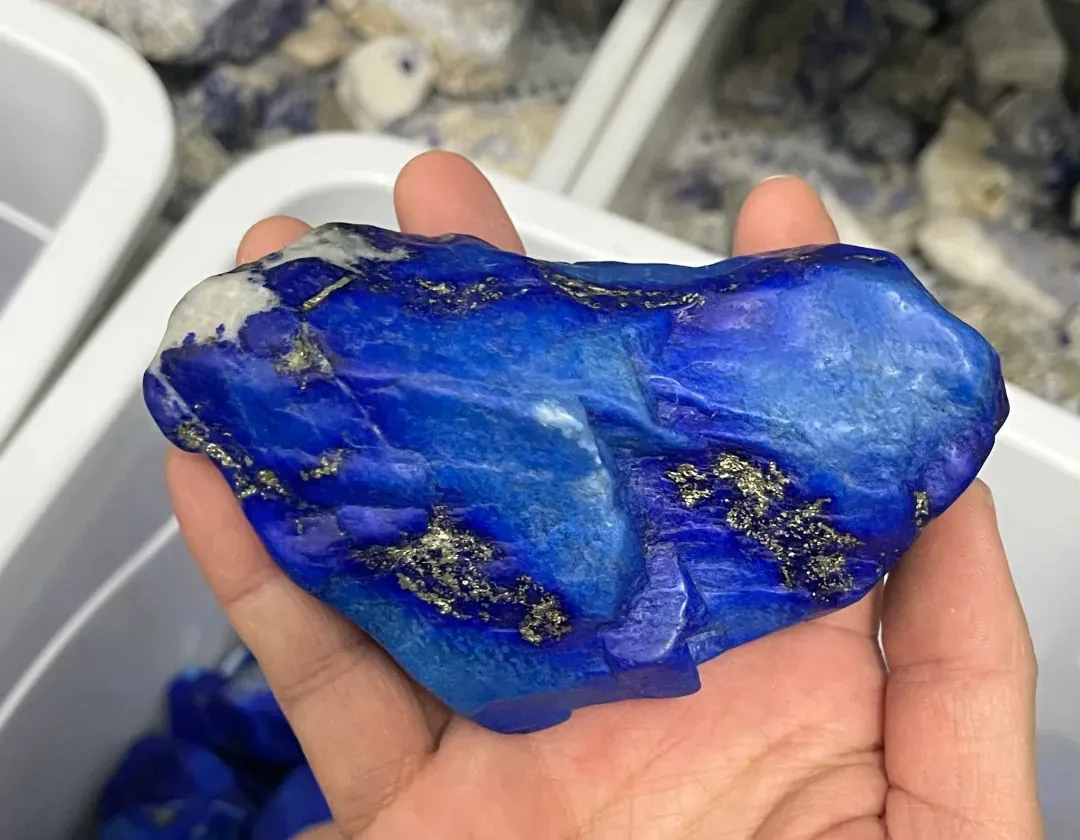
These components help explain much of what you see when looking closely at a piece of lapis.
Lazurite
Lazurite is closely associated with the blue color for which lapis lazuli is famous.
Depending on its composition, lapis can range from slightly greenish blue to violetish blue, with strongly saturated medium-to-dark blue generally being the most desirable appearance in the gem trade.
Pyrite
The metallic gold-colored flecks sometimes visible in lapis lazuli are usually pyrite.
They are not gold.
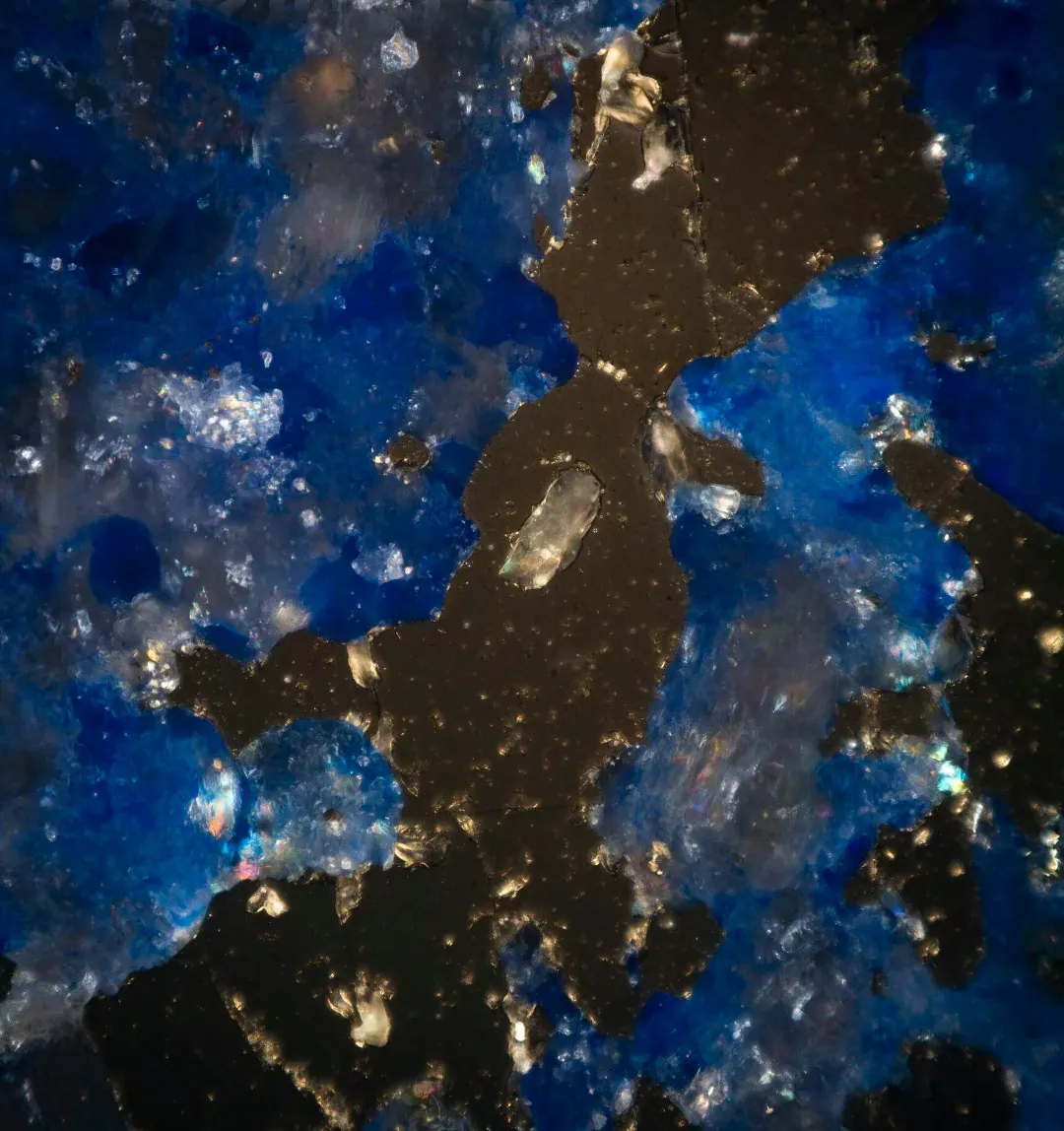
Small, attractively distributed pyrite particles can create a beautiful star-like appearance against the blue stone. Their presence does not automatically reduce the quality of lapis lazuli.
Calcite
White or pale areas commonly seen in lapis lazuli are often associated with calcite.
Visible calcite is part of the natural mineral composition of many lapis specimens. However, large or obvious white calcite areas generally reduce the commercial value of material intended for fine jewelry, especially when buyers are looking for a more uniform blue appearance.
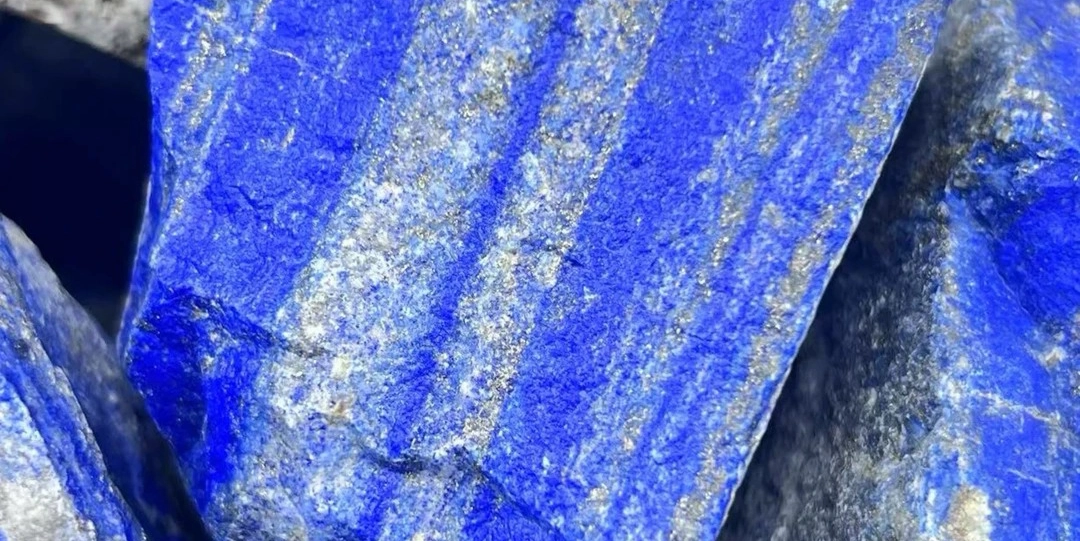
This combination of minerals is why two pieces of natural lapis lazuli can look remarkably different.
One may appear almost entirely deep blue.
Another may contain fine gold-colored pyrite.
Another may display visible white calcite.
All can belong to the same material family.
Quick Facts About Lapis Lazuli
| Property | Lapis Lazuli |
|---|---|
| Material type | Rock composed of several minerals |
| Important components | Lazurite, calcite and pyrite |
| Typical color | Greenish blue to violetish blue |
| Transparency | Semitranslucent to opaque |
| Luster | Waxy to vitreous |
| Mohs hardness | Approximately 5–6 |
| Common gold-colored feature | Pyrite |
| Common white feature | Calcite |
| Common jewelry forms | Beads, cabochons, inlays and tablets |
| Common treatments | Dyeing, waxing or oil impregnation |
GIA reports lapis lazuli as semitranslucent to opaque, with a waxy-to-vitreous luster and a hardness of approximately 5 to 6 on the Mohs scale, depending on its mineral composition.
Is Lapis Lazuli Really a Crystal?
Technically, lapis lazuli is not a single crystal.
This is one of the most important distinctions to understand when researching the term “lapis lazuli crystal.”
A crystal is generally associated with an ordered crystalline structure belonging to a particular mineral. Lapis lazuli, by contrast, is a rock composed of multiple mineral phases.
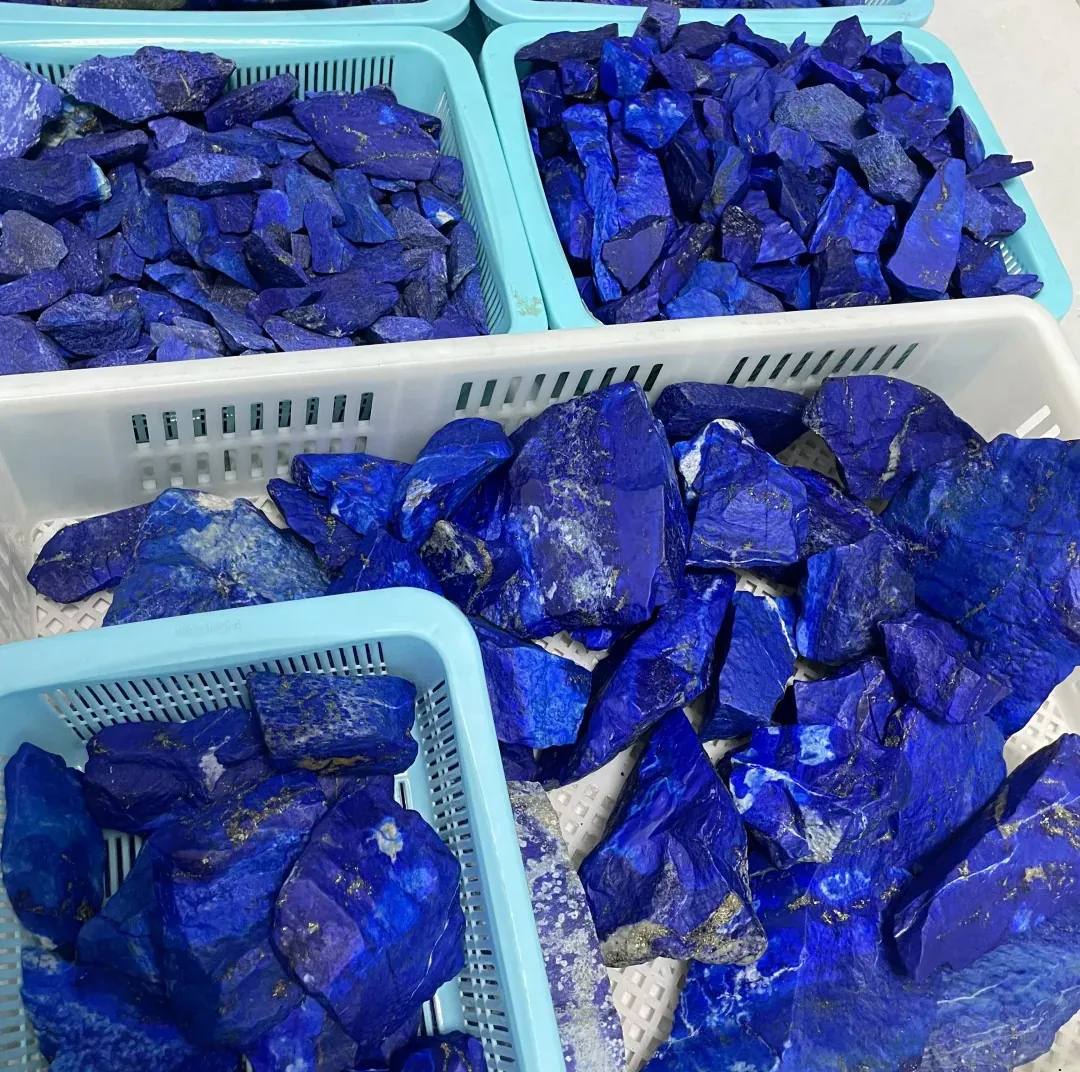
The term lapis lazuli crystal remains common because “crystal” is often used more loosely in retail, jewelry, collecting, and metaphysical communities to describe decorative natural stones.
So both of the following statements can be true:
“Lapis lazuli crystal” is a common consumer term.
and
Geologically, lapis lazuli is a rock rather than a single mineral crystal.
Understanding that difference allows you to use the popular terminology without confusing it with mineralogical classification.
Lapis Lazuli vs. Lazurite
Another common source of confusion is the difference between lapis lazuli and lazurite.
They are not interchangeable terms.
Lapis lazuli refers to the rock as a whole.
Lazurite refers to an important blue mineral associated with the material.
Natural lapis may also contain calcite, pyrite and other minerals.
GIA research on material from Sar-e-Sang in Afghanistan notes that well-formed lazurite crystals are actually rare.
So when you see a polished blue bead or cabochon sold as lapis lazuli, you are generally looking at a natural multi-mineral rock—not a single transparent lazurite crystal.
Lapis Lazuli Crystal Properties
The visual beauty of lapis lazuli comes from the interaction of its mineral composition, color, texture, and surface polish.
Color
Color is the most important quality factor when evaluating lapis lazuli.
The most highly valued material is generally an intense, saturated medium-to-dark blue or slightly violetish blue.
Uniformity also matters.
Material with an even, rich blue appearance is generally more desirable than lapis with dull, grayish, greenish, or heavily mottled areas. GIA identifies color as the most important lapis lazuli quality factor.
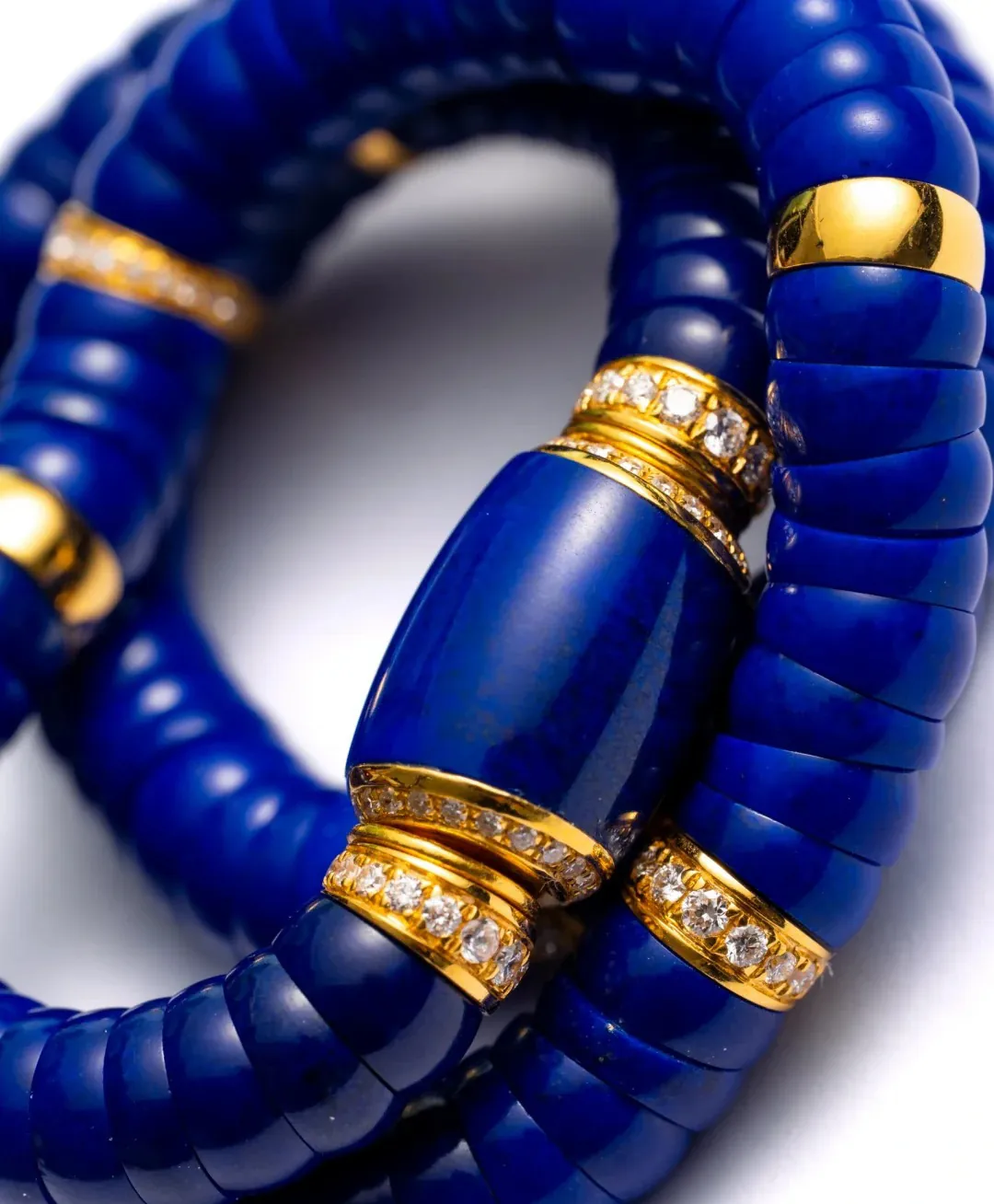
That does not mean every natural stone should look perfectly uniform.
Natural lapis varies.
The important distinction is between natural variation that contributes visual character and mineral areas that significantly interrupt the blue body color.
Hardness
Lapis lazuli measures approximately 5 to 6 on the Mohs hardness scale, depending on its composition.
That makes it considerably softer than gemstones such as sapphire or diamond.
It can still be used successfully in jewelry, but it should be protected from scratching, impact, harsh chemicals, and inappropriate cleaning methods.
Transparency
Lapis lazuli is generally semitranslucent to opaque.
It is valued primarily for body color, texture, pattern, and polish rather than the transparency or brilliance sought in many faceted gemstones.
Luster
A polished surface may show a waxy to vitreous luster.
A good polish can significantly improve the visual depth of the blue color.
However, it is also important to remember that wax or oil may sometimes be applied as treatments to improve apparent color or luster, so appearance alone does not prove that a piece is untreated.
What Do the Gold Flecks in Lapis Lazuli Mean?
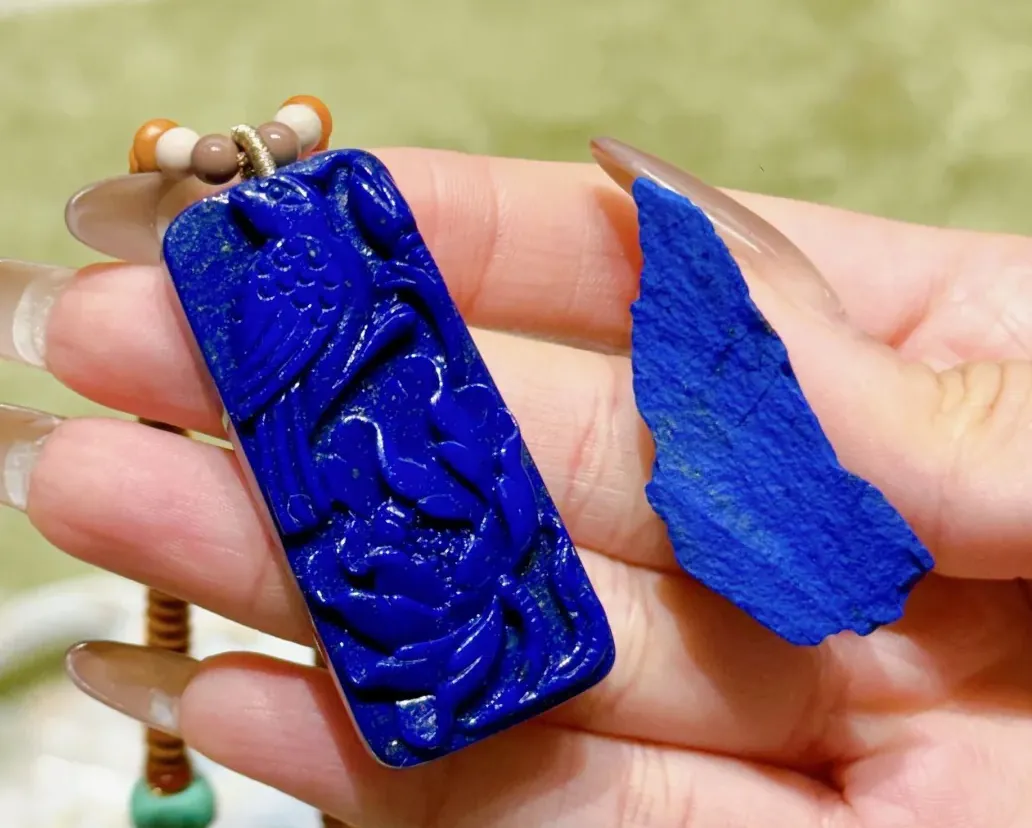
From a mineralogical perspective, the sparkling gold-colored areas commonly seen in lapis lazuli are usually pyrite.
They are not actual gold.
Fine pyrite can be visually attractive, particularly when tiny particles are scattered naturally through an intense blue background.
This creates the appearance that many people compare to stars against a night sky.
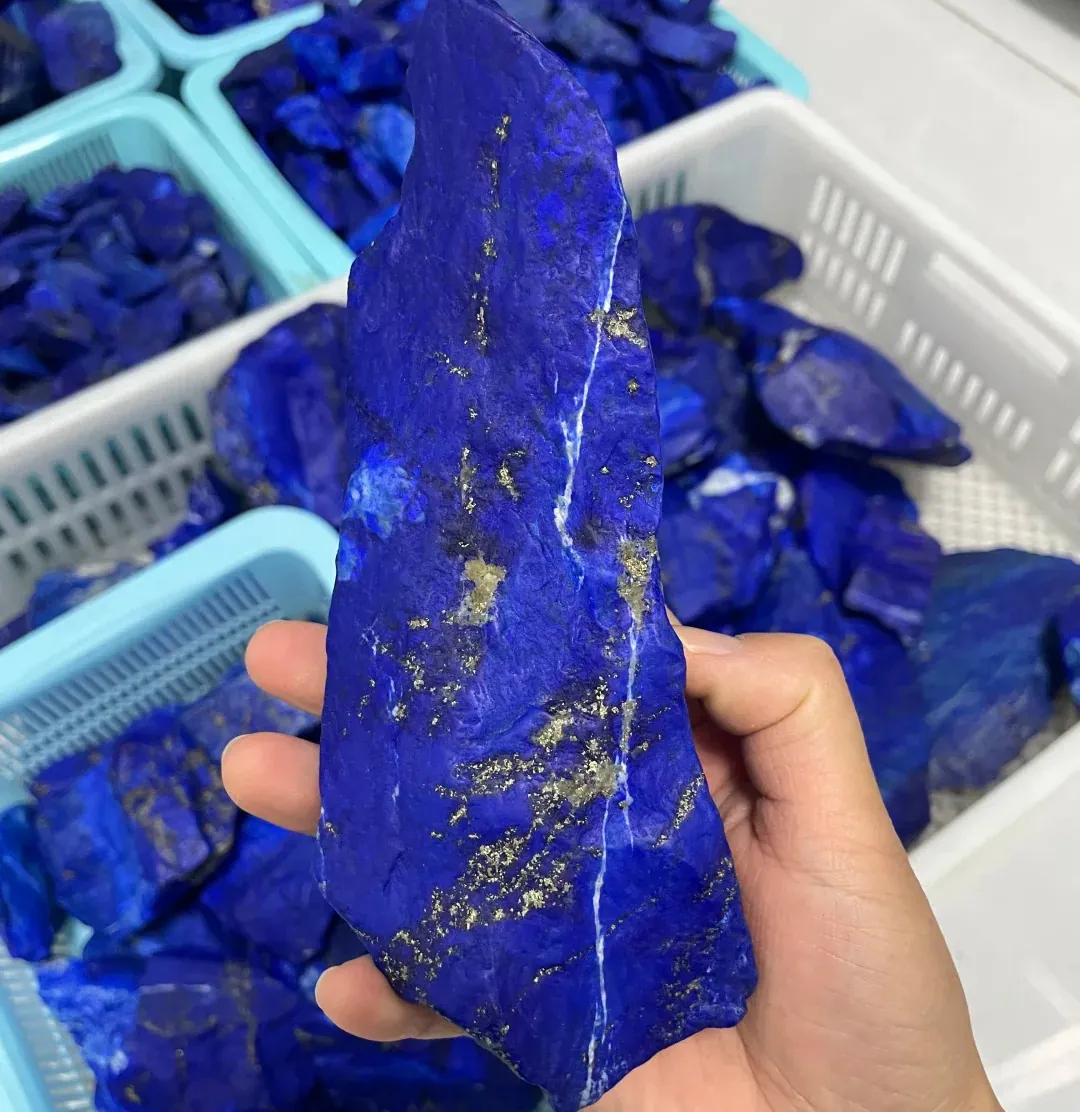
However:
More pyrite does not automatically mean higher quality.
GIA notes that the most prized material may contain little or no visible pyrite, while small and attractively distributed pyrite can still be acceptable in fine-quality lapis. Excessive pyrite can negatively affect appearance.
When evaluating jewelry, pyrite should therefore be considered together with:
- overall color
- saturation
- calcite content
- pattern
- polish
- consistency
rather than treated as a single indicator of quality.
What Are the White Areas in Lapis Lazuli?
The white or pale streaks and patches visible in many pieces of lapis lazuli are commonly associated with calcite.
Calcite is not automatically evidence that a piece is fake.
It is a natural component of lapis lazuli.
However, from a commercial quality perspective, highly visible calcite usually lowers the value of lapis intended for fine jewelry because it interrupts the saturated blue appearance.
GIA describes the most prized lapis as having little or no visible calcite.
That distinction is useful when comparing products.
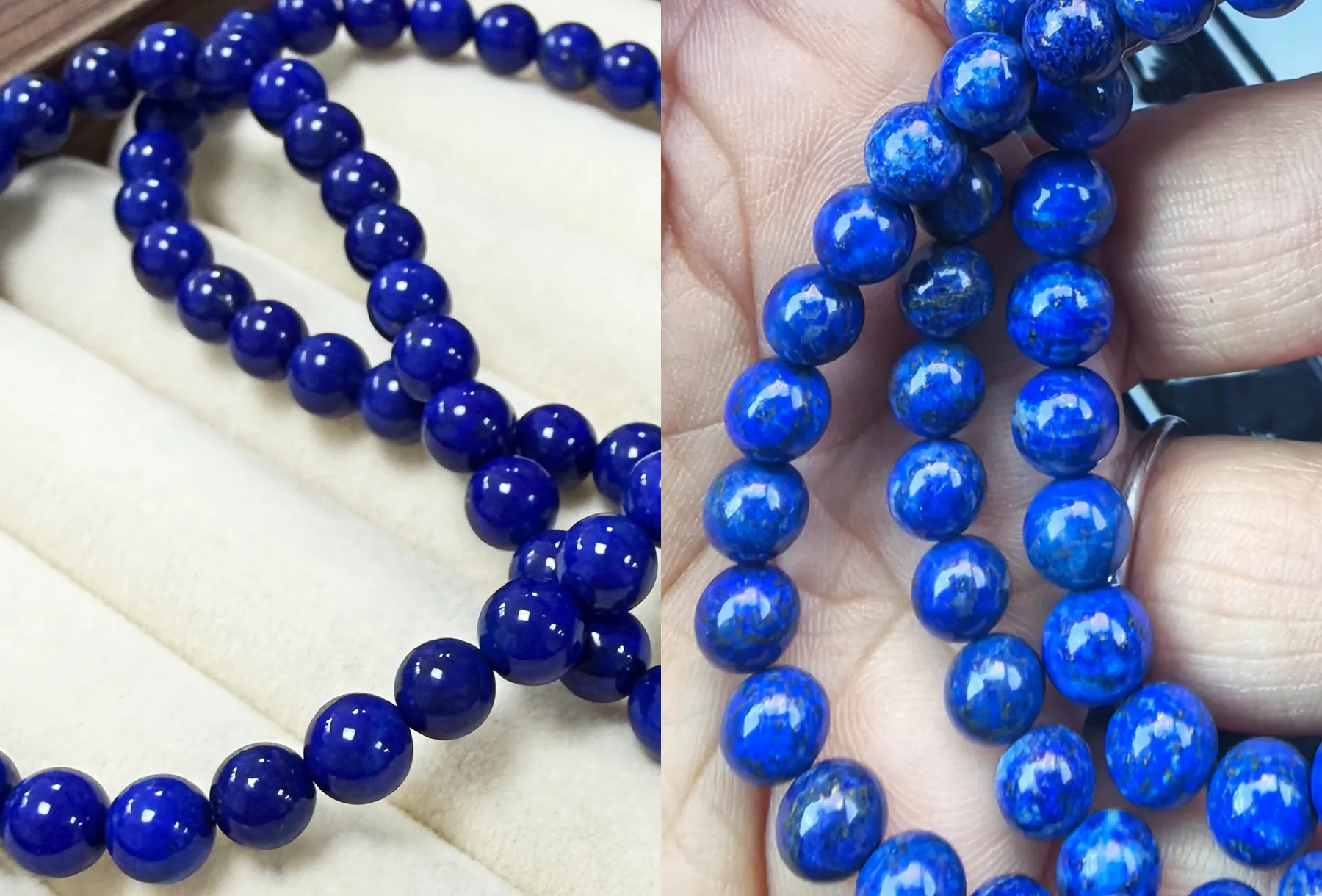
Consider two natural lapis beads:
One might contain a large amount of white calcite.
Another might appear much more uniformly blue.
Both may be genuine lapis lazuli, but they do not necessarily represent the same visual quality.
What Does Lapis Lazuli Crystal Mean?
Lapis lazuli has accumulated many symbolic meanings over thousands of years.
It has historically been associated with prestige and important cultural objects, while modern spiritual traditions commonly connect it with ideas such as wisdom, truth, communication, intuition, and self-expression.
These cultural and metaphysical associations should be distinguished from scientifically demonstrated medical effects.
If your main question is what lapis lazuli symbolizes, its spiritual associations, or how its meaning developed across ancient civilizations, we cover that subject separately in our complete Lapis Lazuli Meaning guide.
Keeping those topics separate is useful because the present guide focuses primarily on the material itself—its properties, appearance, quality, use in jewelry, identification, and care.
How Has Lapis Lazuli Been Used?
Humans have worked with lapis lazuli for thousands of years.
GIA notes that the relationship between people and lapis lazuli extends back more than 6,500 years, and ancient cultures used the material for jewelry, carvings, amulets, beads, inlays, and decorative objects.
Its intense blue color also led to another important use.
When carefully processed, lapis lazuli became a historical source of natural ultramarine pigment.
Natural ultramarine was highly prized for artistic use before less expensive synthetic ultramarine became available in the nineteenth century.
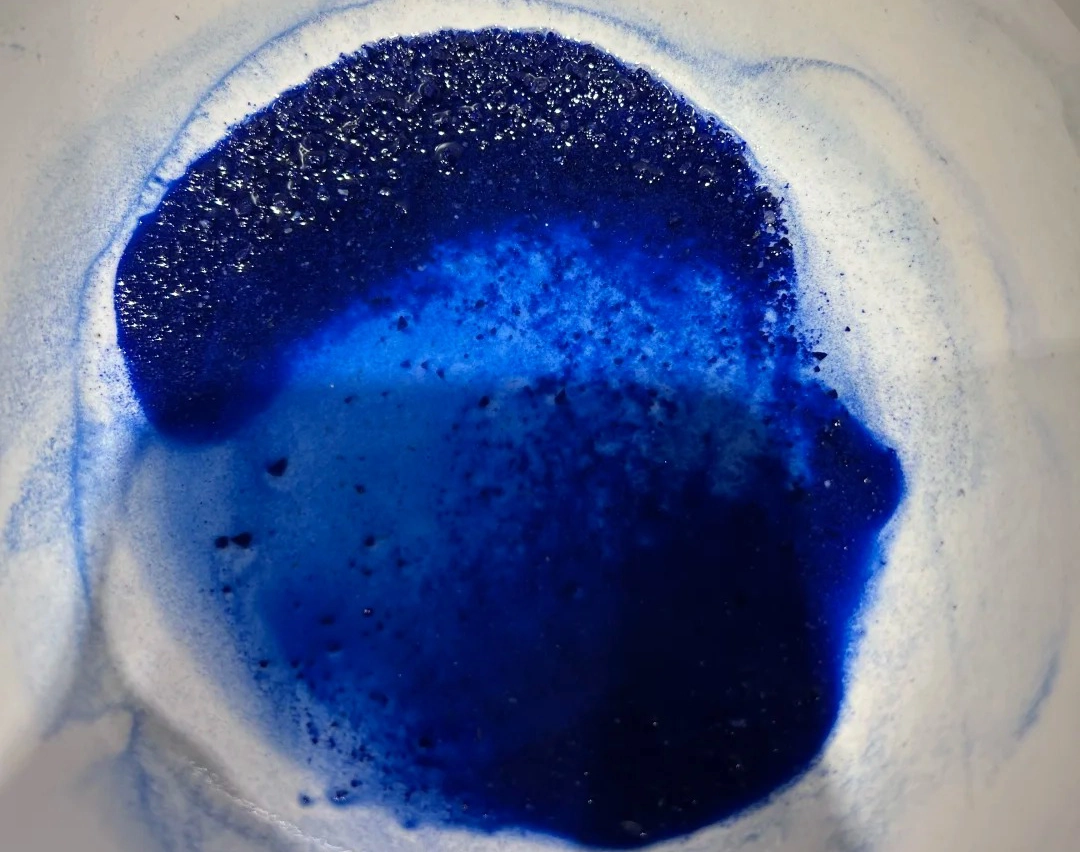
Today, however, most consumers encounter lapis lazuli through jewelry, polished stones, carvings, and decorative objects.
Lapis Lazuli Crystal Uses Today
Lapis Lazuli Jewelry
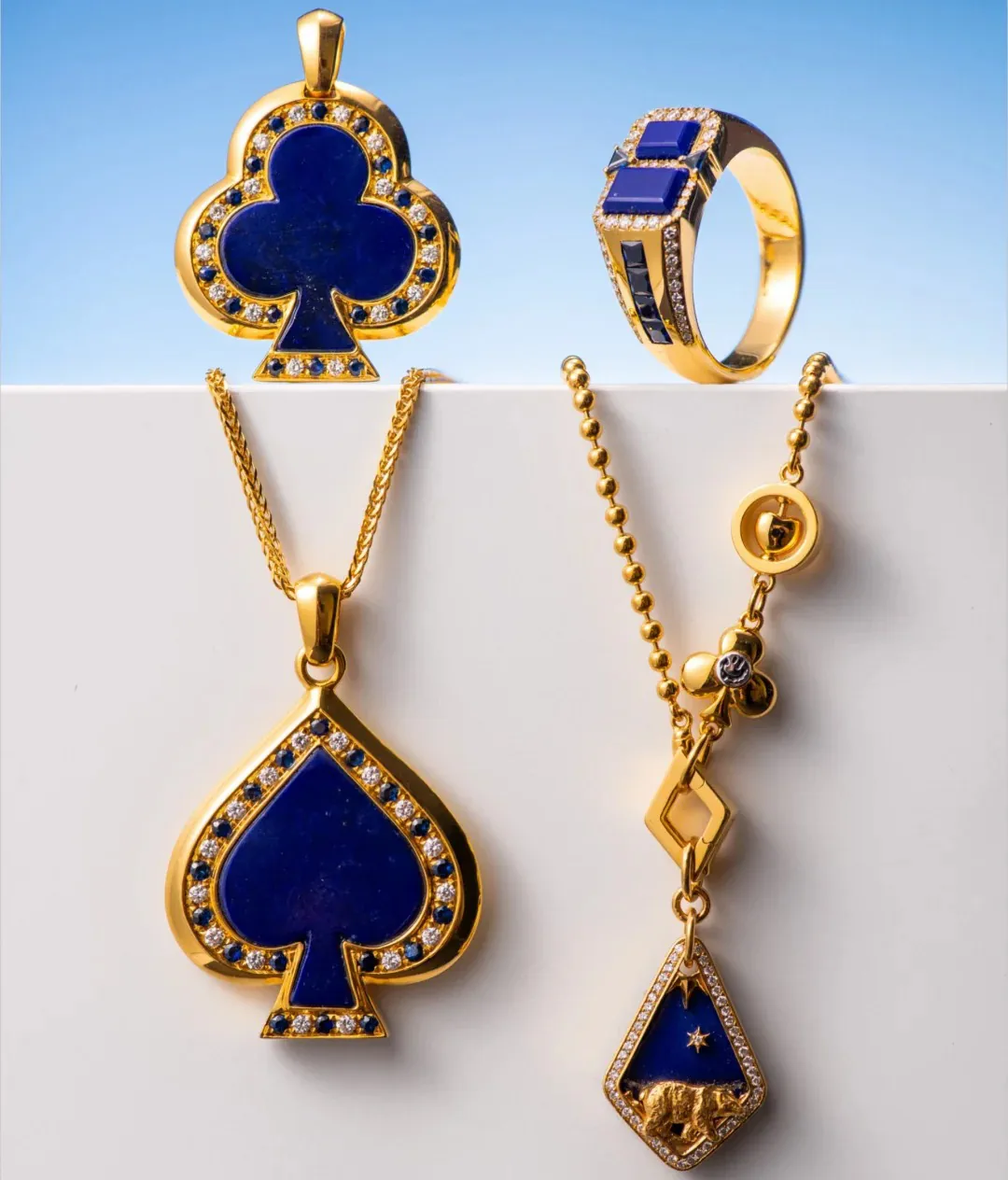
Jewelry remains one of the most natural ways to appreciate lapis lazuli.
Because the material is generally opaque, it is commonly fashioned into forms that emphasize its color rather than faceted brilliance.
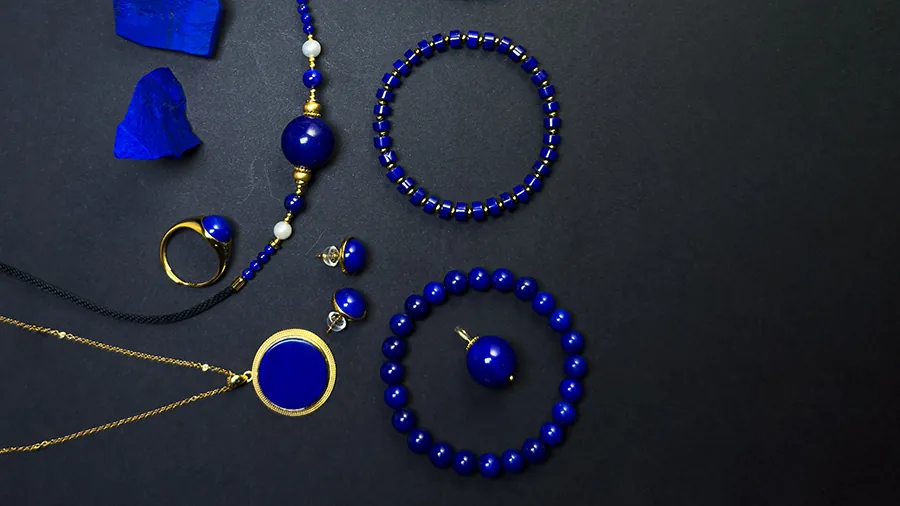
Traditional lapidary forms include:
- beads
- cabochons
- tablets
- inlays
GIA identifies all of these as established ways of cutting and using lapis lazuli.
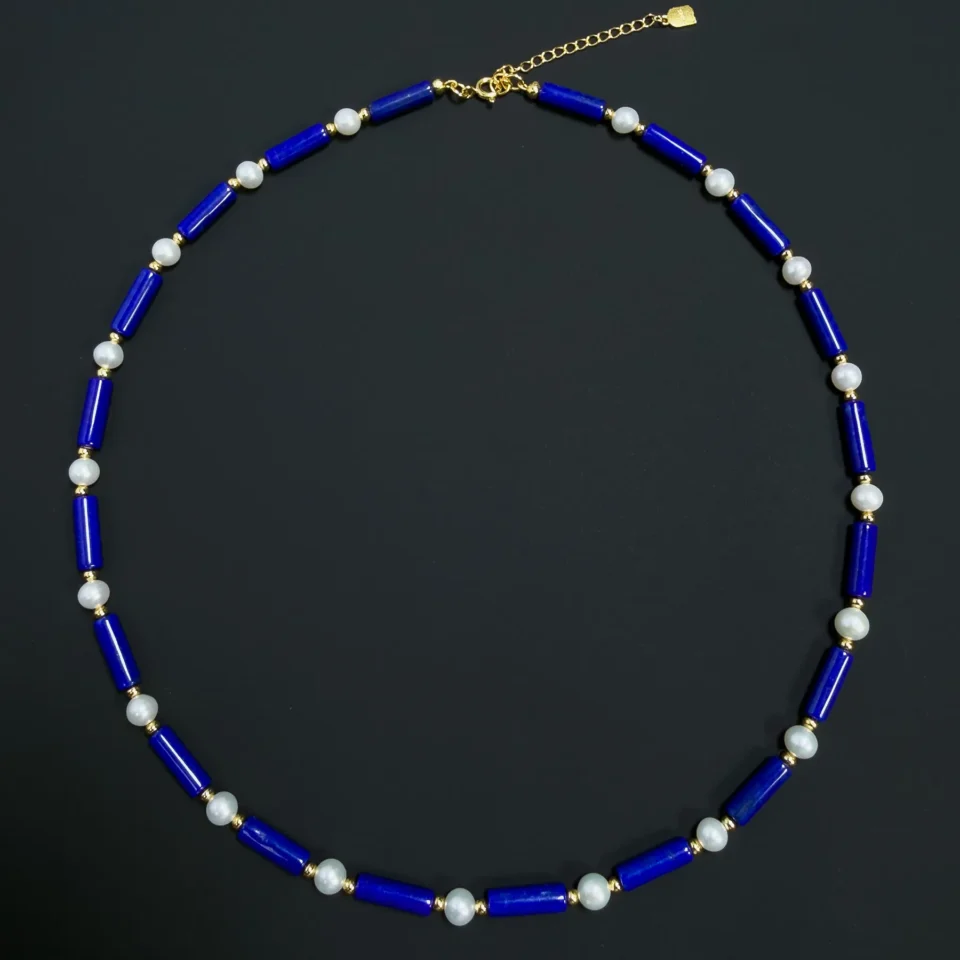
Modern jewelry expands these forms into bracelets, necklaces, pendants, earrings, rings, and mixed-material designs.
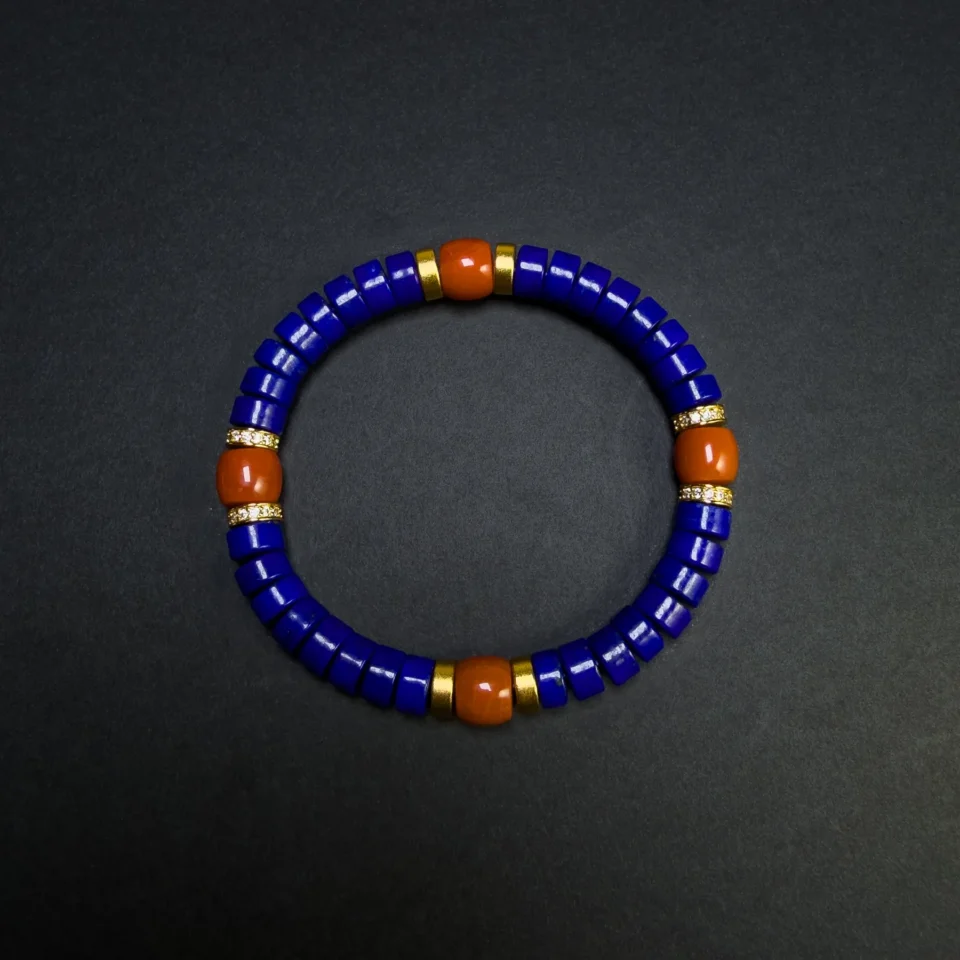
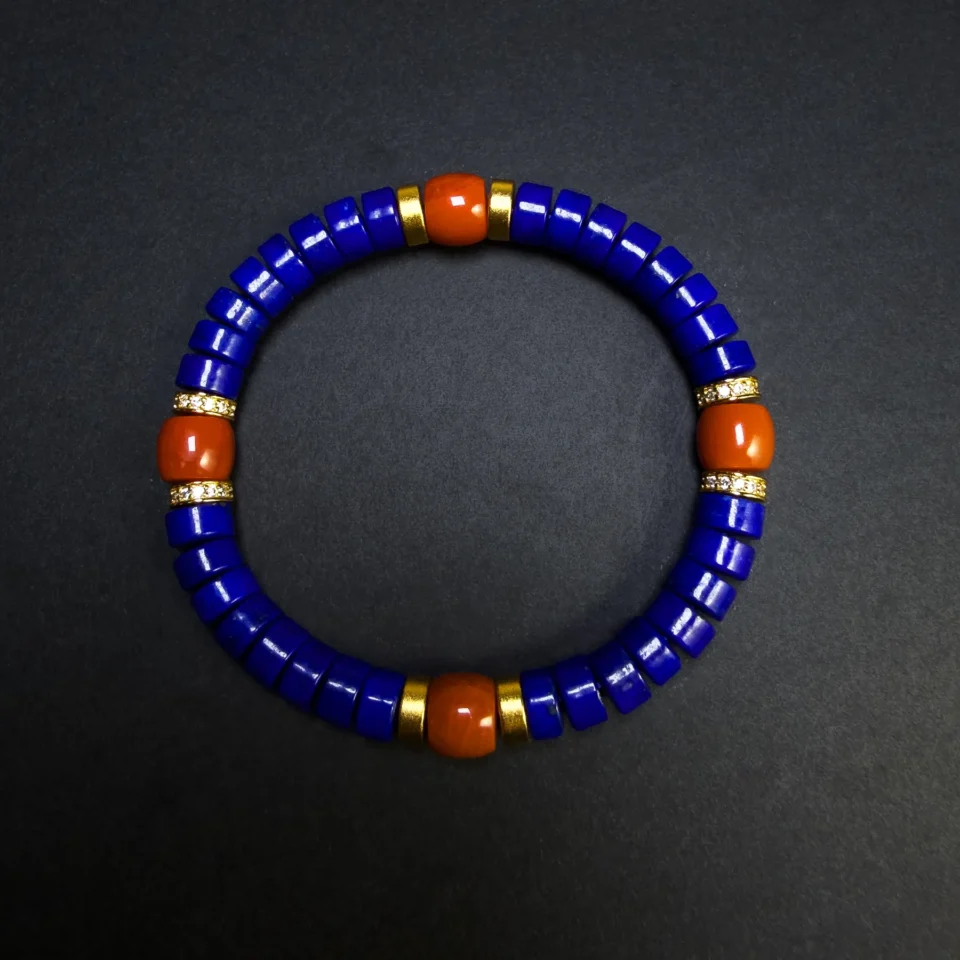
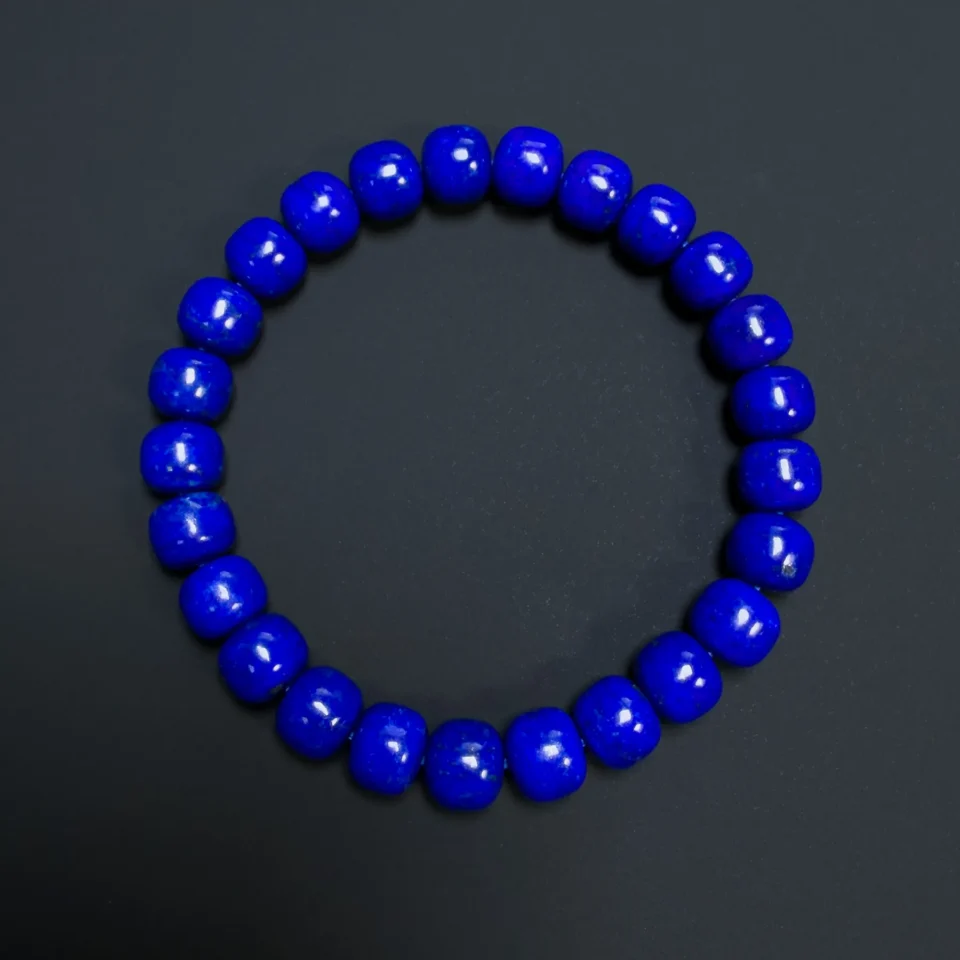
Lapis Lazuli Bracelets
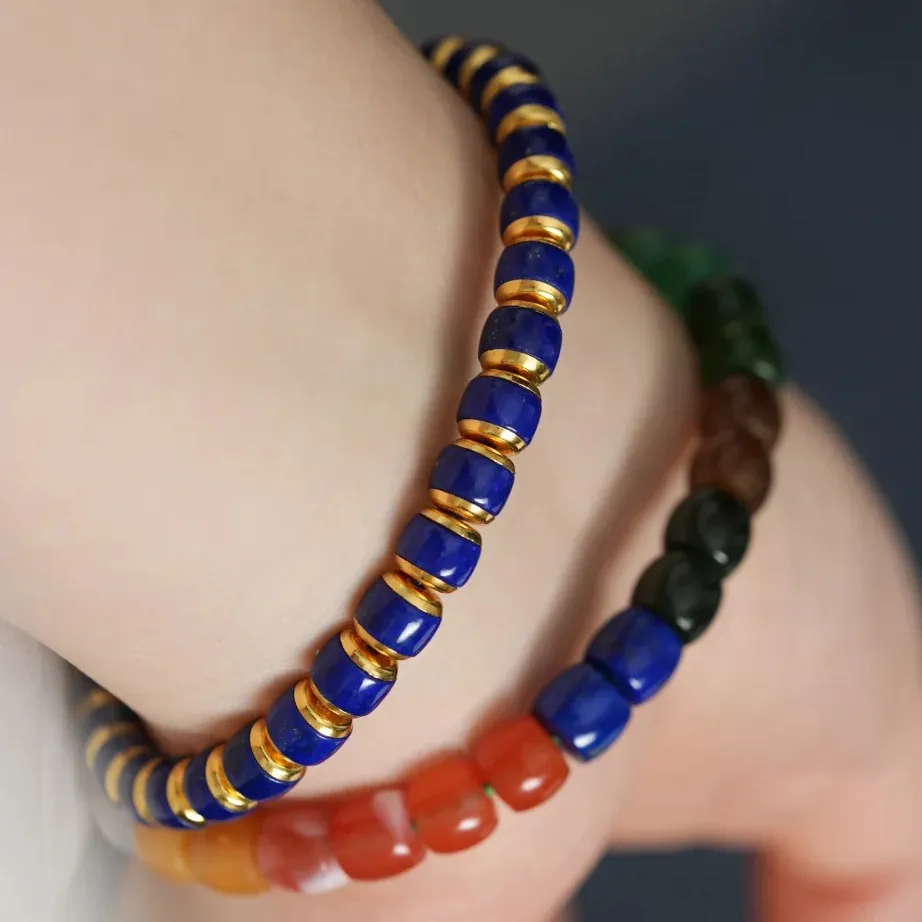
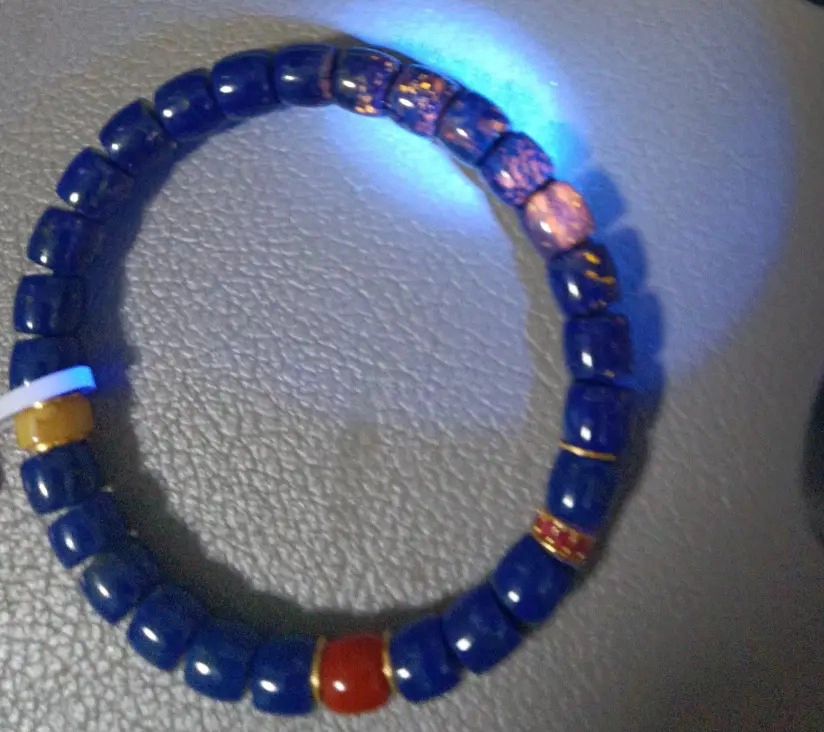
Round beads are particularly effective at displaying changes in lapis texture from one bead to another.
When comparing a bracelet, pay attention to the consistency of:
blue color, calcite, pyrite, bead size, surface polish, and overall matching.
A bracelet made from individually attractive beads can still look inconsistent if the stones vary dramatically in color.
Matching therefore matters almost as much as the quality of an individual bead.
Lapis Lazuli Necklaces
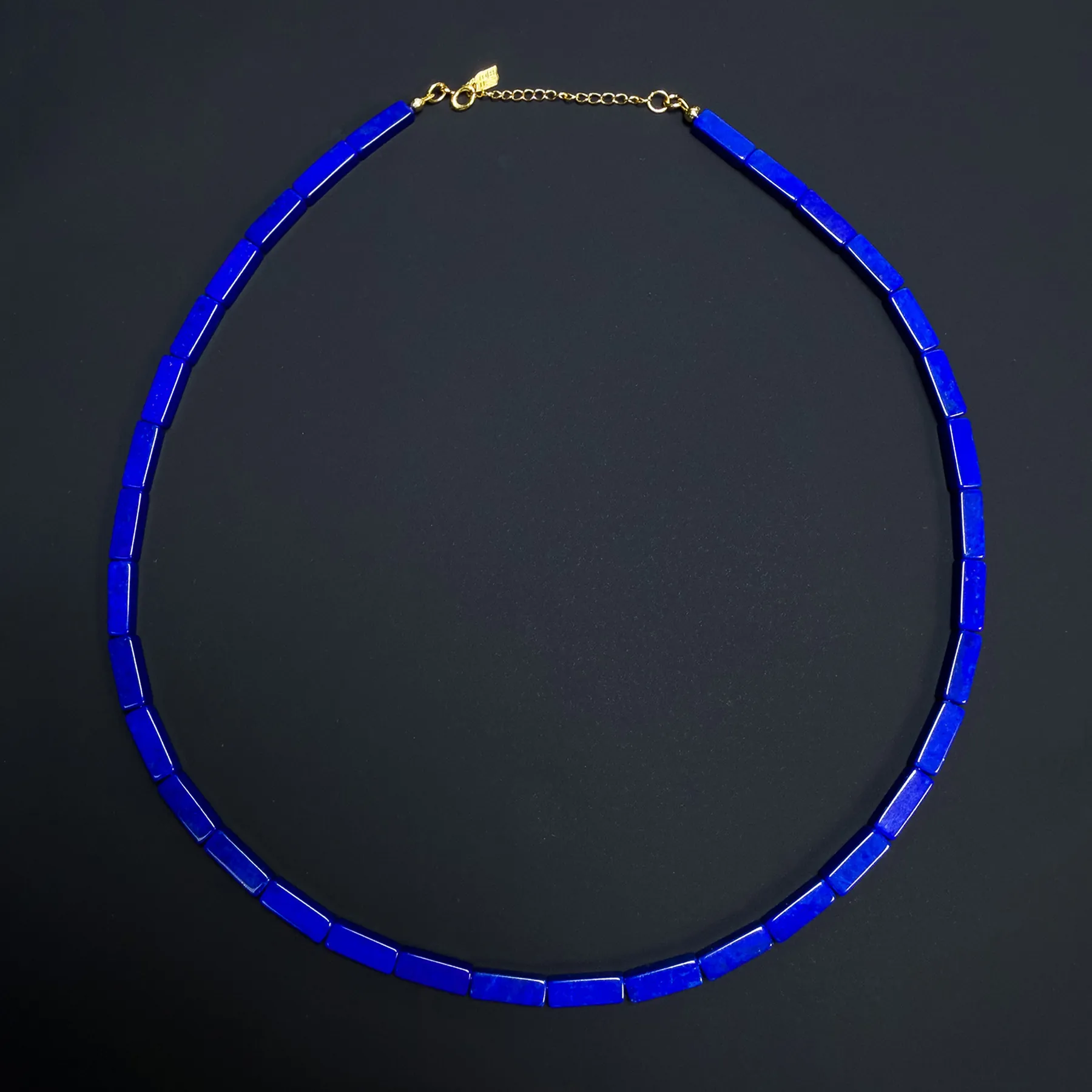
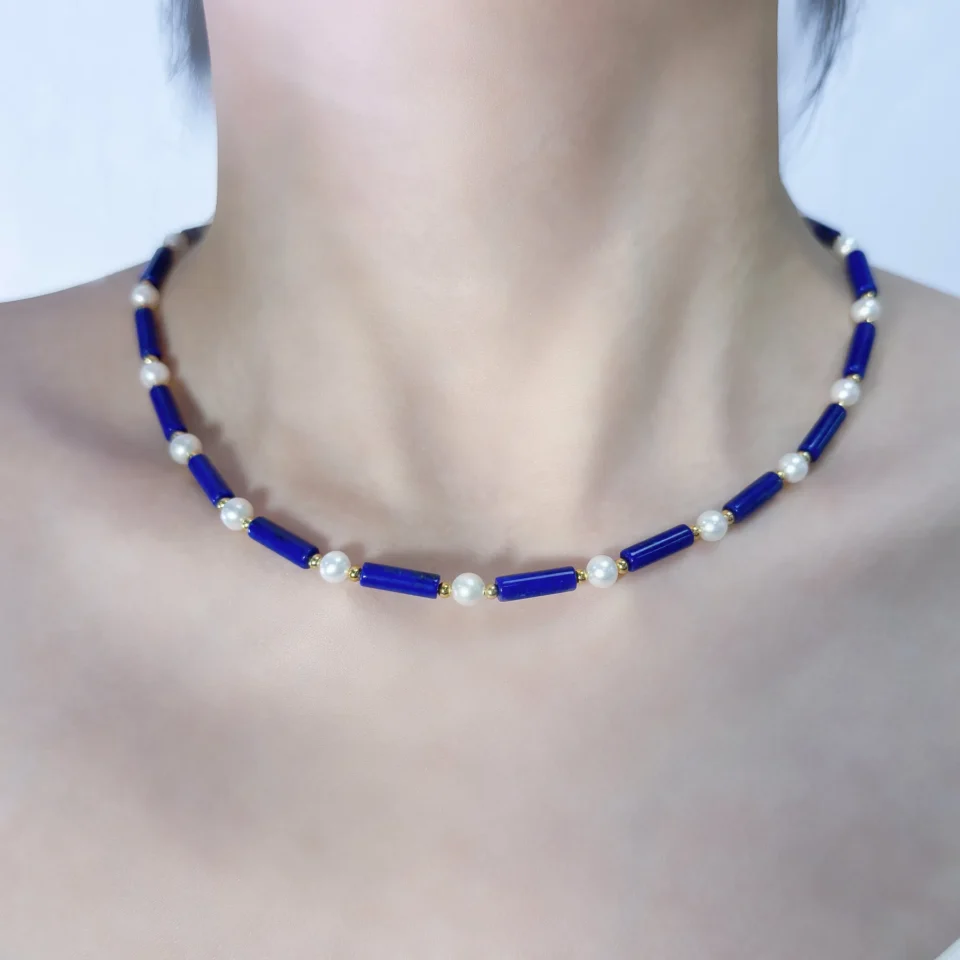
Lapis lazuli can create a strong visual effect in necklaces because its blue color remains clearly visible from a distance.
It works particularly well as beads, pendants, and accents paired with precious metals or contrasting materials.
When paired with 925 sterling silver, the cooler white metal can create a clean contrast with the saturated blue stone.
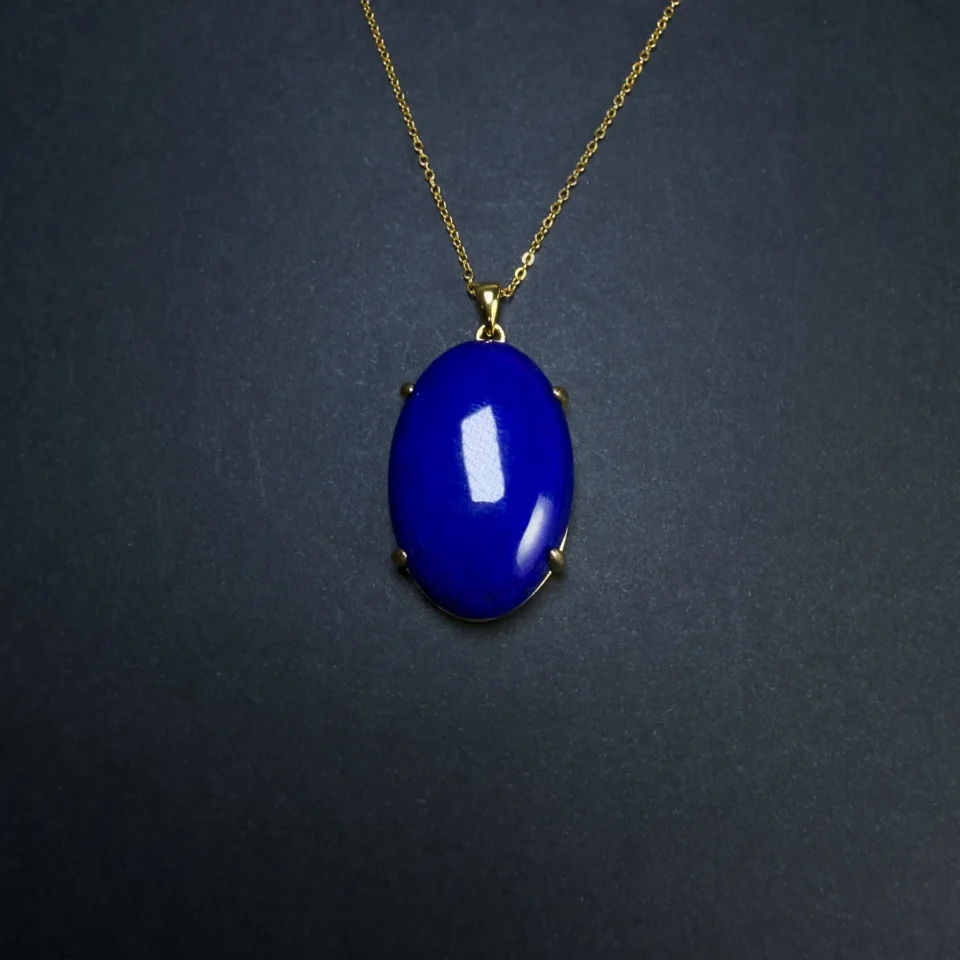
Lapis Lazuli Pendants
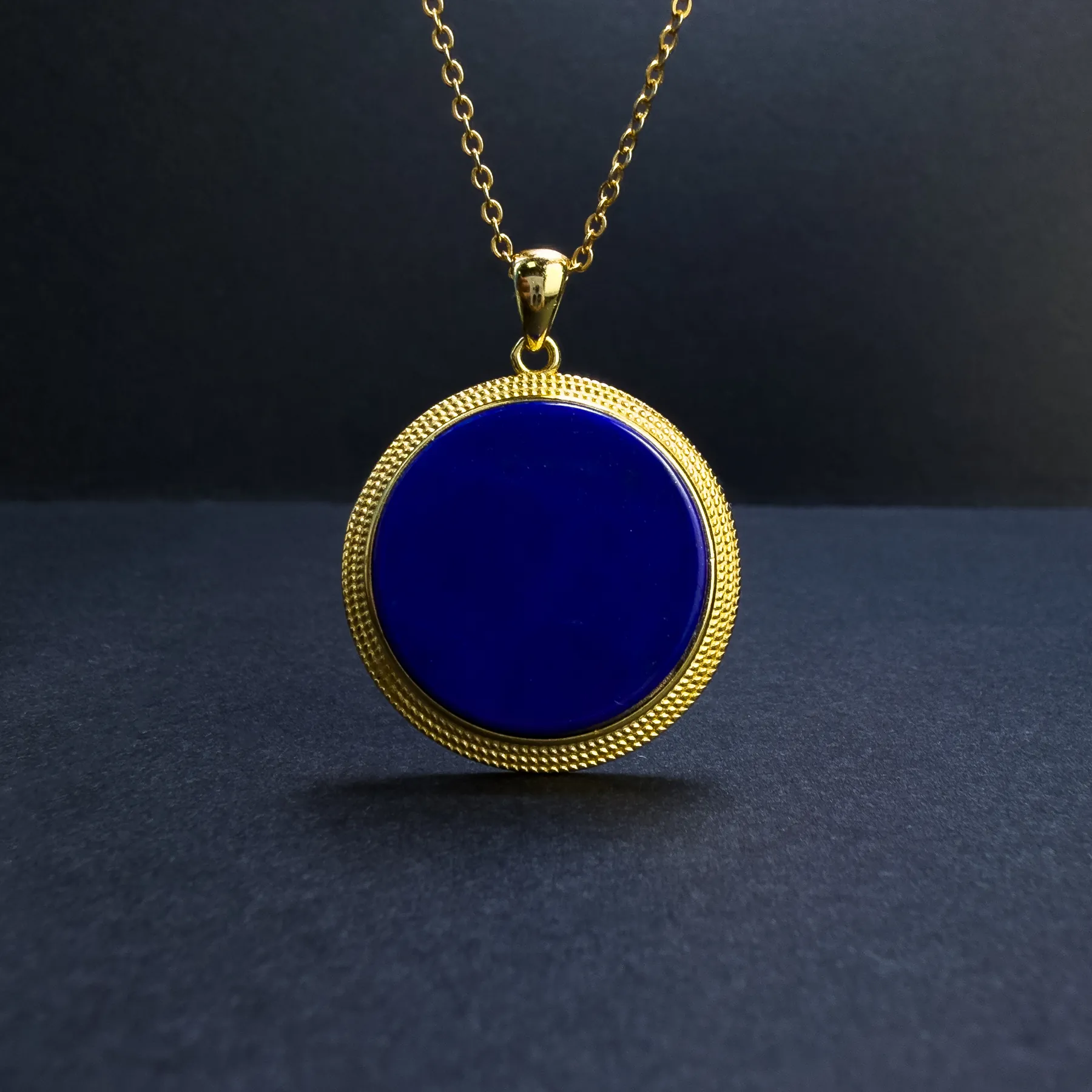
Cabochons and polished lapis pieces are particularly suitable for pendants because the design can showcase a larger uninterrupted surface of blue.
For buyers who prefer uniform material, this also makes calcite or large pyrite areas easier to evaluate before purchase.
Lapis Lazuli Earrings
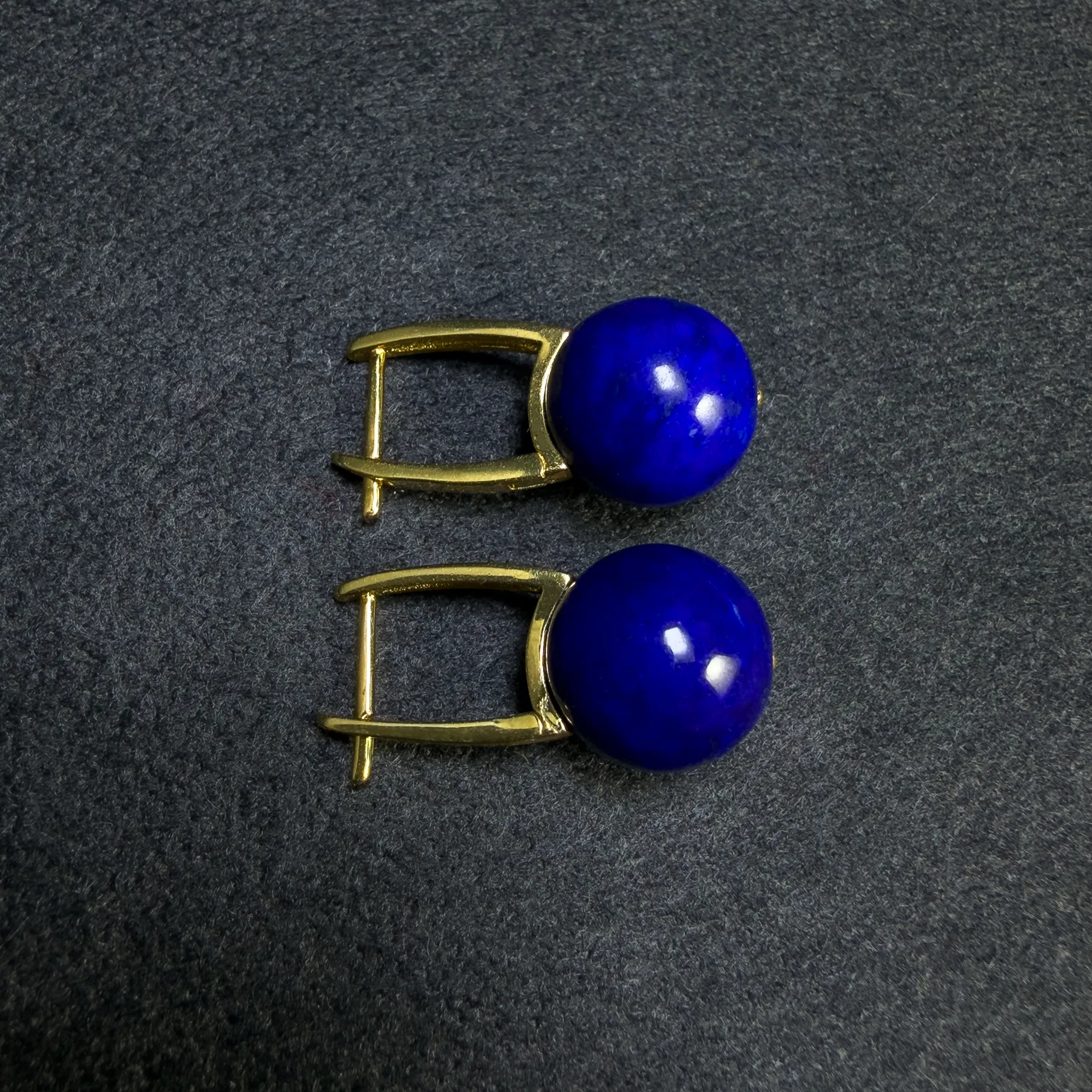
Earrings usually use smaller pieces of lapis, which makes color matching especially important.
If two stones form a pair, compare them carefully for:
- tone
- saturation
- visible calcite
- pyrite pattern
- shape
- polish
Perfectly identical natural stones are not always realistic, but a well-matched pair should look intentional.
How Is Lapis Lazuli Quality Evaluated?
Lapis lazuli does not have a single grading system equivalent to the diamond 4Cs. Trade descriptions such as “Imperial,” “AAA,” “museum grade” and “top grade” are not standardized across the market. At Lakazur, these terms are used only alongside specific product facts—such as natural and untreated status, color, visible calcite and pyrite, and workmanship—so customers can evaluate the piece itself rather than relying on a label alone.
1. Color Comes First
Color is the most important factor.
Look for an attractive, saturated blue.
GIA describes the most prized colors as intense medium-to-dark blue or violetish blue.
2. Consider Calcite
Large visible white calcite areas generally reduce the commercial value of fine lapis.
A small amount does not mean the stone is fake.
It simply changes the appearance and often the market category.
3. Evaluate Pyrite Carefully
Small attractive pyrite flecks can contribute visual character.
Large concentrations of pyrite or material that appears dull or greenish because of excessive pyrite are generally less desirable.
4. Look at Uniformity
For jewelry, especially necklaces and bracelets, matching matters.
You should evaluate not only whether each stone looks good alone, but whether the group works together.
5. Inspect the Polish
A well-polished surface should enhance the blue rather than look chalky or excessively rough.
Keep in mind, however, that surface treatments can also influence apparent luster.
6. Ask About Treatment
This is one of the most overlooked factors when buying lapis lazuli.
Natural lapis can be treated to improve its appearance.
Is Lapis Lazuli Treated?
Yes, some lapis lazuli is treated.
GIA identifies several treatments that buyers should know about.
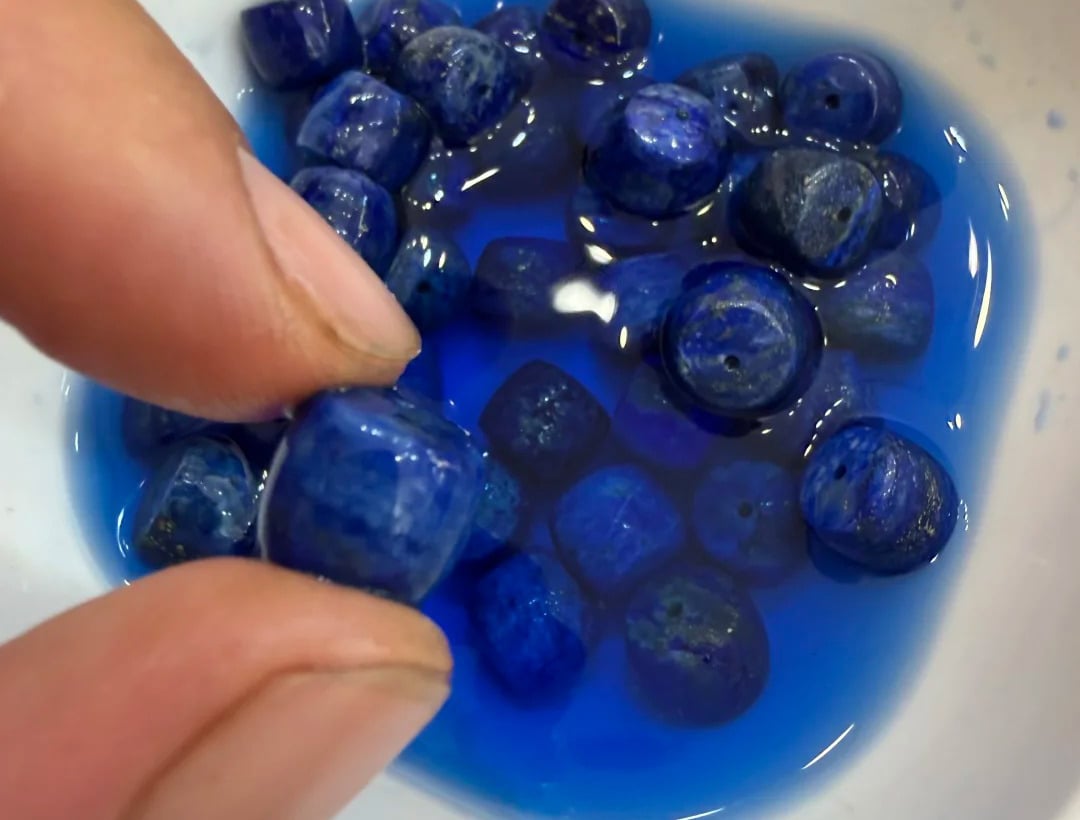
Dyeing
Lapis may be dyed to deepen or even out its blue color and to make light calcite areas less noticeable.
Wax
Wax may be applied to improve apparent surface color and luster.
Oil
Some untreated-colored lapis may be impregnated with oil to improve appearance.
GIA notes that wax and oil treatments have only fair stability and that gemological examination can detect treatments.
Treatment does not automatically make an item unsuitable for jewelry.
The important issue is disclosure.
A buyer should know whether appearance is natural or has been enhanced.
This is particularly important when comparing prices.
How Can You Tell If Lapis Lazuli Is Real?
This is one of the most common questions about lapis lazuli—and also one of the easiest to oversimplify.
There is no single visual feature that can prove a stone is natural lapis.
For example:
Pyrite does not automatically prove authenticity.
White calcite does not automatically prove authenticity.
A perfectly blue stone is not automatically fake.
A stone without visible pyrite is not automatically fake.
Natural lapis varies considerably.
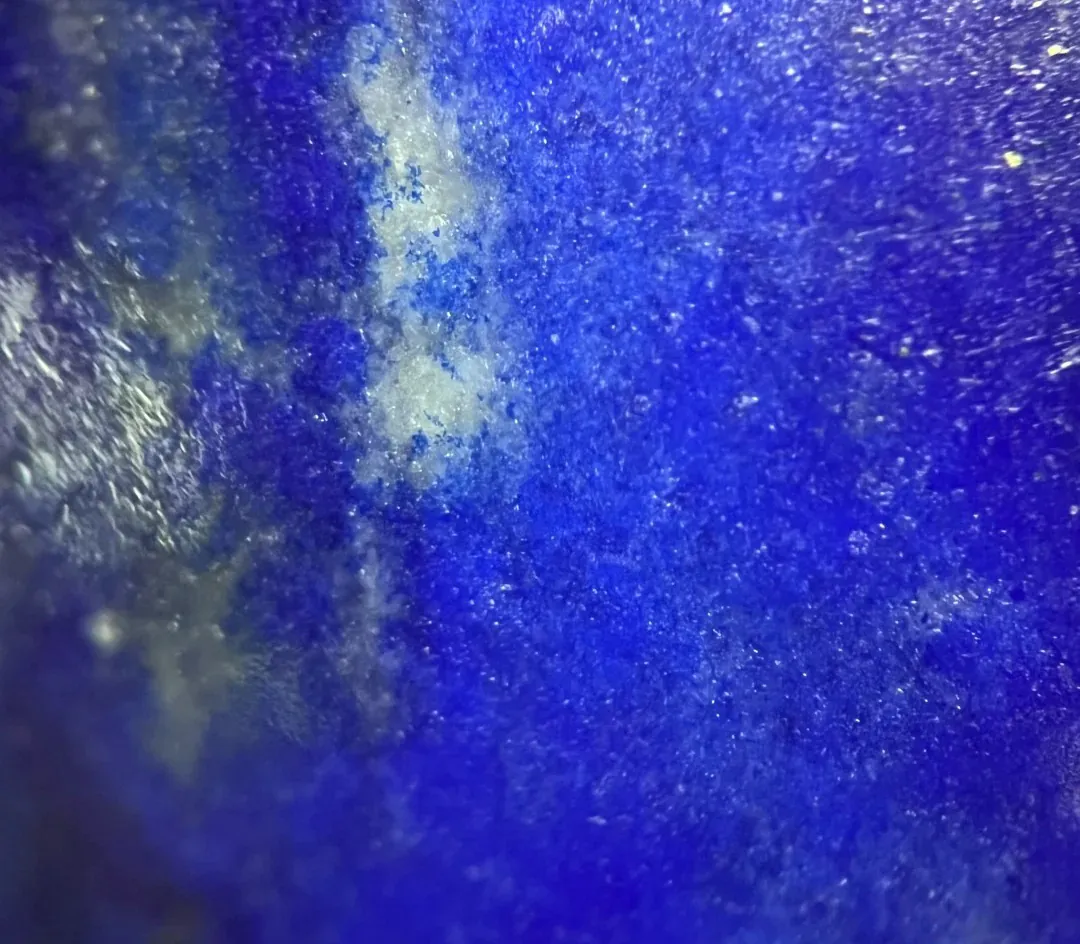
Look for Natural Variation
Many genuine pieces display subtle variation in color, mineral distribution, or texture.
Extremely uniform material deserves closer attention, but uniform appearance alone does not prove imitation because high-quality natural lapis can also be remarkably even in color.
Examine the Gold-Colored Areas
Natural-looking pyrite may support an identification, but it should never be used as the only test.
Imitations can be manufactured to resemble natural mineral patterns.
Examine White Areas
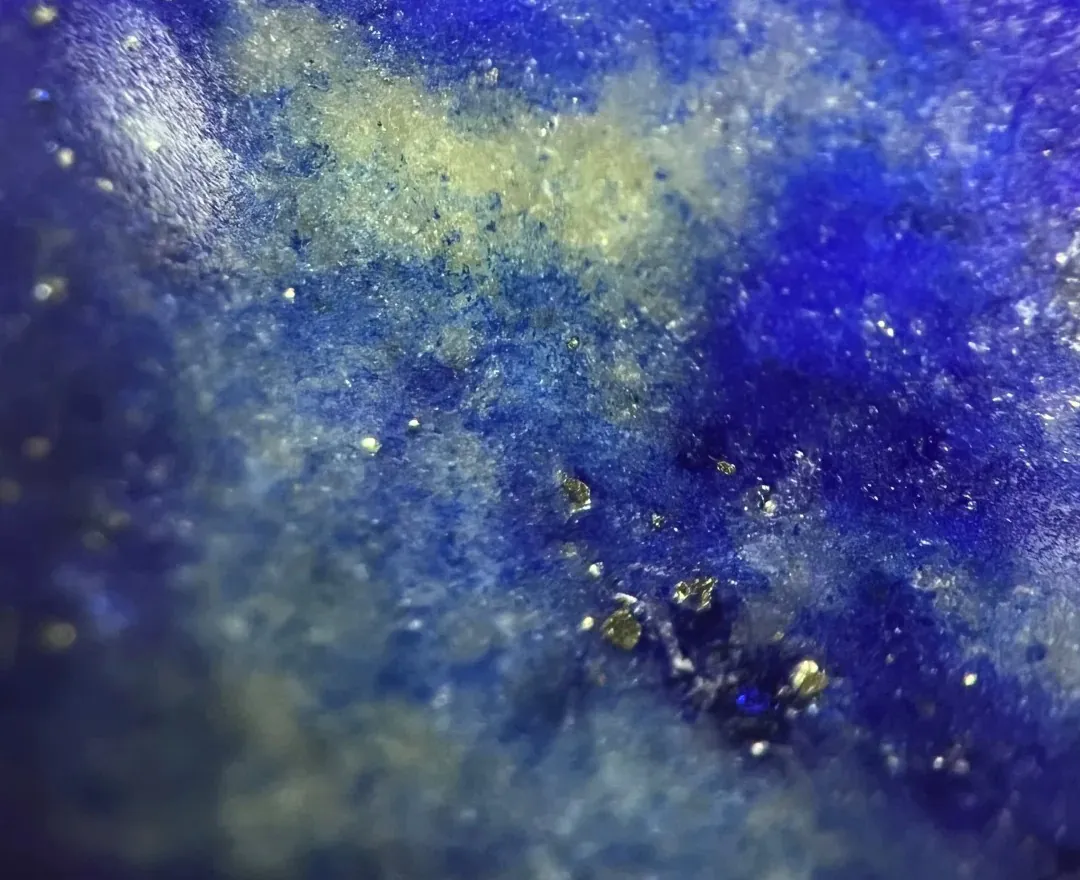
Calcite can naturally occur in lapis.
Again, it is a clue—not proof.
Be Cautious With Extremely Artificial-Looking Color
Very intense or suspiciously uniform color can sometimes result from dye treatment.
However, fine natural lapis can also possess strong saturated blue color.
This is why judging treatment from photographs alone can be unreliable.
Know That Imitations Exist
GIA reports that glass, plastic and ceramic materials have all been used to imitate lapis lazuli.
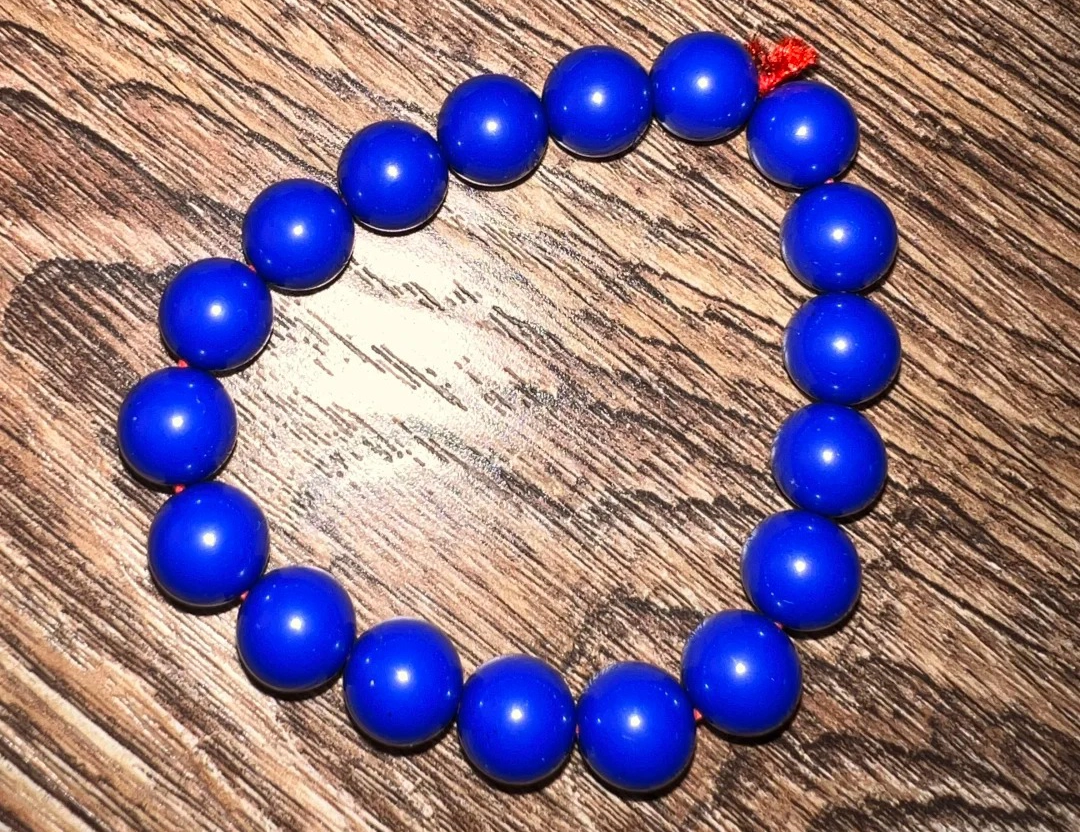
Other blue natural or dyed materials can also resemble lapis closely enough to confuse consumers.
Avoid Destructive Home Tests
Internet advice sometimes recommends acetone, acids, scratching, burning, or other aggressive tests.
These are poor choices for jewelry owners.
Some lapis treatments can be damaged by solvents or heat, and destructive testing can permanently damage the item you are trying to identify. GIA specifically notes that heat and solvents can harm treated lapis surfaces.
For an important or valuable item, professional gemological testing is more reliable than a home experiment.
Lapis Lazuli vs. Sodalite: Are They the Same?
No.
Lapis lazuli and sodalite are different gem materials, although their blue-and-white appearance can sometimes look similar.
Visual identification can be difficult, particularly when stones are heavily polished or the photograph quality is poor.
This is another reason why a simple rule such as:
“Gold flecks mean lapis, no gold flecks mean sodalite”
should not be treated as a definitive identification method.
Not all natural lapis has obvious pyrite, and appearance varies from specimen to specimen.
If identification matters financially, rely on the full material characteristics or a qualified gemological assessment.
What Should You Look for When Buying a Lapis Lazuli Crystal or Jewelry Piece?
Start with what you can actually see rather than marketing terminology.
Compare the Color
Is the blue saturated and attractive?
Does it lean violet-blue, royal blue, medium blue, or greenish blue?
Is the color consistent with what you want?
Examine Calcite
How much white material is visible?
Do you enjoy the natural pattern, or are you looking for a cleaner blue appearance?
Neither preference is inherently wrong.
They simply represent different aesthetic and quality choices.
Examine Pyrite
Is the pyrite subtle and attractive?
Does it overwhelm the blue?
Do you prefer little or no visible pyrite?
Again, there is no requirement that every customer prefer the same appearance.
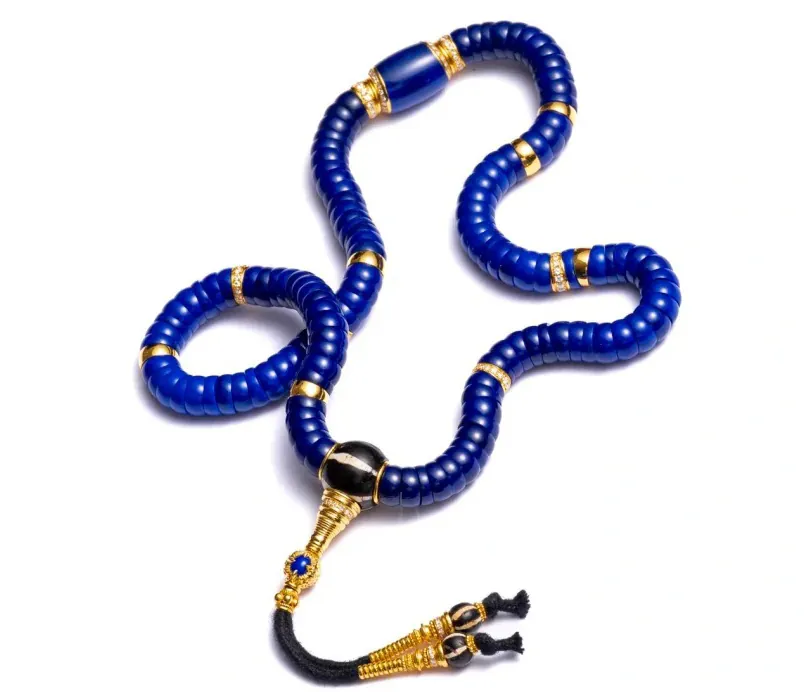
Ask About Treatments
If the seller claims the material is untreated, that claim should have a reasonable basis.
If treatment is known, it should be clearly disclosed.
Read Grade Terms Alongside Specific Facts
Grade terms are most useful when paired with photographs and specific descriptions. Details such as deep blue color, visible calcite and pyrite, treatment status, and workmanship help buyers understand the actual piece.
Be Careful With Geographic Trade Terms
Names such as “Afghan,” “Persian,” “Russian,” or “Siberian” may sometimes be used in the trade to describe appearance or traditional quality categories.
They do not necessarily prove geographic origin.
GIA specifically notes that a gemstone description referring to a region does not necessarily mean the material actually came from that location.
That is particularly important when purchasing online.
If origin matters to you, do not assume it from a marketing name alone.
Can You Wear Lapis Lazuli Every Day?
Lapis lazuli can be worn regularly, but it requires more care than harder gemstones.
Its Mohs hardness of approximately 5–6 means it can be scratched by harder materials.
For necklaces and earrings, this is usually relatively easy to manage because the stone receives less impact.
Bracelets and rings are more exposed to:
- desks
- door frames
- metal objects
- other jewelry
- accidental knocks
If you wear a lapis bracelet next to harder gemstone bracelets, those harder stones may eventually scratch its polished surface.
Everyday wear is therefore possible, but thoughtful wear is better than treating lapis as indestructible.
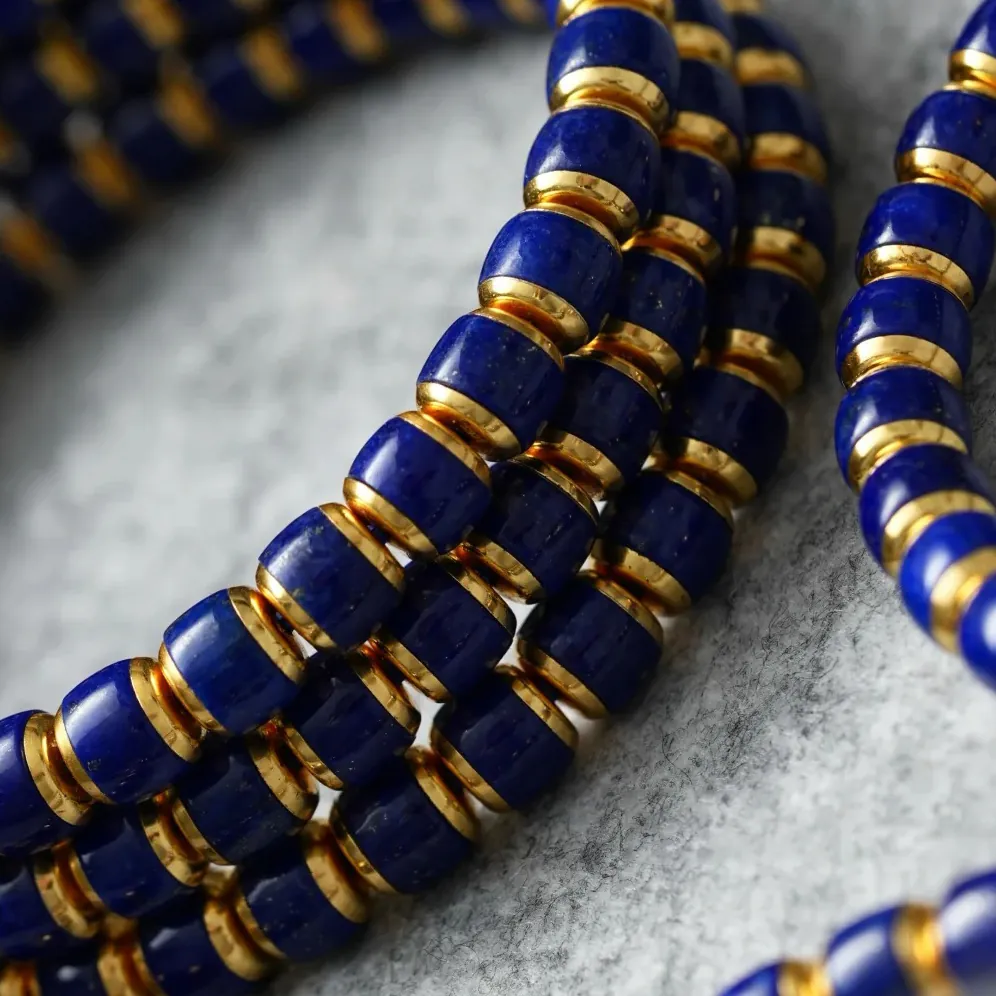
How to Care for Lapis Lazuli Jewelry
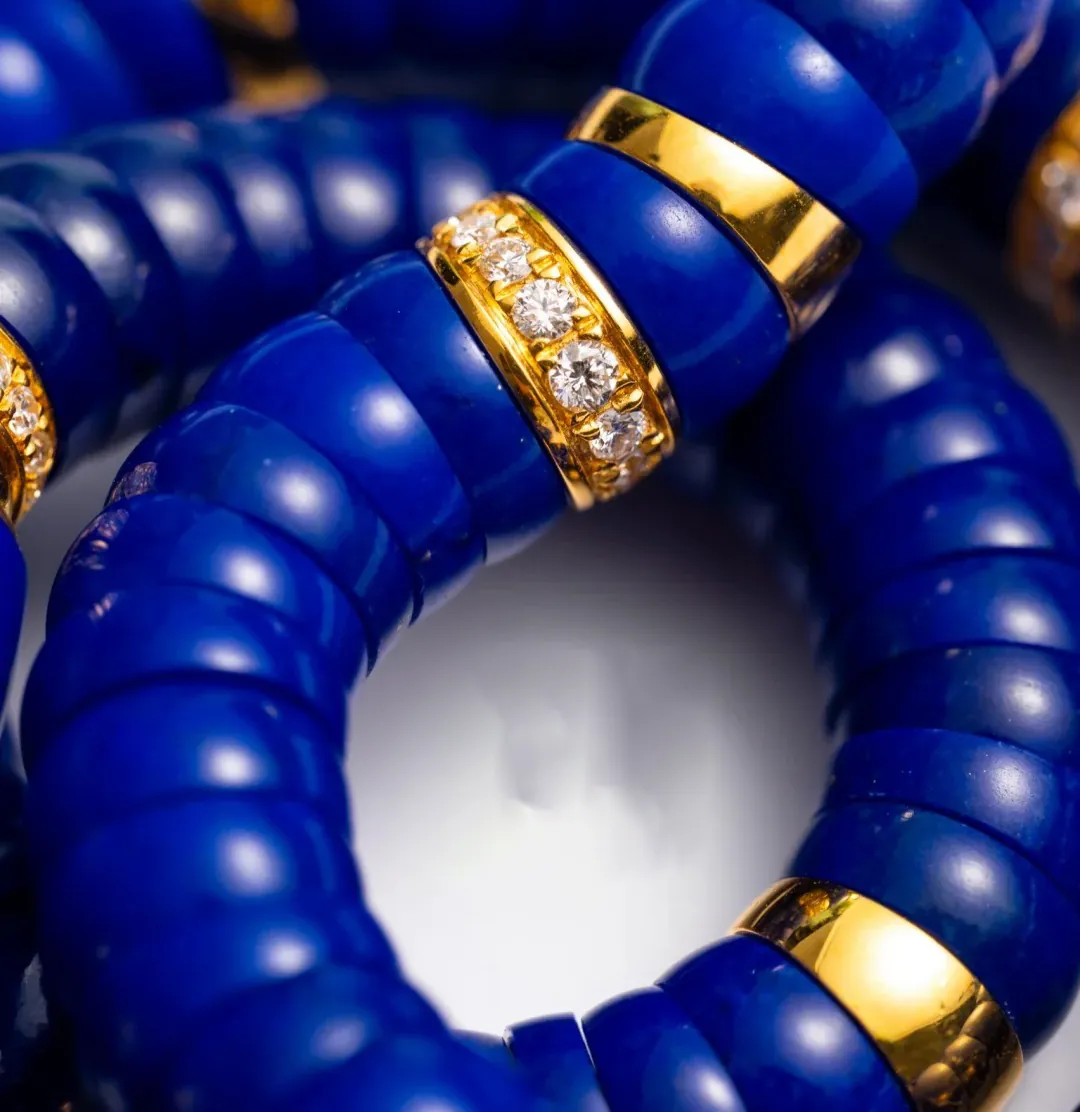
Lapis lazuli should be cleaned gently.
GIA recommends warm, soapy water as the safest cleaning method and specifically advises against steam and ultrasonic cleaning.
For routine care:
- Use a soft cloth.
- Use a small amount of mild soap if cleaning is necessary.
- Rinse carefully.
- Dry thoroughly with a soft cloth.
- Store separately from harder gemstones.
Avoid prolonged exposure to:
- harsh chemicals
- strong solvents
- high heat
- steam cleaning
- ultrasonic cleaning
This is particularly important if the lapis has been dyed, waxed, or oiled because some treatments can be affected by heat or solvents.
Can Lapis Lazuli Get Wet?
Brief contact with warm water during careful cleaning is generally acceptable; GIA recommends warm soapy water for cleaning lapis.
That does not mean the stone should be routinely soaked for long periods.
There is little reason to wear lapis jewelry in pools, showers, or during cleaning tasks where it may encounter chemicals.
Gentle cleaning and limited exposure are the safer approach.
What About “Cleansing” a Lapis Lazuli Crystal?
Physical cleaning and spiritual cleansing are two different things.
Physical cleaning is about protecting the actual material.
Spiritual or symbolic cleansing belongs to personal belief and ritual practices.
Some people who use crystals spiritually prefer non-damaging practices such as meditation, intention-setting, or sound.
These practices should not be confused with gemological cleaning advice.
Avoid methods involving salt water, aggressive chemicals, heat, or long soaking periods simply because they are described online as crystal cleansing techniques.
The physical condition of the stone should come first.
Frequently Asked Questions About Lapis Lazuli Crystal
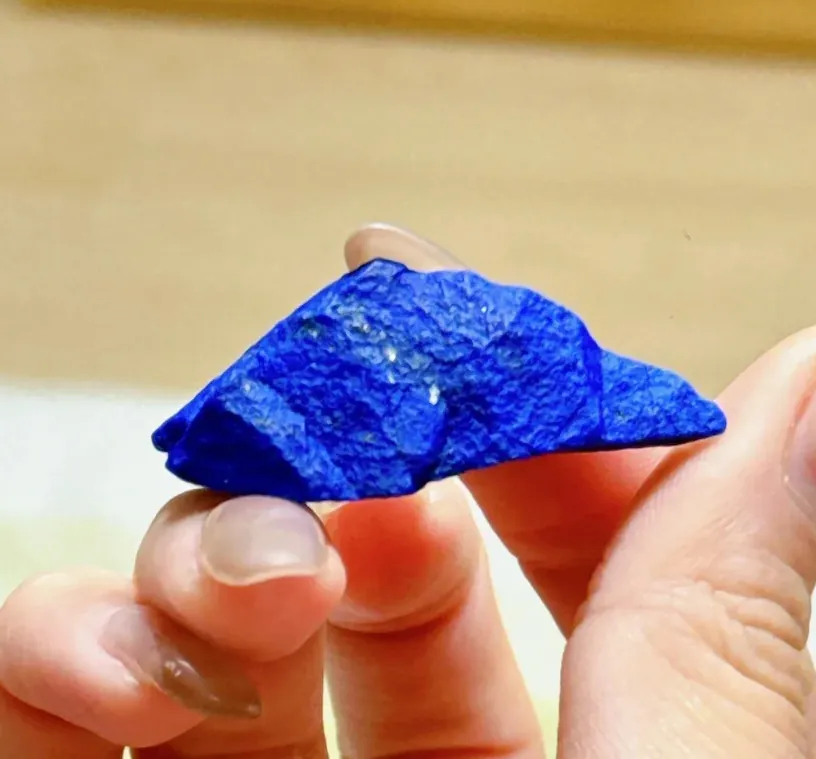
Is lapis lazuli a crystal or a stone?
Lapis lazuli is commonly called a crystal in consumer and spiritual terminology, but geologically it is a rock composed of several minerals rather than a single mineral crystal.
What minerals are in lapis lazuli?
Important components commonly include lazurite, calcite and pyrite. Other minerals can also occur.
What are the gold flecks in lapis lazuli?
The metallic gold-colored flecks commonly seen in lapis lazuli are usually pyrite, not gold.
What are the white spots in lapis lazuli?
White or pale areas are commonly associated with calcite, one of the minerals that can occur naturally in lapis lazuli.
Does real lapis lazuli always contain pyrite?
No. Visible pyrite is not required for a stone to be genuine lapis lazuli.
Fine material can contain very little visible pyrite.
Is lapis lazuli with no white calcite better?
From a traditional gem-quality perspective, highly saturated blue lapis with little or no visible calcite is generally more highly valued. However, some buyers appreciate natural mineral patterning for aesthetic reasons.
Is lapis lazuli dyed?
Some lapis is dyed to improve its blue color or make calcite less noticeable. Wax or oil may also be used to improve appearance.
How can I tell whether lapis lazuli is dyed?
Visual inspection alone is not always enough. A gemologist can test for detectable treatments. Avoid destructive solvent tests on jewelry because treatments themselves can be damaged.
Is lapis lazuli expensive?
Price depends heavily on color, uniformity, calcite content, pyrite distribution, treatment, workmanship, size, and the quality of the finished jewelry.
There is no universal price for “lapis lazuli crystal.”
Can lapis lazuli be worn every day?
Yes, with appropriate care. Its hardness is approximately 5–6 on the Mohs scale, so it should be protected from harder materials and strong impacts.
Can lapis lazuli go in water?
Warm soapy water is recommended by GIA for careful cleaning, but prolonged soaking and unnecessary exposure to chemicals should be avoided.
What is the difference between lapis lazuli and lazurite?
Lapis lazuli is a rock composed of multiple minerals. Lazurite is an important mineral associated with lapis lazuli and its blue appearance.
What is lapis lazuli used for?
It is used for beads, cabochons, pendants, bracelets, necklaces, earrings, carvings, decorative objects, inlays, and historically as a source of natural ultramarine pigment.
What does lapis lazuli symbolize?
Modern interpretations often associate lapis lazuli with wisdom, truth, communication, and spiritual insight.
For the historical and cultural background behind those associations, see our full Lapis Lazuli Meaning guide.
Lapis Lazuli Is More Than a “Blue Crystal”
The phrase lapis lazuli crystal is useful because it reflects the language many people use when searching for this extraordinary blue material.
But understanding lapis lazuli properly means going a little deeper.
It is not a single crystal.
It is a natural rock whose appearance results from the interaction of several minerals—most importantly the blue component associated with lazurite, white calcite, and metallic pyrite.
That mineral complexity is exactly why natural lapis lazuli can vary so much.
Some pieces are almost completely blue.
Some contain subtle gold-colored pyrite.
Others display visible white calcite or complex patterns.
When buying lapis lazuli, the most useful questions are therefore not simply:
“Is there pyrite?”
or
“Is it dark blue?”
A better evaluation considers:
color, saturation, calcite, pyrite, uniformity, polish, treatment, workmanship, and how well the individual stones are matched.
For jewelry, that final point matters especially.
A beautiful lapis lazuli necklace, bracelet, pendant, or pair of earrings is not created by a keyword or a grade label. It comes from selecting material whose color, natural features, proportions, finishing, and design work together.
That is what makes lapis lazuli worth examining closely.
Its blue color may attract your attention first.
The material behind that color is what makes it interesting.
References & Further Reading
- Gemological Institute of America — Lapis Lazuli Description
- Gemological Institute of America — Lapis Lazuli Buyer’s Guide
- Gemological Institute of America — Lapis Lazuli Quality Factors
- Gemological Institute of America — Lapis Lazuli Care and Cleaning
- Gemological Institute of America — Lapis Lazuli History and Lore
- Gems & Gemology — Lapis-Lazuli from Sar-e-Sang, Badakhshan, Afghanistan
- GIA — Historical Reading List: Lazurite from Afghanistan and Its Artistic Use as Ultramarine
- The Metropolitan Museum of Art — Conservation research on natural and synthetic ultramarine