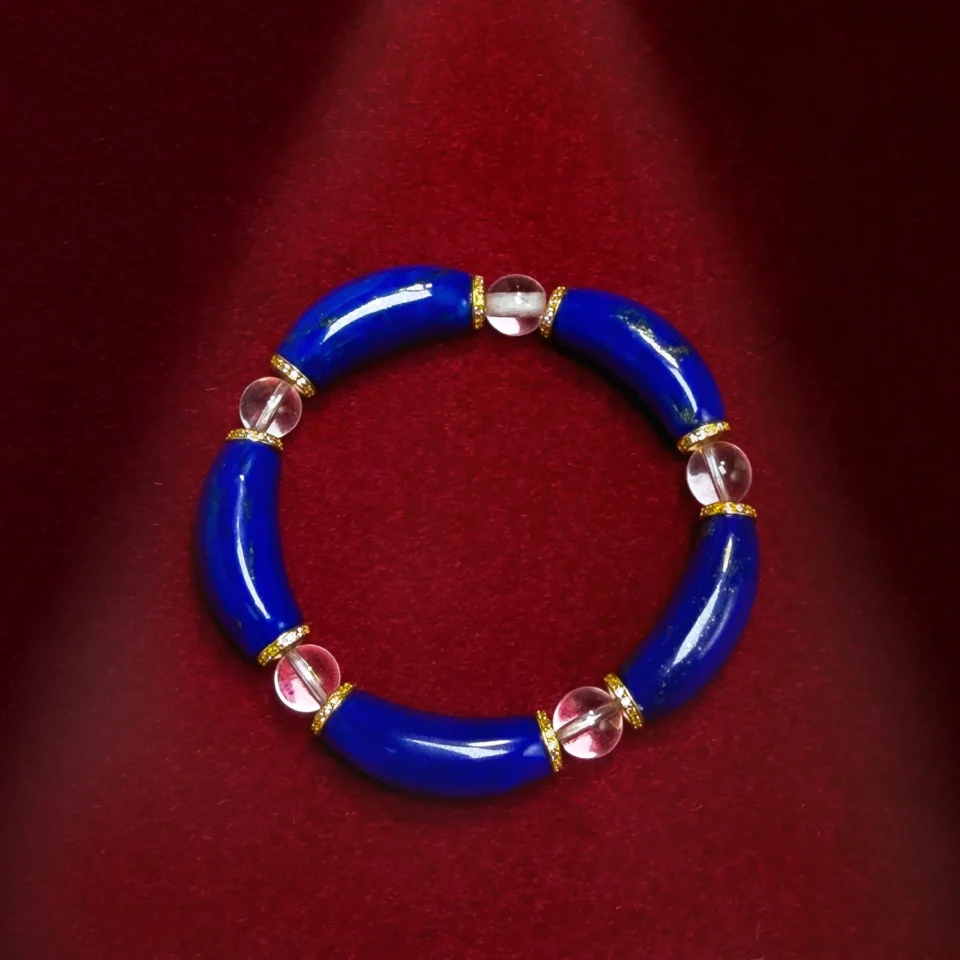
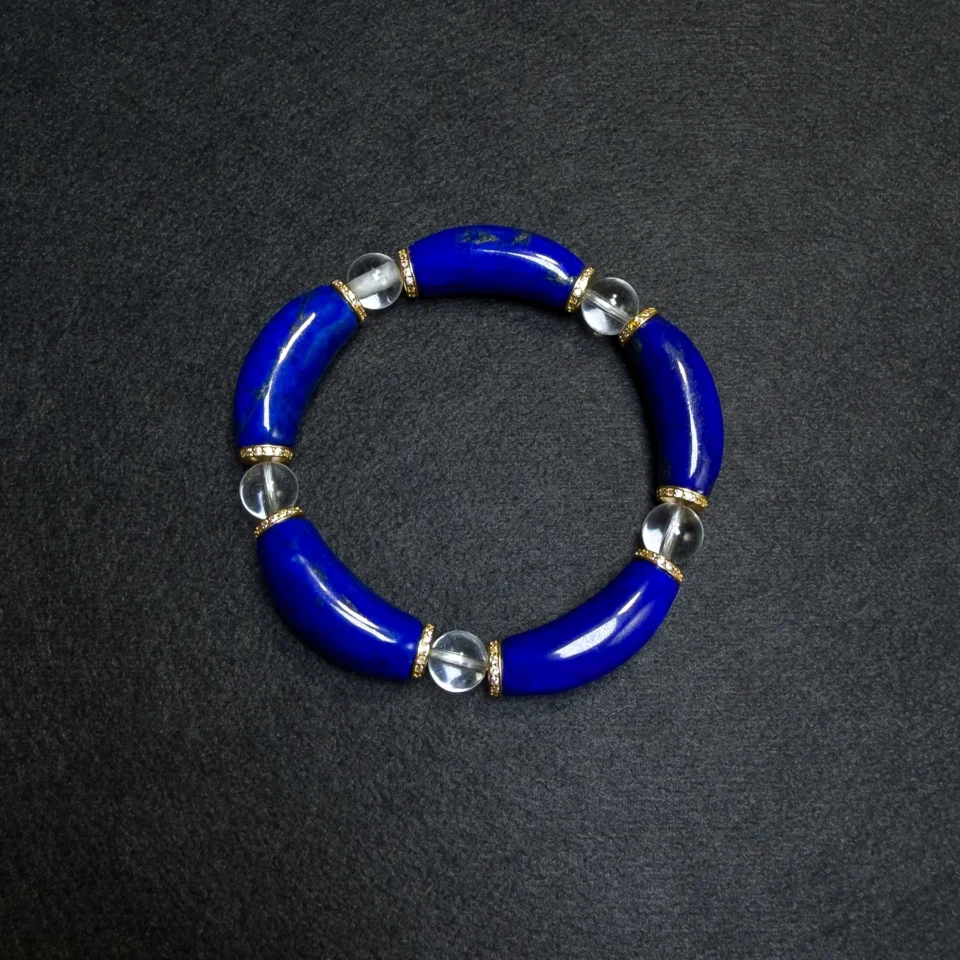
Search for lapis lazuli from Afghanistan and you will often see rough stones: blue blocks with white calcite, metallic pyrite and irregular natural surfaces. Those images tell you where the material begins, but not what happens before it becomes jewelry.
For bead jewelry, the transformation matters. Cutting exposes parts of the rough that were not visible from the outside. Shaping turns a small block into a sphere, where nearly the entire surface can be seen. Final polishing changes the way light reflects from that surface, making texture and finish easier to judge.
For centuries, Afghanistan has been an important source of high-quality lapis lazuli, particularly the historic deposits of Badakhshan. Lapis also travelled far beyond the region in antiquity; lapis lazuli beads from ancient Ur show how long the stone has been used in wearable objects.
Origin is important context, but it does not grade the finished bead for you. Once the stone has been cut and polished, the material still has to stand on its own.
From Afghan Lapis Rough to a Finished Bead
The photographs below document the main stages involved in turning lapis rough into round beads. This sequence is useful because each stage reveals something different about the material. A rough surface can hide internal variation; a cut face shows more of the stone; a finished sphere makes inconsistencies harder to hide.
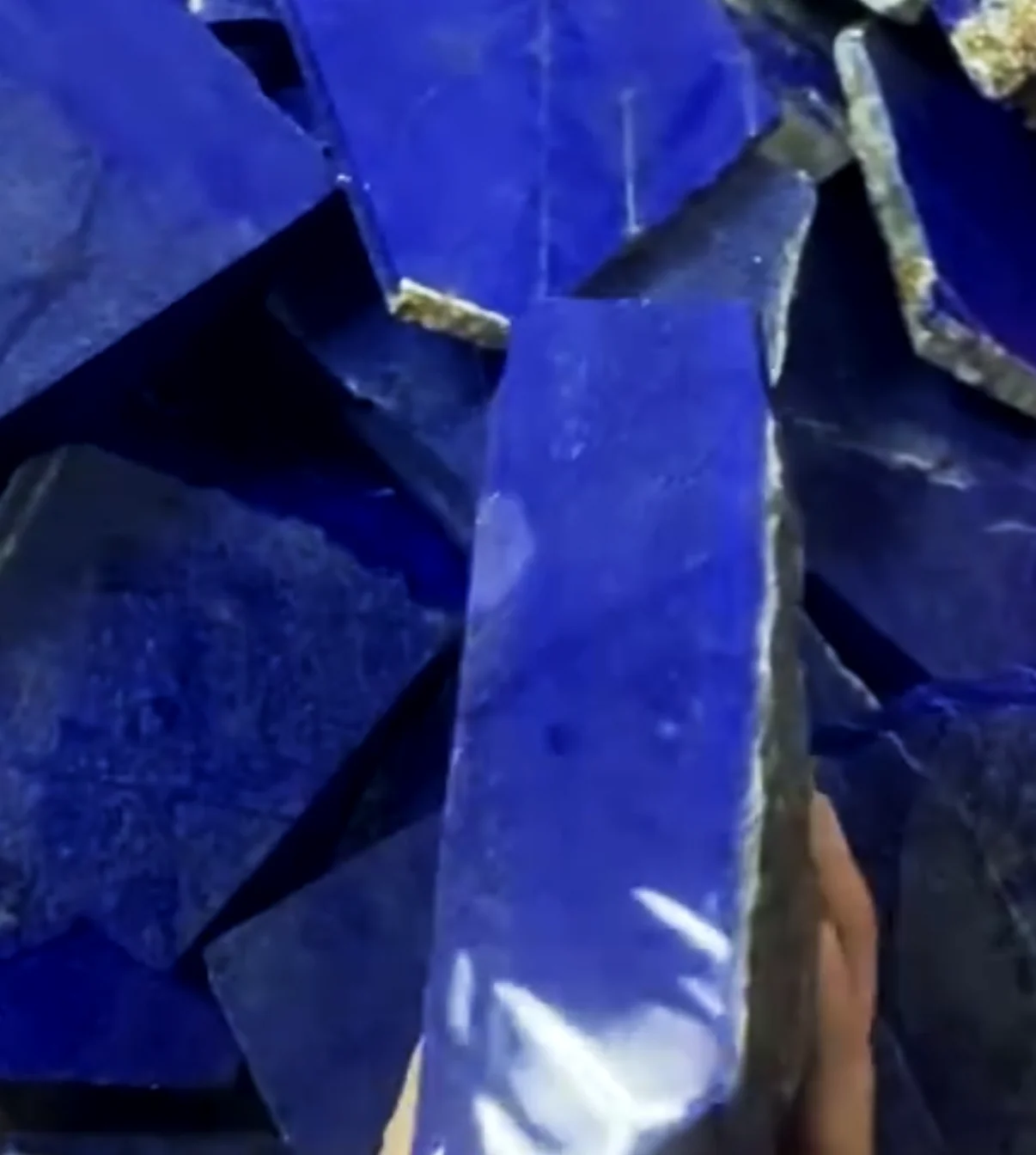
At the rough stage, the visible face gives only part of the story. The cutter can see broad color, obvious calcite and pyrite, but the interior is still unknown. The first cuts begin to show whether the blue continues through the material or whether white zones, fractures or uneven areas appear inside.
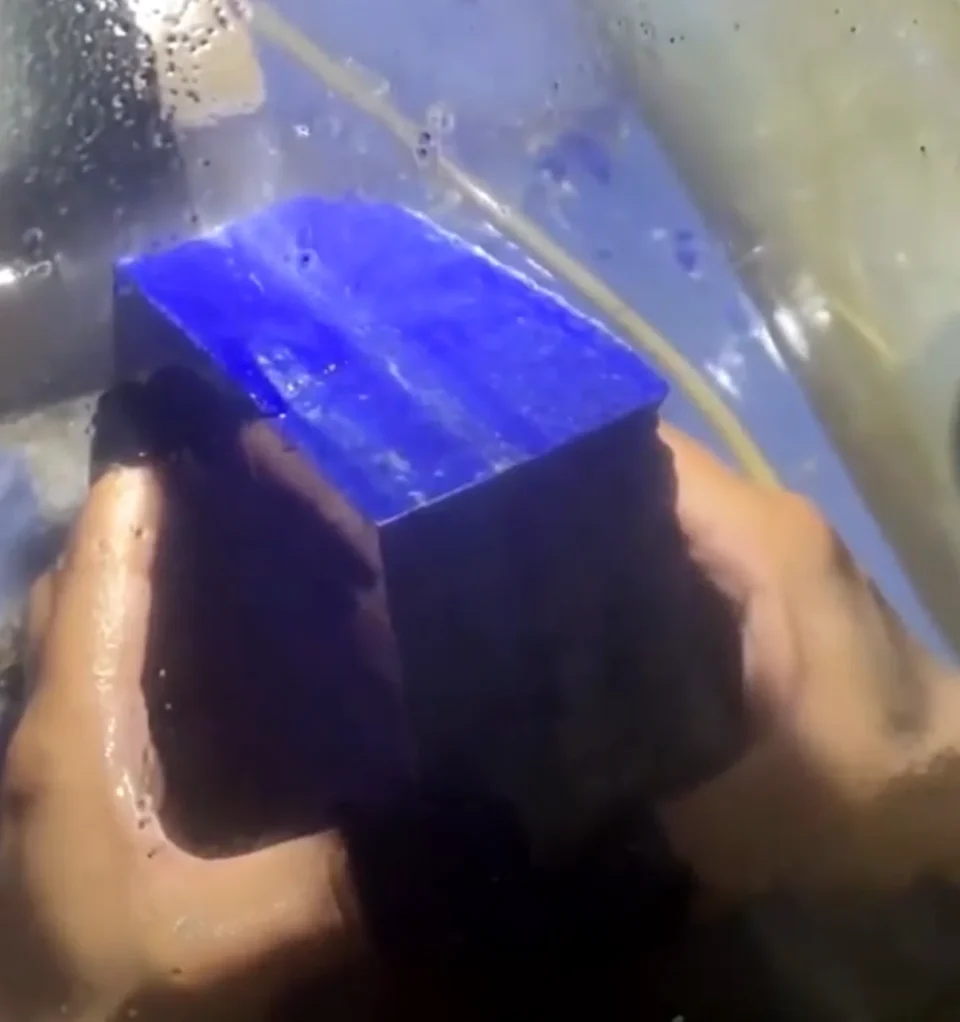
Large sections are then reduced again. This is not simply about making the stone small enough for a bead. Each new cut gives another chance to keep stronger blue areas and remove portions that are unsuitable for the intended jewelry.
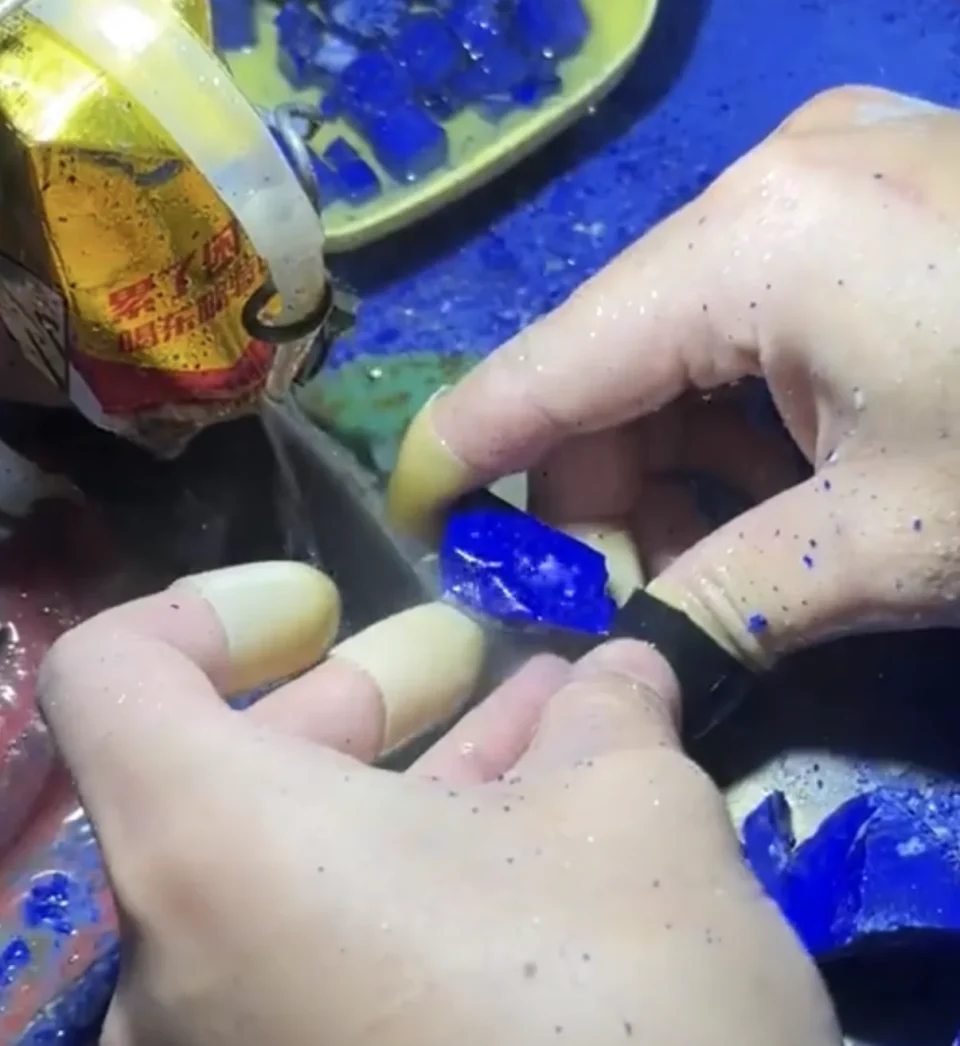
The smaller pieces are still angular at this point. Their corners and edges have to be removed gradually. The goal is to approach a round form without wasting more material than necessary, while continuing to watch for defects or mineral areas that become visible as the surface changes.
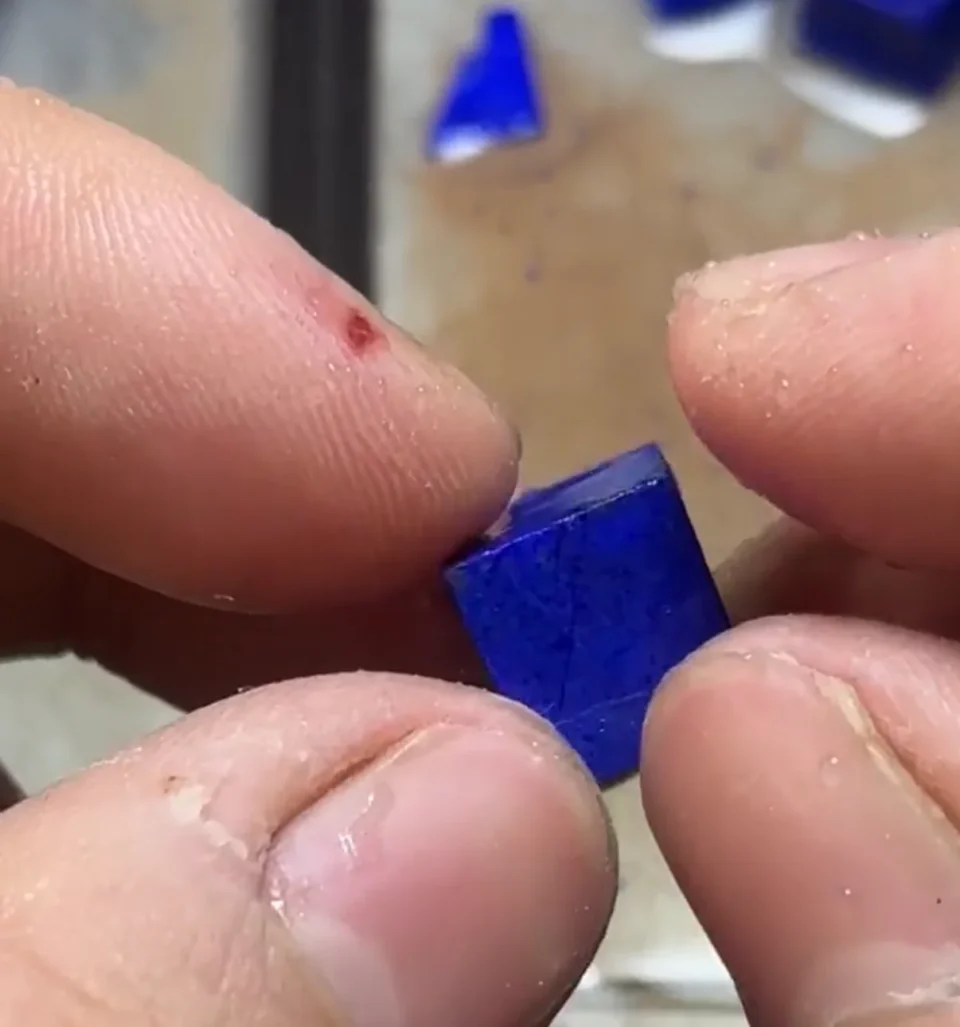
What Polishing Changes—and What It Does Not
Once the bead has reached its round form, it can still look surprisingly flat. Before final polishing, the surface scatters light and the bead often appears matte. That makes the difference between surface finish and underlying material especially easy to understand.
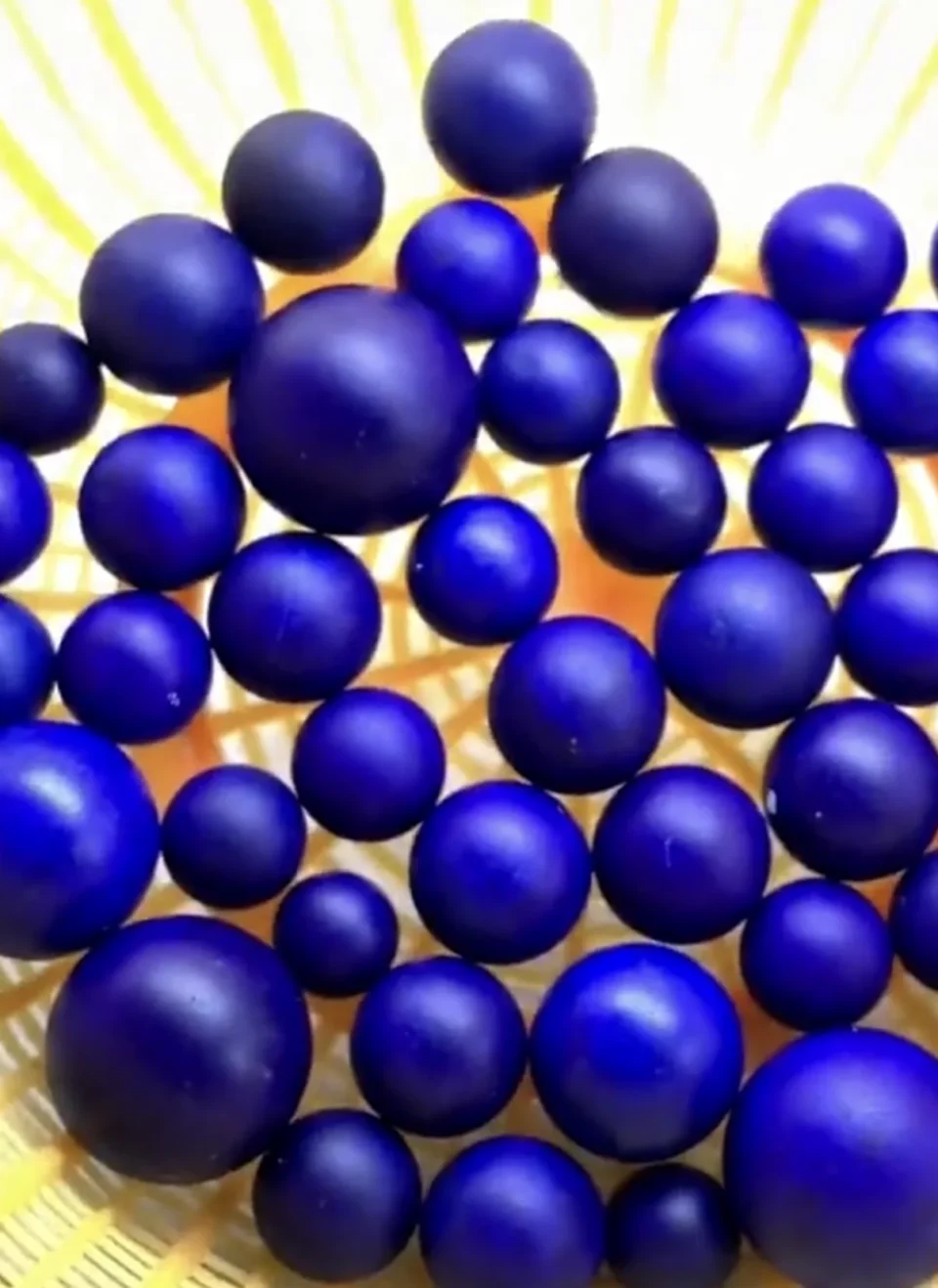
Polishing smooths that surface and increases visible luster. It can make a good bead look much more refined because the color is no longer obscured by a rough, light-scattering finish. But polishing cannot manufacture better lapis. It does not remove calcite inside the bead, correct uneven blue, or turn a coarse-looking body into fine material.
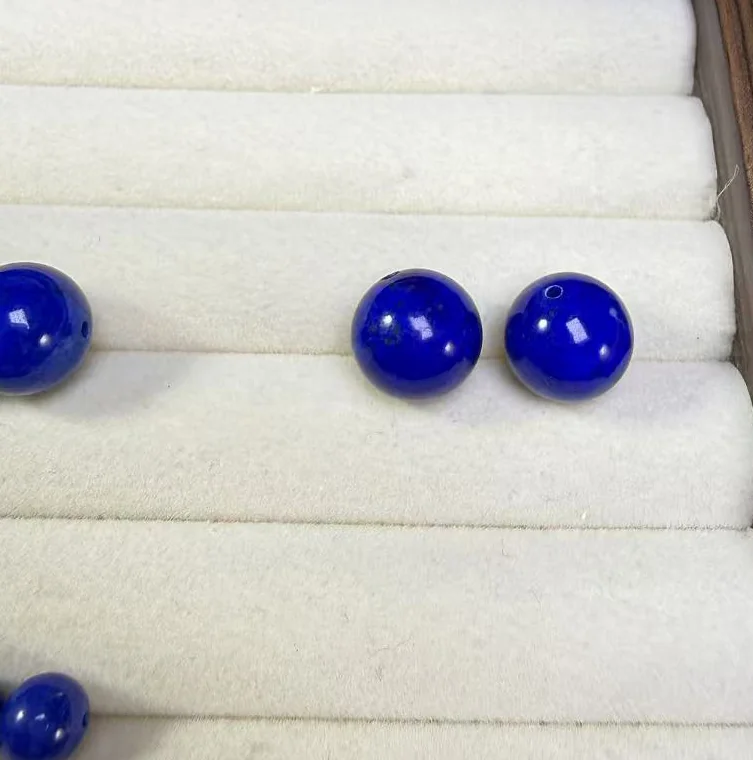
That distinction matters in jewelry. A bright reflection can catch the eye in a photograph, but the quality question sits underneath it: how fine does the body look, how even is the blue, and what happens when the bead is turned in the hand?
What Does Fine Afghan Lapis Look Like as a Bead?
Round beads are unusually revealing because almost the entire surface remains visible. A cabochon can be oriented to show one preferred face; a sphere eventually shows everything. Turn it and calcite, concentrated pyrite, uneven color and differences in surface quality all come into view.
Put a few dozen beads together and there is a second test: consistency. A fine strand cannot be judged by its best bead. The whole group has to work together.
Blue Color Comes First
The darkest bead is not automatically the finest. We look for a rich, saturated blue that still feels lively under ordinary light. Fine material can range through royal blue and slightly violetish blue; gray, muddy or dull-looking areas are much less desirable when the goal is a clean, strong blue appearance.
GIA identifies color as the most important quality factor and describes highly valued lapis as having an intense, relatively uniform blue with little visually disruptive calcite. GIA’s lapis lazuli quality factors provide a useful gemological reference for color, calcite and pyrite.
In a strand, color has a second test: one bead may look excellent on its own and still appear too pale, too dark or slightly gray beside the rest. Fine bead jewelry depends on both individual quality and group consistency.
Texture and Luster: The Quality Difference That Photographs Often Miss
Color is easy to describe; texture is harder. In the Chinese lapis trade, experienced dealers often use words that refer to the apparent density, fineness and porcelain-like quality of the material. Those expressions do not translate neatly into standard English gemological terminology, but the visual difference is real.
Some lapis has a visibly coarser body. Even after polishing, it can look dry, granular or slightly chalky. Finer material appears more compact, with a smoother surface character and a blue that looks richer and more settled in the stone.
The pre-polish and polished photographs above help separate two ideas that are often confused: surface shine and material quality. Polishing improves the first. It does not automatically create the second.
Calcite Becomes Much More Obvious in Finished Jewelry
White calcite is a natural component of lapis lazuli, so seeing it does not mean the stone is fake. The practical question is how much of it remains visible in the finished piece.
A white area that looks minor on a large piece of rough can occupy a substantial part of a 10 mm bead after cutting. In a bracelet or necklace, one strongly calcitic bead can pull the eye away from the rest; several can make the strand look mottled.
When we want a clean blue appearance, we therefore select against conspicuous white matrix. Natural variation is still expected—the aim is not artificial uniformity, but keeping the blue visually dominant.
More Pyrite Does Not Automatically Mean Better Lapis
The gold-colored points in lapis lazuli are usually pyrite, one of the stone’s most recognizable natural features. A common assumption is that more gold-colored pyrite means a higher grade. That is too simple.
Fine scattered flecks can look attractive against saturated blue, and GIA notes that small, attractively distributed pyrite does not necessarily reduce the value of lapis. Heavy concentrations, however, can compete with the blue itself.
For jewelry, we judge the blue first and then ask what the pyrite does to it. Very little pyrite can produce an exceptionally clean appearance; restrained flecks can be equally attractive. The problem begins when the mineral pattern becomes the first thing you notice instead of the blue.
“Old-Mine” and “New-Mine” Afghan Lapis: What We Mean
In parts of the Asian jewelry trade, dealers distinguish between “old-mine” and “new-mine” Afghan material. These are trade terms, not an official GIA grading system.
In our sourcing experience, material sold as new-mine Afghan lapis more often shows a coarser-looking body, less refined luster after polishing, duller or less even blue, and more visible calcite. Good new-mine material does occur, although in the material we have handled it has been much less common.
Material described in the trade as old-mine lapis more often shows the qualities we prefer for higher-end jewelry: a finer-looking, more compact body, smoother polish, richer blue and a cleaner overall appearance.
We still would not buy or reject a bead on the label alone. A weak bead does not become fine because a seller calls it old-mine material, and an excellent bead should not be dismissed simply because it is described as new-mine.
One explanation sometimes heard in the trade is that newer mining areas produce poorer material because miners have not yet reached deeper zones. We do not treat that as an established geological rule. What we can judge directly is the material in front of us: color, calcite, pyrite, texture, polish and consistency.
Why Beads Reveal Lapis Quality So Clearly
Bead jewelry leaves little room for weak material. A cutter making one pendant can often work around an undesirable area in the rough. A necklace requires that decision over and over again, followed by another challenge: matching.
Set thirty individually acceptable beads on a table and their differences become easier to see. A few may be darker, some may carry more pyrite, one may show a white patch, and another may have a noticeably coarser body. None has to be a bad stone on its own, yet they may not belong in the same strand.
Selection therefore continues after cutting and polishing. We regroup beads by blue tone, remove stones that interrupt the color flow, and check diameter, shape, mineral pattern and surface quality together.
Our Natural Imperial Lapis Lazuli Rectangular Bead Necklace is a useful example of this principle: when many pieces of lapis sit directly beside one another, material consistency becomes part of the design.
Matching Matters Even More in Earrings
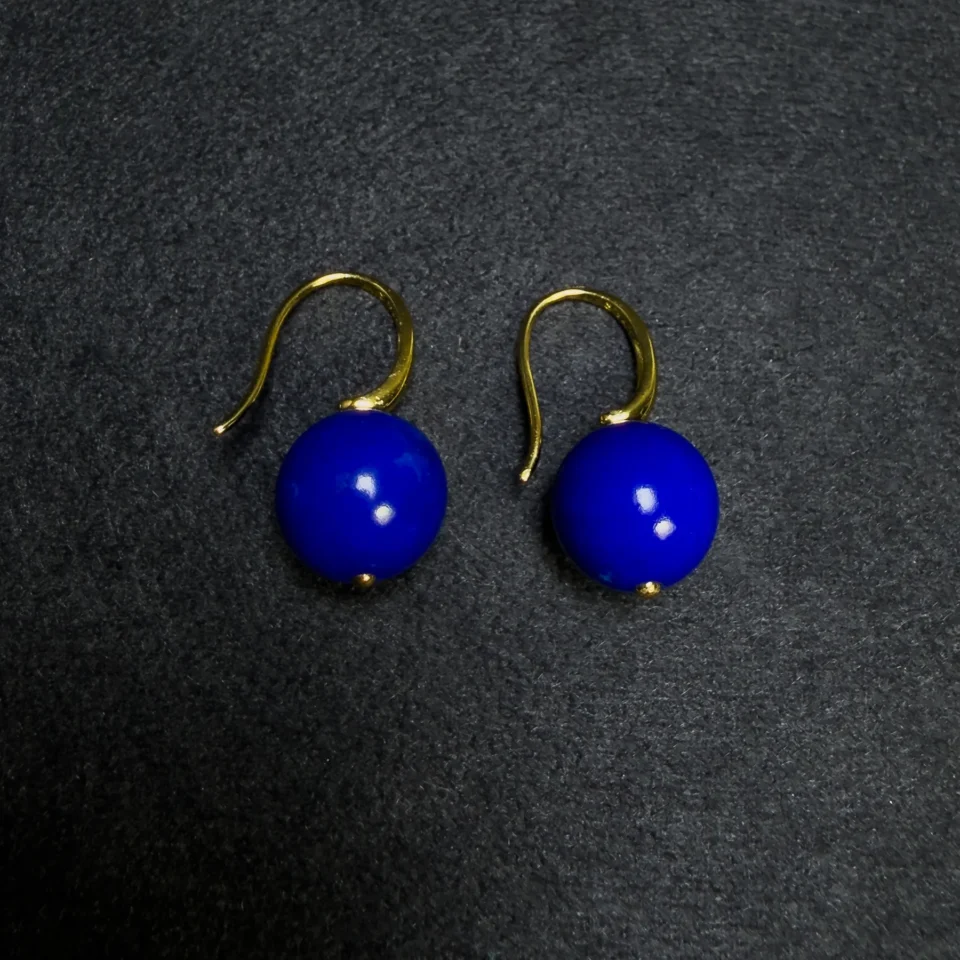
A necklace can tolerate subtle natural variation and still feel balanced; earrings are less forgiving. Put two beads side by side and even a small difference in tone, calcite or pyrite can become obvious.
For a pair, we compare diameter, blue saturation, visible calcite, pyrite distribution and overall surface character. Natural stones do not need to be artificially identical, but the pair should look intentional.
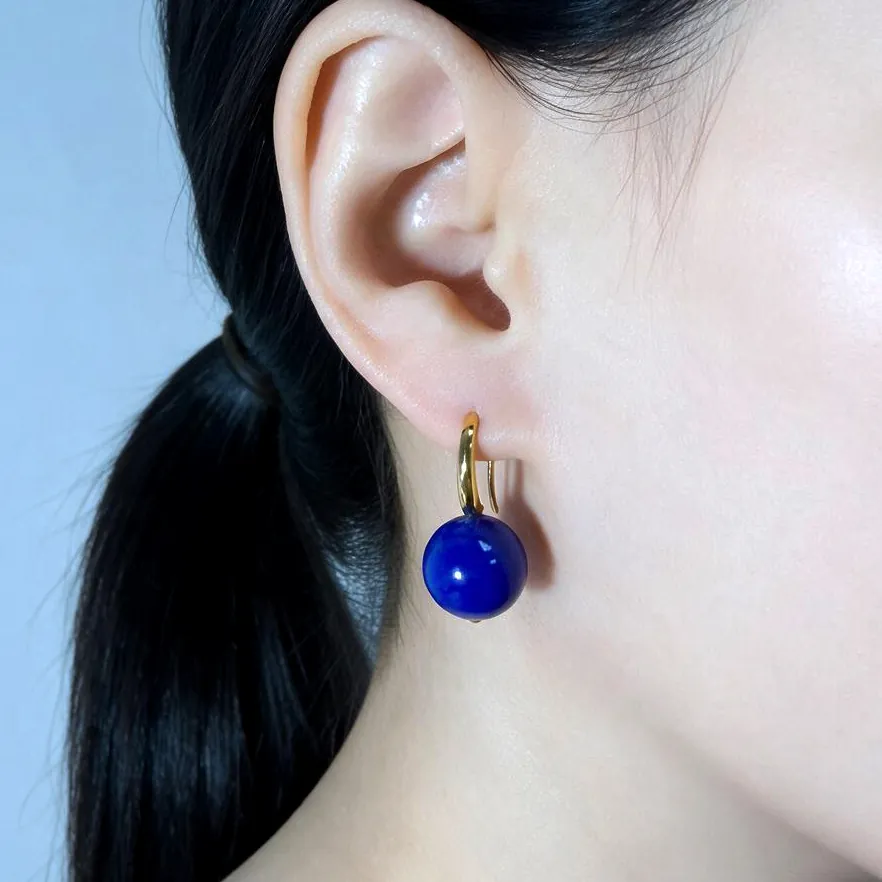
This is easy to see in natural Afghan lapis lazuli bead drop earrings, where almost the entire surface of both beads remains visible.
A Single Stone and a Bead Strand Should Not Be Judged the Same Way
Different jewelry forms expose different quality issues. A single pendant can celebrate one individual stone, including natural pyrite placement or variation that gives it character. A bead necklace depends more heavily on repetition and harmony.
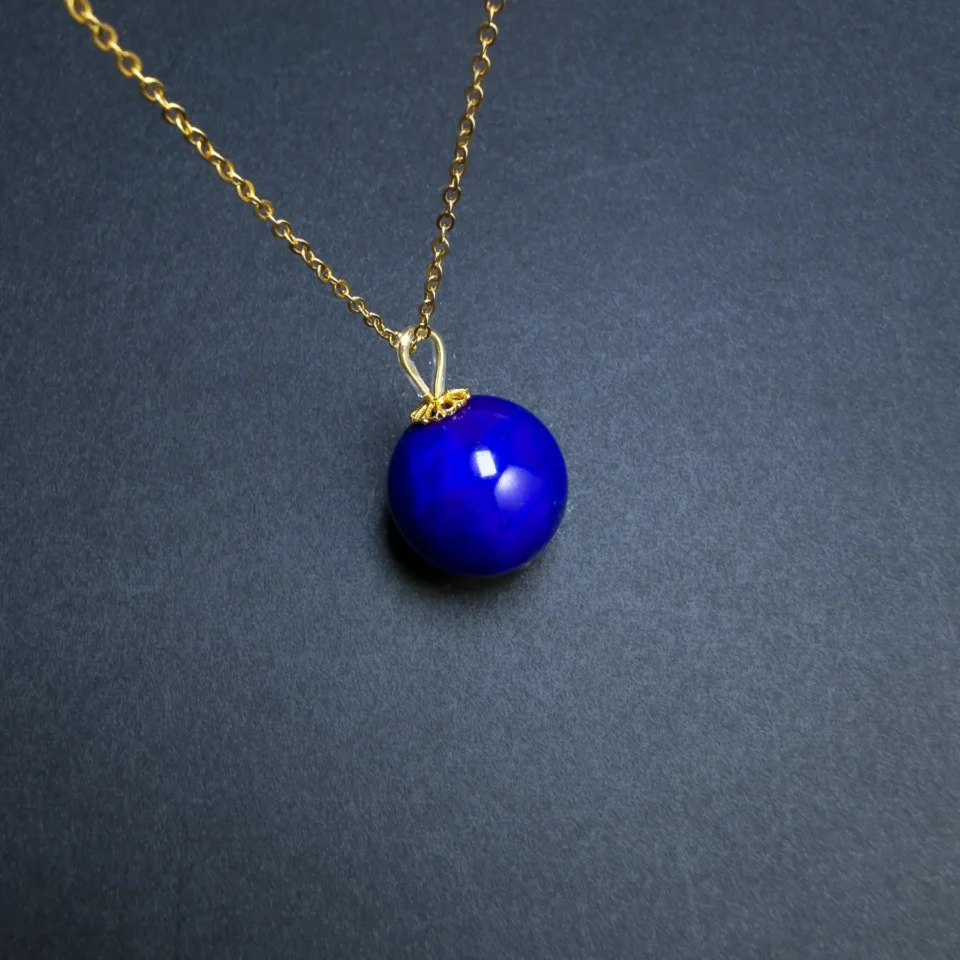
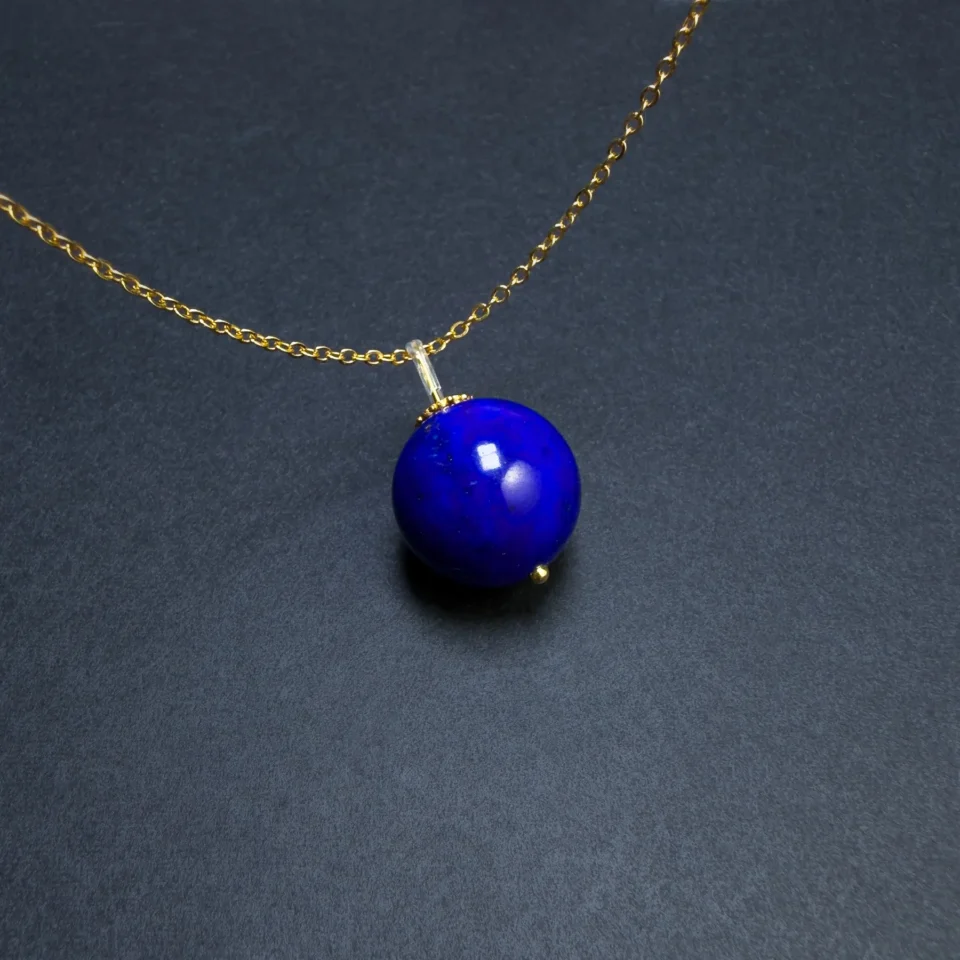
A polished round lapis lazuli pendant gives you one larger surface to judge, while a strand shows whether many pieces can maintain a consistent visual standard.
A Note About the Word “Afghan”
The word “Afghan” needs one more distinction. In gemological trade terminology, “Afghan” or “Persian” can also describe a highly valued type of lapis appearance—an intense, uniform blue with little or no visible calcite and little or no pyrite. GIA notes that a geographic adjective used to describe appearance does not, by itself, prove geographic origin.
Two questions therefore need to stay separate: Where does this stone come from? How good is this stone? A geographic origin claim should rest on provenance, not on appearance alone.
Likewise, genuine lapis mined in Afghanistan spans more than one quality level. The country is famous for exceptional material, but the origin name does not make every bead exceptional.
What We Look for in Fine Lapis Lazuli Beads
| Factor | What we look for in finished beads |
| Color | Rich, saturated blue that does not appear gray, muddy or lifeless |
| Calcite | Little visible white matrix where a clean blue appearance is desired |
| Pyrite | None, minimal amounts, or fine distribution that does not overwhelm the blue |
| Texture | A fine, visually compact body rather than a coarse or chalky appearance |
| Polish | A smooth, even finish that reveals the material clearly without being confused with material quality itself |
| Matching | Consistent color, size and overall character across a strand or pair |
This is a practical jewelry-selection framework, not a laboratory grading system. Laboratory analysis can tell you a great deal about what a material is; jewelry selection adds another question: which stones actually belong together in the same finished piece?
What to Look for When Buying Afghan Lapis Jewelry Online
Useful photographs should show enough of the actual stone to judge it. Look for close views from more than one angle and lighting that does not exaggerate the blue. Dramatic light and heavy editing can hide bead-to-bead differences.
With a strand, scan the whole piece rather than only the center or the most attractive section. Check whether the blue remains reasonably consistent, whether calcite or pyrite suddenly dominates individual beads, and whether the surfaces look evenly polished. For earrings, compare the pair directly.
If “Afghan,” “old-mine,” or another provenance-related term materially affects the price, ask what the claim is based on.
The Finished Jewelry Tells More Than the Rough Stone
Afghanistan’s reputation for lapis lazuli is deserved, but the words “Afghan lapis” still do not tell you what a finished necklace, bracelet or pair of earrings will look like.
The process photographs make the reason visible. Cutting reveals the interior. Rounding exposes nearly the whole surface. Polishing improves the finish but cannot correct the underlying material. Once several beads are placed together, color consistency and matching become part of quality as well.
We therefore treat origin as context, not as a shortcut. The finished stone still has to look good.