Lapis lazuli is one of the most commonly faked and dyed gemstones on the market. A blue bead labelled “lapis” can be natural stone, dyed low-grade lapis, compressed powder held together with glue, dyed howlite, or plain glass.
Instead of repeating the usual checklist, we bought a fake and put it side by side with genuine, undyed lapis lazuli from our own stock. We looked at both from across the room and under a macro lens, rubbed them with an alcohol swab, held them in a flame, and finally cut them in half. Every photo and video below is from that test.
Quick answer: Real lapis lazuli usually shows slight color differences from bead to bead, small gold pyrite flecks or white calcite, and a bright, glassy polish. It does not leave blue on a cotton swab dipped in acetone or alcohol. A fake tends to look flat, evenly colored and slightly chalky, its dye may rub off, and inside it looks like fine compressed powder rather than crystalline rock. No single home test is proof: combine several, and use a gem lab for valuable pieces.
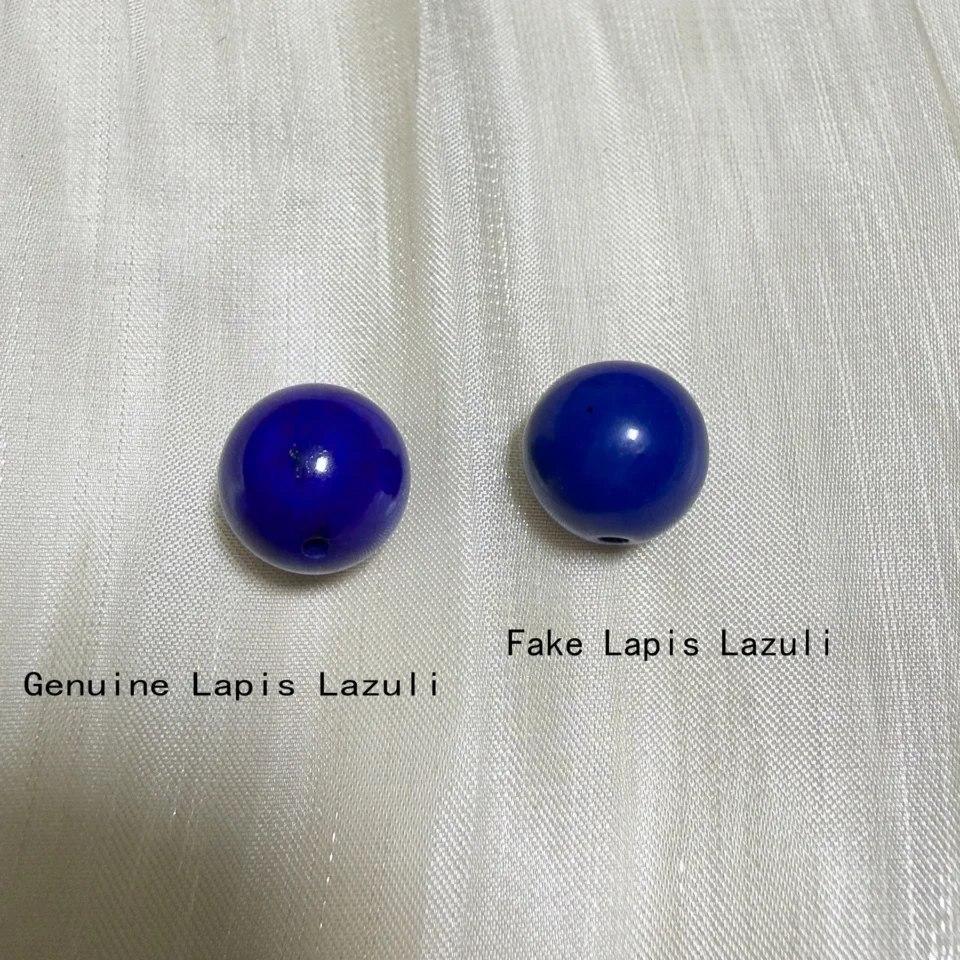
Which test should you use?
Four of the six tests are safe to try on jewelry you want to keep. The last two destroy the stone, so they are here to show what we found, not as instructions.
| Test | What you need | Safe for jewelry? | What it can tell you |
|---|---|---|---|
| 1. Color across the strand | Daylight | Yes | Natural bead-to-bead variation vs one flat, uniform blue |
| 2. Close-up: pyrite and calcite | Phone zoom or a 10x loupe | Yes | Irregular pyrite and calcite point to natural rock; evenly sprinkled “glitter” does not |
| 3. Luster | A single light source | Yes | Supports the other clues; not a verdict on its own |
| 4. Swab test | Cotton swab with acetone or alcohol | Yes, on a hidden spot; keep solvent off cord and glue | Whether the color is dyed |
| 5. Flame test | Lighter and metal tweezers | No: destructive and a burn risk | Not recommended at home |
| 6. Cross-section | A loose bead you are willing to cut | No: destroys the bead | Crystalline rock vs pressed powder |
If you only do two things: compare the color and look closely for irregular pyrite and calcite, then swab a hidden spot.
What “fake lapis lazuli” actually means
“Fake” covers several very different materials, and the right test depends on which one you are dealing with. Natural lapis is not a single mineral but a rock, made mainly of blue lazurite with white calcite and gold-colored pyrite (GIA). Anything else sold as lapis falls into one of these groups:
| Type | What it is | Typical warning signs |
|---|---|---|
| Dyed natural lapis | Real lapis, usually low grade, dyed to deepen the blue and hide white calcite | Blue on a solvent swab; dye collecting in cracks and around drill holes |
| Reconstituted (“pressed” or “reconstructed”) lapis | Powder bonded with resin or glue, often dyed, then pressed into blocks. The powder may or may not be real lapis | Very even color; fine, powdery texture inside; darkens or smokes under heat |
| Dyed imitations | White stones such as howlite, magnesite or jasper dyed blue, sometimes sold as “Swiss lapis” or “German lapis” | Flat, uniform blue; grey veins; swab turns blue |
| Glass, plastic and ceramic | Man-made materials that GIA lists as long-standing lapis imitations (GIA) | Bubbles, mold lines, unnaturally perfect color |
| Gilson-type imitation | A factory-made material, sometimes with added pyrite-like flakes | Too perfect; “gold” flecks look evenly sprinkled |
One more category is not fake but should be disclosed: undyed lapis is sometimes impregnated with wax or oil to improve color and luster, and a gemologist can detect it (GIA).
The fake in our test is a dyed, compressed-powder imitation bonded with glue, one of the most common fakes in bead strands and low-cost jewelry.
How we ran the test
- Samples: a strand of genuine, undyed lapis lazuli beads from our stock, and a strand of fake beads of similar size bought as “lapis.” For the destructive tests, we cut one bead from each strand in half.
- Conditions: both strands photographed on the same fabric, under the same light, with the same phone.
- Tests: color from a distance, close-up and macro inspection, luster, alcohol swab, lighter flame, and a cut cross-section.
- Limits: this is one genuine sample and one fake, tested by a jeweler, not a gem lab. It shows how these two stones behaved and what to look for, not a guarantee for every stone.
Test 1: Step back and compare the color across the strand
Start with the simplest check: lay the piece down in daylight and look from an arm’s length or further.
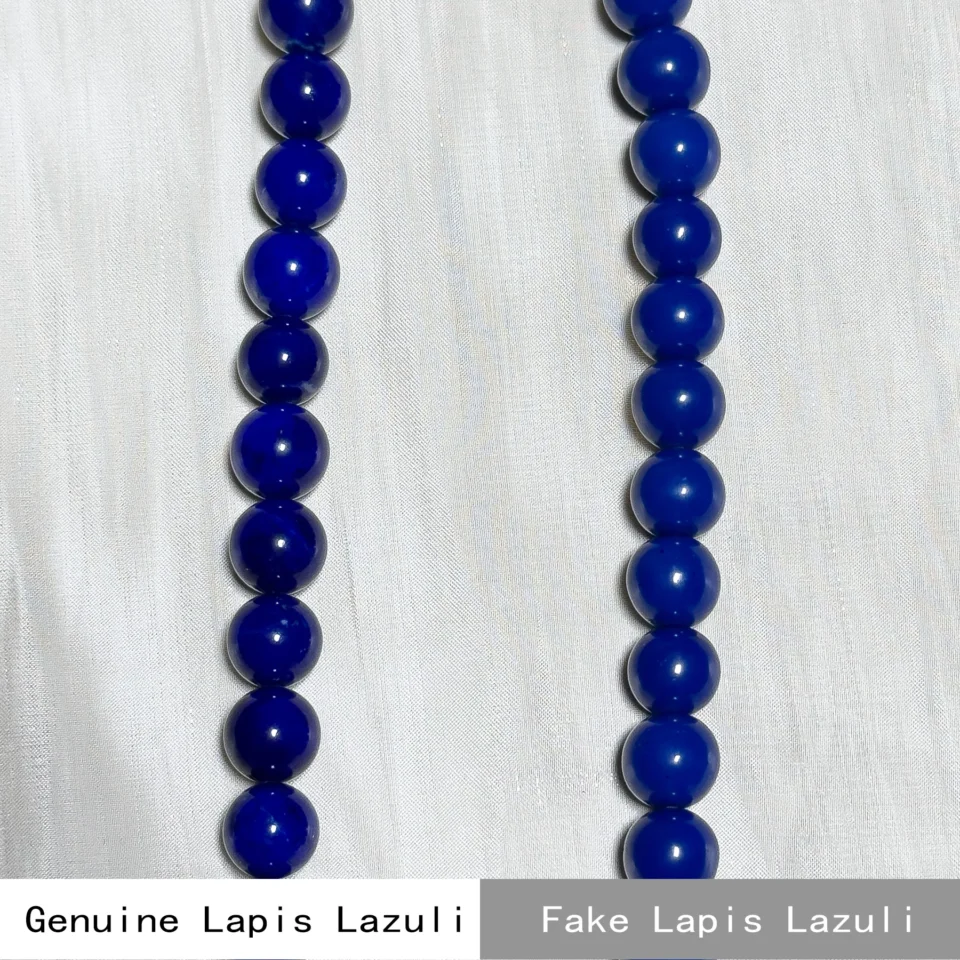
In our test, this was the fastest giveaway. The genuine strand shifted from dark royal blue to slightly lighter tones, with the odd fleck or streak, because each bead was cut from a different part of the rock. The fake strand looked like it had been poured from one bucket of paint: same shade, same surface, bead after bead.
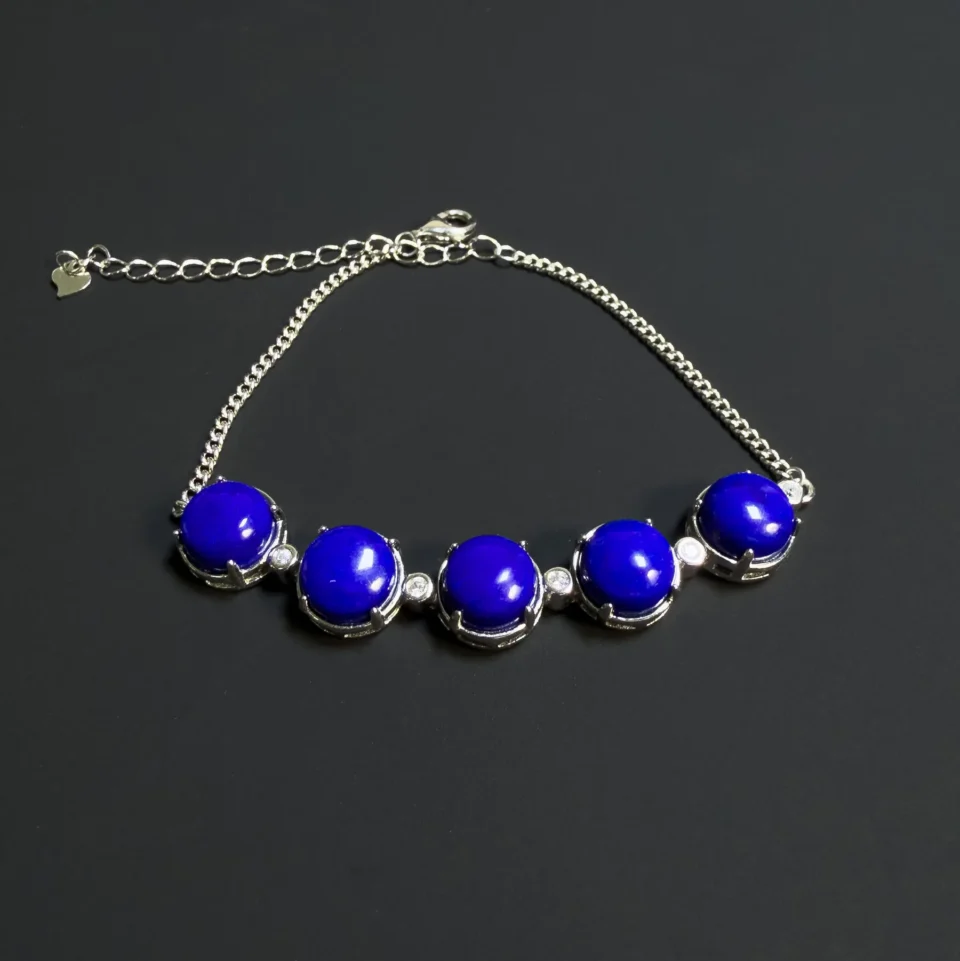
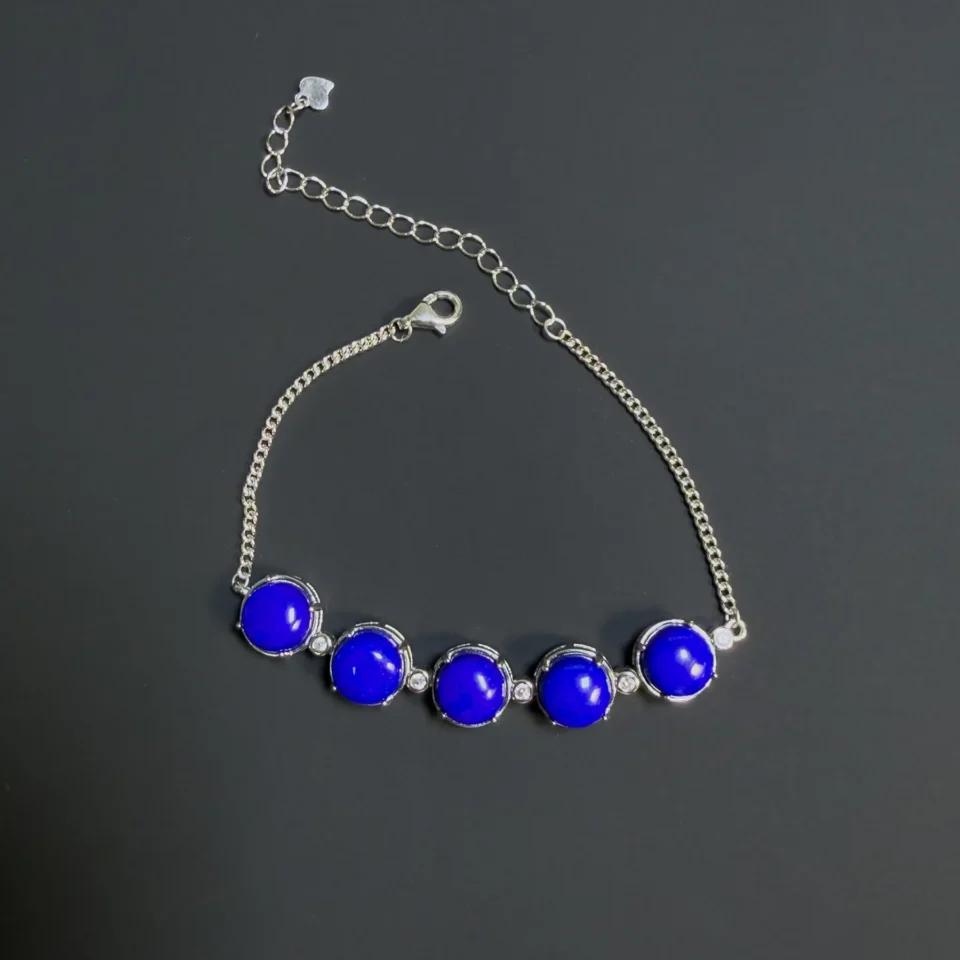
A caution: perfectly even color does not automatically mean fake. GIA notes that the finest lapis has a uniform body color free of visible pyrite and calcite (GIA). Treat evenness as a warning sign only when it comes with the flat, chalky look described in the next two tests. Our 7mm lapis lazuli bracelet is an example: no calcite or pyrite is visible to the naked eye, yet the blue still shifts between brighter areas and darker, almost black ones.
Test 2: Look closely for pyrite, calcite and natural variation
Now get close: use a phone camera’s zoom, a macro lens, or a 10x jeweler’s loupe.
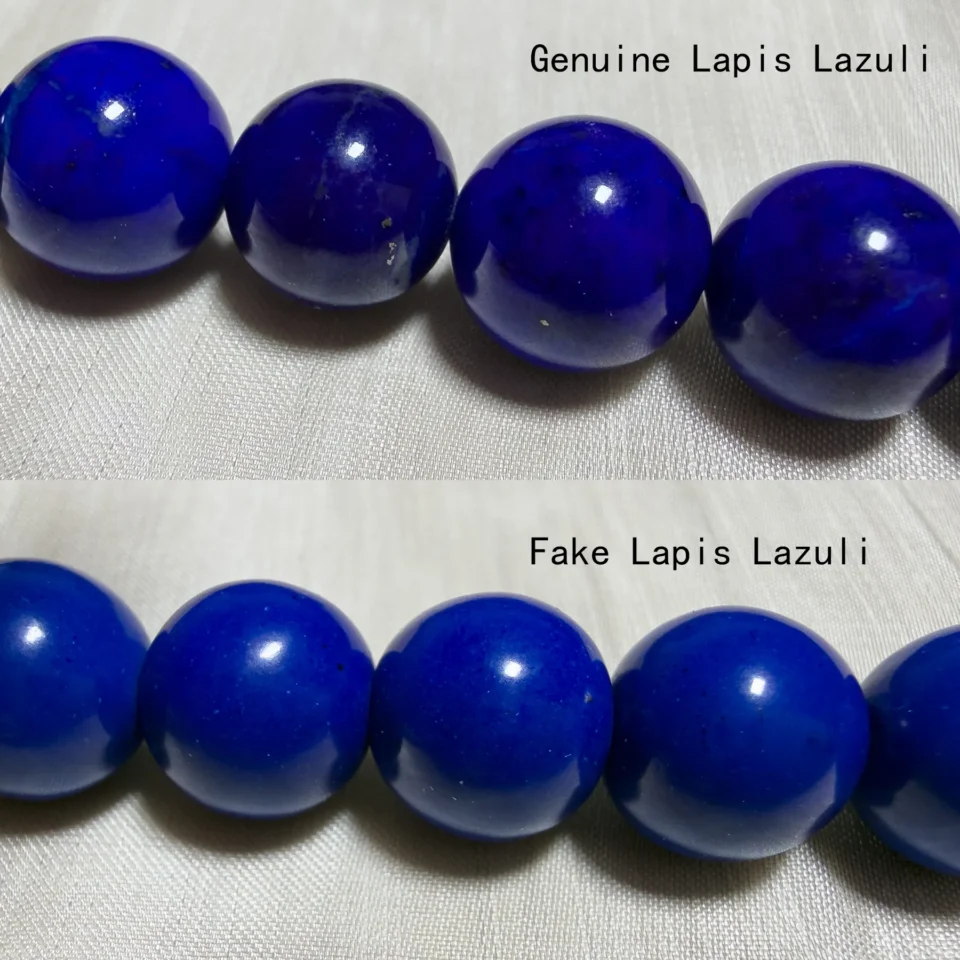
Under magnification, the genuine beads showed what you expect from a natural rock:
- Pyrite: small, irregular, brassy-gold flecks scattered unevenly. (More on this in our guide to lapis with gold flecks.)
- Calcite: thin white or pale-blue veins and patches. White areas are not a sign of a fake; they are the natural host rock, although heavy calcite lowers the value.
- Tone changes: each bead had its own pattern of darker and lighter zones.
The fake showed none of that: an even blue with tiny dark specks that looked more like dust in a molded material than a mineral.
Do not rely on pyrite alone. Some imitations have pyrite-like flakes added to look convincing. Natural pyrite is irregular in size and placement; added “glitter” tends to look evenly sprinkled.
Test 3: Check the luster
Tilt the stone under a single light source and watch the reflection.
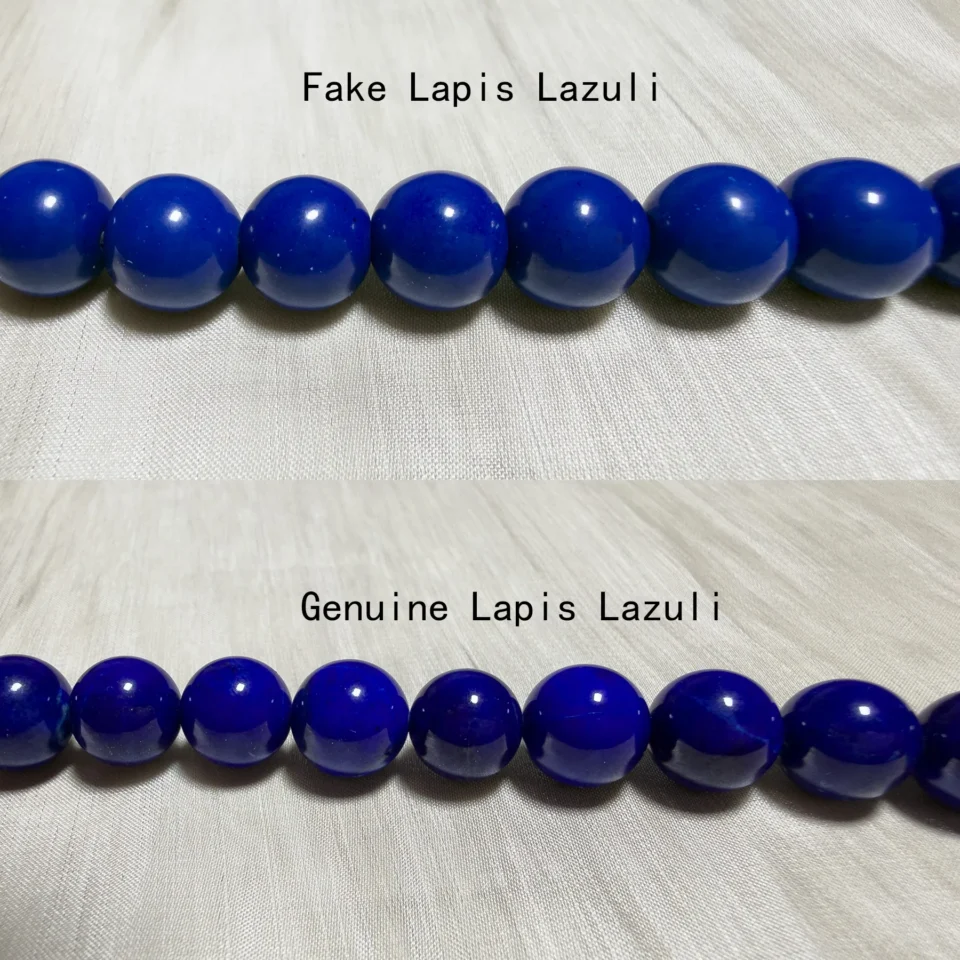
Well-polished natural lapis is dense enough to take a crisp, glassy shine, and the reflection on our genuine beads was sharp. The pressed-powder fake looked dull by comparison, closer to painted ceramic than polished stone. Luster is subjective and depends on the polishing, so use this to confirm what the first two tests suggest, not as a verdict on its own.
Test 4: The swab test (acetone or alcohol)
This is the most useful home test for dyed lapis and for dyed imitations. GIA notes that the dye used on some lapis can come off when rubbed with acetone (nail polish remover) or denatured alcohol (GIA). We used an alcohol swab.
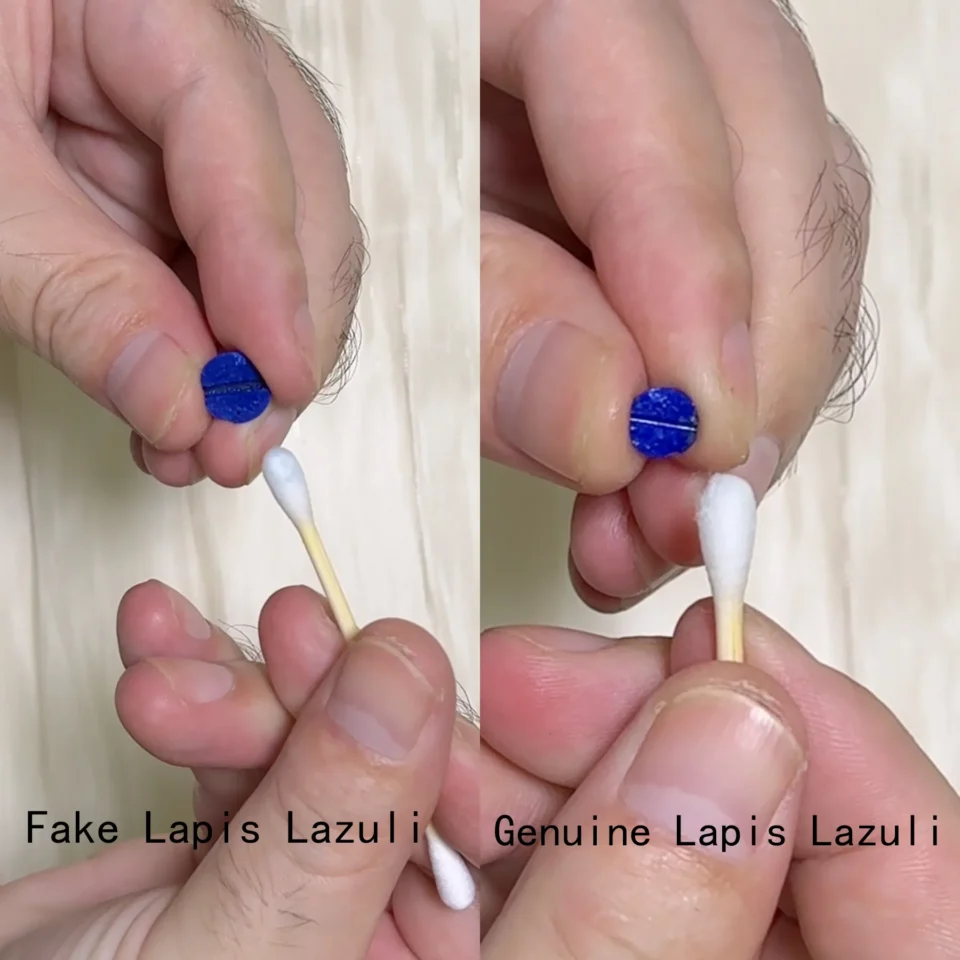
What happened: after a few seconds of rubbing, the swab on the fake picked up a pale blue-grey tint while the other end stayed white. The genuine sample was rubbed longer and harder, and its swab stayed white.
How to do it yourself:
- Choose an out-of-sight spot, such as the edge of a drill hole or the back of a cabochon.
- Dampen a cotton swab with acetone or alcohol.
- Rub firmly for 10–15 seconds and check the cotton.
- Wipe the stone with a damp cloth afterwards. Keep solvent away from stringing cord and glued settings.
How to read the result:
- Blue on the swab: the color is dyed. That means either dyed natural lapis or an imitation; the swab cannot tell you which.
- Clean swab: a good sign, not proof. Dyed lapis is sometimes sealed with wax or plastic precisely so the dye will not rub off (GIA), and gemologists treat a clean swab as inconclusive when a wax coating may be present (Gem Society).
Test 5: The flame test (destructive, not recommended at home)
We include this test because it made the difference between our two samples very obvious. It also destroys stones, burns fingers and can mislead you, so read the warnings before you think about trying it.
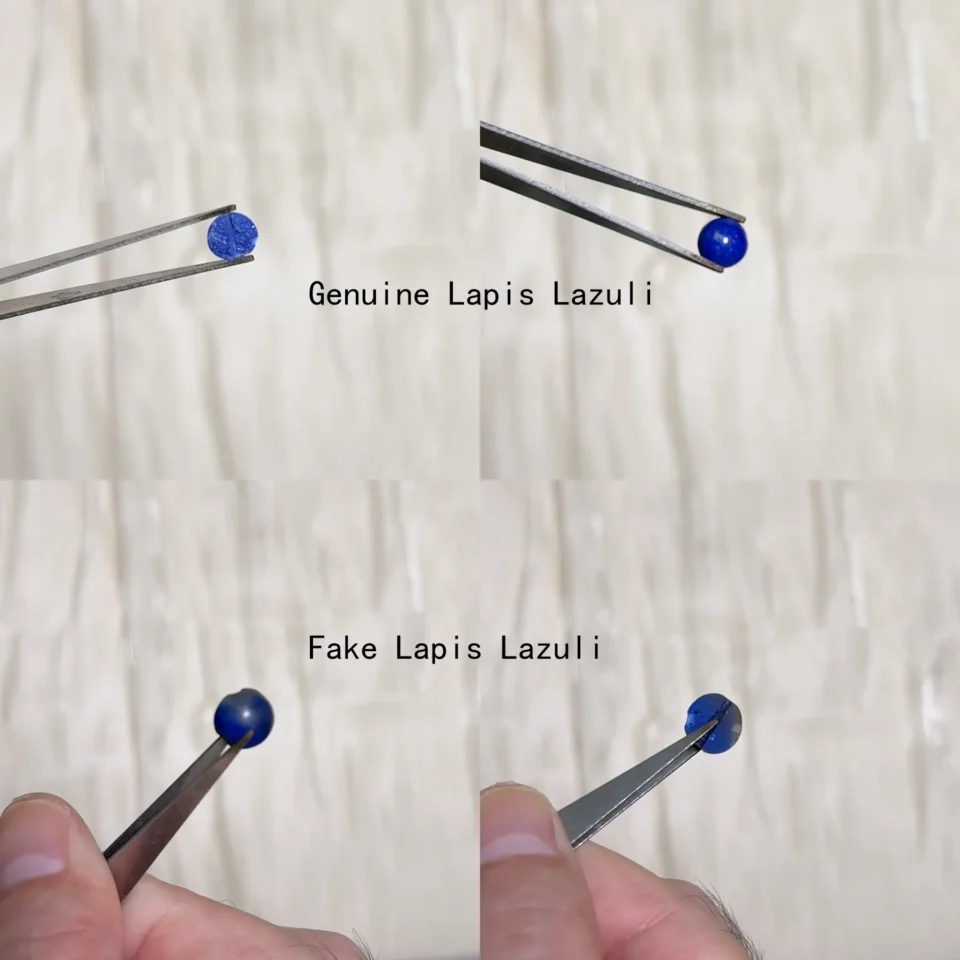
What happened: after about two seconds in a lighter flame, the fake developed grey-black patches and gave off smoke from the glue that binds its powder. The genuine sample spent around 20 seconds in the flame and came out still mostly blue and in one piece. It was hot enough that when it slipped from the tweezers, it scorched the cloth below.
Why we do not recommend it:
- It is destructive. Heat can crack lapis, damage metal settings and ruin any stringing.
- It can give a false alarm. Undyed lapis treated with wax or oil is common, and wax deteriorates with heat (GIA), so a perfectly natural stone can smoke or discolor too.
- It is a burn and fire risk.
If you must try it, use only a loose bead you are prepared to lose, hold it with metal tweezers over a non-flammable surface, and never test jewelry you plan to wear. Gemologists use a controlled “hot point” test on a tiny spot instead.
Test 6: Look inside (cut cross-section)
Cutting a bead is the most destructive test of all, but it shows the clearest difference between natural rock and a manufactured fake.
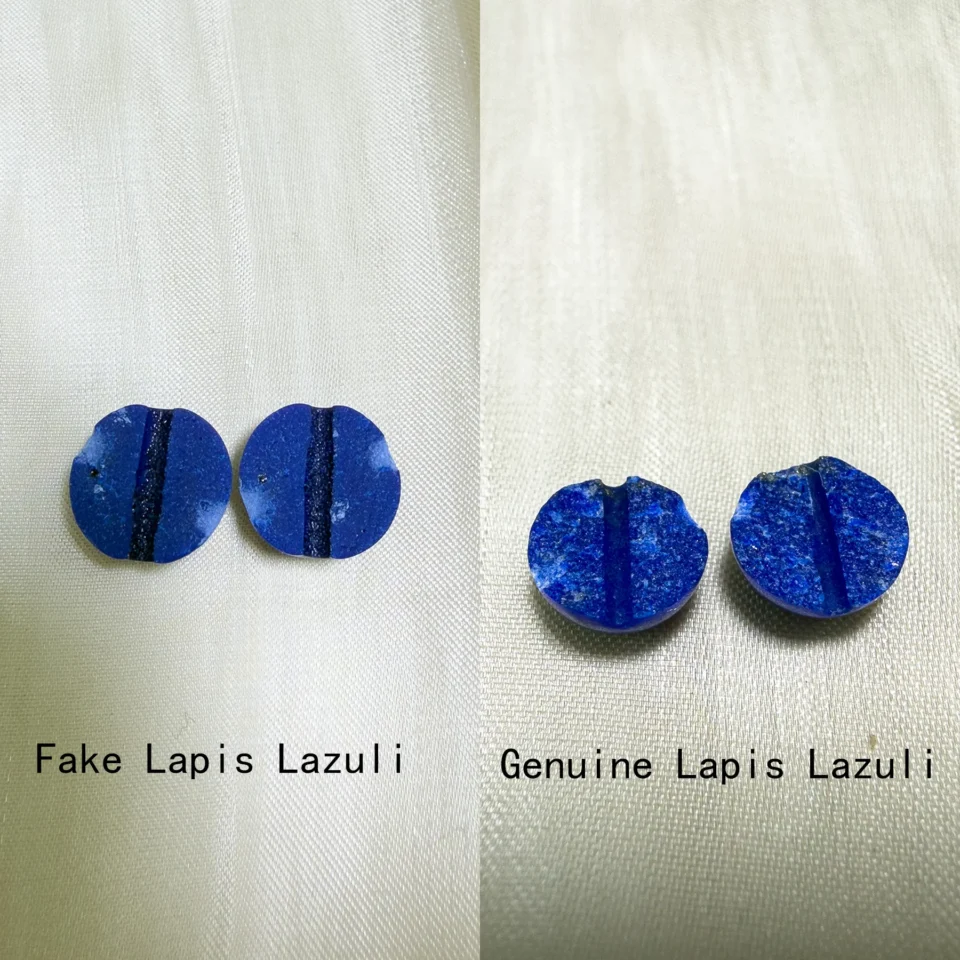
Inside, the genuine bead looked like what it is: rock. It had a coarse, glittering crystalline grain, patches of white calcite and pyrite visible near the edge. The fake was a fine, sandy-looking mass with a uniform, lifeless blue, pale patches near the surface, and a dark, almost black band lining the drill channel.
You will rarely want to cut your own jewelry, but you can borrow the idea. Look into the drill hole with a loupe. Dye tends to collect around drill holes and in cracks, and on our fake the channel was visibly darker than the surface.
Real vs fake lapis lazuli: summary of our results
| Check | Genuine lapis (our sample) | Fake lapis (our sample) |
|---|---|---|
| Color across the strand | Shades vary from bead to bead | Every bead the same blue |
| Close-up | Irregular pyrite flecks, white calcite, tonal zones | Even blue, tiny dark specks, no pyrite |
| Luster | Crisp, glassy polish | Duller, slightly waxy |
| Alcohol swab | Swab stayed white | Swab turned pale blue-grey |
| Flame (~2–20 s) | Mostly unchanged after about 20 s | Grey-black patches and smoke within about 2 s |
| Inside | Crystalline, sparkling grain | Fine, powdery, uniform mass |
What to do if your lapis fails a test
A failed test raises a question; it does not always answer it. Here is how we would read the most common results.
If the swab turns blue
The color has been dyed. On its own, the swab cannot tell you whether you have dyed natural lapis or a dyed imitation such as howlite or pressed powder. Go back to Test 2: dyed natural lapis still shows irregular pyrite, white calcite and a crystalline sparkle under the dye, while an imitation tends to look uniform.
Dyed natural lapis is still lapis, but it is treated, it is worth less than undyed material, and the seller should have disclosed it. If you keep wearing a dyed piece, clean it only with a soft cloth and mild soapy water, and keep it away from solvents, since they are what remove the dye.
If you were told it was natural and undyed
Contact the seller promptly, as most return windows are time-limited. Send daylight photos of the piece, a photo of the tinted swab, and the original listing or receipt, and ask how the material was described and whether it can be returned.
If the results are mixed
A clean swab on a flat, chalky-looking stone, or a slightly tinted swab on a stone full of pyrite, is inconclusive. Repeat the visual checks in good daylight, and for a valuable piece, use a gem lab (see When to use a gem lab).
If your lapis is very pale or very dark
Unusual color alone is not a sign of a fake. Pale, white-flecked material is often natural lower-grade lapis (see what denim lapis lazuli is), and very dark stones can be natural too (see black lapis lazuli). Judge these pieces by the swab test and the close-up checks, not by color.
Is it still worth anything?
Value depends on what the material turns out to be and how it has been treated. For how color, calcite, pyrite and treatment affect price, see how much lapis lazuli is worth.
Bought it from Lakazur? Email shop@lakazur.com with your photos, and see our refund and returns policy.
Home “tests” that prove very little
- “Real stone feels cold.” Glass and ceramic feel cold too.
- “It has gold flecks, so it’s real.” Imitations can have added pyrite-like flakes.
- “It’s heavy.” Natural lapis and reconstituted material differ in density, but you cannot feel that difference in your hand. A gemologist measures it.
- “It was expensive.” A suspiciously cheap price is a warning sign, but a high price is not proof.
- The scratch test. Lapis sits between 5 and 6 on the Mohs scale (GIA). Scratching tells you little and permanently damages a real stone.
When to use a gem lab
For an expensive piece, an antique, or a seller who cannot answer treatment questions, a lab report is worth the fee. GIA does not grade lapis, but its Colored Stone Identification Report identifies the material, says whether it is natural, and names any detectable treatments (GIA).
How to buy real lapis lazuli with confidence
What to check in product photos
Most fakes are bought online, so the photos are your first test. Use the same checks we used on our samples:
- More than one bead. In a strand, look for small shifts in tone from bead to bead. One identical shade across every bead, together with a flat, chalky look, is the pattern our fake showed (Test 1).
- Close-ups at full size. Zoom in for irregular pyrite flecks and white calcite (Test 2). Gold specks that look evenly sprinkled over every bead suggest added “glitter.”
- The drill holes. Dye tends to collect around holes and in cracks, so dark rings at the holes are a warning sign (Test 6).
- Lighting and editing. Heavy editing or filters can hide all of the above. A short, unedited video in daylight shows color and polish more honestly than a styled photo.
- The material description. Look for a clear statement of what the stone is and whether it is dyed, waxed or reconstituted. “Lapis” alone, or a trade name, is not enough.
- Price. A very low price for a strand of deep, even blue is a reason to ask more questions, but a high price is not proof.
To see what this looks like in a real listing, compare the close-ups of our rounded barrel bead bracelet: saturated royal blue, very little white calcite and a light scattering of pyrite flecks.
Questions and checks before you pay
- Ask direct questions and get the answers in writing: Is it natural lapis? Is it dyed, waxed or reconstituted?
- Ask for daylight photos or a short video close enough to see pyrite, calcite and surface polish.
- Be wary of trade names such as “Swiss lapis,” “German lapis” or “reconstructed lapis.”
- Check the return policy before you buy, so you can return a stone that fails the swab test.
- Compare it with similar blue stones. Sodalite is a different natural stone, often mistaken for lapis; see our sodalite vs lapis lazuli guide. For grading, see our lapis lazuli quality guide.
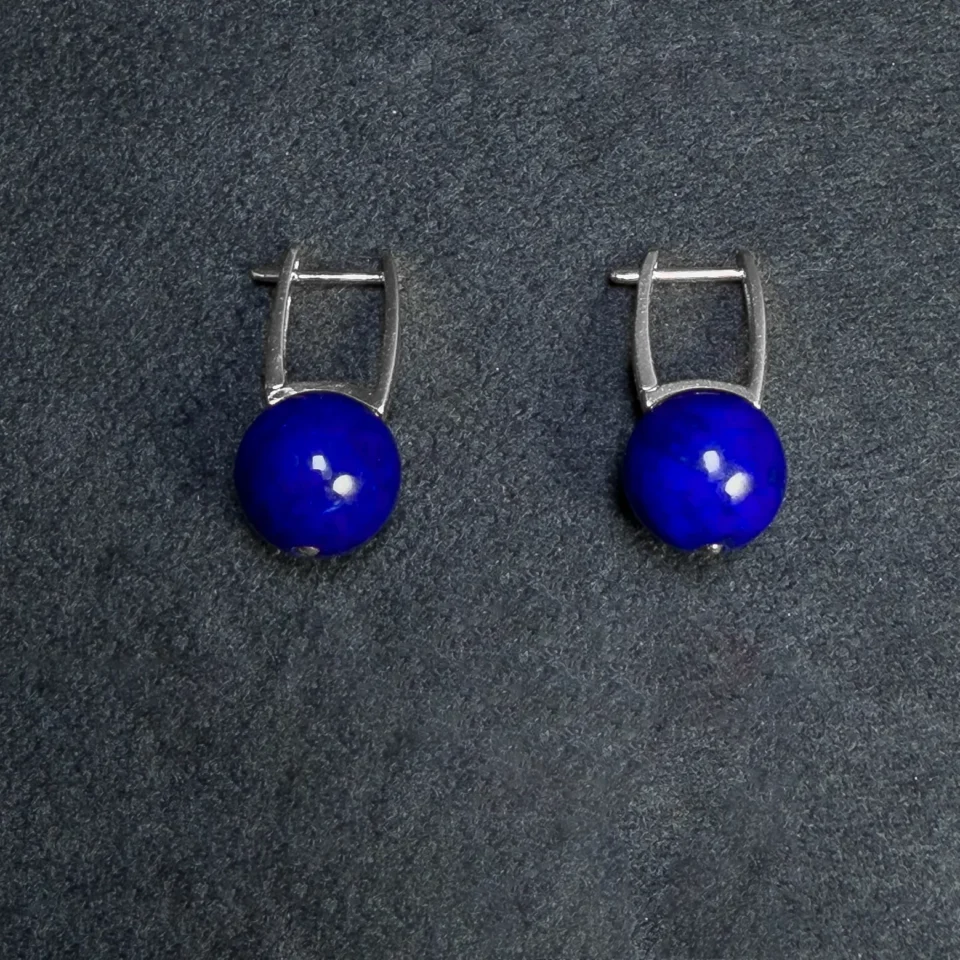
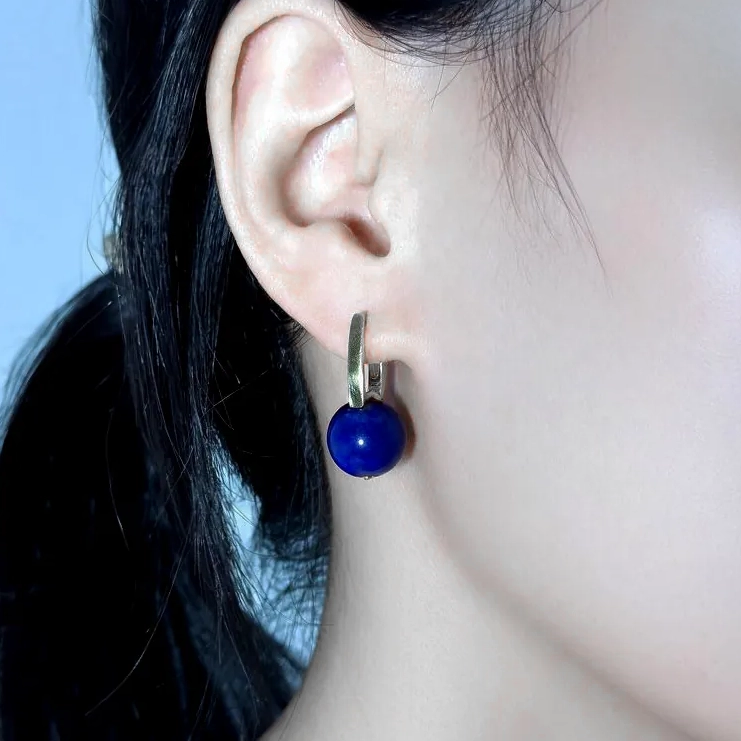
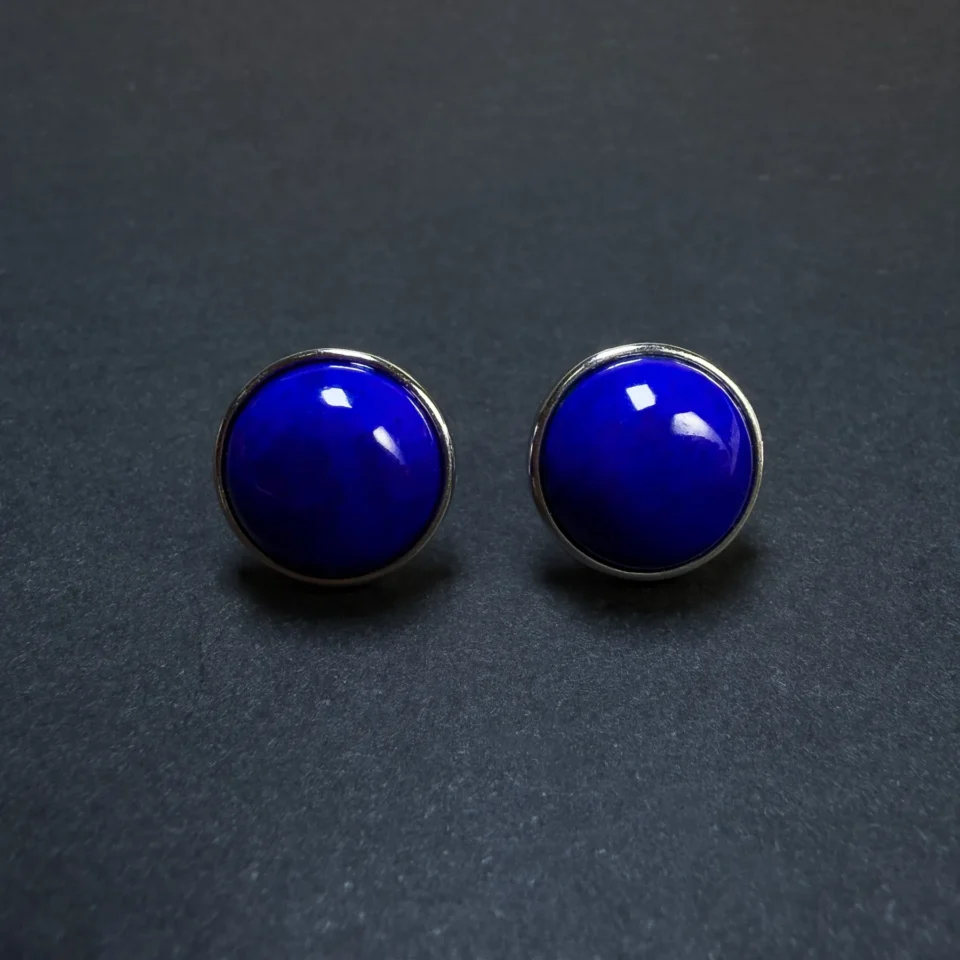
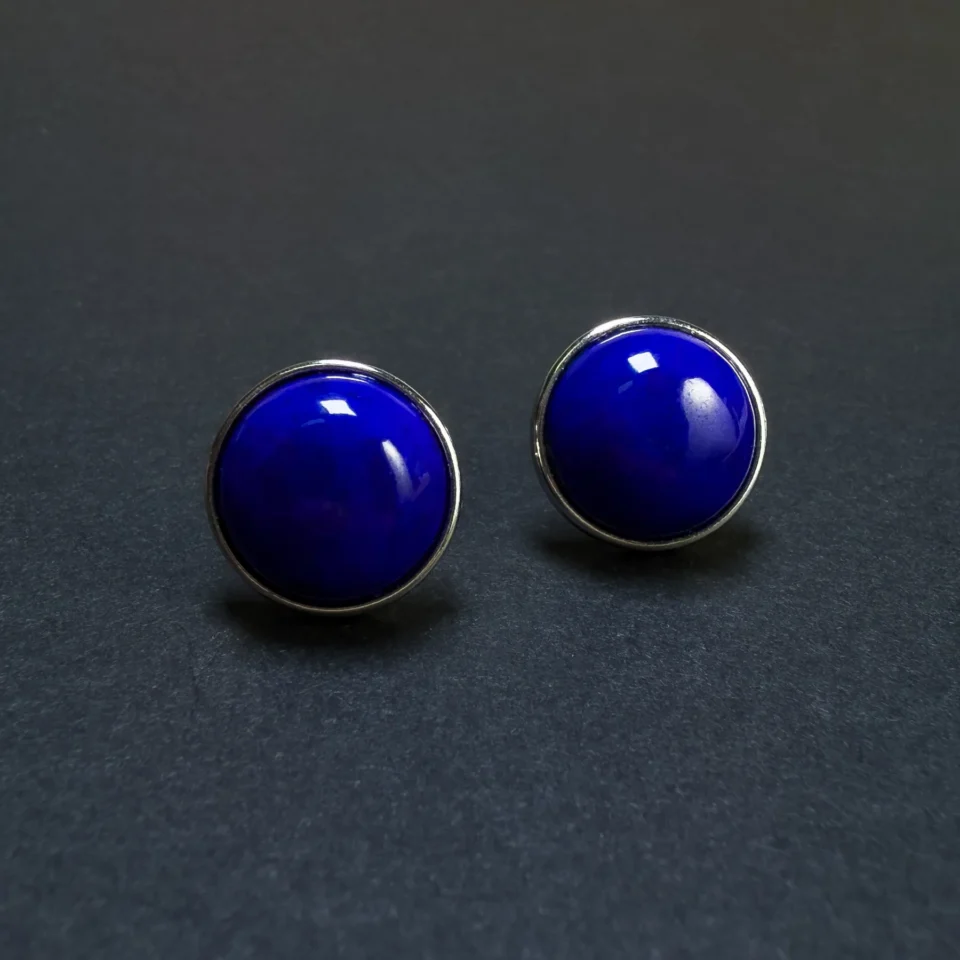
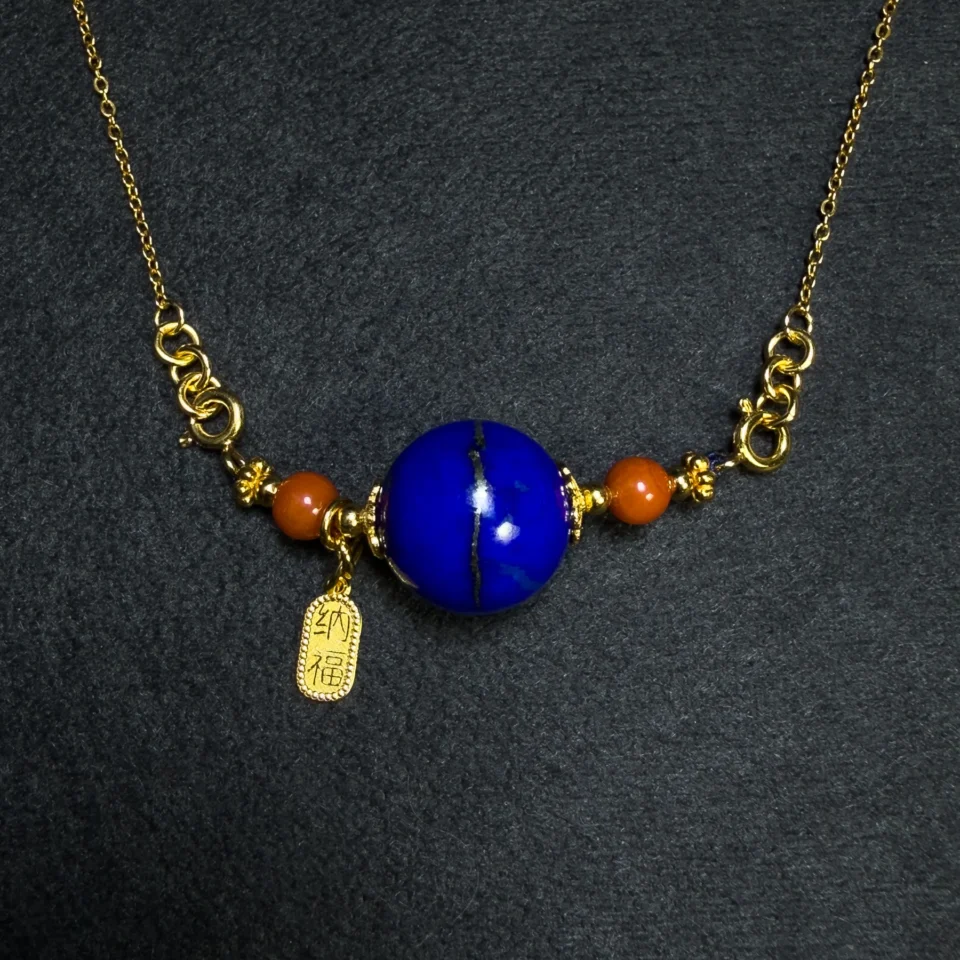
Every piece of lapis lazuli we sell at Lakazur is natural and undyed: we cut and polish it ourselves from rough, so we know no dye is added along the way. Browse our natural lapis lazuli jewelry, including lapis lazuli earrings and pendants.
Frequently asked questions
Does real lapis lazuli rub off on a cotton swab?
No. Undyed lapis lazuli does not transfer color to a swab dipped in acetone or alcohol. If blue comes off, the stone is dyed, either as treated natural lapis or as an imitation.
Is lapis lazuli with white spots fake?
No. White spots and veins are usually calcite, part of the natural rock. Heavy calcite lowers the value, but it is a sign of natural material, not a fake.
Is reconstituted lapis real lapis?
Not in the usual sense. It may contain real lapis powder, but it is ground up, mixed with resin or glue, often dyed and pressed into shape. It is a manufactured product and should be sold and priced as one.
Can real lapis lazuli be dyed?
Yes. Low-grade natural lapis is often dyed to deepen the blue and hide calcite. It is still lapis, but treated, worth less than undyed material, and should be disclosed by the seller.
Does real lapis lazuli fade?
The color of undyed lapis is stable. Dye is what can fade or rub off with chemicals. To be safe, clean any lapis with warm, soapy water and never with steam or ultrasonic cleaners (GIA).
What is the most reliable way to tell if lapis is real at home?
Combine three things: compare the color and texture with natural variation in mind, look for irregular pyrite and calcite under magnification, and do a swab test in a hidden spot. If any of these look doubtful and the piece is valuable, take it to a gem lab.