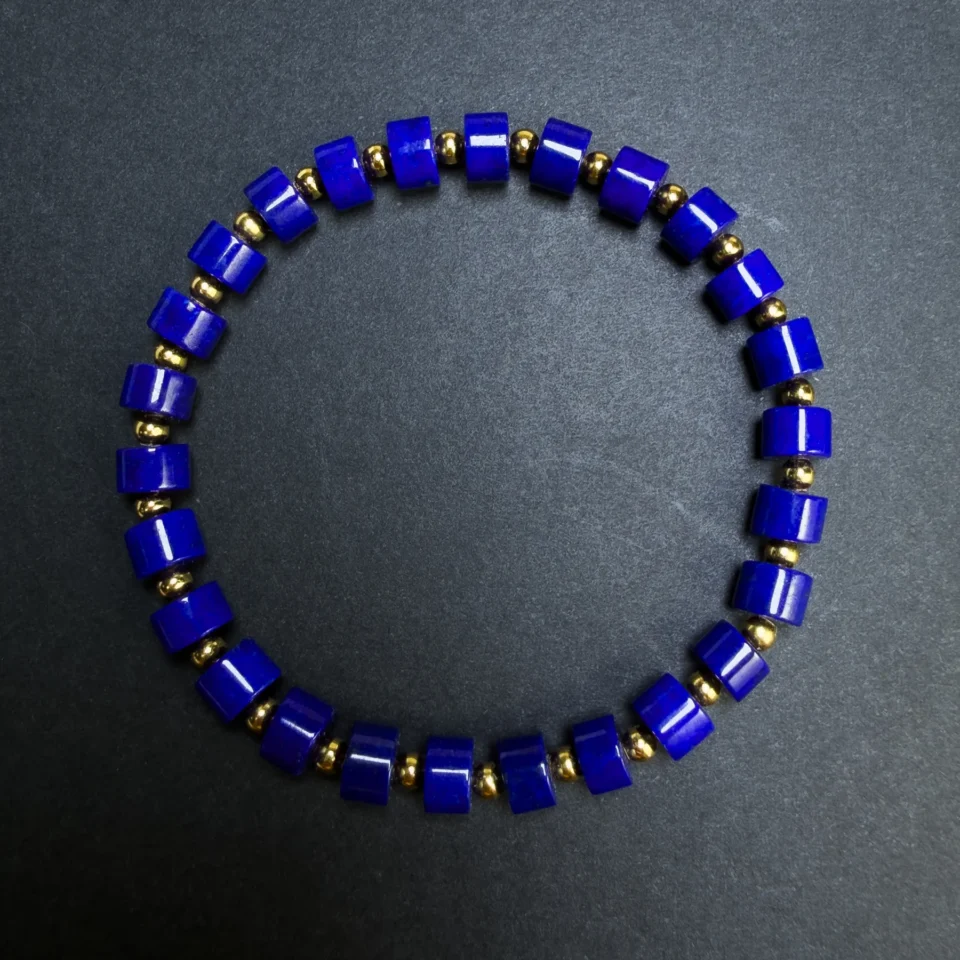
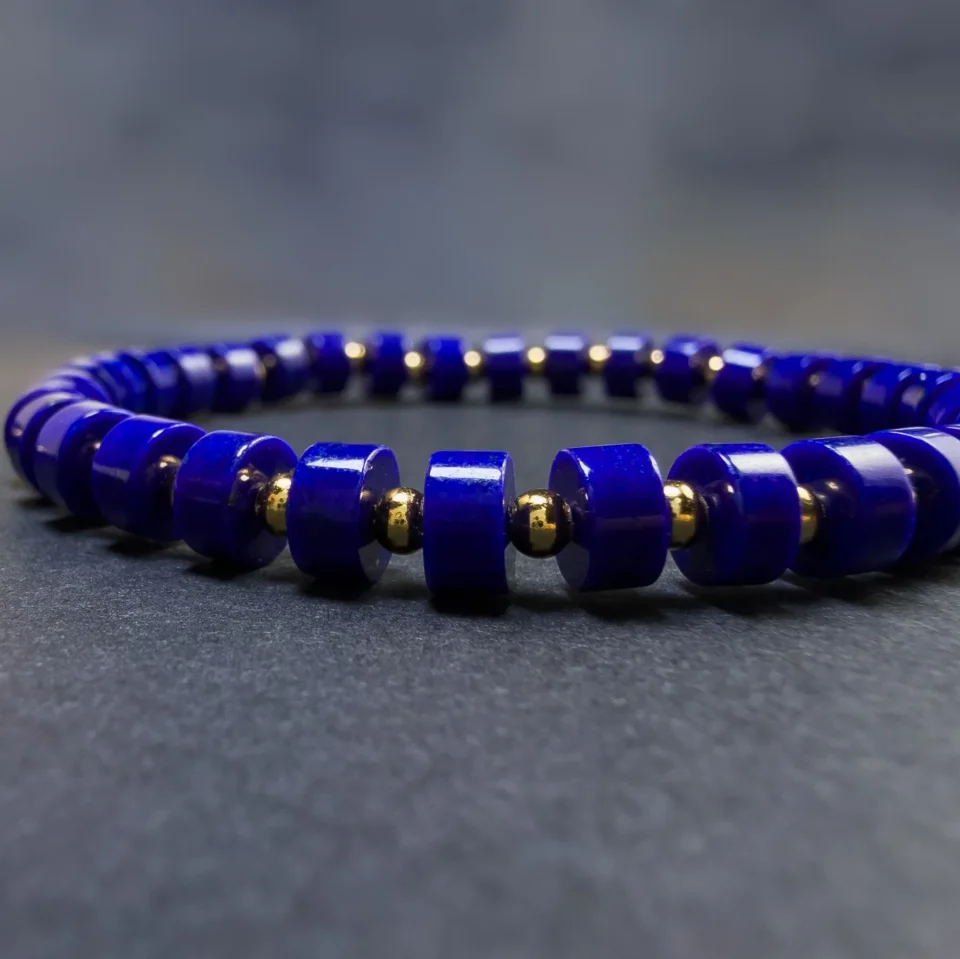
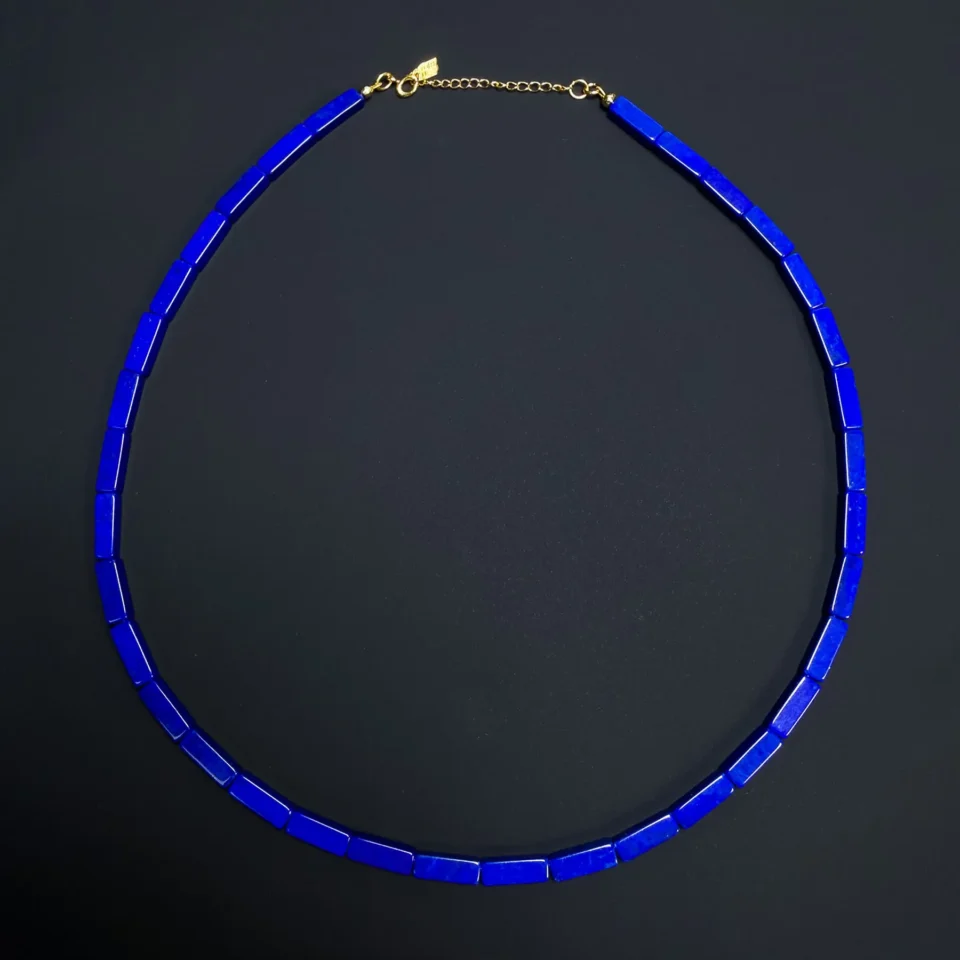
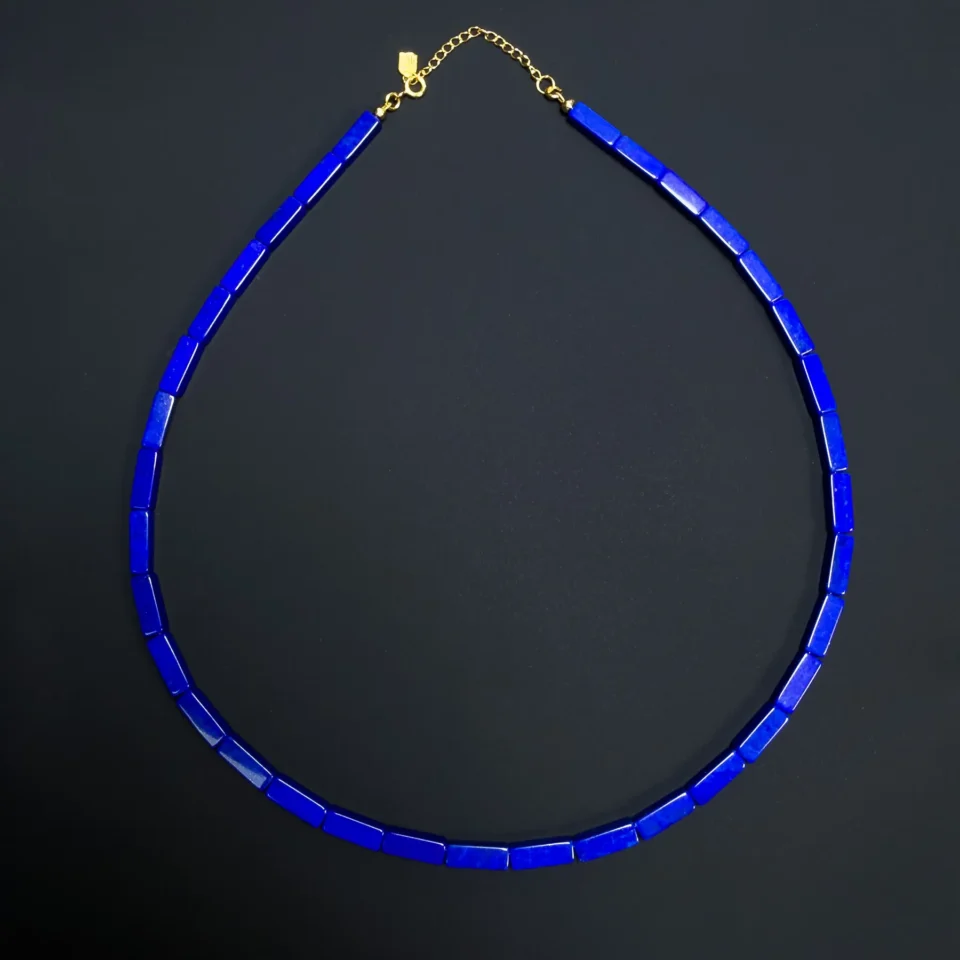
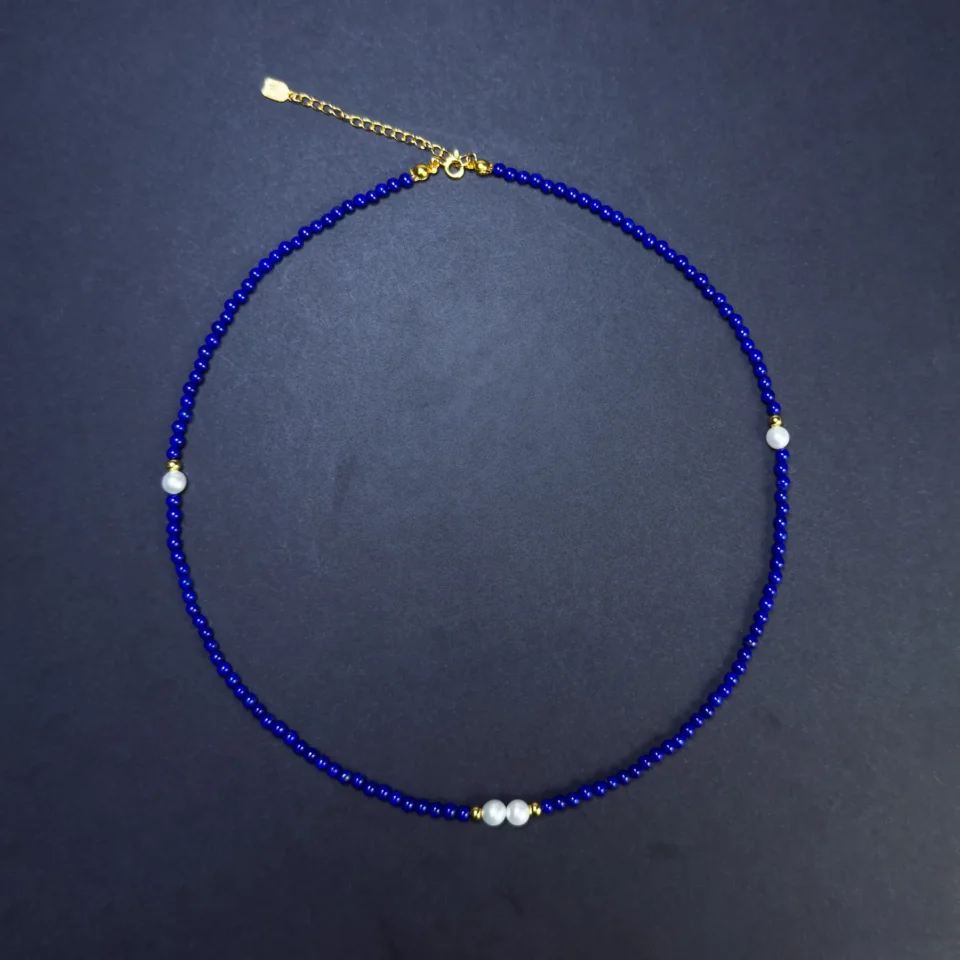
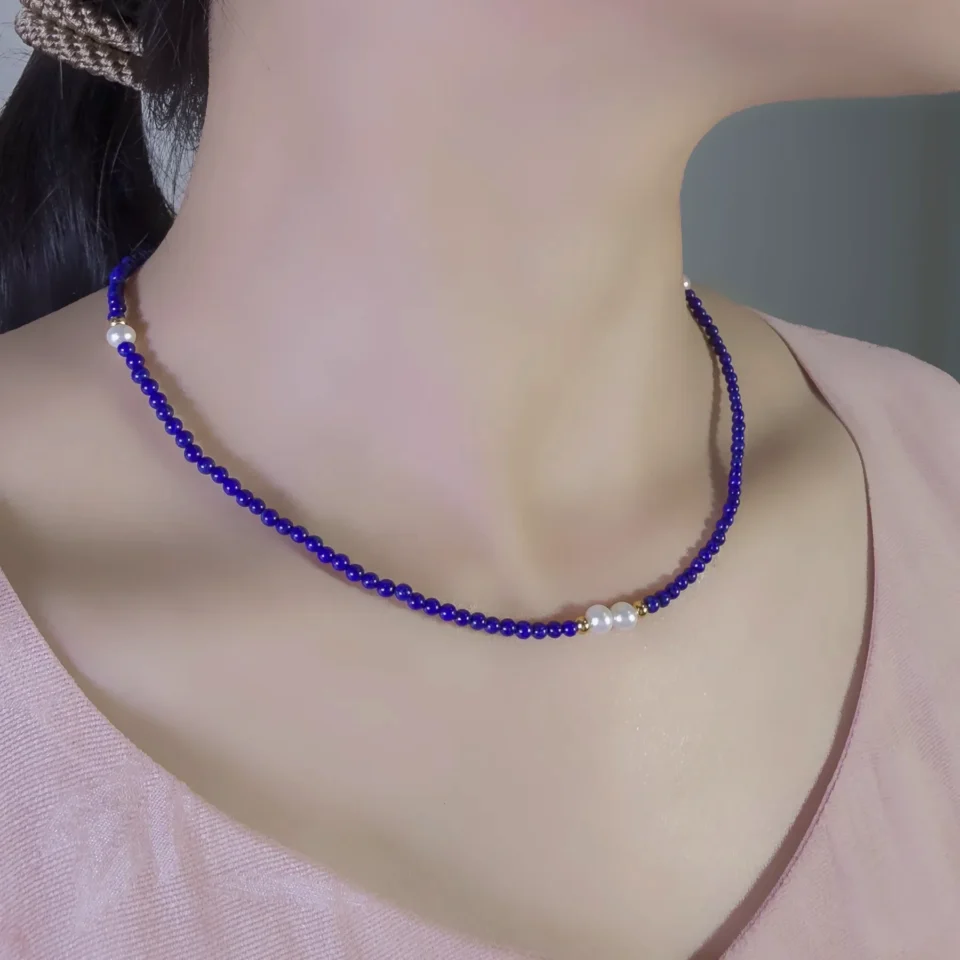
“Black lapis” is a market description, not an official GIA color grade. GIA describes lapis lazuli as slightly greenish blue to violetish blue, generally medium to dark in tone, with intense medium-to-dark blue or violetish blue among the most prized colors. In our own sourcing, however, we also encounter natural lapis so dark that it can appear blue-black or nearly black in ordinary light.
In the Chinese lapis trade, extremely dark natural lapis is sometimes described as “blackcurrant-colored lapis.” This is an informal trade term rather than a laboratory or GIA color category. Against white, very dark beads may look almost black; viewed more closely or against a darker background, their blue can become easier to see.
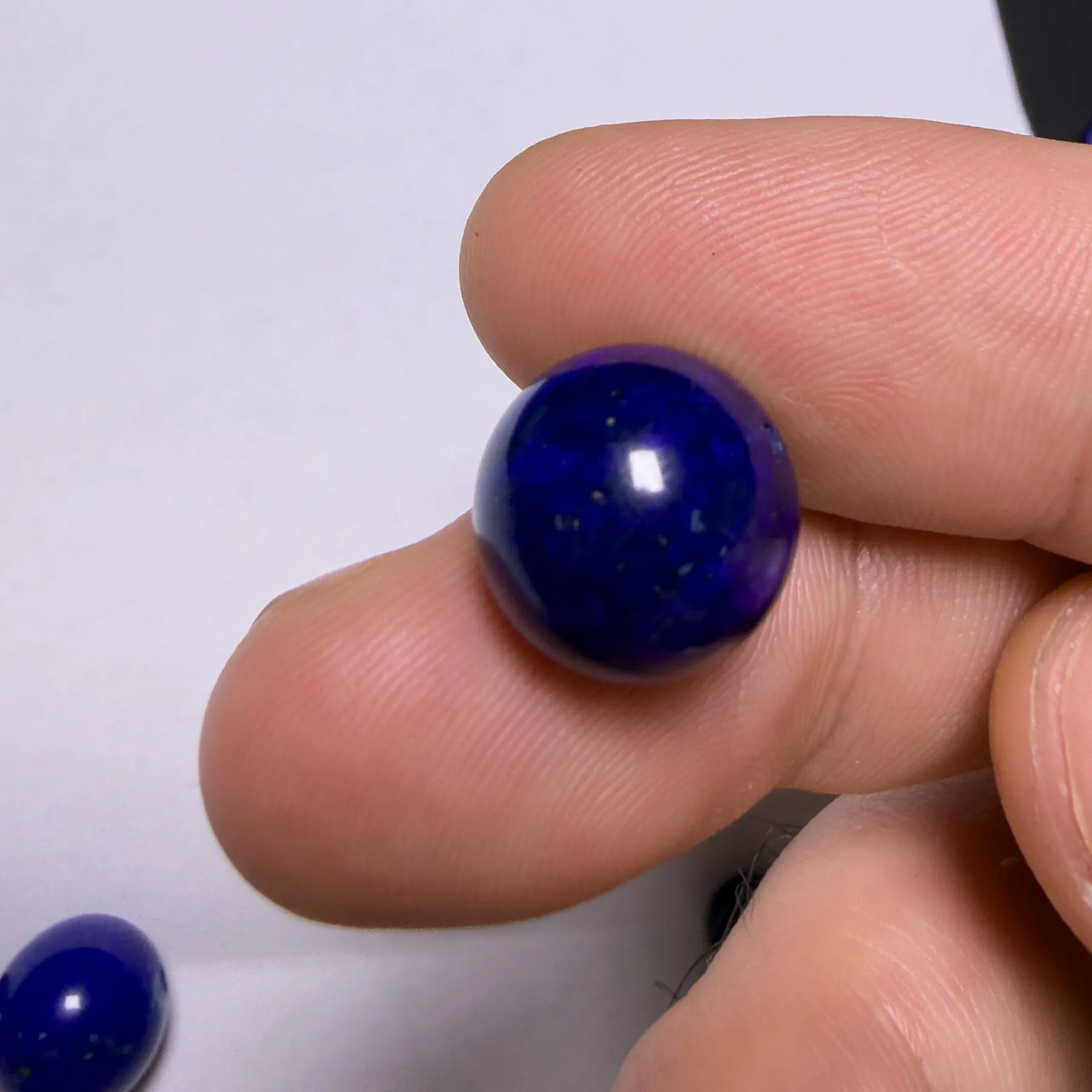
Is Black Lapis Lazuli a Natural Color?
Natural lapis lazuli is fundamentally a blue material. GIA’s published color range runs from greenish blue through royal and deep violetish blue rather than defining “black” as a separate lapis color category. That does not mean a natural piece cannot look black. When the tone is extremely dark, the eye may read the surface as blue-black or nearly black, especially in ordinary indoor light or against a bright background.
For a broader look at the normal blue range of lapis, see our guide to lapis lazuli color. An almost-black appearance does not make “black” an official natural lapis color grade.
What Does “Blackcurrant-Colored Lapis” Mean in the Chinese Market?
In our experience with the Chinese lapis trade, extremely dark natural lapis is sometimes described as “blackcurrant-colored lapis.” The term describes its blue-black to nearly black appearance rather than an official gemological category. It does not by itself prove origin, treatment status or quality, and it is not a GIA grade.
When we examine this kind of material, we still look for the same things we would in other lapis: the quality of the underlying blue, visible calcite and pyrite, fineness of texture, polish, and whether the color is natural or treated. A very dark color can be visually striking, but darkness alone is not enough to judge the stone.
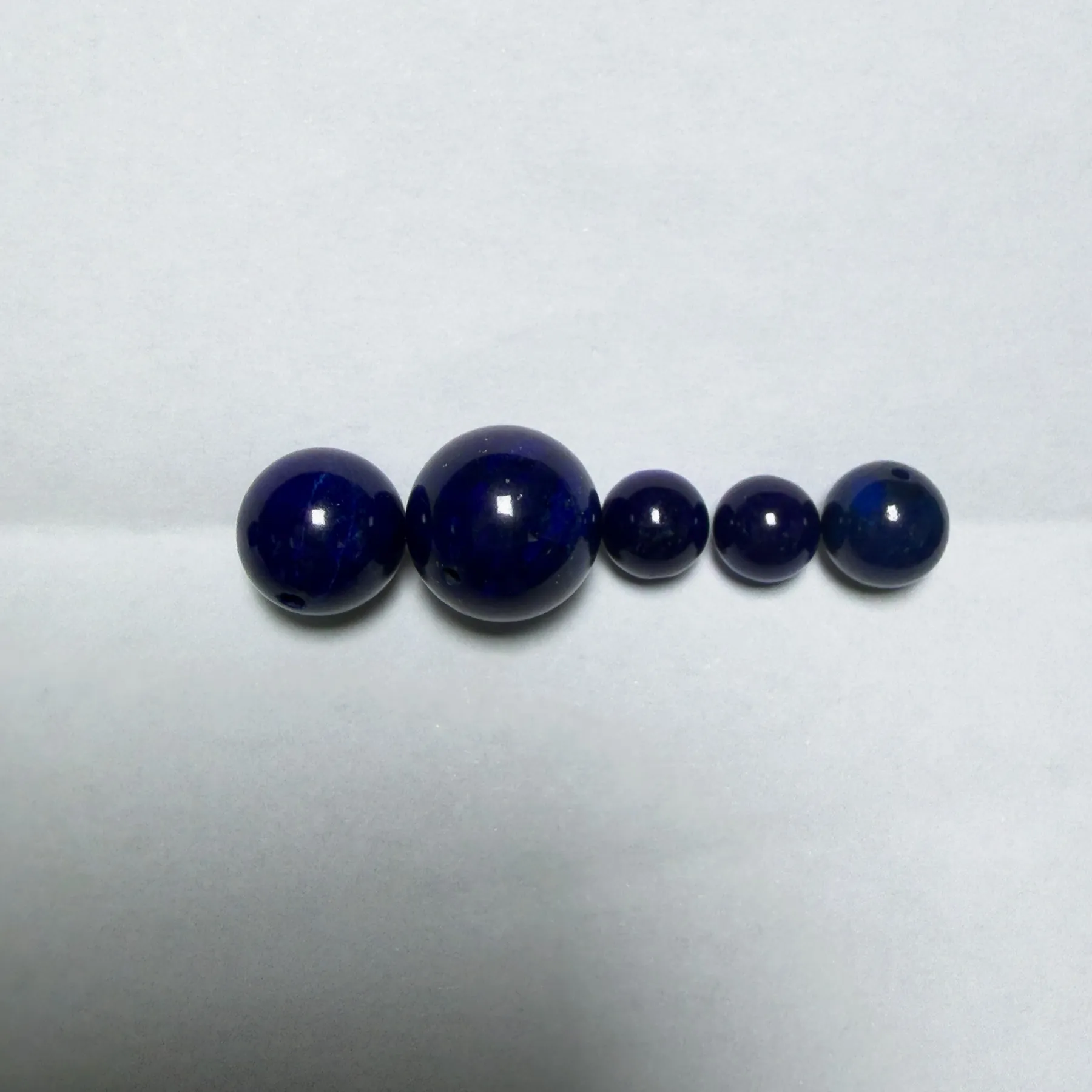
Why Can the Same Dark Lapis Look Blacker or Bluer?
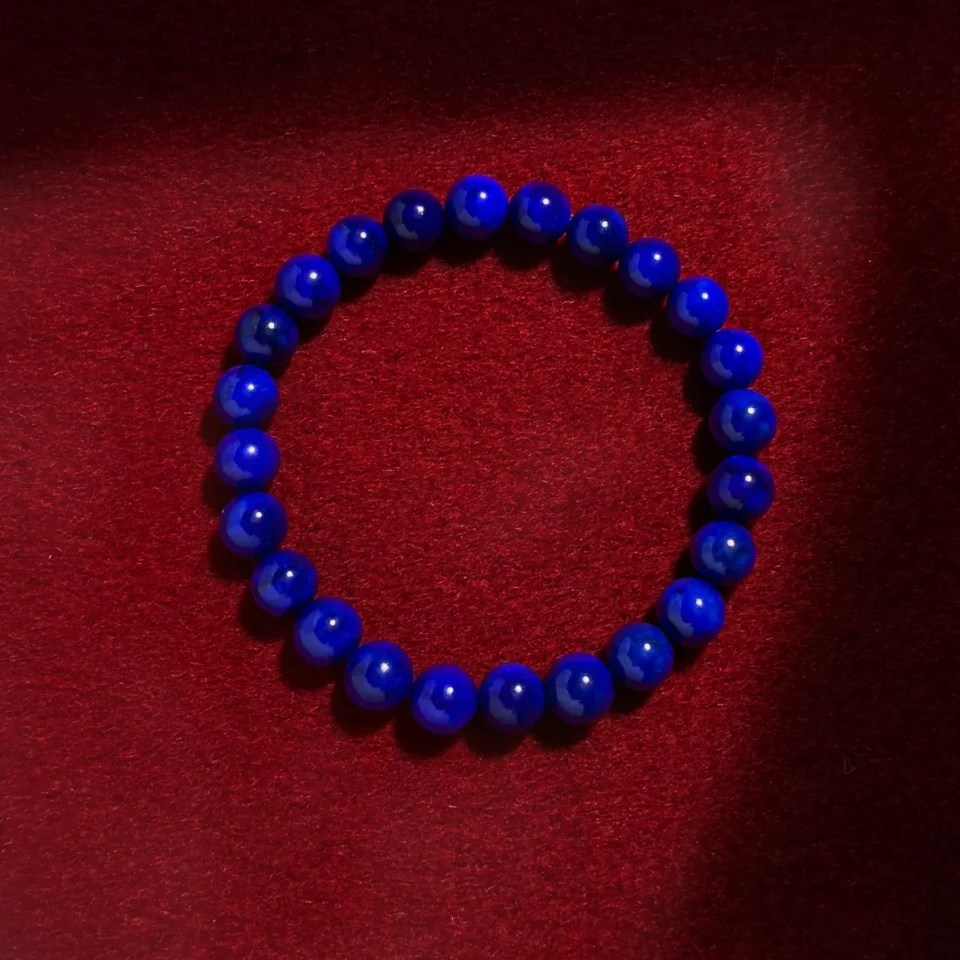
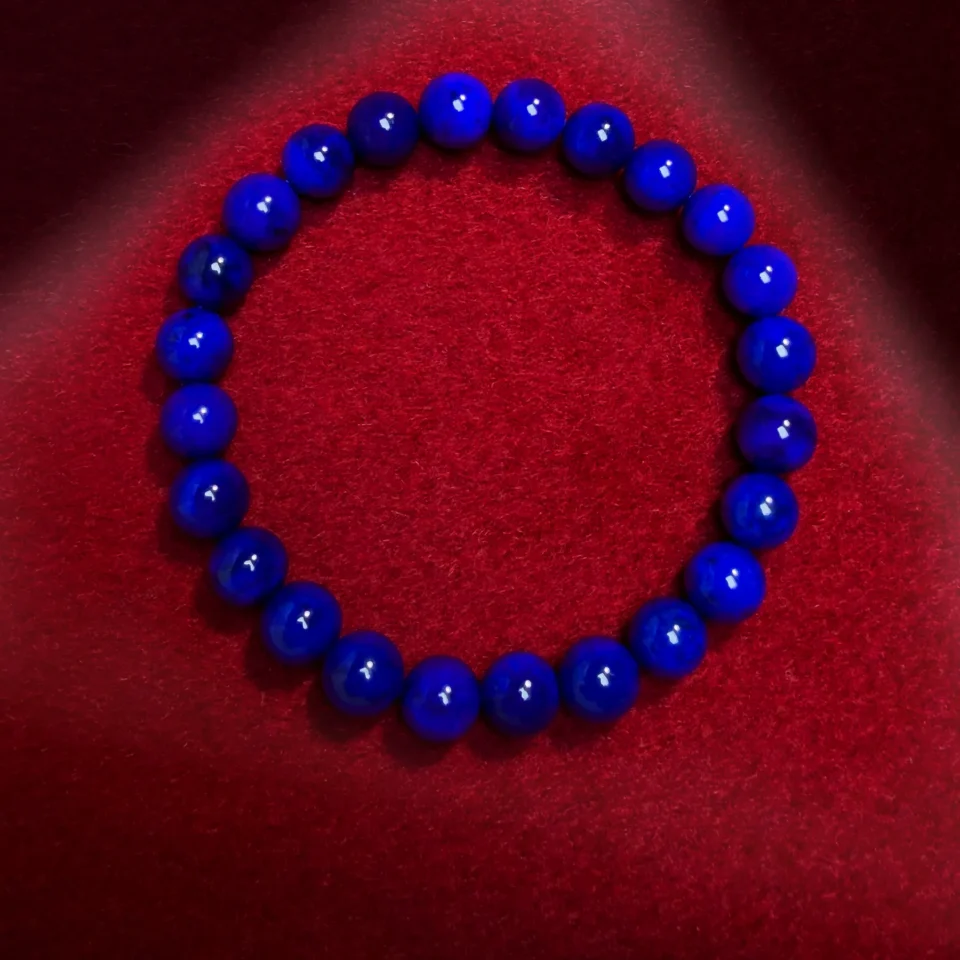
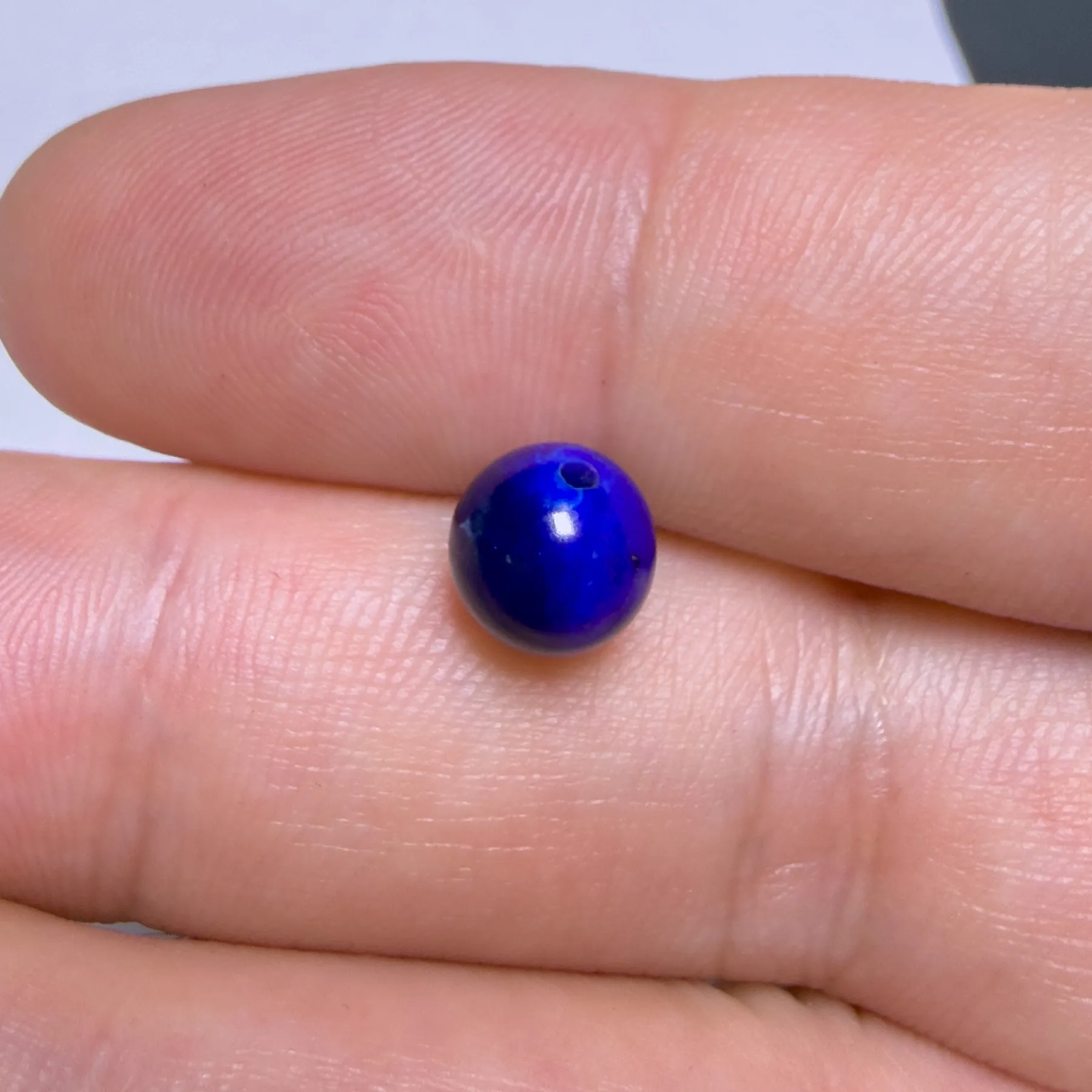
Background, lighting and camera exposure change how dark blue is perceived. A white background creates strong contrast, so an already dark bead can look almost black. Against a black background, that contrast is reduced and the blue areas can become easier to see. This is one reason a single product photograph is not enough to judge a very dark piece.
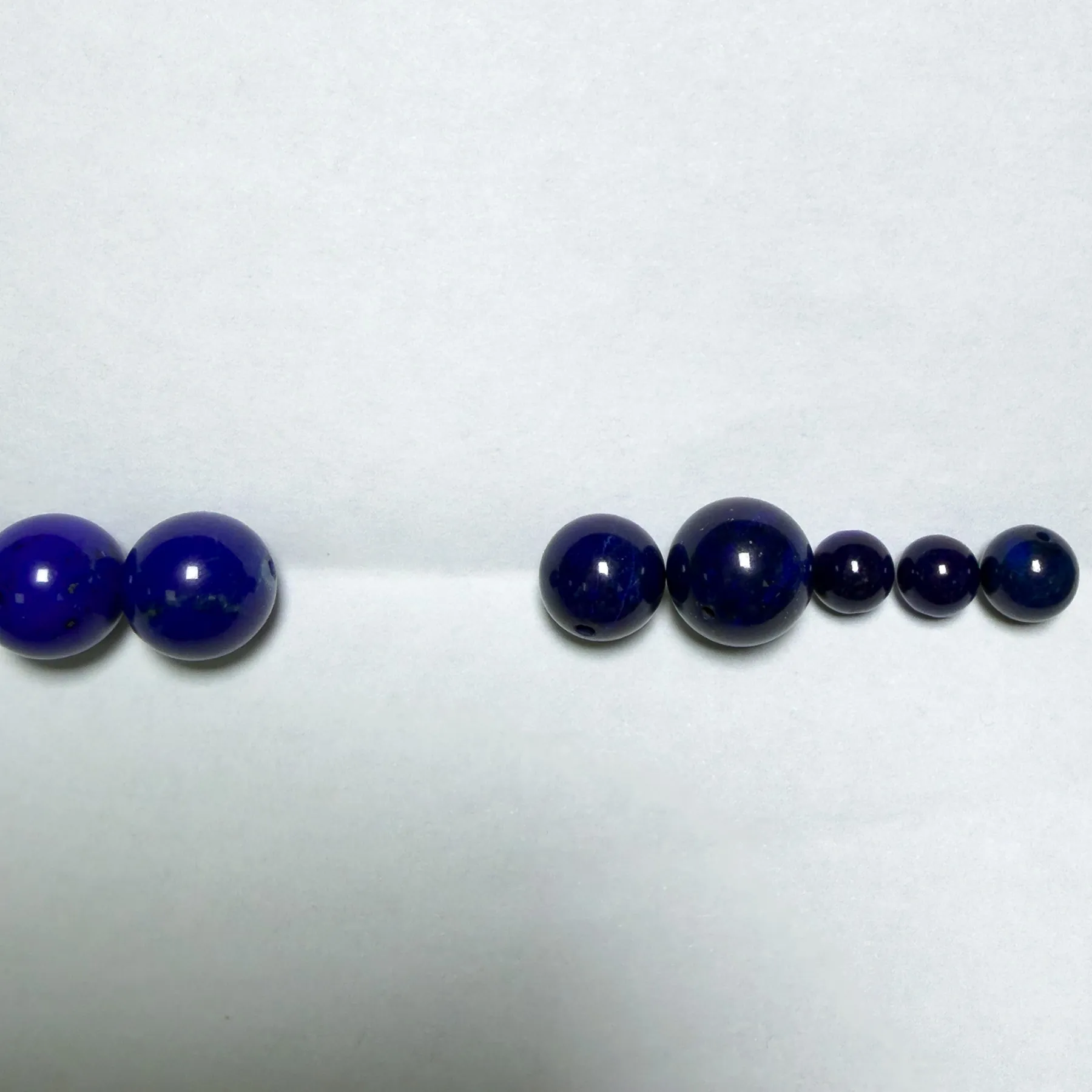
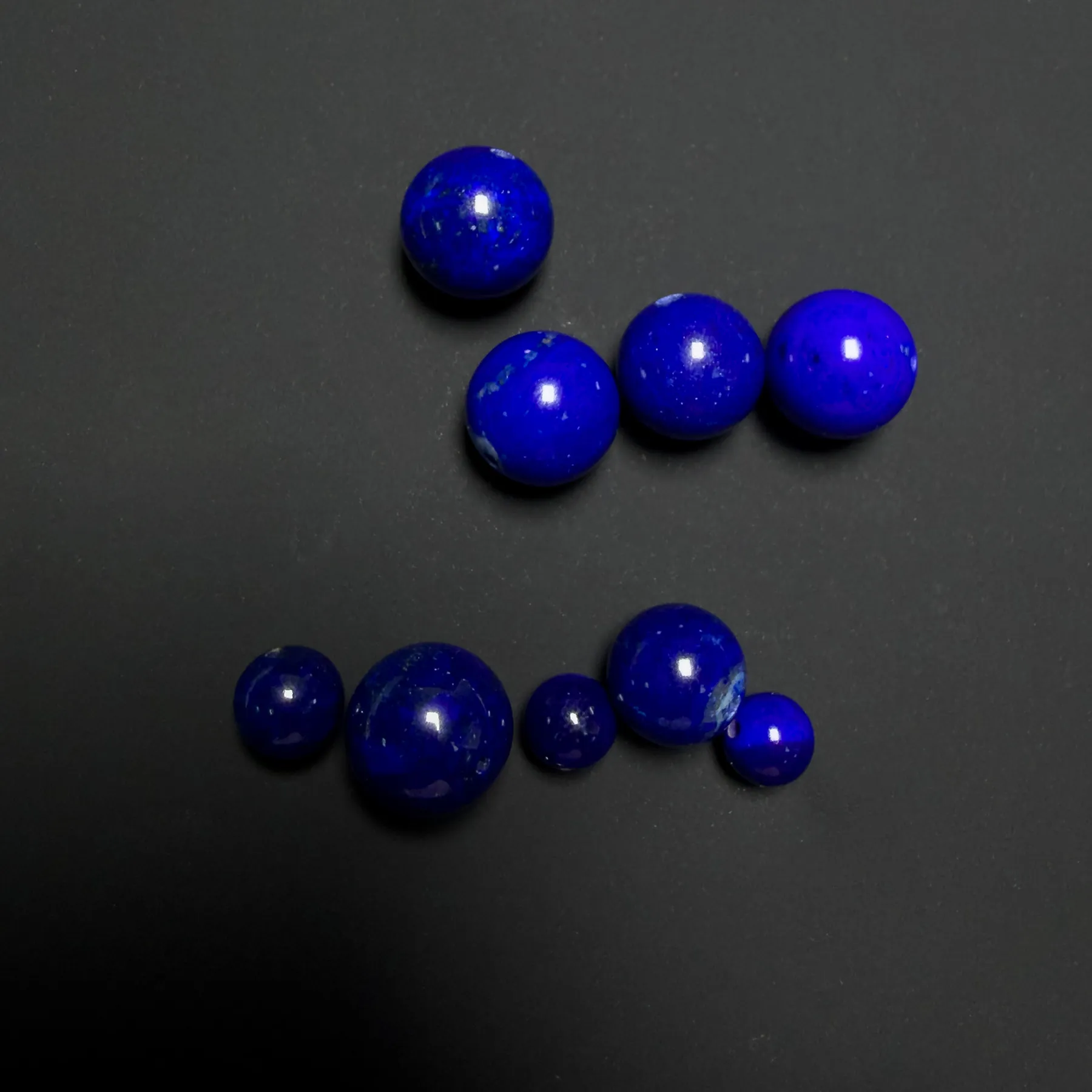
Can One Black Lapis Bead Show Both Blue and Nearly Black Areas?
Yes. One side of the bead below reads as vivid deep blue while the other appears much darker. The transition happens within a single polished bead. This variation is why we treat “black lapis” as a market description of appearance, not as a separate mineral or an automatic quality grade.
Is Black Lapis Dyed?
Sometimes. A dark-looking lapis bead is not automatically dyed, but the label “black lapis” is also not proof that the color is natural. GIA’s buyer’s guide notes that lapis may be dyed to improve color and conceal calcite. Material that has not been dyed may also be impregnated with wax or oil to improve color and luster.
For a purchase where treatment matters, ask the seller four direct questions: Is the color natural? Has the lapis been dyed? Has it been waxed or oiled? Can you show the material under neutral bright light? For higher-value material, seller disclosure or professional gemological testing is more reliable than appearance alone.
Is Black Lapis More Valuable?
Not simply because it is called black. GIA does not grade lapis lazuli, and “black” is not an official premium grade. In the traditional lapis market, color quality still matters: the most prized material is intense, uniform, medium-dark to dark blue or violetish blue, with little or no visible calcite and, depending on the material, little or attractively distributed pyrite.
From our own sourcing experience, an extremely dark piece can be desirable when the underlying blue remains rich, the texture is fine, the polish is coherent and the treatment status is understood. We would not pay more simply because a seller calls it “black lapis.” For the broader value factors, see our lapis lazuli worth guide. For finished pieces across the color range, browse lapis lazuli jewelry.
How We Check Black Lapis in Practice
- View it under neutral bright light. Very dark material should be judged where the underlying blue can actually be seen.
- Compare it against both white and dark backgrounds. This shows how much of the “black” appearance comes from contrast.
- Look closely at the surface. Check the blue bodycolor, pale mineral areas, pyrite, texture and polish rather than judging the word “black” alone.
- Confirm treatment separately. Color appearance cannot by itself prove that the material is untreated.
Judge a dark piece in good light: look for visible blue and ask whether the color is natural or treated. “Blackcurrant-colored” is a useful Chinese trade description for this appearance, but the stone still needs to be evaluated as lapis lazuli.