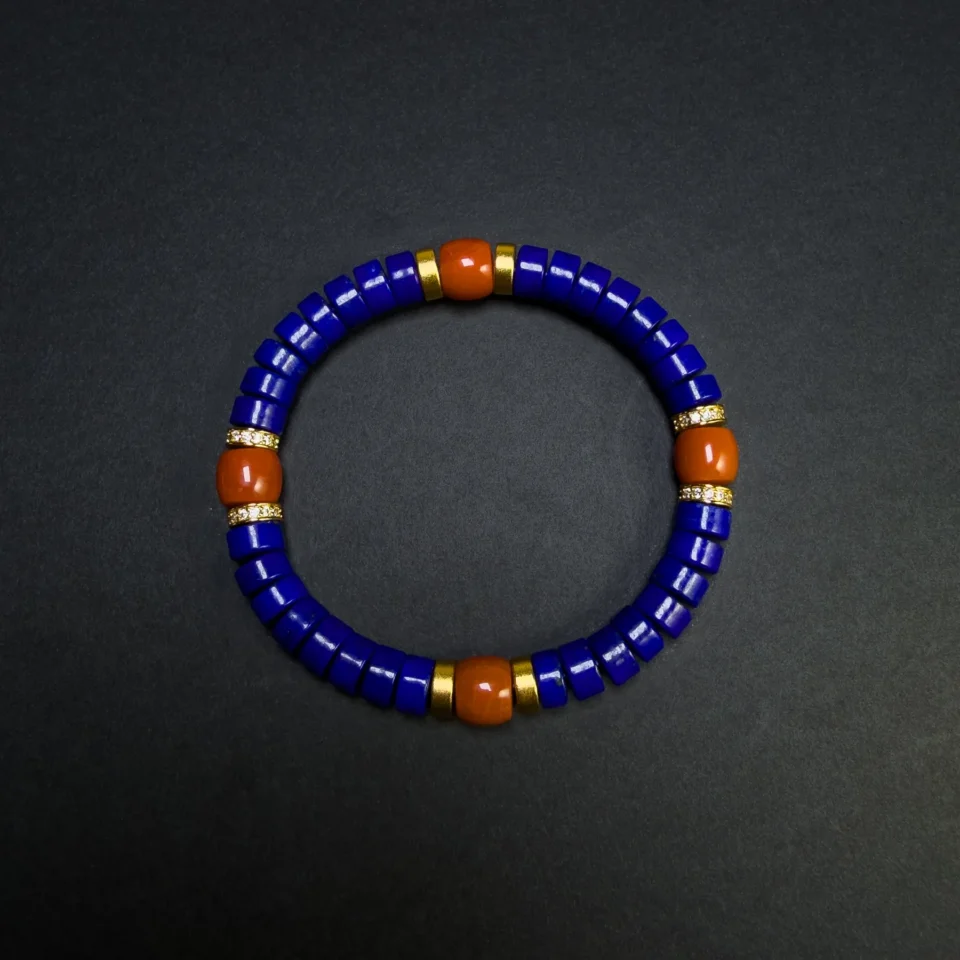
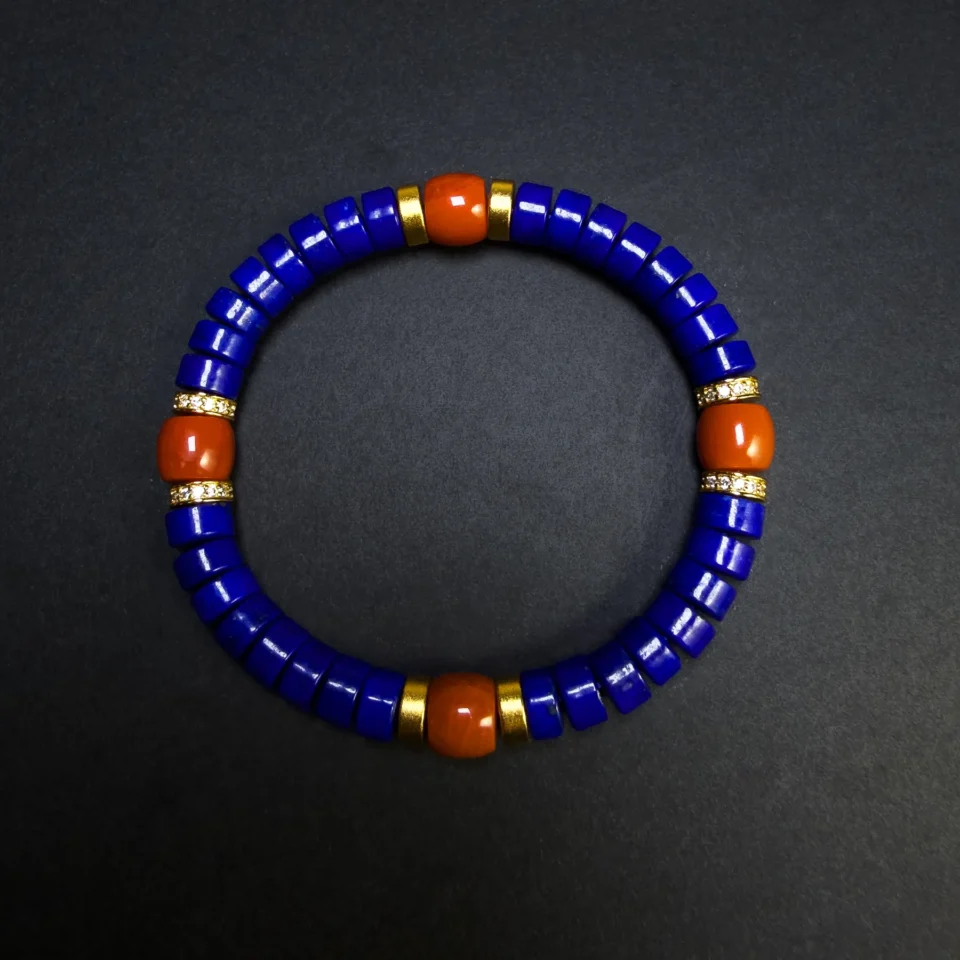
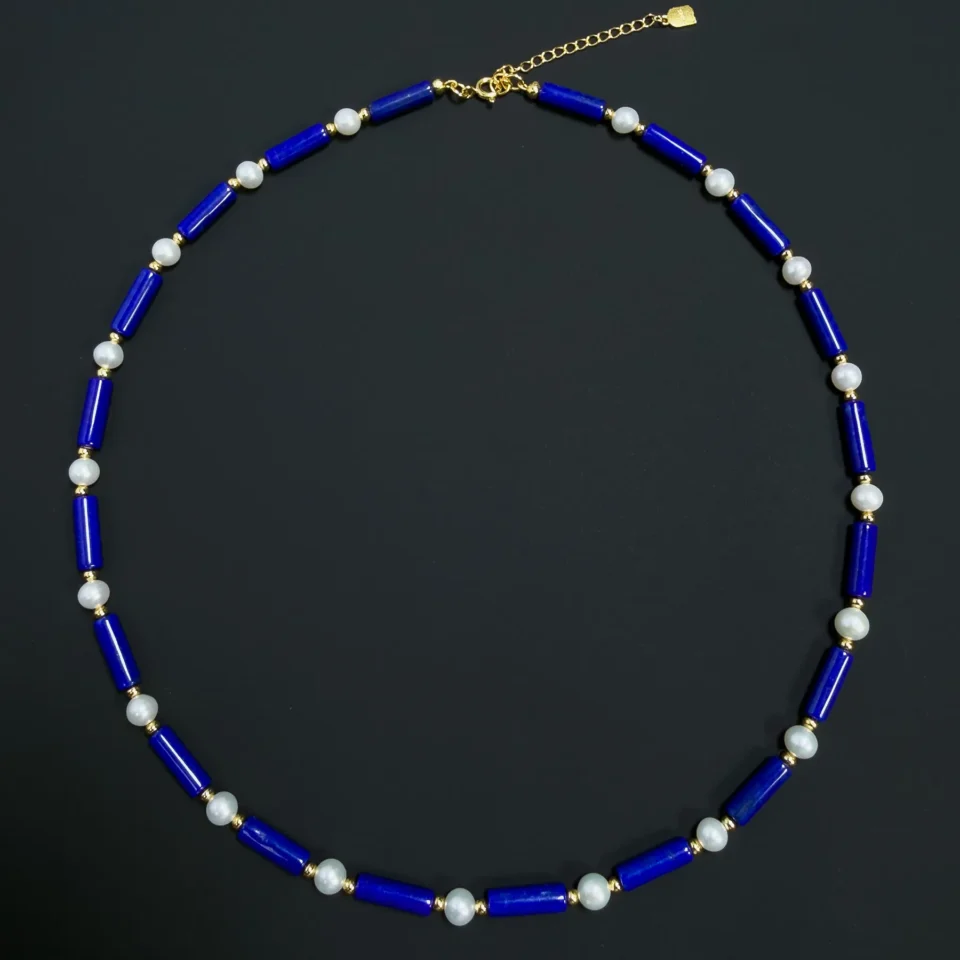
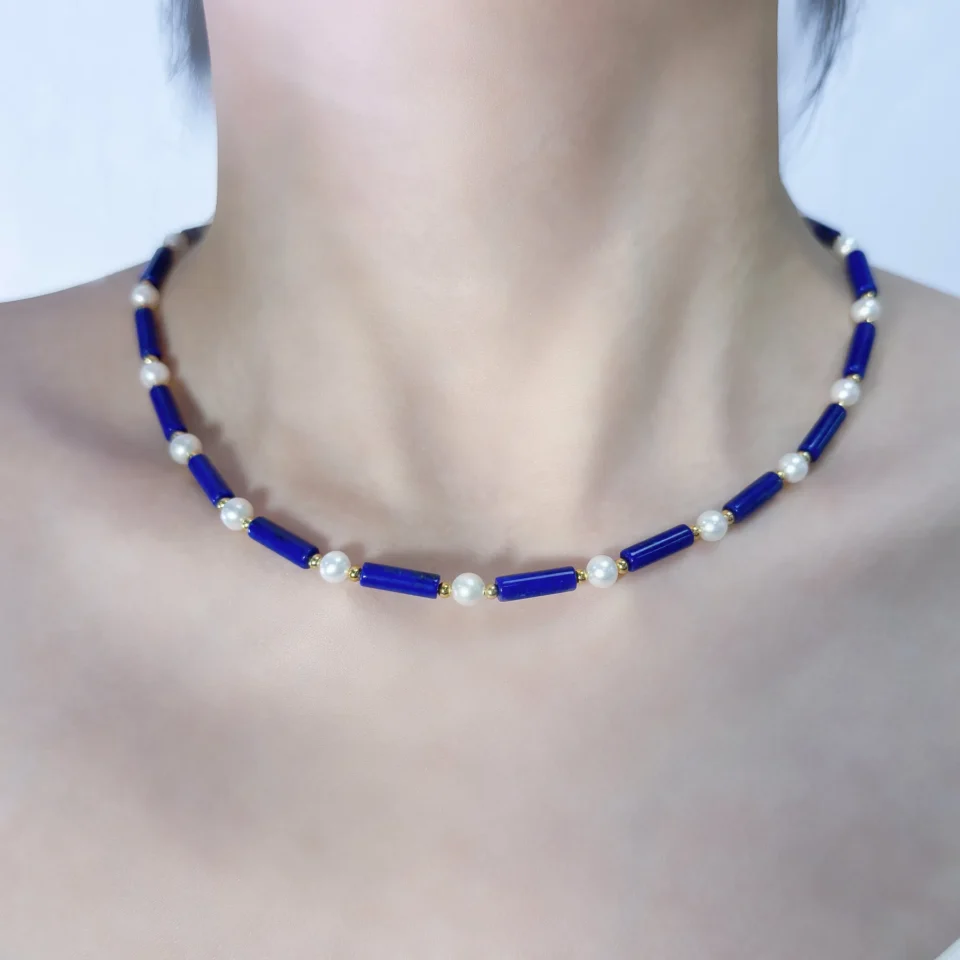
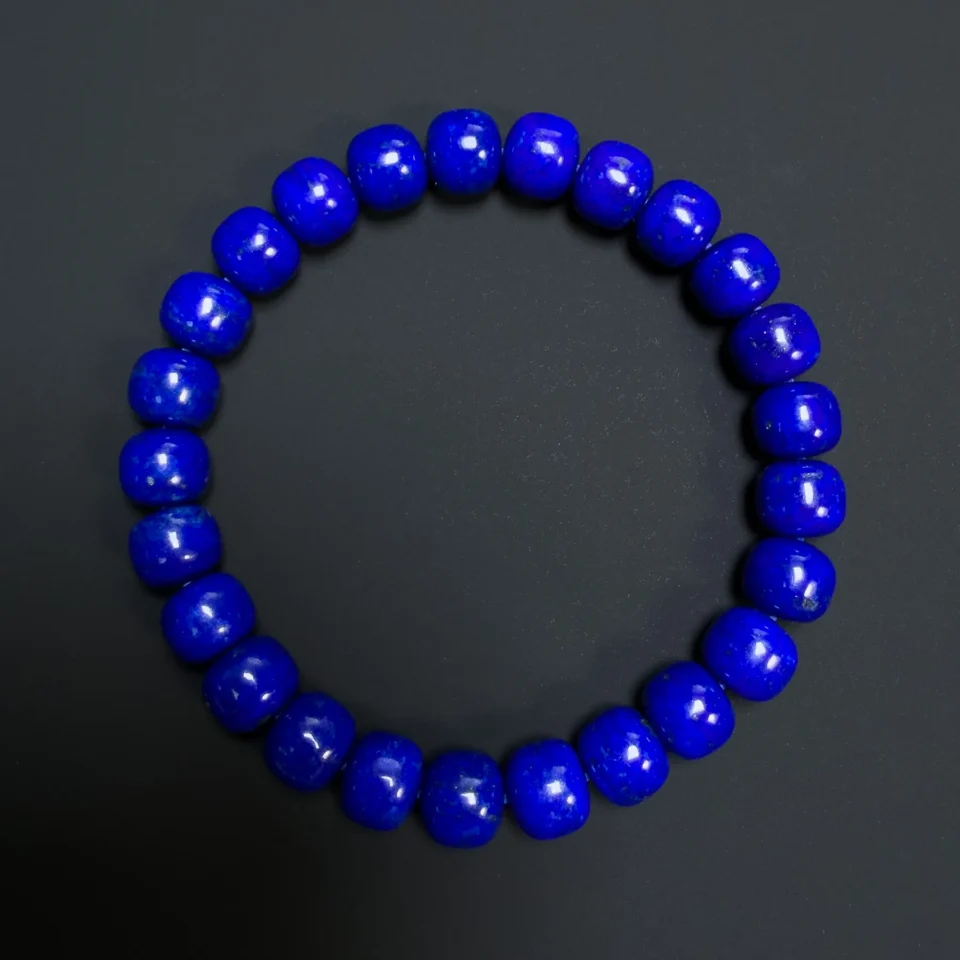
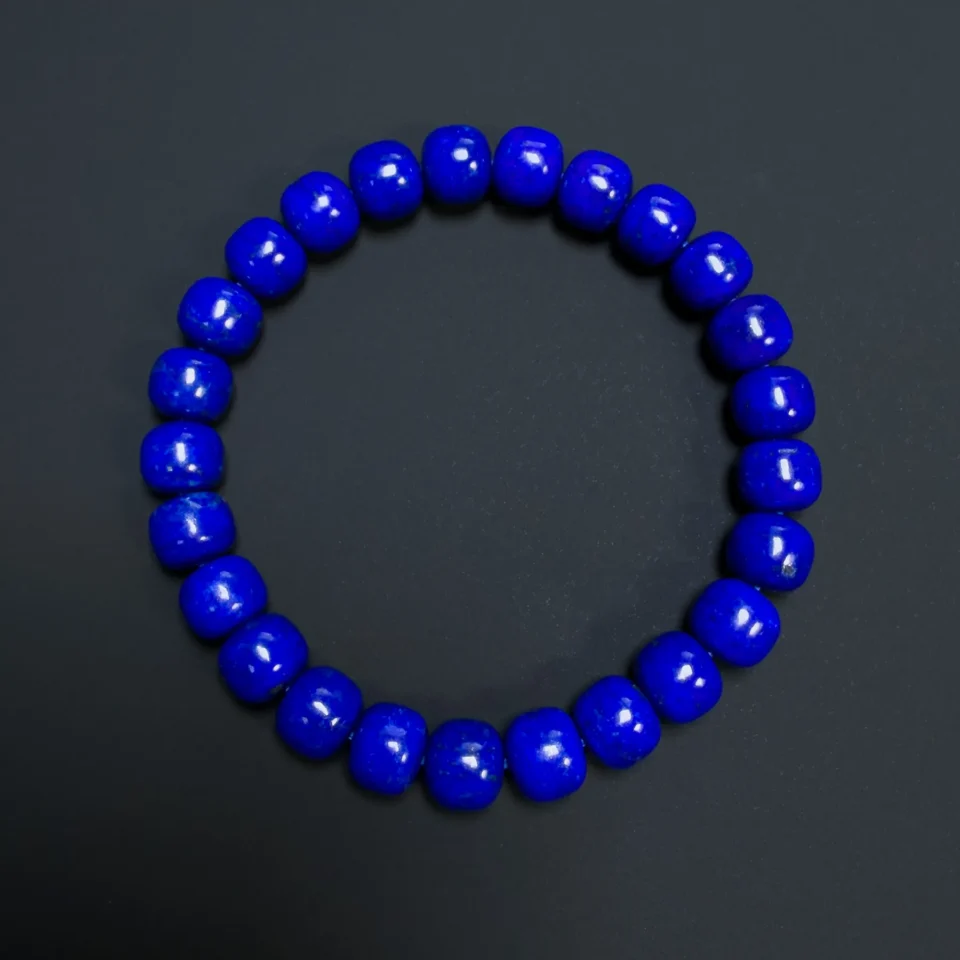
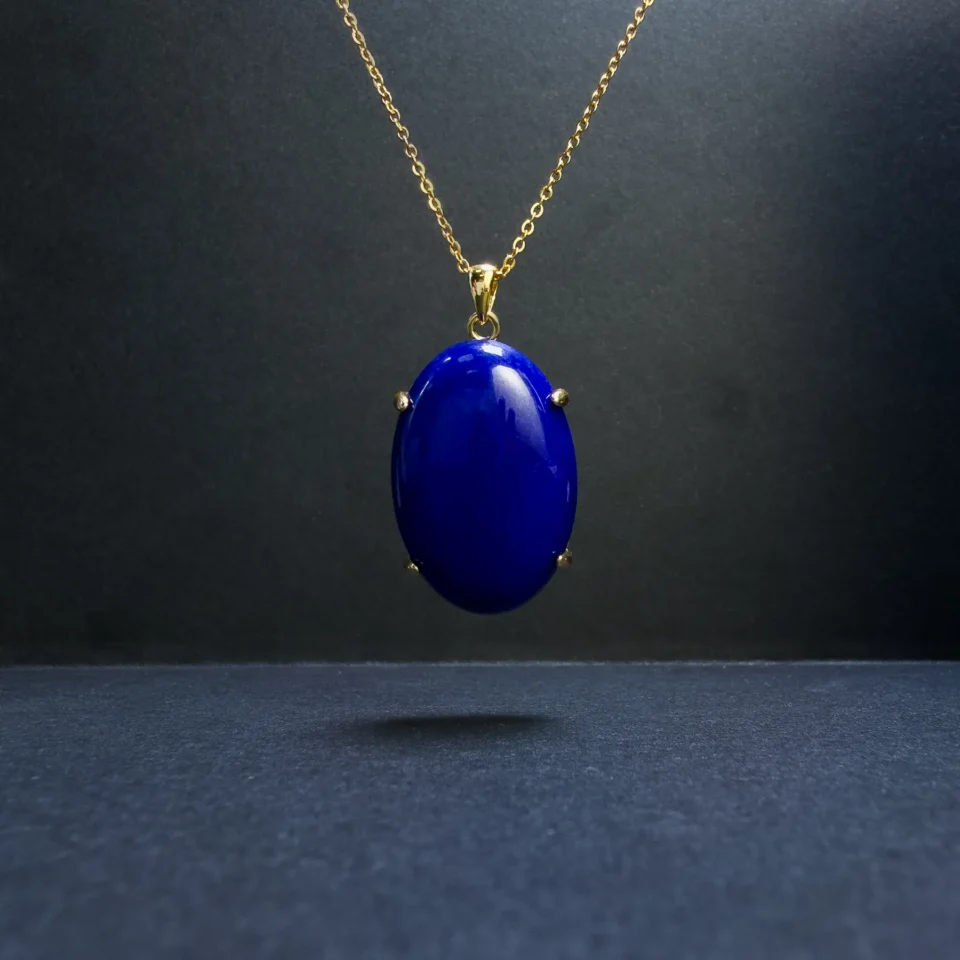
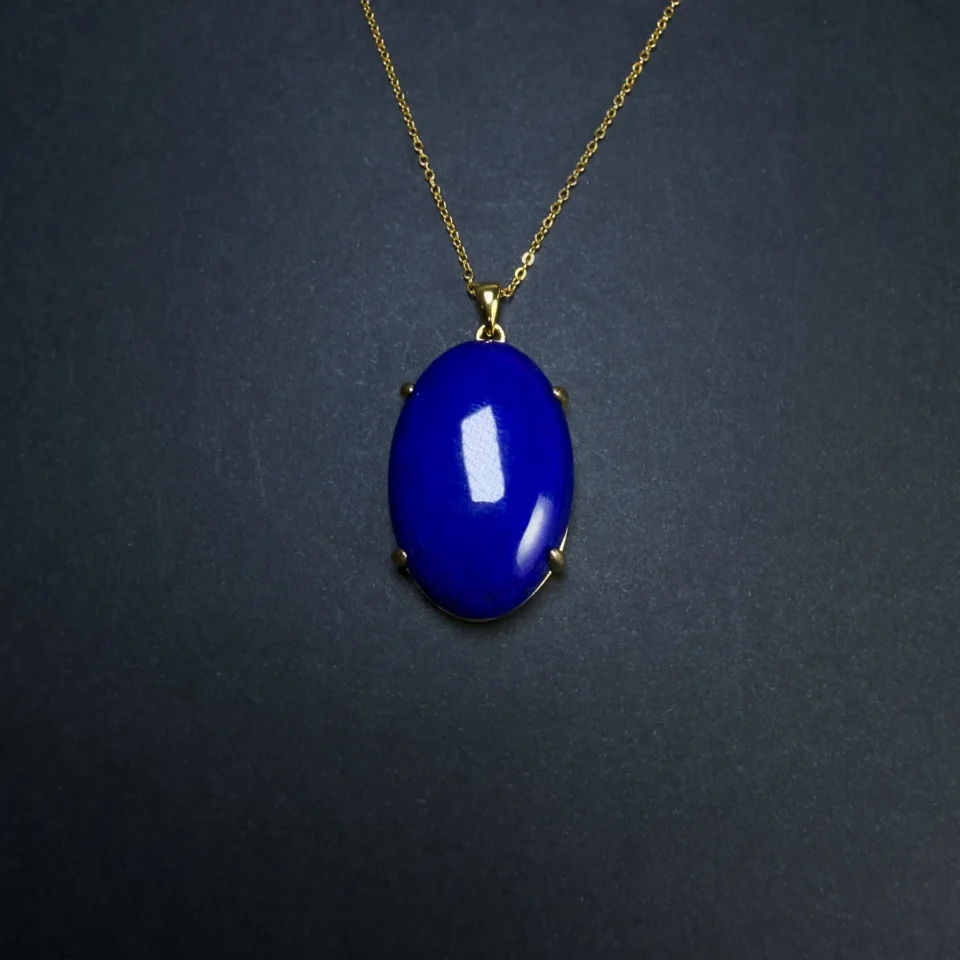
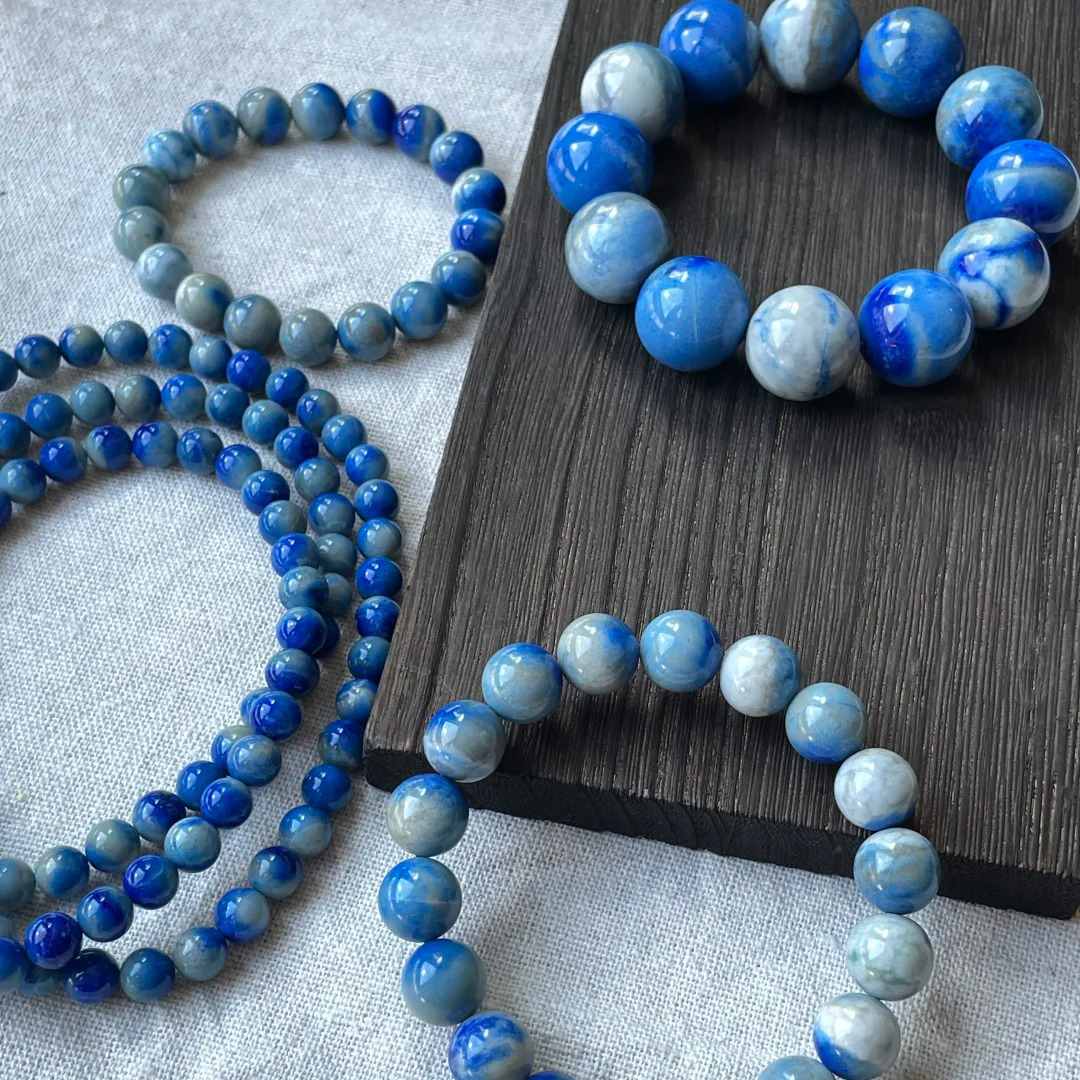
Denim lapis lazuli is not a separate mineral and it is not an official GIA grade. The name is used in the trade for lapis with a mottled, washed-blue appearance that can resemble faded denim. GIA documented material marketed as “denim” lapis in 1993, describing small medium-to-dark blue areas interspersed with small white areas that produced an overall pale, mottled blue look. The material in that report was represented as coming from Afghanistan, which is a useful reminder that “denim” describes an appearance rather than one fixed country of origin.
The appeal of denim lapis comes from the balance between blue and pale mineral areas: sometimes soft and cloud-like, sometimes strongly contrasted, and sometimes much more gray or white. The term itself does not tell you whether the stone is untreated, how valuable it is, or how well it will look once cut into lapis lazuli jewelry.
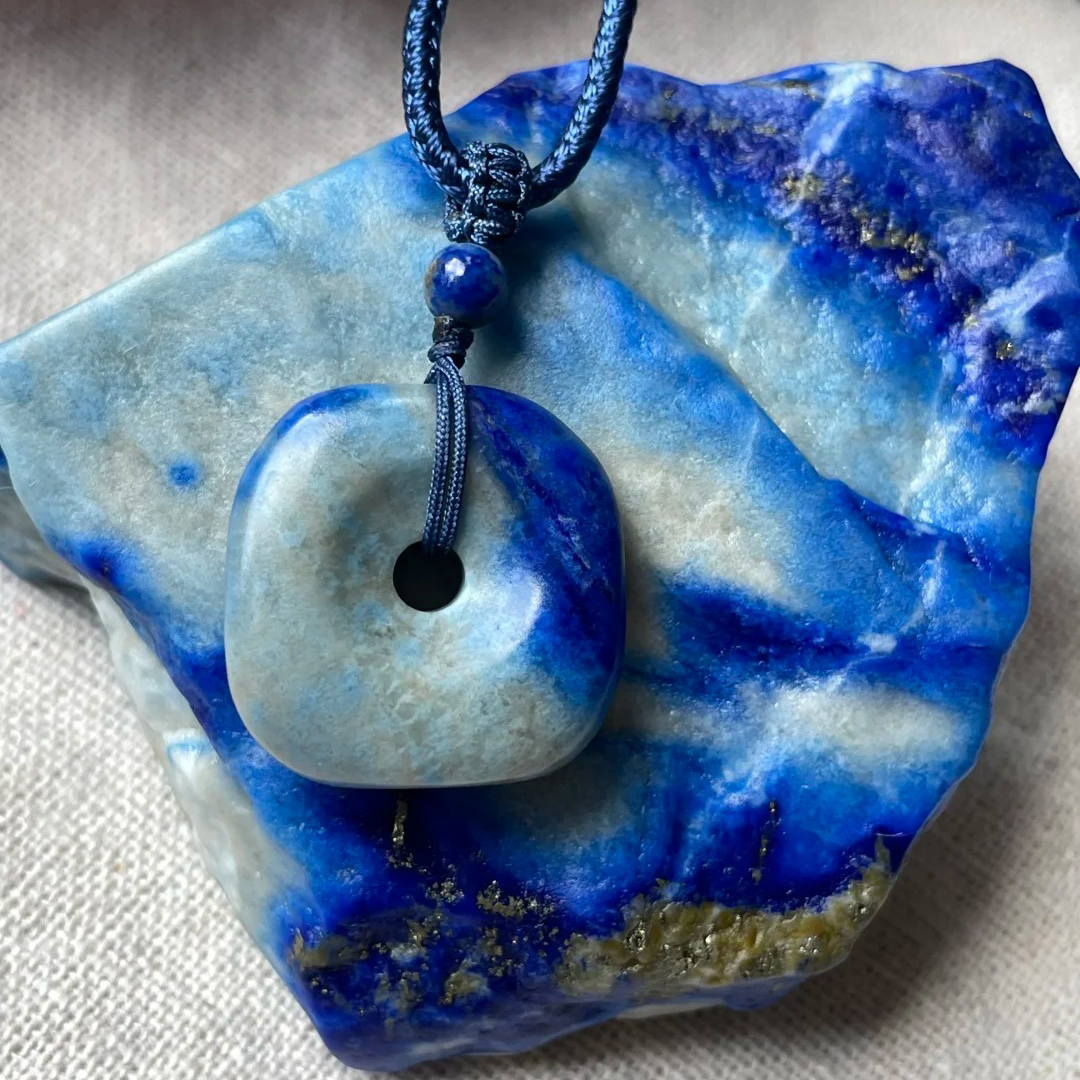
What Does Denim Lapis Lazuli Look Like?
There is no single “denim blue.” The look can range from medium blue with pale cloudy areas to much softer blue-gray material. What connects these pieces visually is the broken, mottled relationship between blue and lighter mineral areas rather than a uniform field of deep royal blue. GIA notes that lapis occurs across a wide range of blues, and that mineral composition strongly influences the final color.
Metallic-looking pyrite may be present, but it is not required for a denim appearance. In the 1993 GIA samples, there was no obvious pyrite visible to the eye; only a few extremely small metallic crystals, probably pyrite, were observed under magnification. So “no gold flecks” does not by itself rule out lapis.
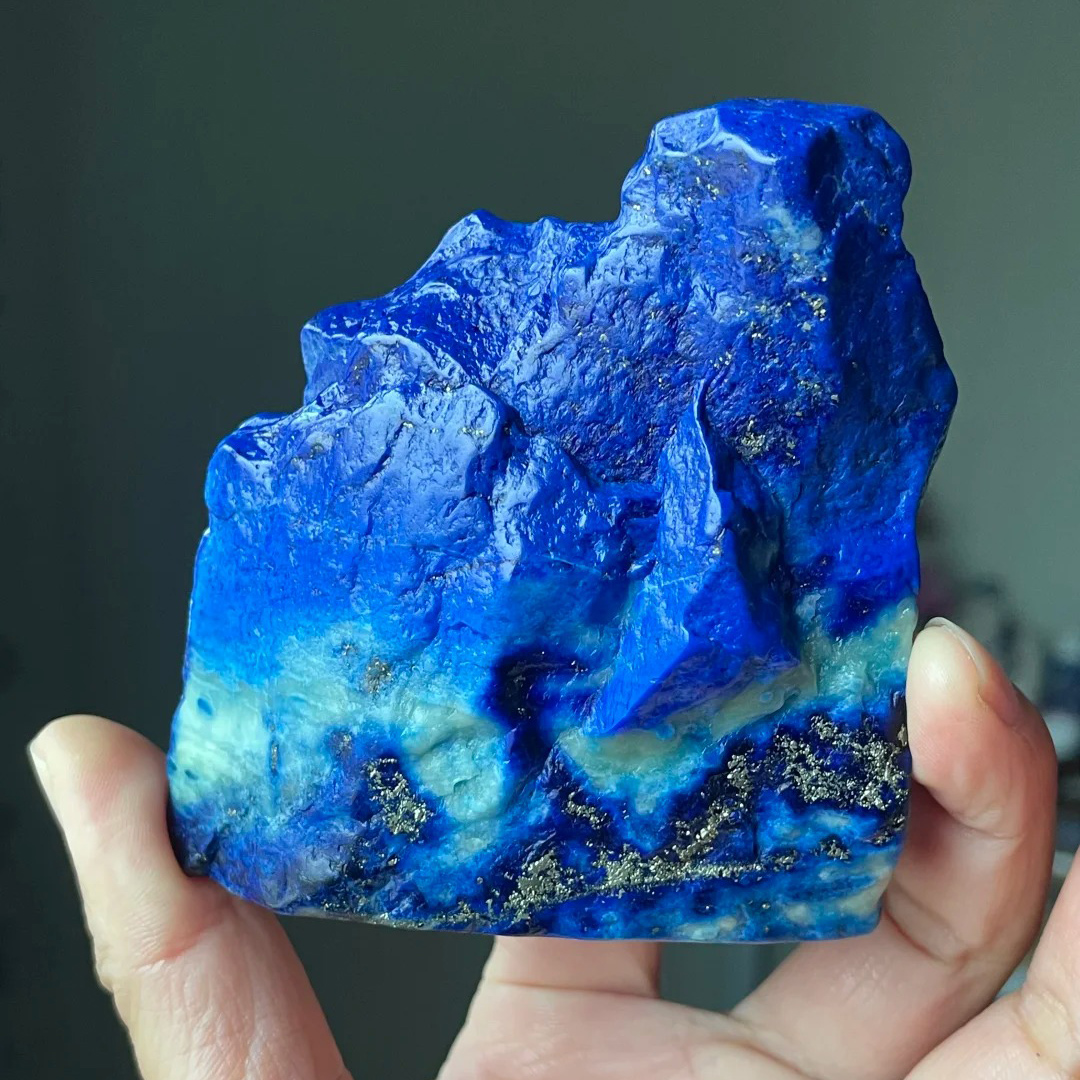
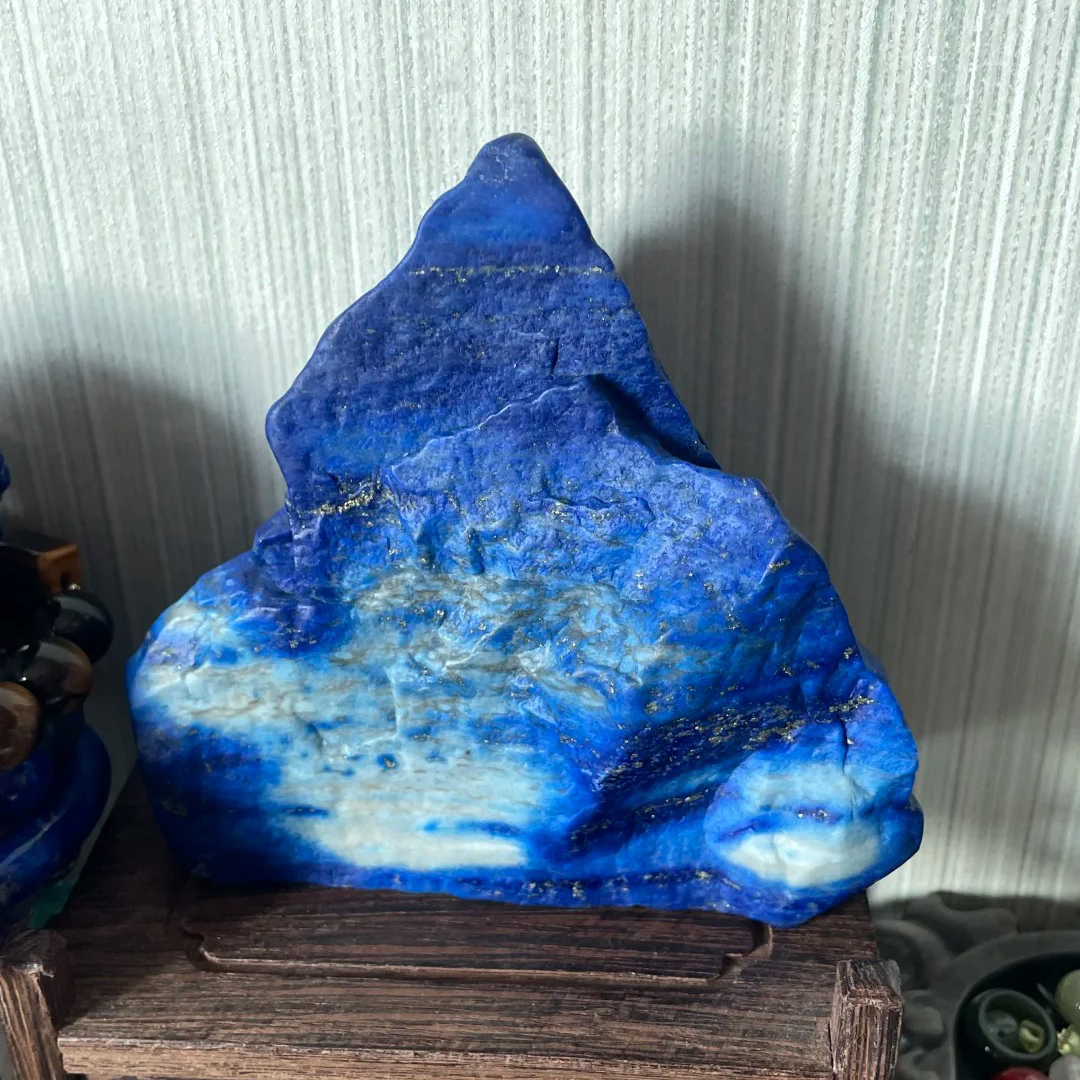
Why Does It Look Like Faded Denim?
Blue lapis areas mixed with lighter mineral areas can make the whole surface read as a softer, washed blue. Calcite is often part of that pale component, but it is better not to define denim lapis by one fixed calcite percentage. Lapis is a multi-mineral rock, and the exact mineral mix can vary from piece to piece.
That is also why two pieces sold under the same denim name can look very different. One may have a smooth transition between blue and pale areas; another may have large white patches or strong blue islands. Cutting direction can reveal a completely different pattern from the same general type of material.
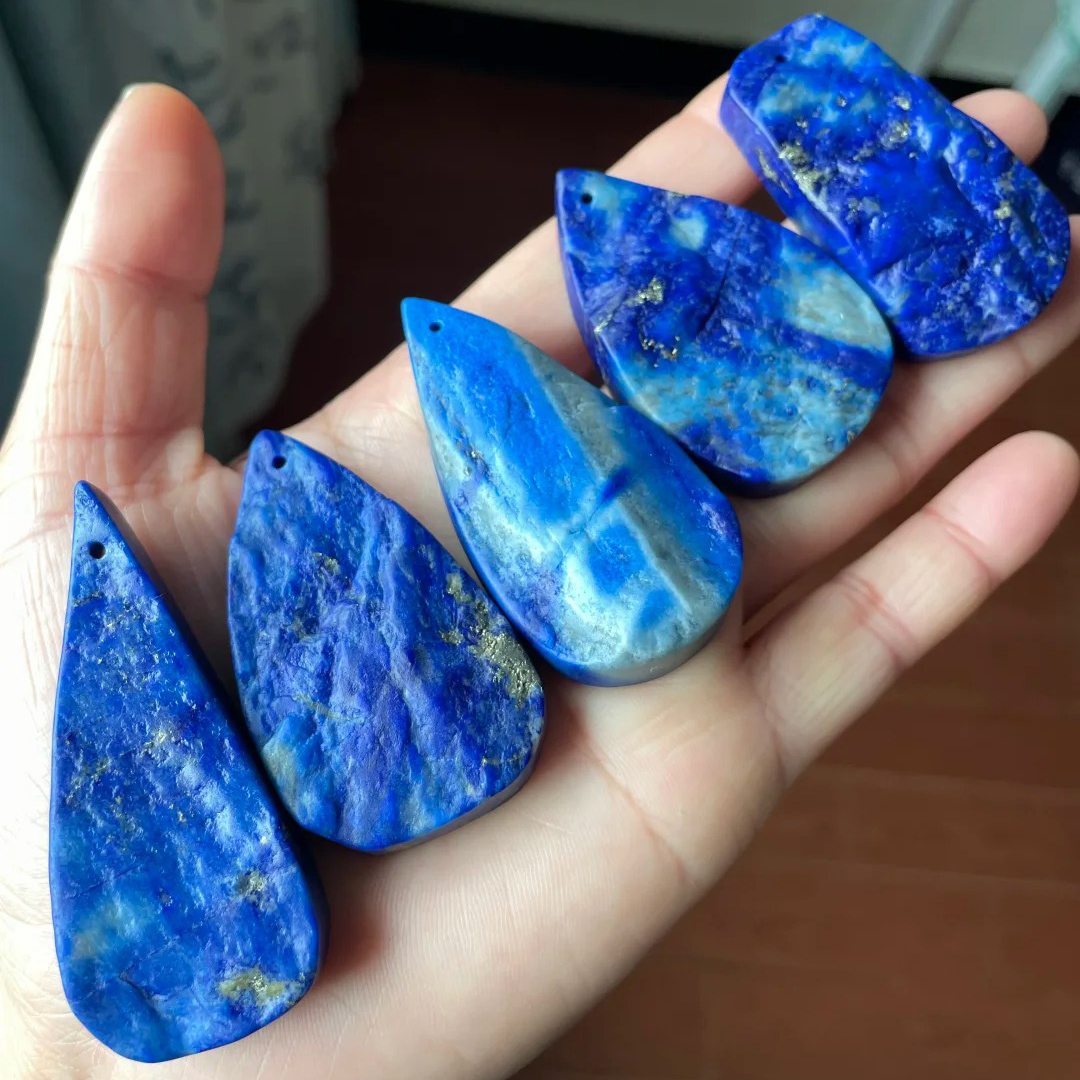
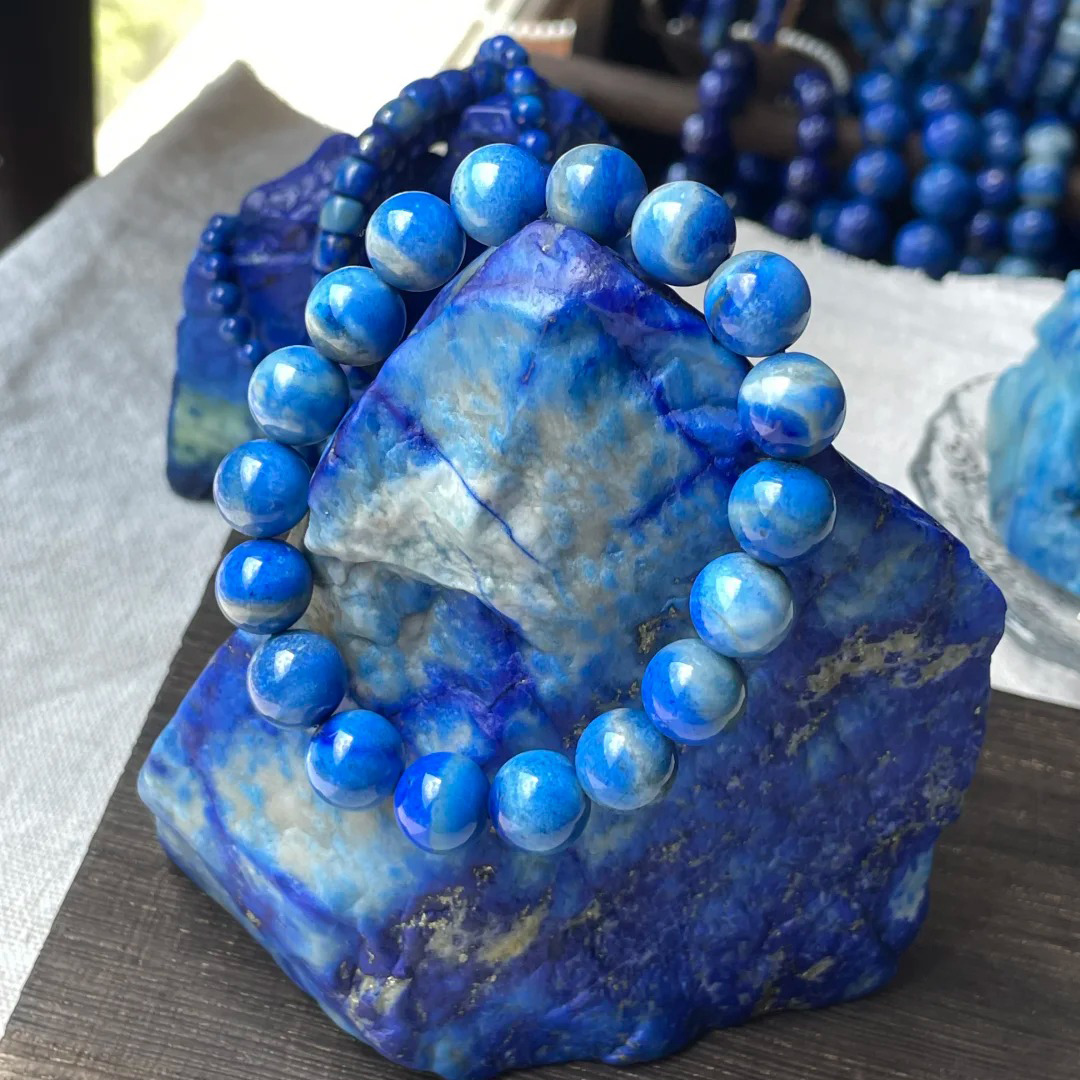
Not All Denim Lapis Looks the Same
“Denim” is a visual label, not a promise of one consistent quality. Some material looks balanced, with lively blue and soft pale areas. Other material can look gray, chalky or visually busy. Compare the actual stone rather than relying on a seller’s A, AA or AAA label.
For a broader explanation of how blue saturation changes the look of lapis, see our guide to lapis lazuli color.
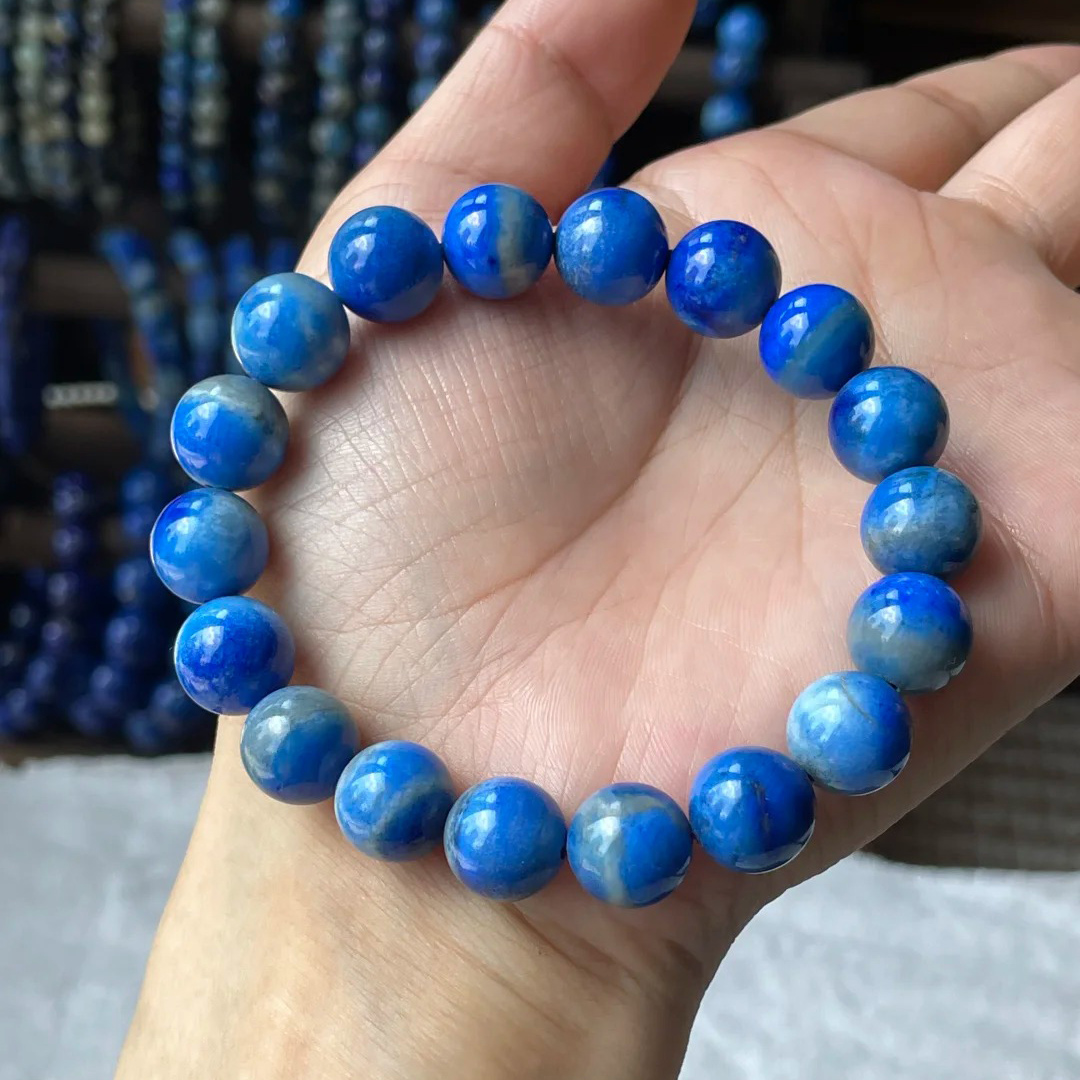
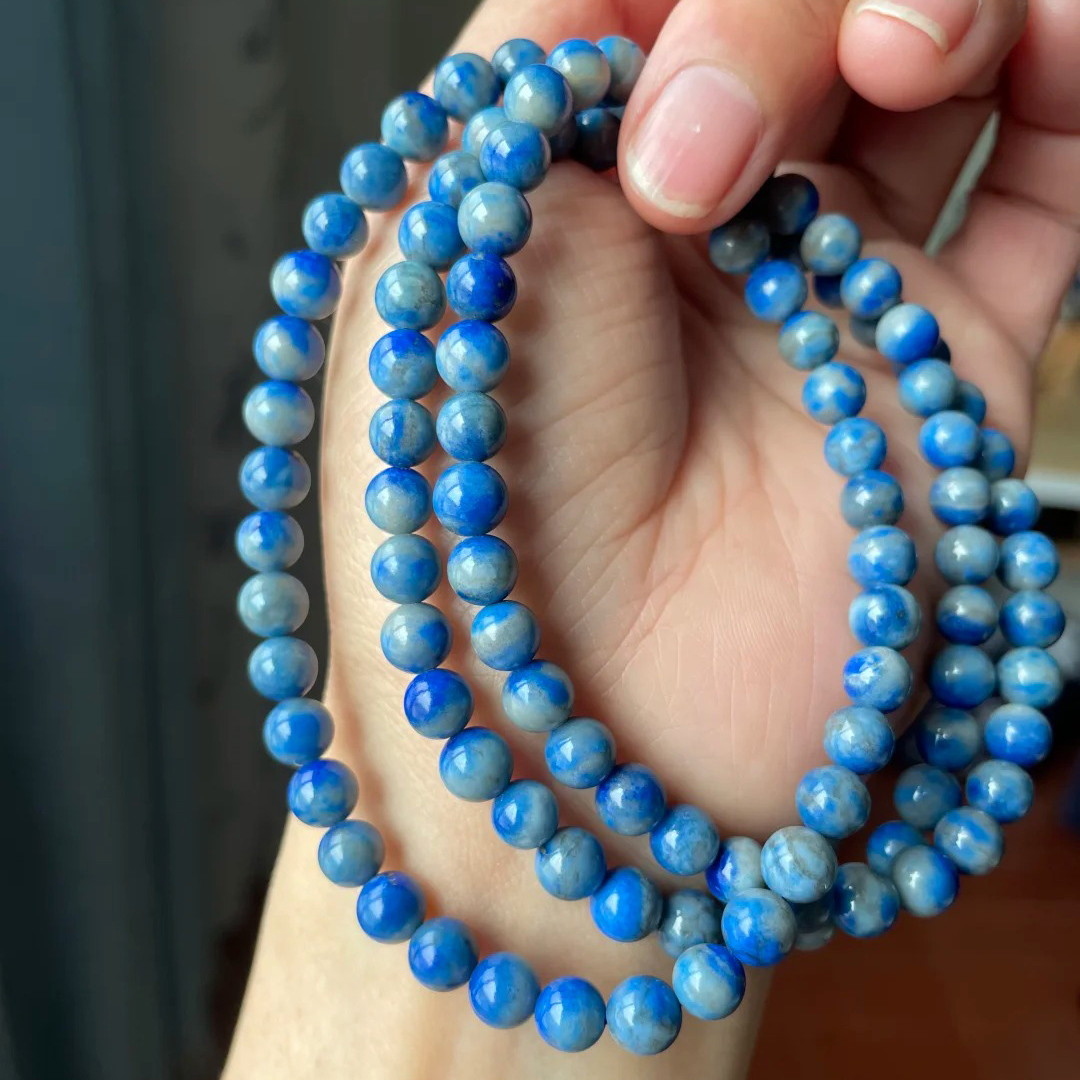
How We Judge Better Denim Lapis for Jewelry
In our hands-on selection, we do not judge denim lapis by paleness alone. We look at five things: the quality of the blue, how the pale areas are distributed, whether the material has a fine or coarse-looking texture, how well it takes a polish, and how consistently multiple pieces can be matched in a finished design.
- Blue quality. The blue should retain clarity and color rather than look dull or muddy.
- Pale mineral distribution. Cloudy or irregular pale areas can be attractive when they create a coherent pattern; large disruptive patches can make the material look less refined.
- Texture. A finer-looking, more compact body usually gives the polished surface a more coherent appearance.
- Polish and luster. A good finish should make the surface look smooth and complete, not dry or chalky.
- Matching. For a bracelet or necklace, the full group matters. Beads can vary individually and still work if the overall blue-to-pale balance feels intentional.
See how those choices work across finished lapis lazuli bracelets.
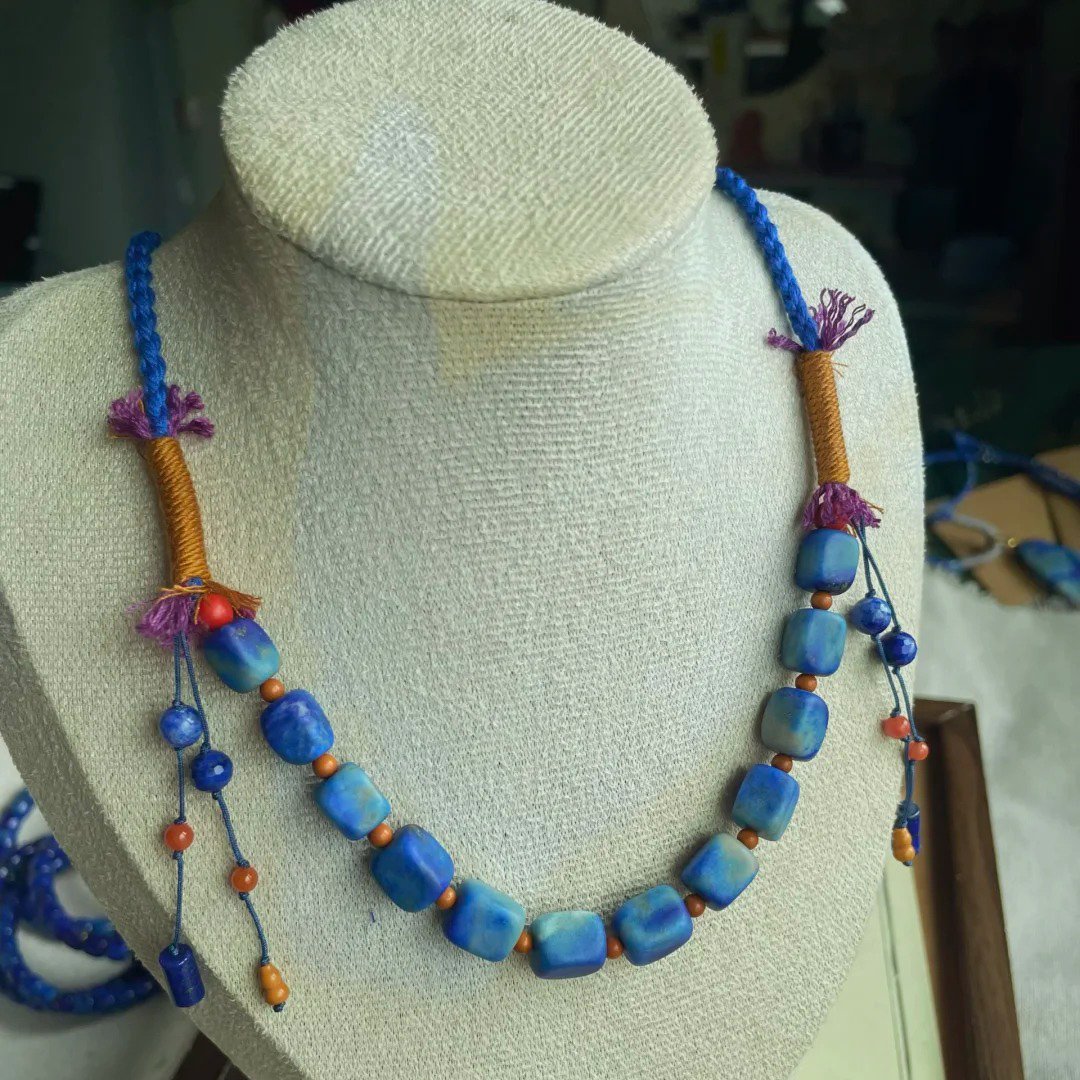
Does Denim Lapis Have Lower Value?
In the traditional lapis market, denim-looking material is usually valued below fine, saturated, relatively uniform blue lapis when the lighter appearance comes with more visible pale matrix. GIA describes the most valued lapis as intense, uniform blue with no visible calcite. That does not mean denim lapis cannot be attractive in jewelry. Its appeal can come from a washed-blue pattern, fine texture, good polish and strong matching.
The important distinction is between material value and design appeal. A pale denim strand may not command the same raw-material price as fine deep-blue lapis, yet a well-matched and well-finished piece can still be visually desirable. For a fuller explanation of how color, calcite, pyrite, texture and polish affect price, see our lapis lazuli worth guide.
Can Denim Lapis Be Dyed or Treated?
Yes, lapis can be treated, but the denim appearance itself does not prove treatment. GIA notes that lapis may be dyed to improve color or conceal calcite, and lapis that has not been dyed may also be impregnated with wax or oil. If treatment status matters to the price, rely on seller disclosure or professional gemological testing rather than appearance alone.