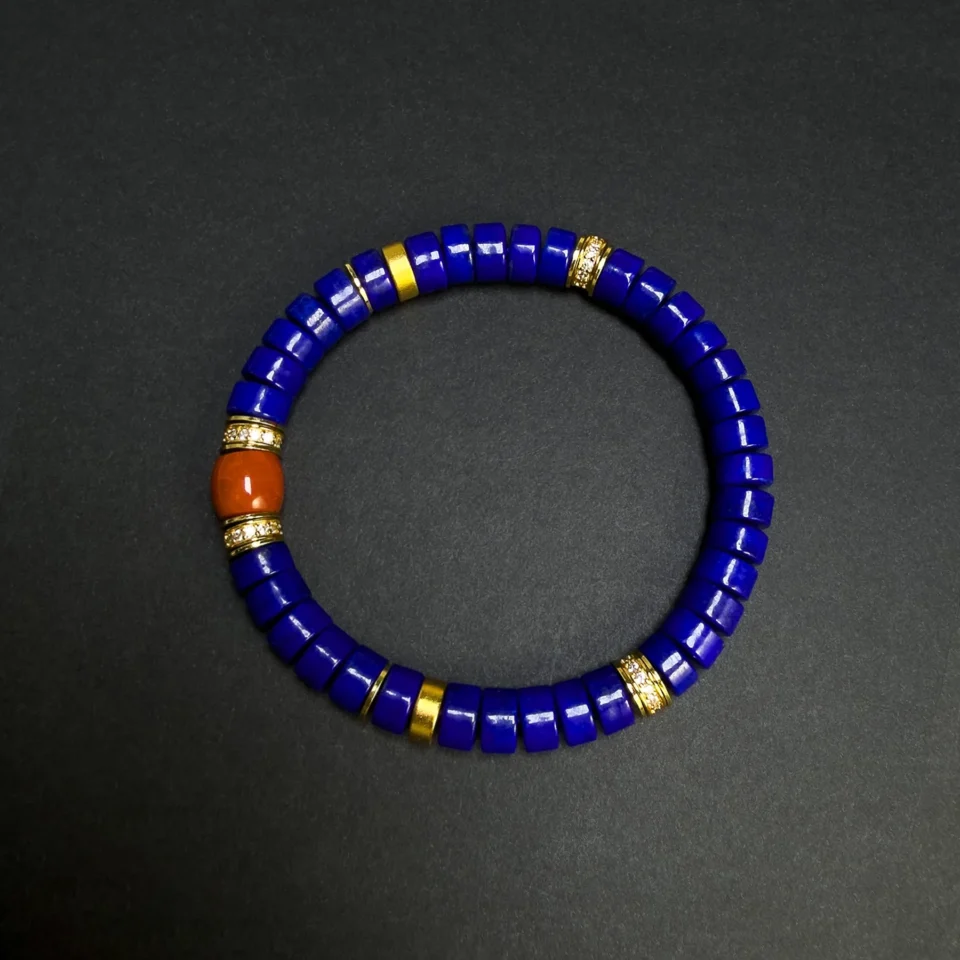
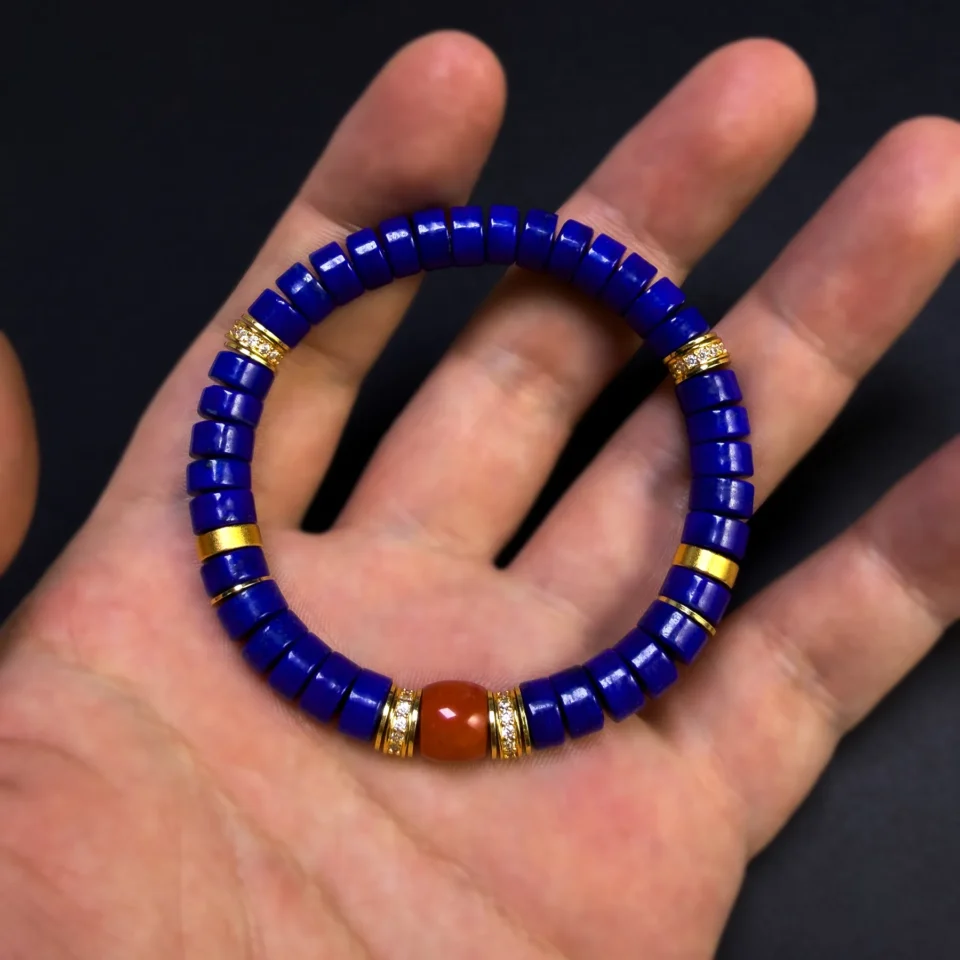
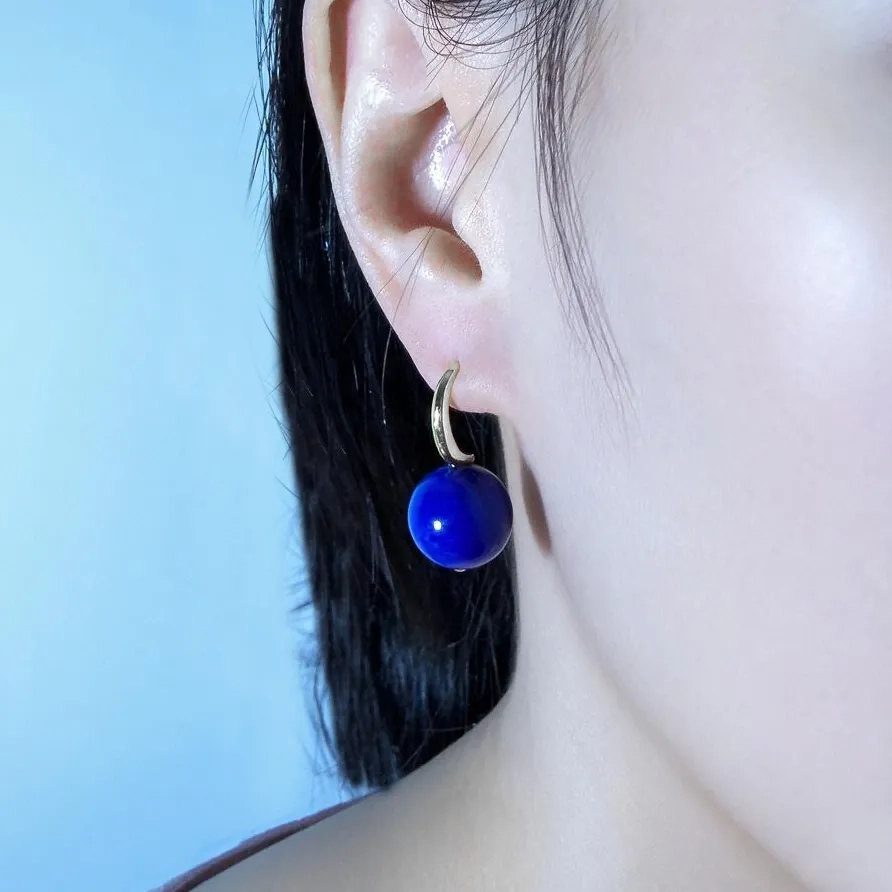
Lapis lazuli uses span several distinct roles, not one single purpose. Today you will most often meet the stone as jewelry—rings, bracelets, bangles, pendants, necklaces, and earrings—cut as cabochons, beads, tablets, or inlay. The same rich blue also suits carvings, small decorative objects, and ornamental inlay. Natural ultramarine pigment ground from lapis once powered European painting; most ultramarine sold now is synthetic, while natural pigment survives mainly in specialist and traditional contexts. Crystal and spiritual practice treat the stone as a cultural symbol, not a medical product. Historically, lapis also appeared in Egyptian funerary jewelry and in Qing court beads—where dress codes listed it among materials eligible officials could wear, while surviving museum lapis strings are mainly documented for the emperor’s Heaven-sacrifice rite—uses that belong in their own section below, separate from modern retail jewelry. This guide focuses on why each use fits the material, where it fails, and how your intended use should change what you select.
Lapis Lazuli Uses Today at a Glance
Modern lapis uses (not a market-share ranking; order is for reading only):
| Modern use | Why lapis suits it | Main limit |
|---|---|---|
| Jewelry: rings, bracelets, bangles, pendants, necklaces, earrings | Strong blue; takes a polish; works as beads, cabochons, tablets, and inlay (GIA) | Mohs about 5–6; fair toughness—rings and bracelets take more knocks (GIA Care) |
| Carvings, decorative objects, inlay | Color and pattern read well at larger scale; rough can be large enough to carve (GIA) | Needs sound, workable material; edges can chip |
| Natural ultramarine pigment | Historic lightfast blue from lazurite in lapis (GIA; pigment histories) | Costly; largely replaced in commerce by synthetic ultramarine after the 1820s (CAMEO) |
| Crystal / spiritual practice | Cultural and personal symbolism | Not medical advice; see lapis lazuli meaning |
Historical uses are covered later.
Lapis Lazuli in Jewelry
GIA describes lapis as durable enough for jewelry wear when cared for, typically cut as cabochons, beads, inlays, or tablets (Buyer’s Guide; GIA overview). “Durable enough” is not the same as “as hard as sapphire.” Hardness sits between 5 and 6 on the Mohs scale depending on composition, and toughness is rated fair (GIA Care). That is why the form of jewelry matters as much as the blue.
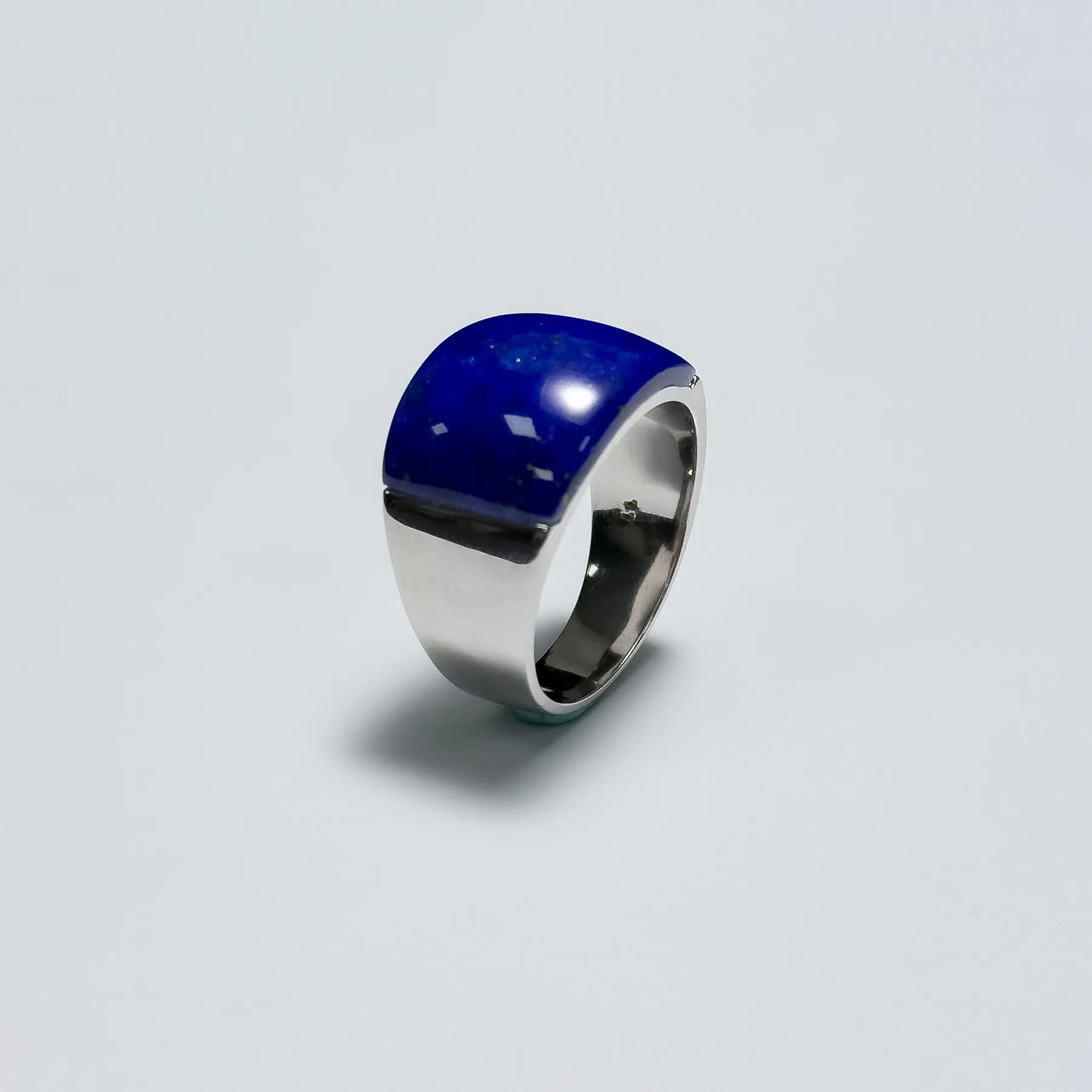
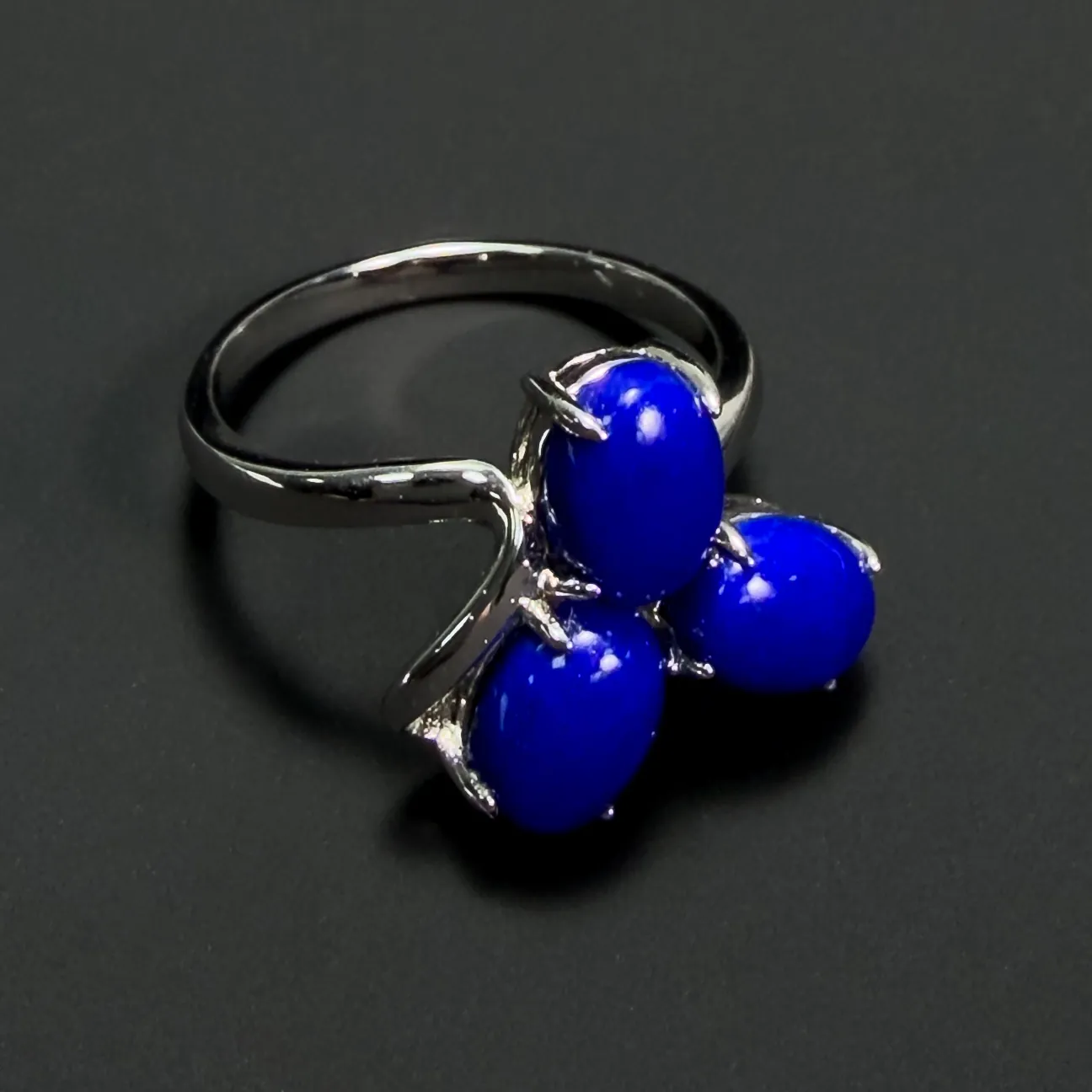
Rings
Rings face desks, keys, door frames, and other hard surfaces. Prefer protective settings (full or partial bezel over thin prongs where the edge is exposed), check that the stone sits flush enough to avoid catching, and treat daily-wear rings as higher abrasion risk than pendants. If the piece is waxed or dyed, heat and solvents are especially unfriendly (GIA Care).
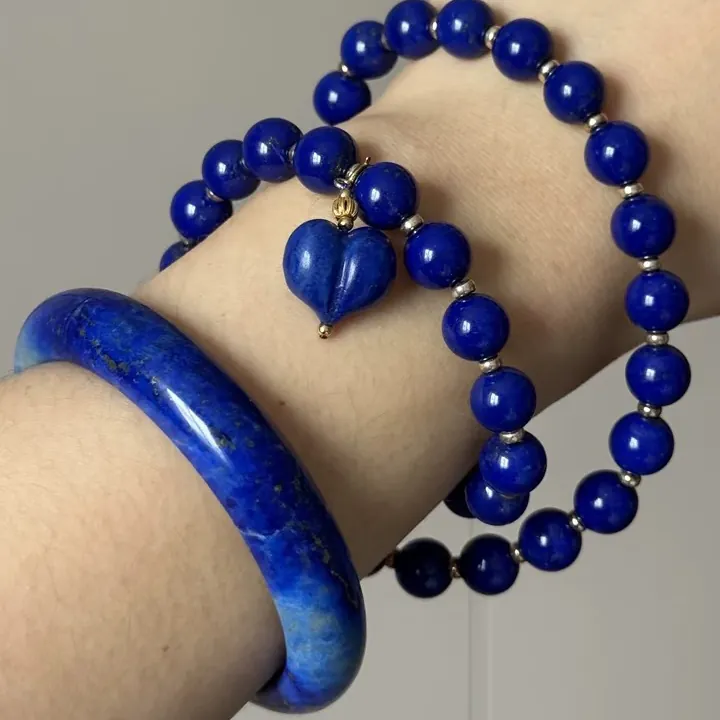
Bracelets and Bangles
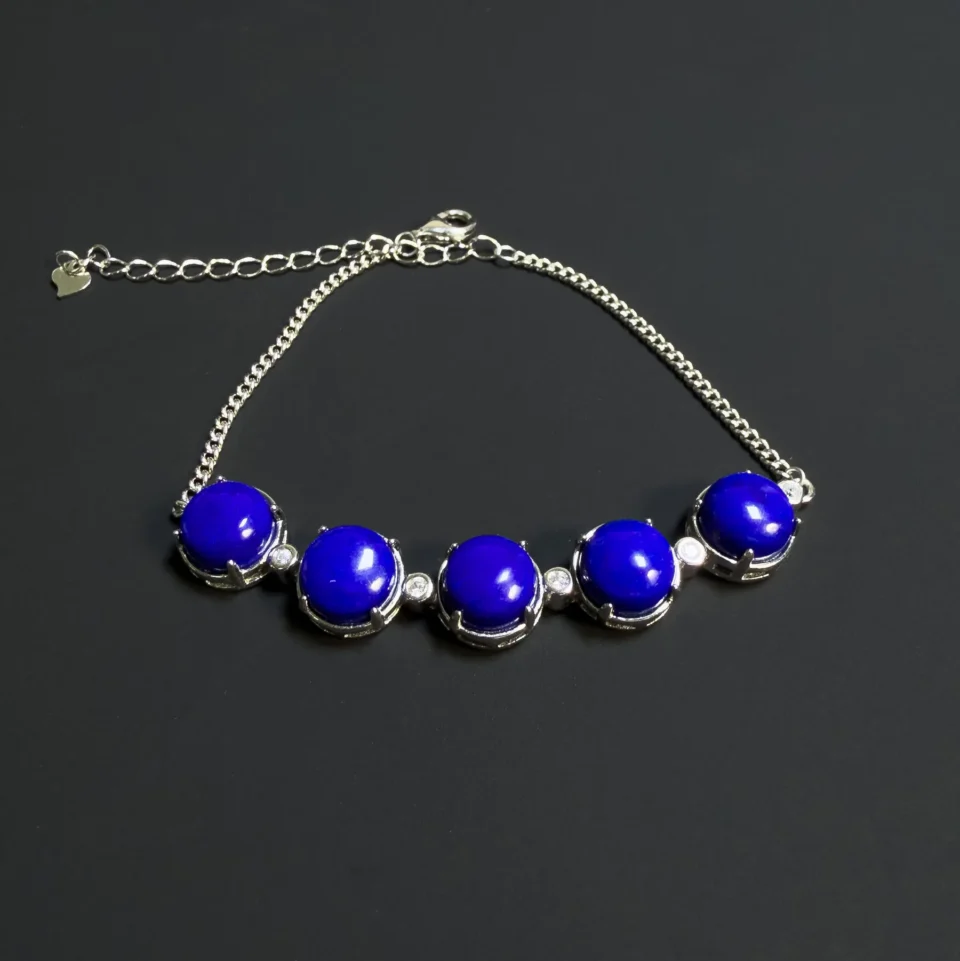
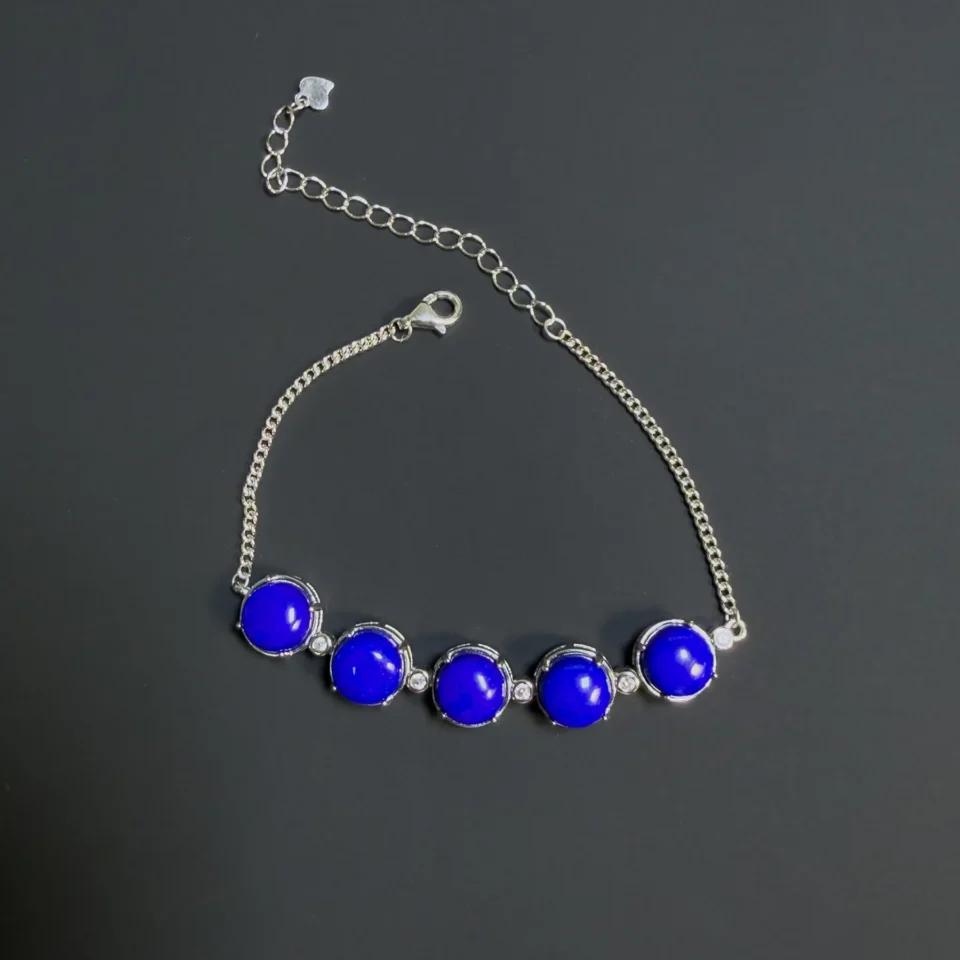
Bracelets and bangles take sideways knocks against tables and keyboards. A beaded bracelet can flex and absorb some shock; a rigid bangle concentrates impact on fewer contact points. Ask for secure bead knots or findings, and avoid hanging a fragile cabochon where it will strike a hard edge repeatedly.
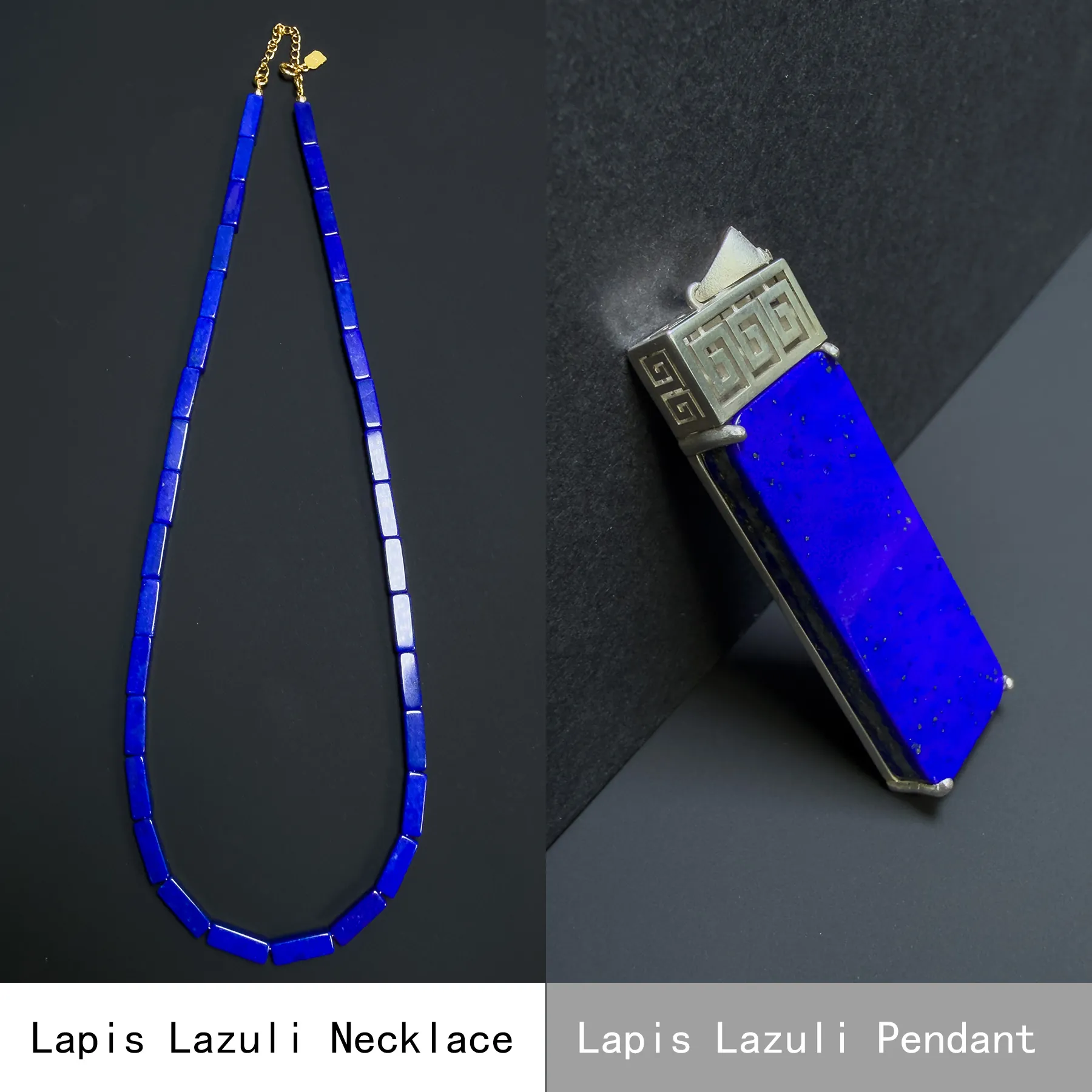
Pendants and Necklaces
Pendants and necklaces usually see less impact than rings or bracelets. Strand jewelry rewards color and size matching along the line of beads; a single pendant rewards an even face and clean polish. For pyrite (“gold”) flecks and how they affect look—not metal value—see Lapis With Gold.
Earrings
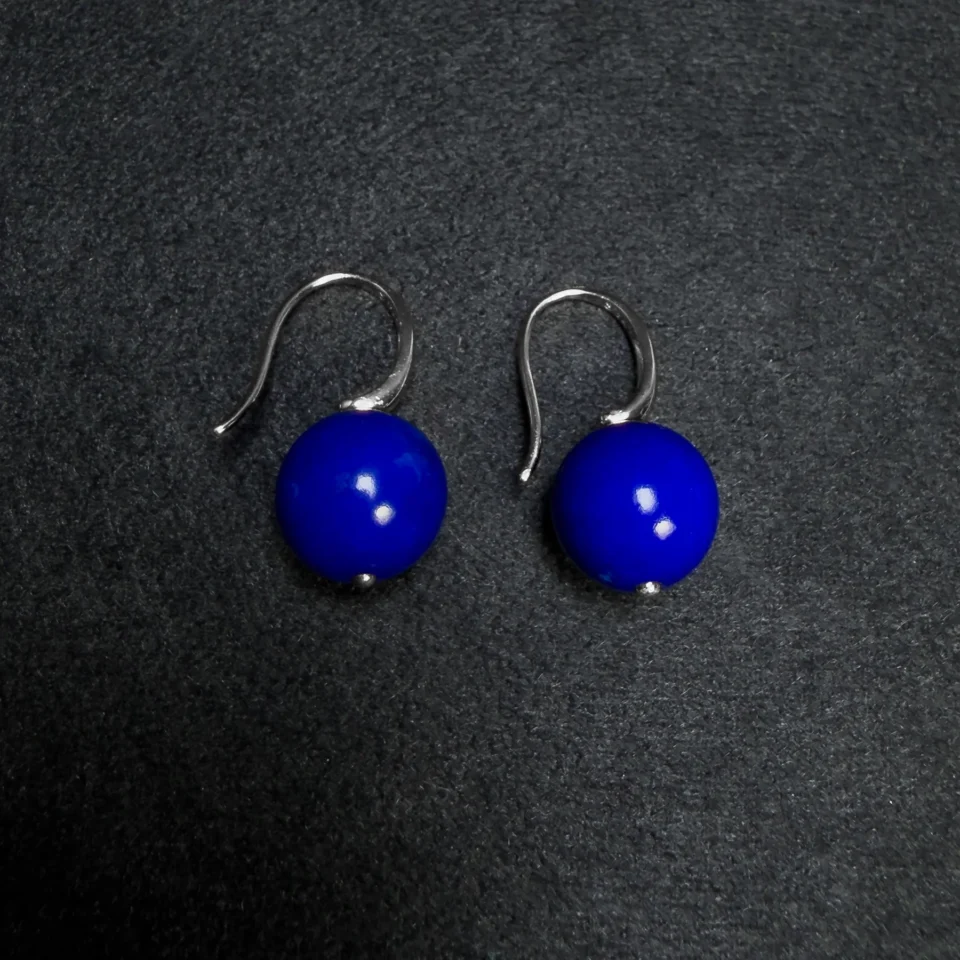
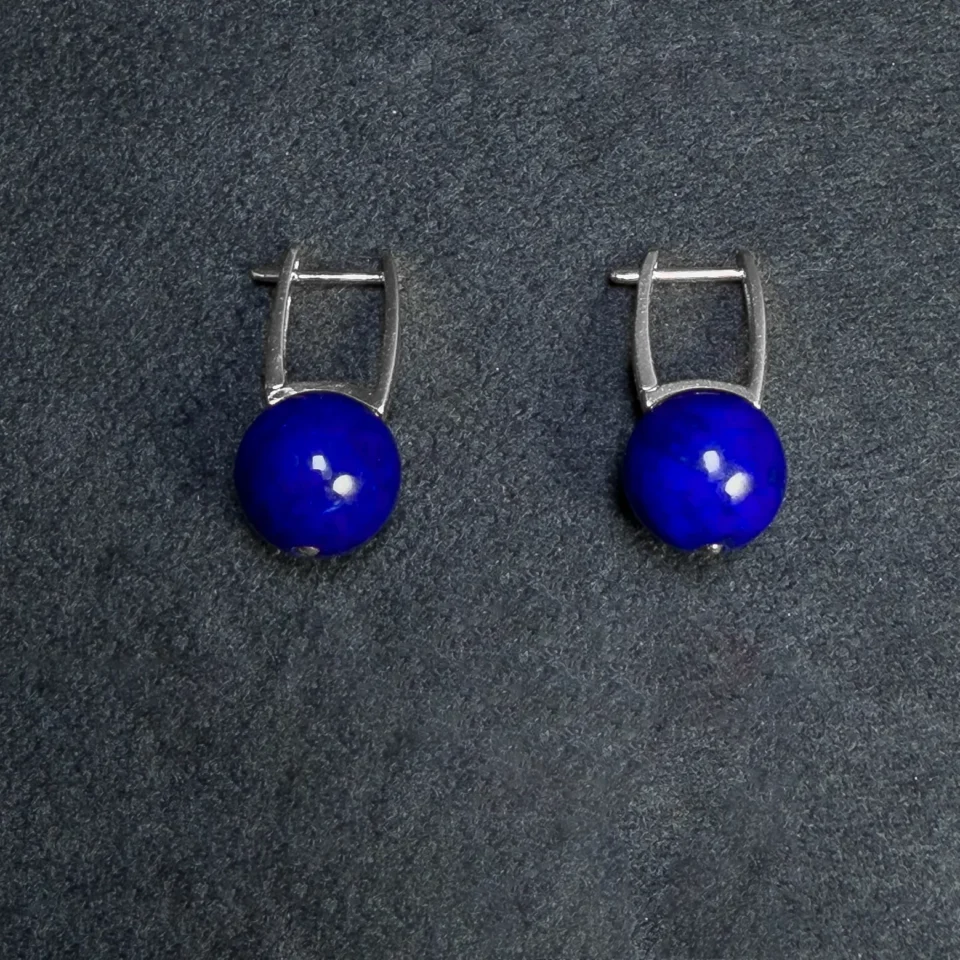
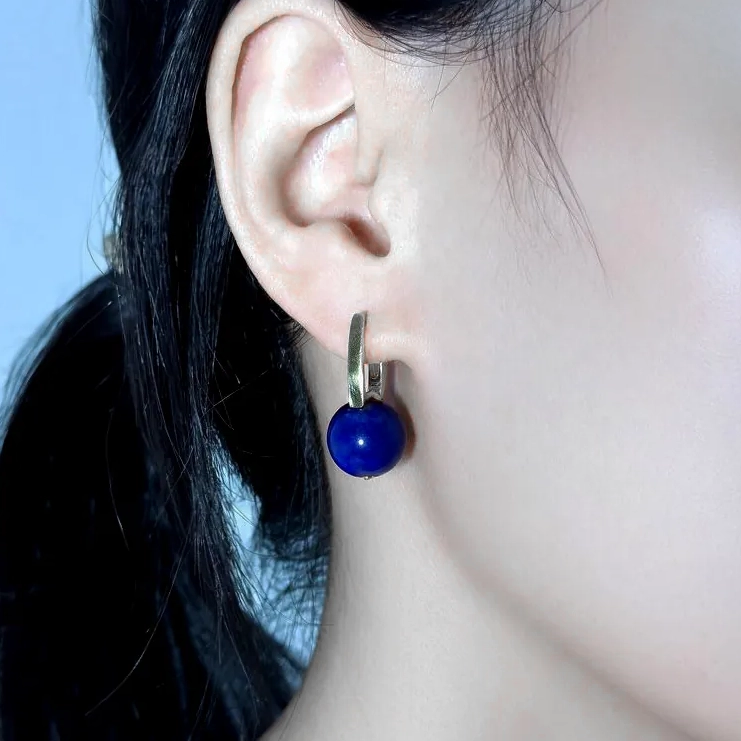
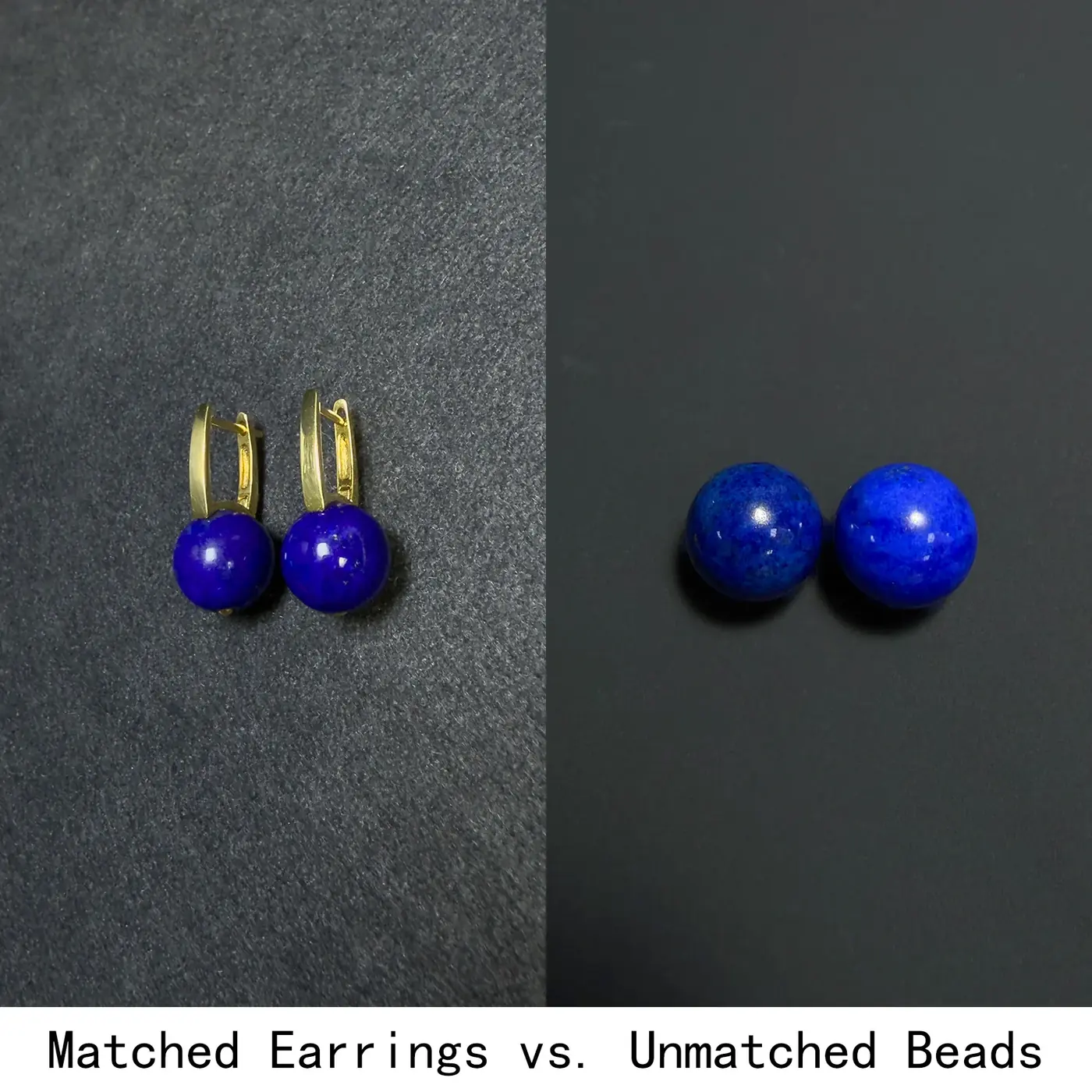
Earrings generally take the least mechanical wear. The hard part is pairing: two stones should agree in hue, tone, and the amount of calcite or pyrite so they read as a set under the same light.
Beads, Cabochons, and Inlay
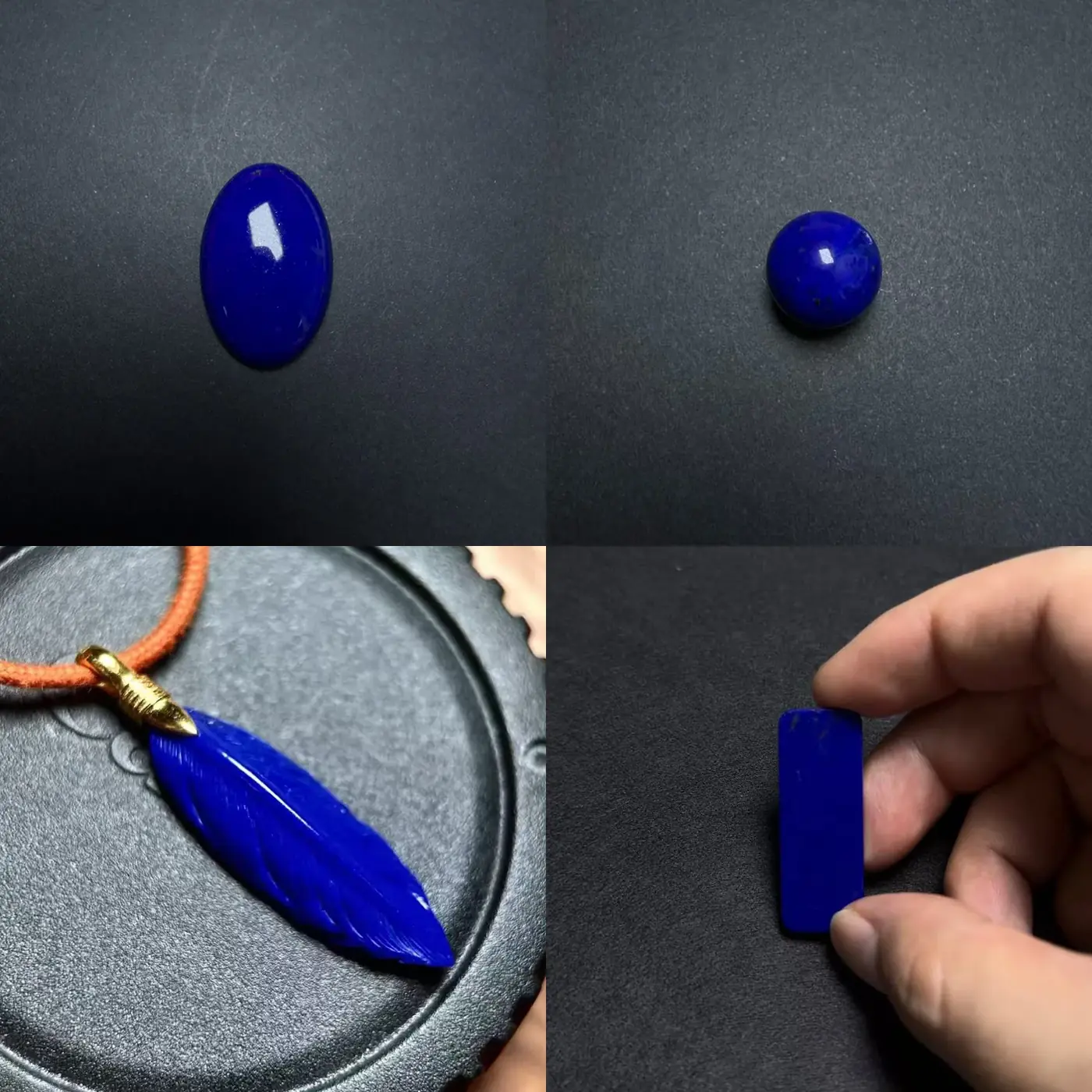
- Beads show pattern around the circumference; matching matters for strands.
- Cabochons show a single face—color evenness and polish dominate.
- Inlay / tablets need stable, well-fitted pieces; excess calcite or fractures show quickly in flat work.
GIA’s cut list—cabochons, beads, inlays, tablets, carvings—lists the usual options for most lapis jewelry and objects (GIA).
Lapis with Sterling Silver
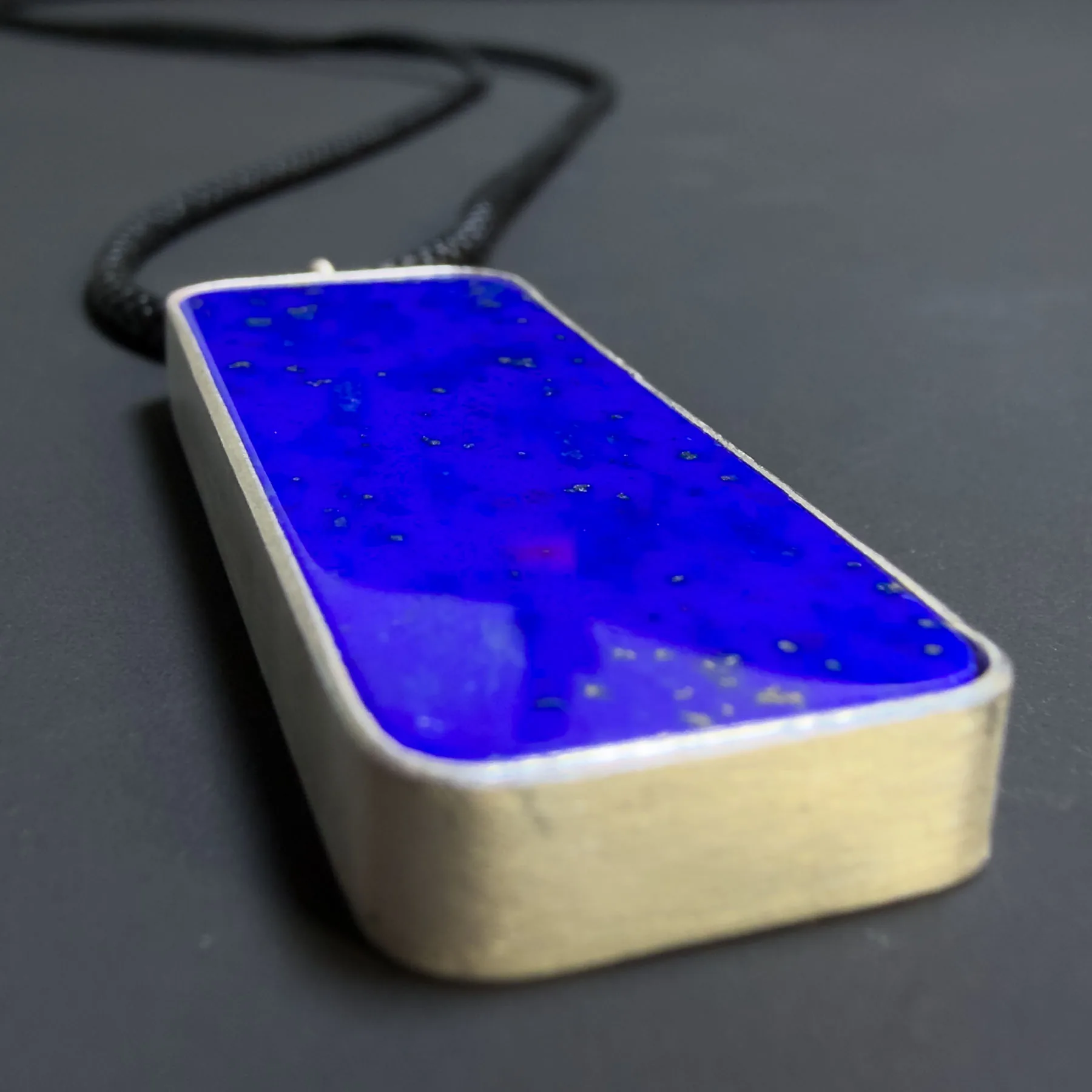
Sterling silver (925) is a common, clean pairing for lapis in contemporary jewelry. Silver’s cool tone sits beside deep blue without competing with pyrite sparkle. That is a styling preference, not a gemological rule that silver is “correct” and gold is “wrong.” Gold settings have a long historical record with lapis; choose the metal for the look you want, then judge stone quality and setting protection on their own merits.
Browse current lapis jewelry forms on the lapis lazuli collection when you are ready to compare cuts and settings.
How the Intended Use Changes Stone Selection
Use the job to set the stone criteria:
| Intended use | Prioritize | Be stricter about |
|---|---|---|
| Earrings | Pair match (hue, tone, inclusions) | One “hero” stone and one mismatched twin |
| Strand bracelet / necklace | Consistency along the strand | Random jumps in calcite or pyrite density |
| Ring face | Even color, solid polish, protective setting | Thin edges, open prongs on a soft corner |
| Carving / ornament | Block size, workable pattern, soundness | Hairline cracks that run with the tool path |
Lighting changes how blue and pyrite read—judge matching under the light you will wear in, not only under a phone flash. The matched-versus-unmatched earring photo above is the practical pairing check for earrings; apply the same eye to strand consistency when buying bracelets or necklaces.
Carvings, Decorative Objects and Inlay
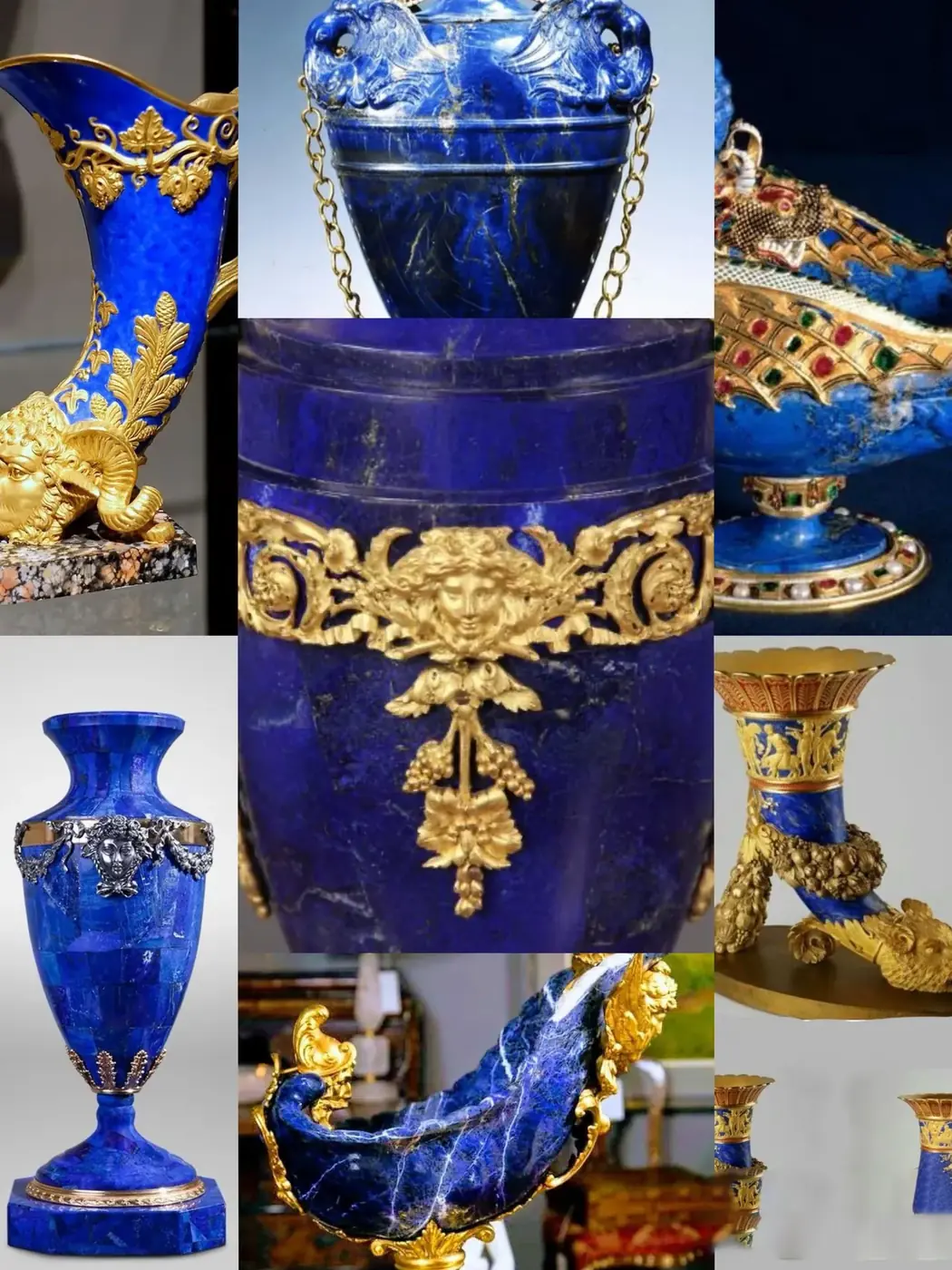
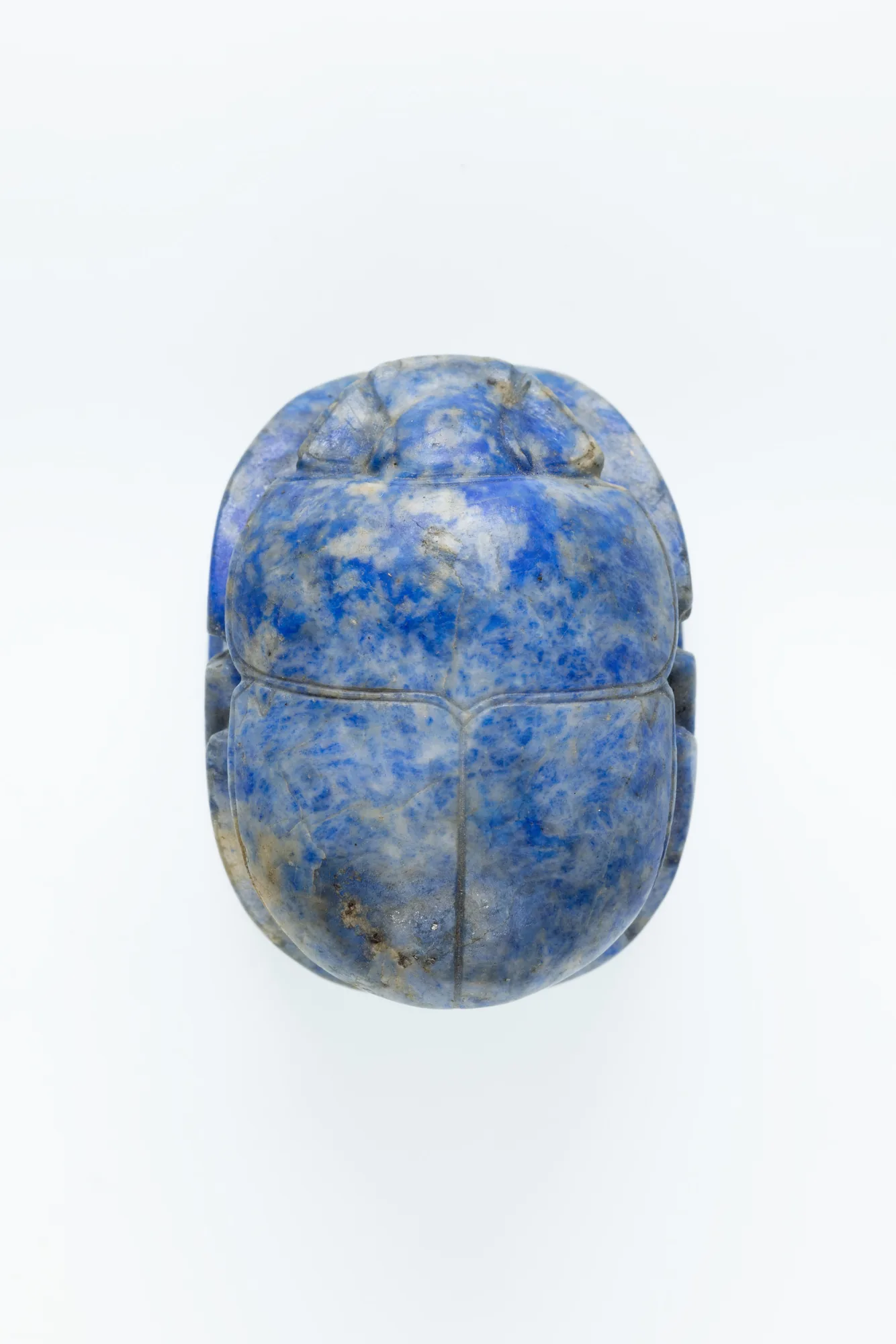
Beyond jewelry, lapis has long been a carving and ornamental material—small vessels, seals, figurines, game pieces, and decorative objects appear across GIA’s historical overview, and large rough can support freeform sculpture today (GIA History & Lore; GIA overview). Color and the contrast between blue lazurite, white calcite, and gold-colored pyrite are the design tools. Limits are practical: carve from sound material, expect chip risk on thin edges, and ask for clear photos of the finished surface before buying.
Lapis in History
History is not a modern use chart. The examples below are specific objects or documented ritual rules—not a claim that “all Egyptian blue” or “all court beads” were natural lapis.
Ancient Egypt: funerary jewelry and royal burial contexts
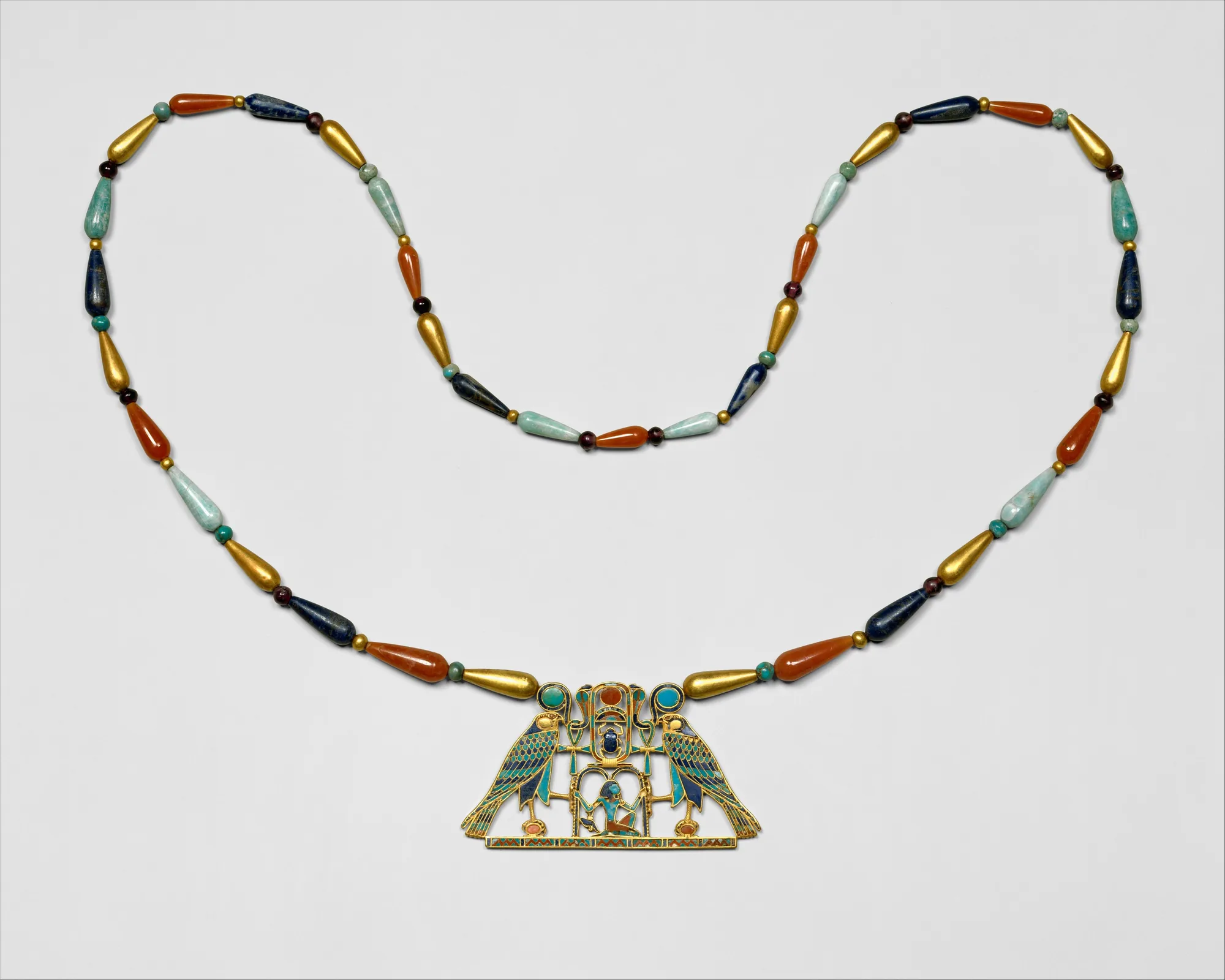
Natural lapis lazuli appears in Egyptian jewelry and amulets across long periods. A clear, museum-documented Middle Kingdom example is the Pectoral and Necklace of Sithathoryunet in the Metropolitan Museum of Art (Dynasty 12, ca. 1887–1878 B.C., from her tomb beside the pyramid of Senwosret II at Lahun). The Met lists the medium as gold with carnelian, lapis lazuli, turquoise, and garnet on the pectoral (necklace also includes lapis). The piece was found in a funerary context among the princess’s jewelry (Met 16.1.3a, b).
For a pharaoh’s burial assemblage, Tutankhamun’s golden burial mask is the best-known case. The Grand Egyptian Museum lists its materials as gold, glass, lapis lazuli, obsidian, carnelian, faience, and quartzite (GEM). That mixed list matters: Egyptian workshops also used blue glass and faience that can look like lapis. Color alone does not prove the stone. Conservation and excavation records distinguish glass inlays from natural lapis on specific parts of Tutankhamun’s objects; do not describe the entire mask as “made of lapis.”
Smaller documented pieces include Late Period lapis lazuli amulets such as the British Museum’s Ra-Horakhty figure (EA11337), material listed as lapis lazuli (British Museum).
Qing dynasty lapis court beads (朝珠)—official dress rules, not “every official wore lapis”
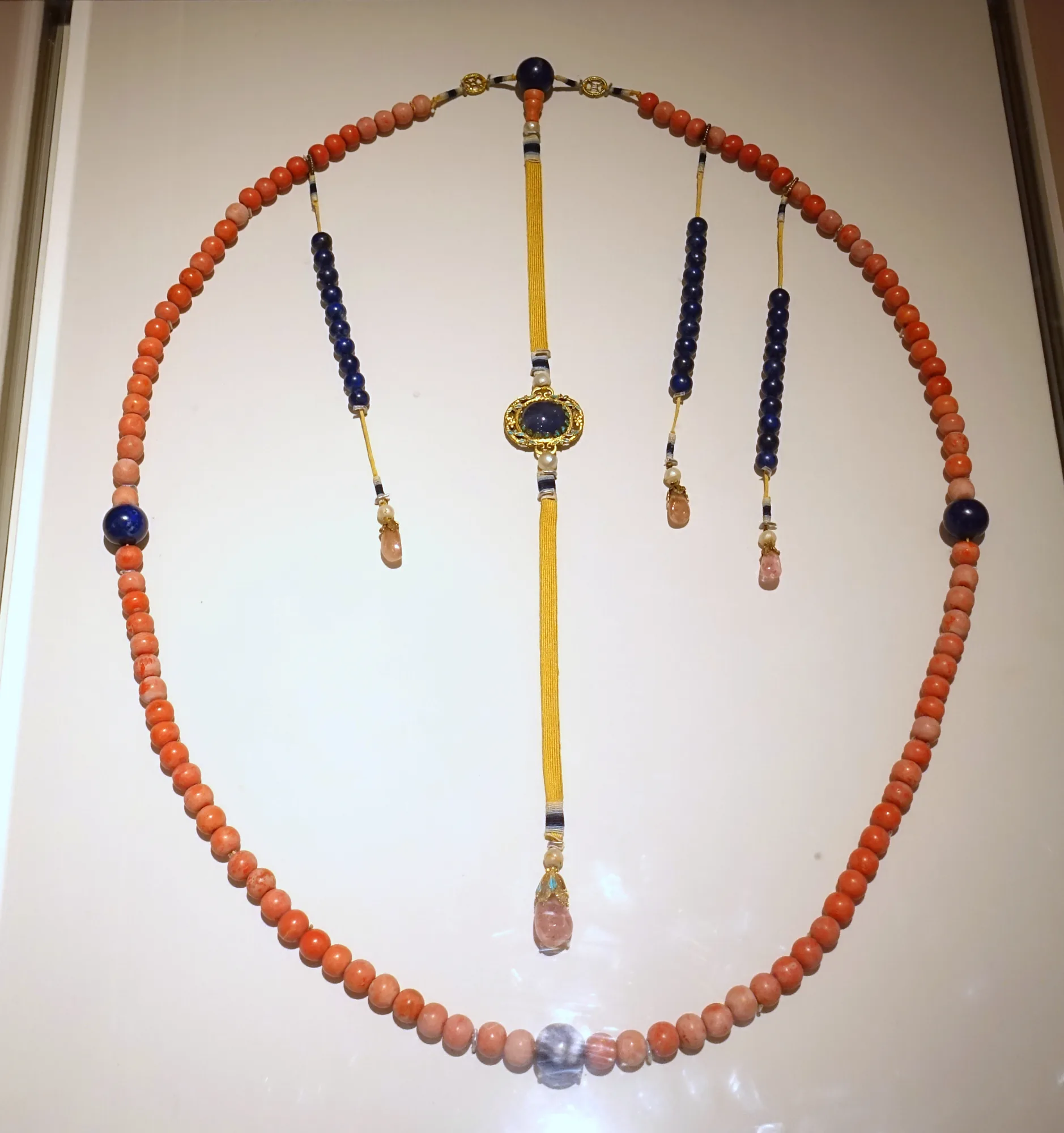
Qing court beads (chaozhu) were an official-dress ornament with strict rules on who could wear them. Dress regulations allowed civil officials of the fifth rank and above, military officials of the fourth rank and above (plus listed court offices such as Hanlin, Censorate, and certain ritual ministries), and correspondingly ranked titled women, to wear court beads; ordinary people could not (Prince Gong’s Palace overview; Palace Museum note).
For those entitled wearers below the eastern-pearl exclusive tier, the Qianlong-era Huangchao Liqi Tushi (Illustrated Regulations for Ceremonial Paraphernalia of the Imperial Court), juan 5, entry “Court beads for dukes (民公朝珠),” states that court beads may be of coral, lapis lazuli (青金), turquoise, or amber, as chosen (珊瑚、青金、绿松、蜜珀随所用), with ornaments as appropriate and a stone-blue cord—and that the same rule applies to marquises downward through eligible civil fifth-rank / military fourth-rank and listed offices (识典古籍 · 皇朝礼器图式卷五; parallel text HY2639). In plain terms: lapis was a permitted material for official court beads, not a mandatory one, and not a one-to-one “this rank wears lapis beads” badge. (Separately, the same code uses lapis for fourth-rank hat finials—a different object from necklaces; do not read hat buttons as proof that an official’s chaozhu was lapis.)
Surviving lapis lazuli court beads (chaozhu) in major museum catalogs are mainly documented as imperial Heaven-sacrifice strings—a color-coded ritual rule for the emperor, not a named official’s personal set:
- Palace Museum (Beijing) Kangxi-period / Qing lapis court necklaces (故00010358 and related entries): 108 (or incomplete) lapis beads; museum text states the emperor wore lapis court beads when sacrificing to Heaven, with amber/beeswax for Earth, coral for the Sun, and turquoise for the Moon (dpm.org.cn 232186; dpm.org.cn 231350).
- National Palace Museum (Taipei) lapis court necklace: cites Huangchao Liqi Tushi that the emperor’s court beads use lapis specifically for the Heaven rite (NPM).
- National Museum of China lapis court necklace: likewise frames the piece with the emperor’s Heaven-altar rule (chnmuseum.cn).
What this does not mean: every official’s beads were lapis; lapis beads do not equal a specific civil or military rank marker; and an imperial Heaven-sacrifice museum string is not automatically “an official’s lapis necklace.” Materials varied by person, occasion, and regulation. Keep the dress-code permission and the ritual rule separate; neither is a modern marketing claim.
Earlier civilizations in brief
GIA places lapis in Mesopotamia, Egypt, China, Greece, and Rome, with human use discussed over more than 6,500 years, and notes carving and ornamental objects alongside jewelry (GIA History & Lore). Mesopotamian royal burials (for example objects associated with Ur) include famous lapis inlay.
Lapis as Ultramarine Pigment: Then and Now
Renaissance painters used lapis to make ultramarine—an expensive blue prized for brightness and stability (GIA). Natural ultramarine is prepared from the lazurite-rich rock; its cost historically limited how freely artists used it (pigment history summaries such as Pigments Through the Ages).
In the 1820s Jean-Baptiste Guimet developed a commercial synthetic ultramarine (prize awarded 1828; sold thereafter). Synthetic ultramarine is chemically akin to the natural pigment, finer and more regular in particle form, far less expensive, and widely used in artists’ paints and industry (MFA CAMEO).
Today: most tubes and industrial “ultramarine” are synthetic. Natural lapis-derived ultramarine still appears in specialist artistic and conservation contexts where historical materials matter. Home grinding, extraction, and DIY pigment recipes are outside this guide—they are technical, wasteful of rough, and easy to get wrong.
Lapis in Crystal and Spiritual Practice
In modern crystal and spiritual communities, lapis is often linked with ideas such as wisdom, expression, or protection. Those associations are cultural and personal. They are not medical claims, diagnoses, or treatment advice. For symbolism and cultural framing, read Lapis Lazuli Meaning and the crystal overview on Lapis Lazuli Crystal. This uses page keeps the boundary clear: jewelry and objects are physical uses; spiritual meaning is interpretive practice.
Practical Limits Before You Use or Wear Lapis
- Hardness / toughness: Mohs about 5–6; toughness fair (GIA Care).
- Cleaning: warm, soapy water; never steam or ultrasonic cleaners (GIA Buyer’s Guide). Test a hidden area first if dye is possible (GIA Care).
- Treatments: dye and wax/oil impregnation are known; heat and solvents can damage treated surfaces (GIA).
- Daily habits: remove rings for heavy chores; keep lapis away from harsh cleaners, perfume sprayed directly on the stone, and harder gems that can scratch it in a jewelry box.
- No destructive home tests: do not scratch, acid-test, or burn lapis to “prove” it. Ask the seller for treatment disclosure instead.
Deeper buying and care checklists live in the Lapis Lazuli Quality Guide.
FAQ
Is lapis lazuli good for everyday wear?
GIA says lapis can be worn daily in jewelry with proper care (Buyer’s Guide). Everyday pendant wear is usually gentler than everyday ring wear because of impact risk.
Is lapis a good choice for rings?
Yes if the setting protects the edges and you accept higher abrasion risk. Prefer bezels or guarded mounts; clean only with warm soapy water—no ultrasonic or steam.
Are bangles harder on lapis than beaded bracelets?
Often yes: a rigid bangle transmits knocks more directly. Construction quality still matters more than the label alone.
Is ultramarine paint still made from lapis?
Natural ultramarine historically came from lapis. Most modern ultramarine paint is synthetic, commercially available since the late 1820s (CAMEO). Specialist natural pigment still exists for niche work.
Did ancient Egyptians use real lapis lazuli?
Yes—museum objects document natural lapis in jewelry and amulets (for example Met’s Sithathoryunet pectoral). They also used blue glass and faience. Always read the material line on the object record; blue color alone is not proof.
Related reading
- Lapis Lazuli Quality Guide — choose and care
- Lapis Lazuli Meaning — symbolism and cultural framing
- Lapis Lazuli Crystal — properties overview
- Lapis With Gold — pyrite flecks vs metal
- Afghan Lapis Lazuli — fine material appearance in jewelry
- Shop lapis lazuli jewelry