If you are wondering whether lapis lazuli is toxic or safe to wear, you may be holding two worries at once: a jewelry question (can I put this on my skin?) and a workshop-or-myth question (dust, acids, gem waters, or “who should not wear it”). Those are not the same problem.
This guide explains each type of risk from a jewelry-workshop point of view. It is not medical advice. Cultural or spiritual meanings are beliefs—not therapies—and we do not treat astrology or “energy side effects” as clinical contraindications.
Short answer: Polished lapis lazuli in everyday jewelry is usually discussed as suitable for normal wear. That does not mean every finished piece, every metal stack, or every wearer will have zero issues. Sharper concerns belong mainly to cutting and grinding dust, DIY acid tests, and soaking or swallowing—not to casually putting on a finished necklace or earrings. Natural stone, treatment disclosure, and skin reaction are three separate judgments; none automatically proves the others.
What lapis lazuli actually is (why “toxic” gets confusing)
According to the Gemological Institute of America (GIA), lapis lazuli is a rock—mainly lazurite, calcite, and pyrite. Lazurite supplies the prized deep blue; calcite shows as white; pyrite shows as metallic yellow flecks (iron sulfide—not “gold”).
People hear “sulfur” or “pyrite” and jump to poison; see red skin and blame the blue stone first; or read crystal blogs that list “negative effects” as if they were lab results. Separate what form of lapis you have from what evidence level each claim has.
Three-layer risk table: wear vs workshop vs elixir myths
| Layer | Typical situation | Do | Don’t |
|---|---|---|---|
| A — Polished jewelry, daily wear | Finished beads, cabochons, earrings, necklaces, bracelets, pendants | Wear polished pieces; soft cloth; warm, soapy water after a spot test; store away from harder gems; if a rash appears, stop wearing and check metal parts and residues | Assume every skin reaction is “stone toxicity”; overnight soaks; steam or ultrasonic; treat “natural stone” as a guarantee that no one will ever react |
| B — Workshop: cutting, grinding, polishing, acid tests | Rough slabs, sawing, sanding, home hardness/acid experiments | Dust control, ventilation, respiratory protection for mineral dust; leave chemical ID to professionals | Dry-sand without protection; DIY acid “authenticity” tests; apply powder/pigment safety sheets to a sealed bead on finished jewelry |
| C — Elixir / long soak / ingestion | Gem water, long soaks, chewing beads, swallowing chips or powder | Keep stones out of drinks you plan to ingest; keep small beads from young children who mouth objects; if swallowed—especially when material/treatment is unclear—contact poison control or a clinician for advice based on age, substance, amount, and symptoms; for choking, collapse, seizures, or trouble breathing, seek emergency care immediately | Treat “elixirs” as medicine; long acidic soaks as home authenticity tests; induce vomiting yourself; assume every tiny chip needs an ER visit or that “no choking” ends the question |
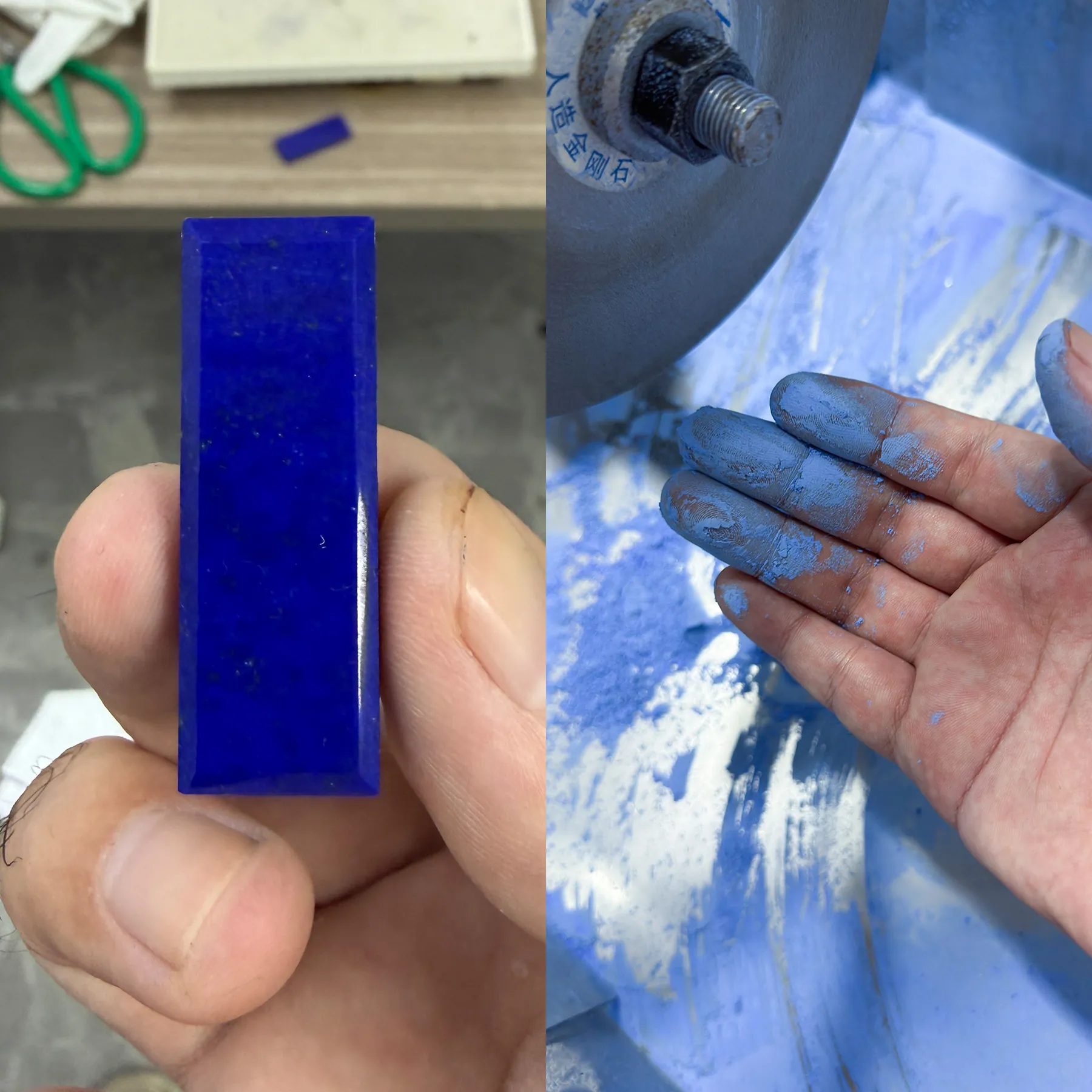
Layer A — Polished jewelry (what most buyers mean)
Finished polished lapis is worn against skin worldwide as ornament. GIA treats it as jewelry material with Mohs hardness about 5–6 and fair toughness, and recommends careful cleaning—not panic withdrawal from wear (GIA lapis care; GIA buyer’s guide).
Wear and dust are evaluated separately. Cutting-powder hazards do not transfer automatically to an intact polished piece—and calling a stone “natural” does not prove every finished piece and every wearer will be problem-free. Look at the metal path, treatments, polish condition, and your own skin. If ears or neck turn red, use the skin irritation steps below before assuming the lapis is “poisonous.”
Layer B — Workshop dust and acids
The International Gem Society (IGS) gemstone toxicity table discusses hazards across normal handling, cutting, and ingestion. For lapis lazuli, IGS lists Medium, often with pyrite. Separately, pyrite is High, with a note it can react dangerously if accidentally swallowed.
How to read it: Those ratings are a combined risk prompt. The table does not give a separate grade for wearing polished jewelry vs cutting dust vs ingestion. Medium is not “polished earrings are medium-toxic on contact.” Everyday handling is part of what the table considers. IGS is educational lapidary context, not a substitute for testing a specific finished piece, and not a wearer dose chart.
Cutting and grinding safety tips
- Treat fine dust like other mineral dust: ventilation and suitable respiratory protection.
- Do not DIY acid ID on lapis; leave chemical identification to a professional lab or gemologist.
- Artist pigment powder safety sheets cover powder handling—not a sealed bead on a sterling silver ear wire.
Layer C — Elixirs, long soaks, and swallowing
Gem-water soaks are a different exposure pathway from wearing jewelry. Do not use lapis to make drinks you plan to ingest. Do not swallow powder or chips on purpose.
If ingestion happens—especially when material, treatment, or amount is unclear—get case-specific guidance from poison control or a clinician. Poison Control first-aid guidelines generally advise: do not induce vomiting; if the person collapses, has a seizure, has trouble breathing, or cannot be awakened, call emergency services immediately; otherwise use their web tool or call a poison center (U.S. 1-800-222-1222) based on age, substance, amount, and symptoms. Foreign-body ingestion notes similarly stress symptoms and uncertainty—many objects pass, but distress or unclear situations still need professional judgment.
This is general first-aid guidance, not a diagnosis for lapis. Not every chip needs the ER, and no choking does not always mean no further concern.
Online “arsenic ppm” charts for jewelry wear, or claims that copper is “the main lapis toxin,” usually lack solid public evidence tied to finished polished pieces.
Folklore vs mineral facts
Spiritual language can be meaningful. It is still not a substitute for mineral facts, and belief experiences are not medical contraindications.
| Claim you may see online | What can be verified | What the evidence does not support |
|---|---|---|
| “Negative effects: overstimulation, insomnia, anxiety” | Subjective experiences are belief/psychology territory | That lapis medically causes insomnia or anxiety |
| “Who should not wear lapis” (zodiac / chakras) | Cultural rules are not lab results | Astrology lists as clinical bans |
| “Toxic because of copper / arsenic” | Mainly lazurite + calcite + pyrite (GIA); pyrite is iron sulfide; online ppm graphics vary and often lack transparent sourcing | That copper is the main lapis toxin, or informal ppm charts prove polished jewelry is poisonous to wear |
| “Never let lapis touch skin” | Contradicts centuries of jewelry use | Blanket “no skin contact” for finished jewelry |
| “Dyed or waxed lapis is poisonous” | Dye/wax/oil are treatments affecting appearance and cleaning stability (GIA) | Equating treatment disclosure with chemical poisoning |
| “Pyrite flecks leach poison” | Flecks are typically pyrite; fine flecks are an aesthetic factor | That visible pyrite makes polished pieces unsafe by default |
For cultural context (non-medical), see lapis lazuli meaning.
Skin irritation: stop, check metal and residues, then get clinical help if needed
When a rash or itch appears under jewelry, start with practical steps before assuming “stone toxicity.”
- Stop wearing the piece. The American Academy of Dermatology (AAD) notes that a rash beneath jewelry can relate to metals, and that soap and water trapped under jewelry can irritate skin. Dermatologists often recommend stopping the jewelry over the rash.
- Check contact parts and residues. Ear wires, posts, butterfly backs, clasps, plating, solder, and leftover soap, lotion, sweat, or friction. In an S925 context, stamp photos of posts or backs help you see where to look—they do not prove the whole piece cannot cause a reaction.
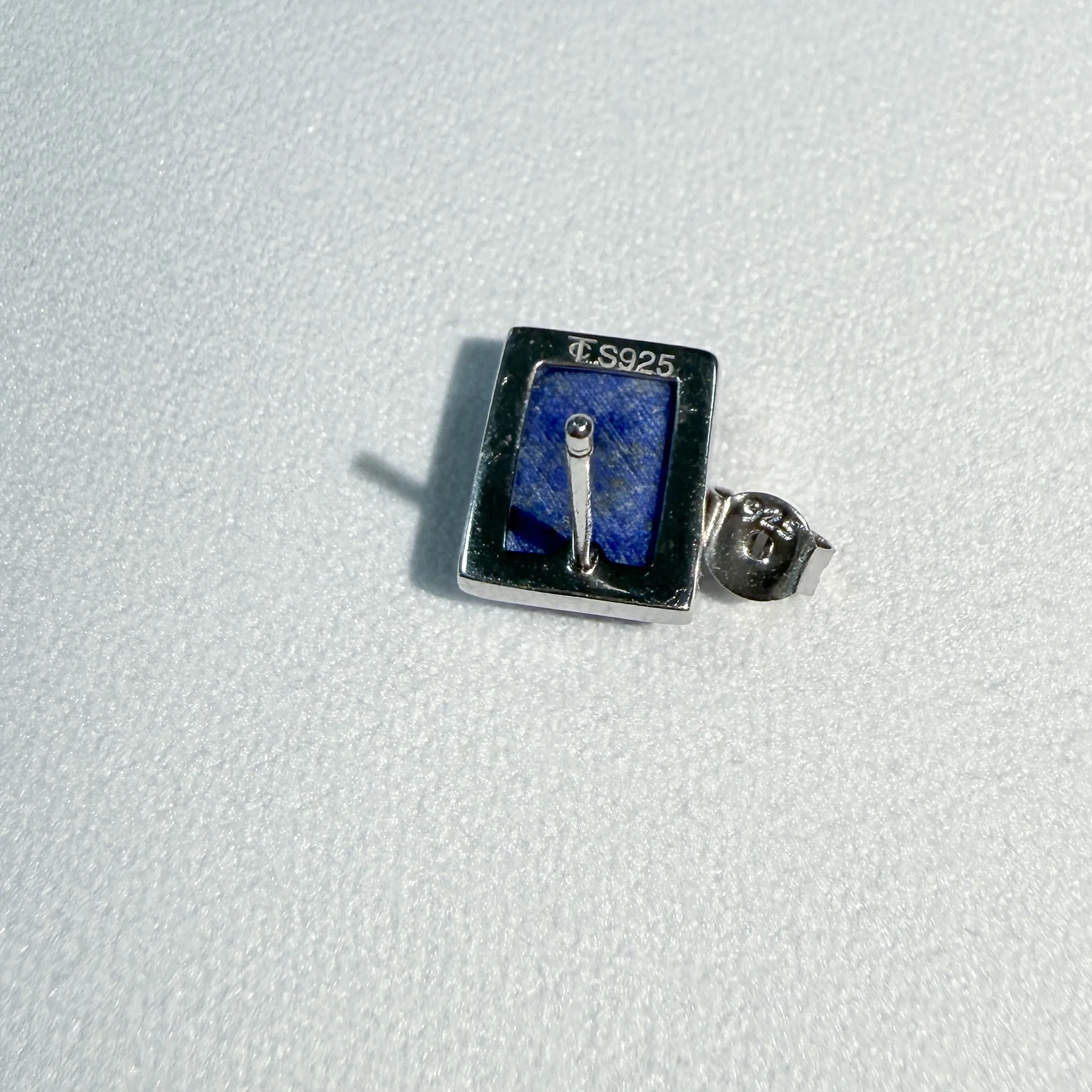
- If the rash continues, returns, or clearly worsens, see a dermatologist. AAD notes a clinician can help when self-checks are not enough.
Broken polish, dye rub-off, or a rough damaged face can also irritate—quality/care issues, not proof that lapis is “highly toxic to touch.”
To compare earring settings and contact parts, browse lapis lazuli earrings.
Dyed or waxed care is not the same as “toxic”
GIA notes some lapis is dyed (dye may come off with acetone or denatured alcohol) and may be sealed with wax or plastic; material may also be impregnated with wax or oil, with only fair stability. Clean with warm, soapy water and a spot test; never steam or ultrasonic; heat or solvents can damage treated surfaces (GIA care; GIA buyer’s guide).
Natural-looking appearance, treatment disclosure, and skin response are three different questions. Unstable dye or wax is a care-and-honesty issue—ask for dyed/waxed disclosure—not “poison jewelry.” Mohs ~5–6 and fair toughness mean protect lapis from hard knocks and harder gem neighbors.
For deep-blue color, calcite, pyrite, lookalikes, and treatments before you buy, use the lapis lazuli quality guide.
Buyer safety checklist
- Confirm the form: polished jewelry vs rough you plan to cut vs powder pigment.
- Read the metal story (S925 / plating / posts and backs). A stamp photo helps locate contact parts; it does not prove the whole stack is reaction-free.
- Ask about dyed, waxed, or oiled treatments.
- Skip home acid and destructive tests—leave chemical ID to professionals.
- No gem elixirs; do not swallow powder or chips.
- If ingestion happens: do not induce vomiting; use poison-control / clinician guidance for age, substance, amount, and symptoms; call emergency services for breathing trouble, collapse, seizures, or unresponsiveness.
- Clean gently: warm soapy water, soft cloth, spot test; avoid steam and ultrasonic.
- Keep small beads from children who mouth objects.
- If you cut rough lapis yourself, control dust and keep the workspace ventilated. Workshop risks do not apply to wearing a finished piece.
- Belief lists are not medical orders.
- Next step: quality guide · meaning · earrings.
FAQ
Is lapis lazuli toxic to wear?
For typical polished jewelry wear, lapis is usually discussed as fine against the skin—not a promise that every piece and every wearer will have zero issues. Metal stacks, treatments, polish, and individual skin all matter. Keep dust, DIY acid tests, and ingestion separate from wear.
Can lapis lazuli cause allergies?
If a rash or itch appears under a piece, stop wearing it first. Then check posts, backs, clasps, plating, and residues such as soap or lotion—AAD notes jewelry rashes can involve metals, and soap under jewelry can irritate. S925 stamp photos help inspect contact parts; they do not prove the whole piece is non-sensitizing. If the problem continues, returns, or worsens, see a dermatologist.
Is lapis safe for earrings and necklaces?
As a jewelry material category, polished lapis is commonly worn, with caveats: fair toughness, gentle cleaning, honest treatment disclosure, and metal quality at skin contact points. Individual reactions still need the stop-check-clinician path above.
What about pyrite flecks—are they dangerous?
Pyrite is a common visible part of many lapis rocks (GIA). Fine flecks are an aesthetic feature. IGS flags higher concern for pyrite especially in ingestion/reactive notes—not a default “don’t wear if you see gold-looking spots” rule. IGS ratings are combined prompts, not separate wear grades.
Does dyed lapis mean it is toxic?
No. Dye, wax, and oil change cleaning rules; they are not automatic proof of poisoning. Prefer sellers who disclose treatments.
Who should not wear lapis lazuli?
Zodiac or energy-based lists of who should avoid lapis have no medical basis. Sensible limits: protect lungs when cutting dust; avoid harsh cleaners on unclear treatments; vet the setting if you have strong metal sensitivity; do not ingest stones or gem waters. Persistent skin problems belong with a clinician.
What if someone swallows a bead or chip?
Do not induce vomiting on your own. Use poison-control or clinician advice for age, material, amount, and symptoms. Seek emergency care for choking, breathing trouble, collapse, seizures, or unresponsiveness. Not every small fragment is an automatic ER case—and “no choking” is not the only question that matters.
Related reading
- Lapis Lazuli Quality Guide — deep blue, calcite, pyrite, treatments, care
- Lapis Lazuli Meaning — cultural/belief notes, non-medical
- Lapis lazuli earrings — finished styles and settings
References
- GIA — Lapis Lazuli overview (rock aggregate; lazurite, calcite, pyrite).
- GIA — Lapis Lazuli Care and Cleaning (Mohs ~5–6; fair toughness; dye/wax/oil; warm soapy water).
- GIA — Lapis Lazuli Buyer’s Guide (warm soapy water; never steam or ultrasonic).
- IGS — Gemstone Toxicity Table (combined handling, cutting, and ingestion ratings; lapis Medium; pyrite High if swallowed).
- AAD — Itchy rash could be contact dermatitis (jewelry rashes may involve metals; soap under jewelry can irritate; stop the jewelry; see a dermatologist if unclear).
- Poison Control — First aid for poisonings (do not induce vomiting; web tool or 1-800-222-1222; emergency services for collapse, seizure, breathing trouble, or unresponsiveness).
- Poison Control — Foreign body ingestion (general guidance on swallowed objects).
These sources offer general jewelry-care, skin-rash, and first-aid information. They are not prescriptions, diagnoses, or proof that any specific piece is safe for every wearer.