
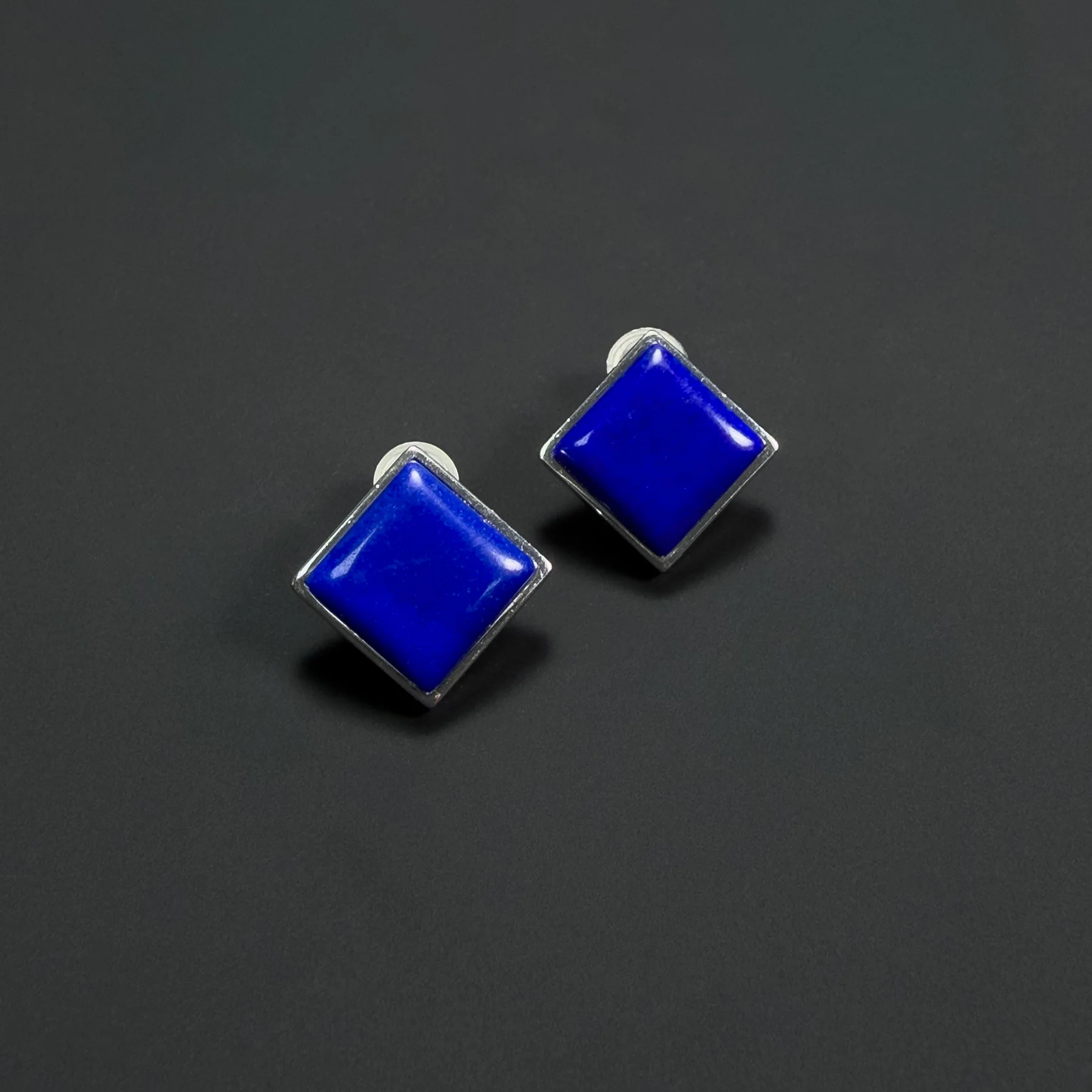
A square of blue, worn on its corner
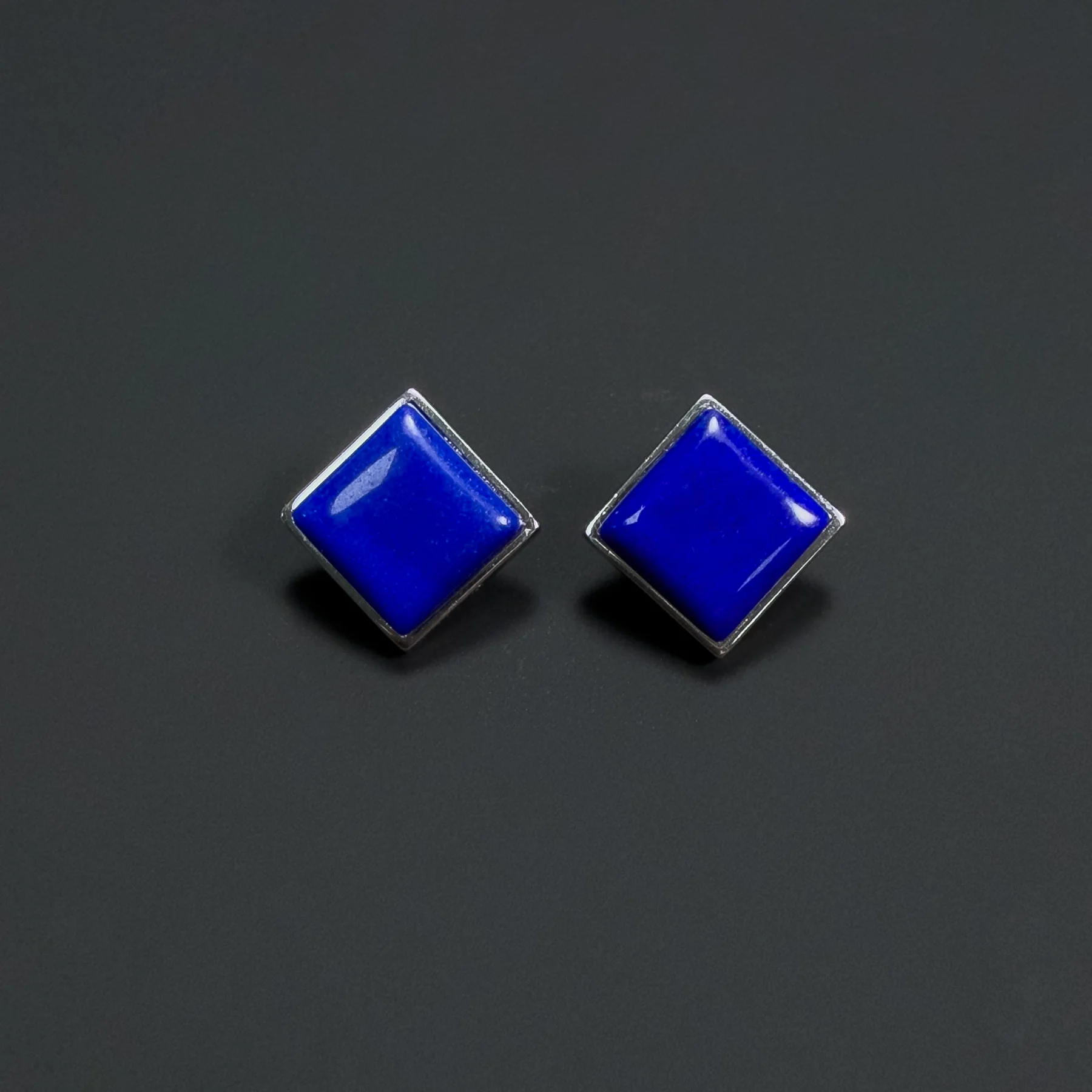
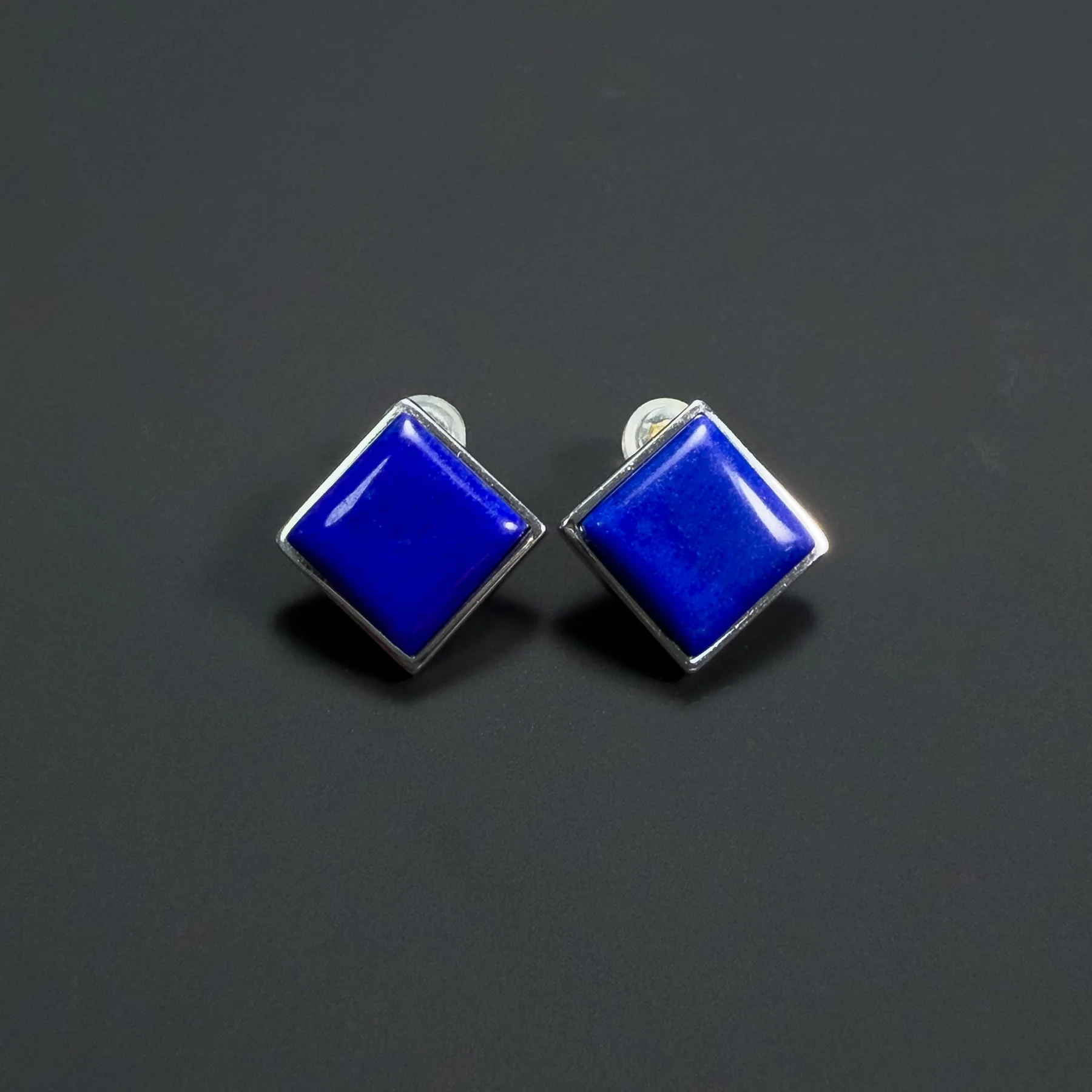
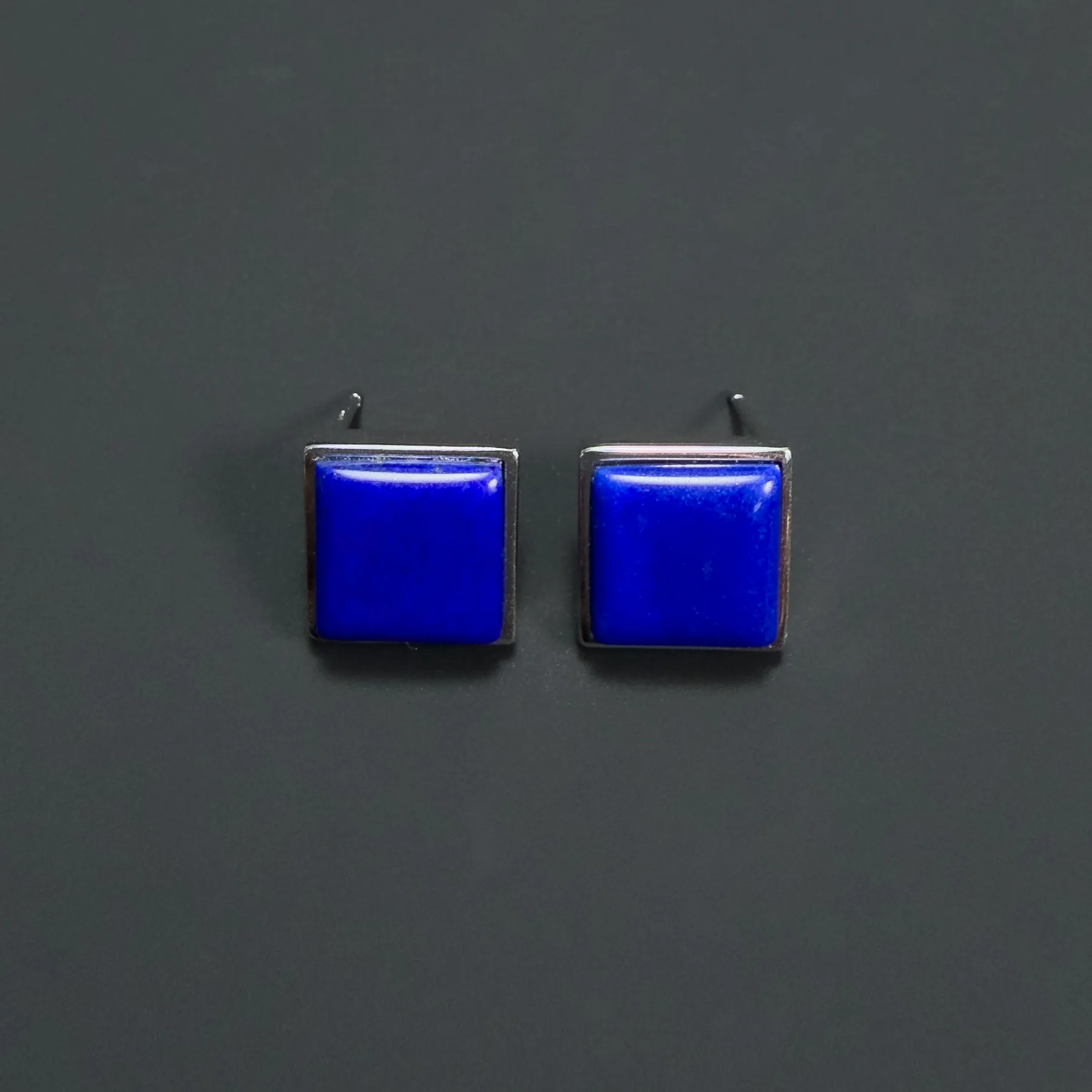
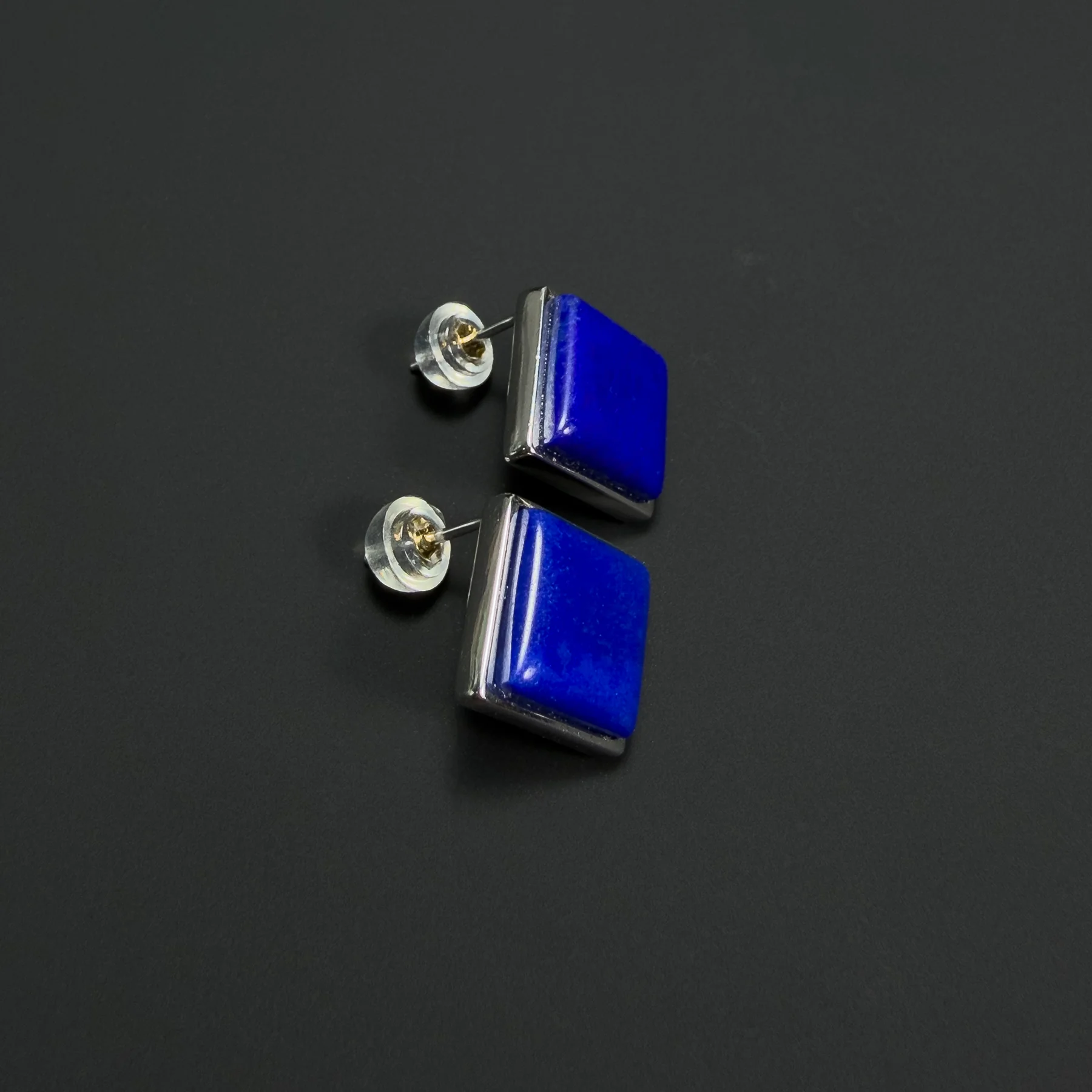
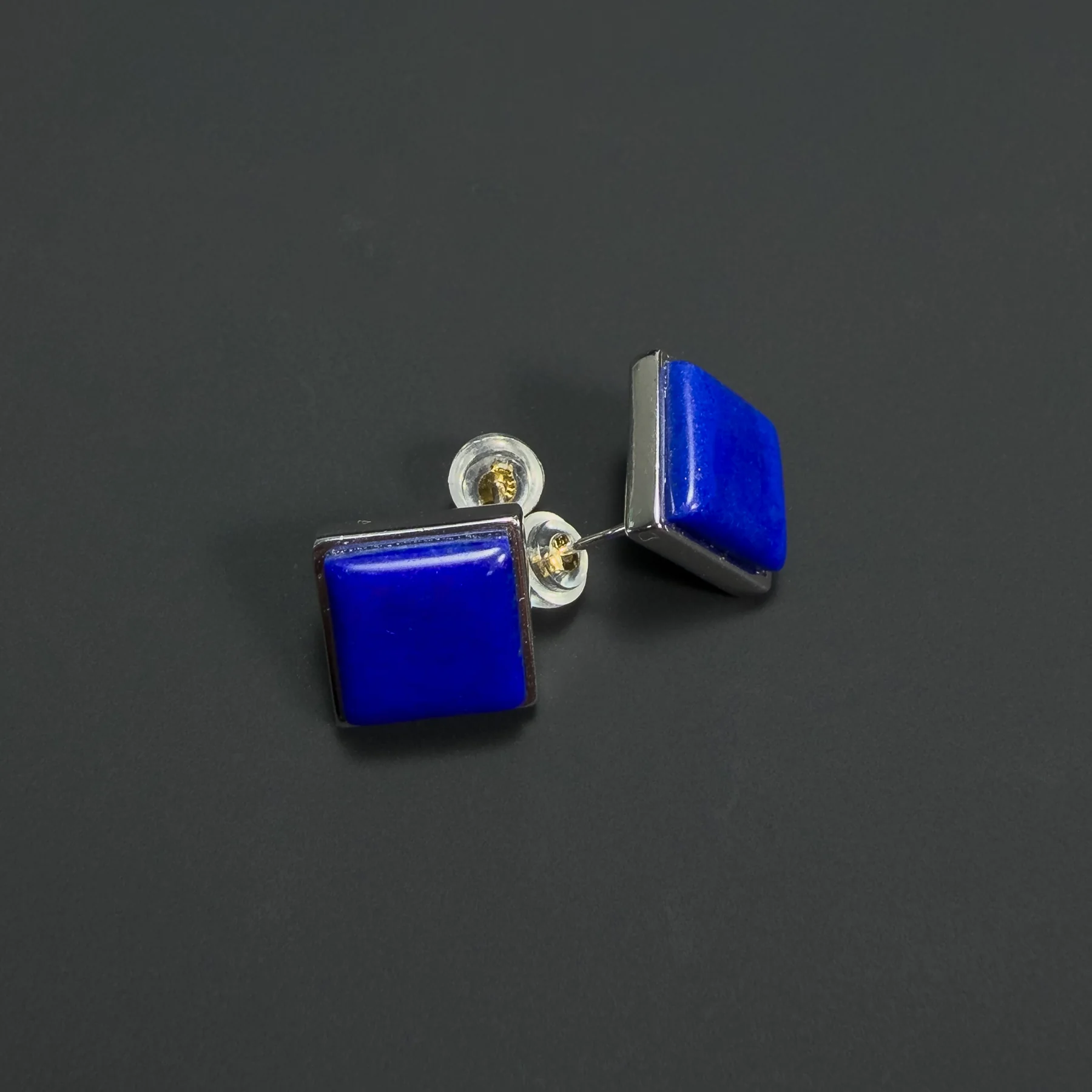
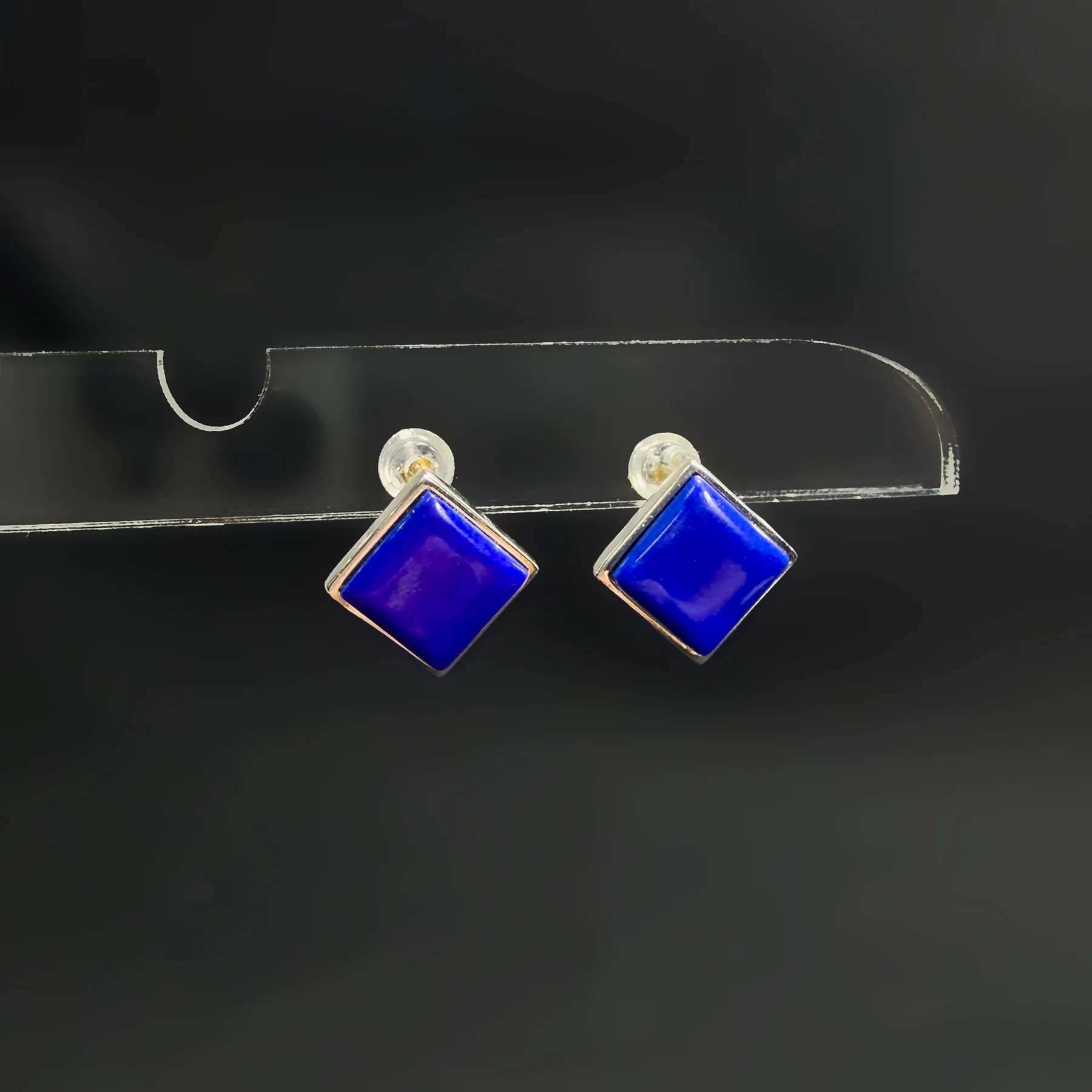
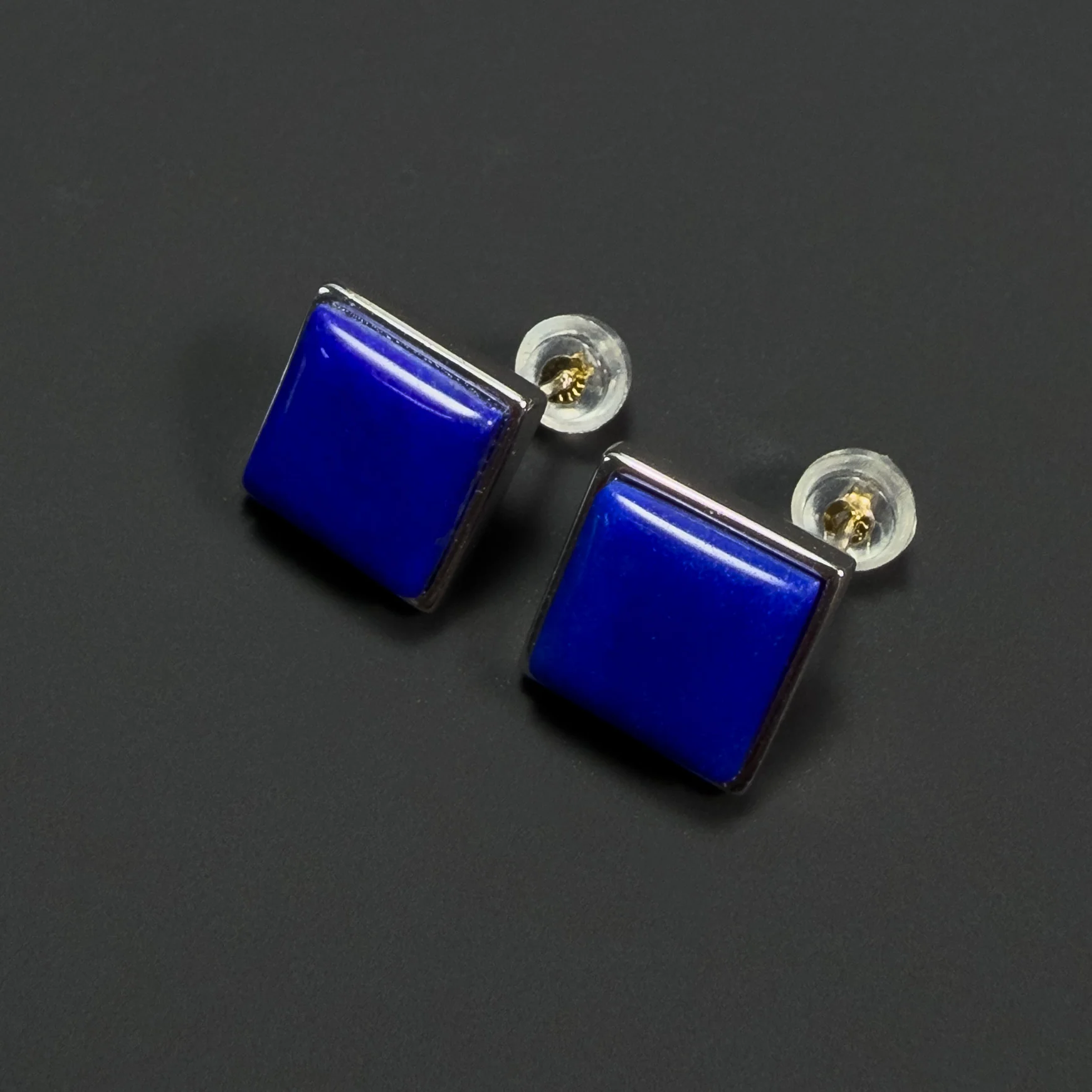
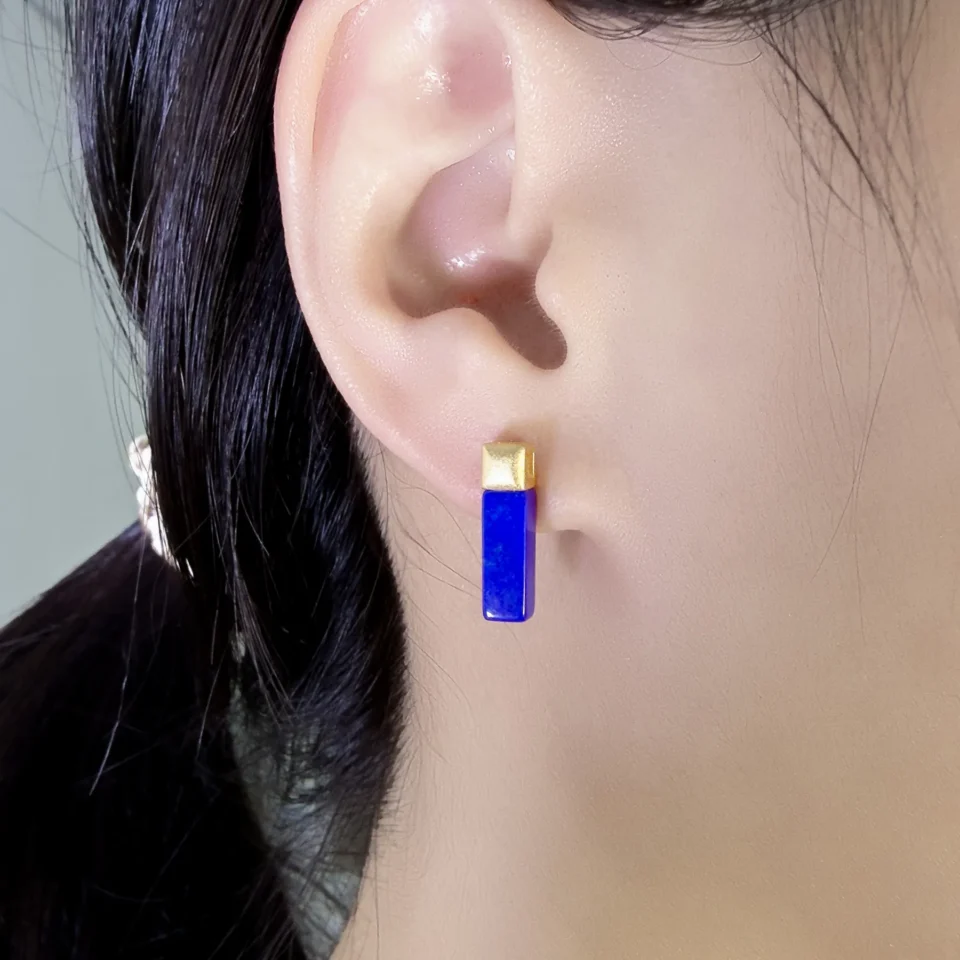
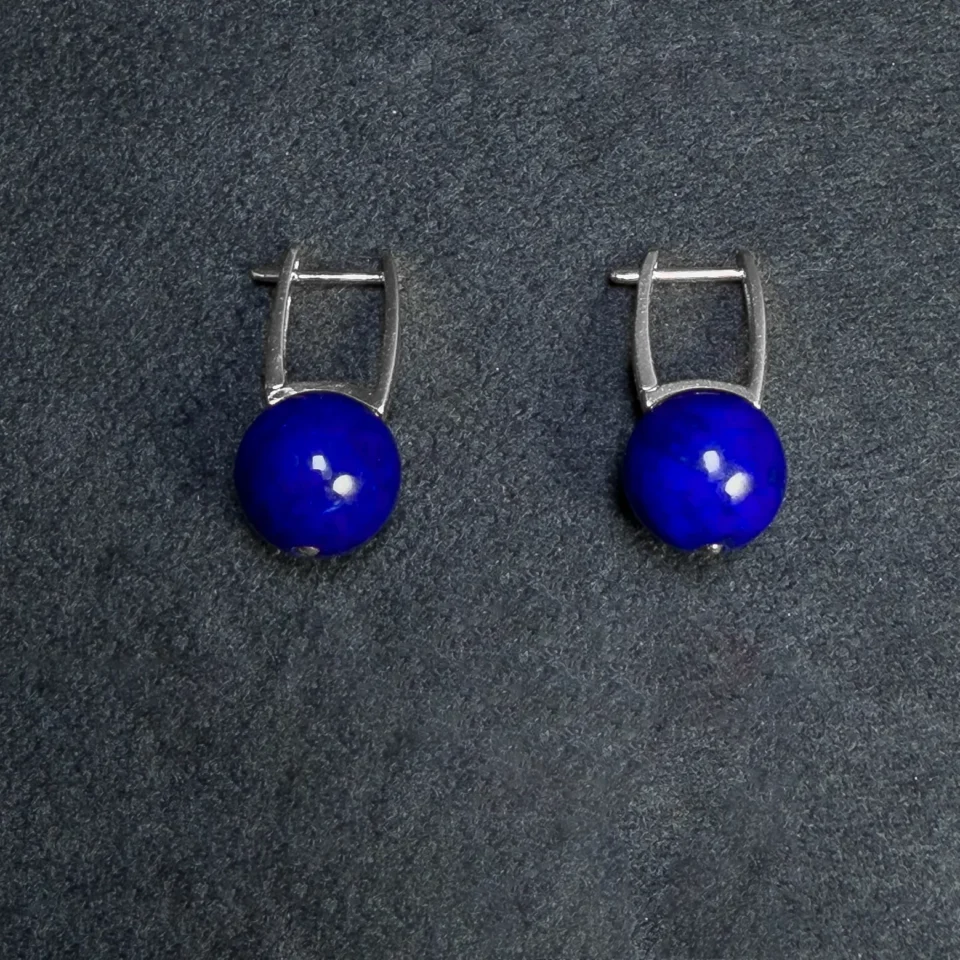
Each stud is a single natural lapis lazuli cabochon: square, with four straight edges and a gently domed top, about 10 mm along each side. A thin S925 sterling silver bezel, about 0.75 mm wide, follows those edges and brings each stud to about 11.5 mm along each side including the bezel. On the ear, the square turns on its corner, with one point up and one point down, forming a diamond-shaped outline. That diagonal position is the only way these studs are made to be worn; they are not designed to sit with their sides level.
Why the diagonal matters
On the diagonal, the straight edges run at an angle, and the top and bottom points add a small vertical accent at the lobe. A round stud reads as one continuous curve from every side; this shape gives crisp lines and defined corners instead. If you like geometric shapes but still want a small stud rather than a drop, that is the practical difference here.
Deep, even blue, and what matching means
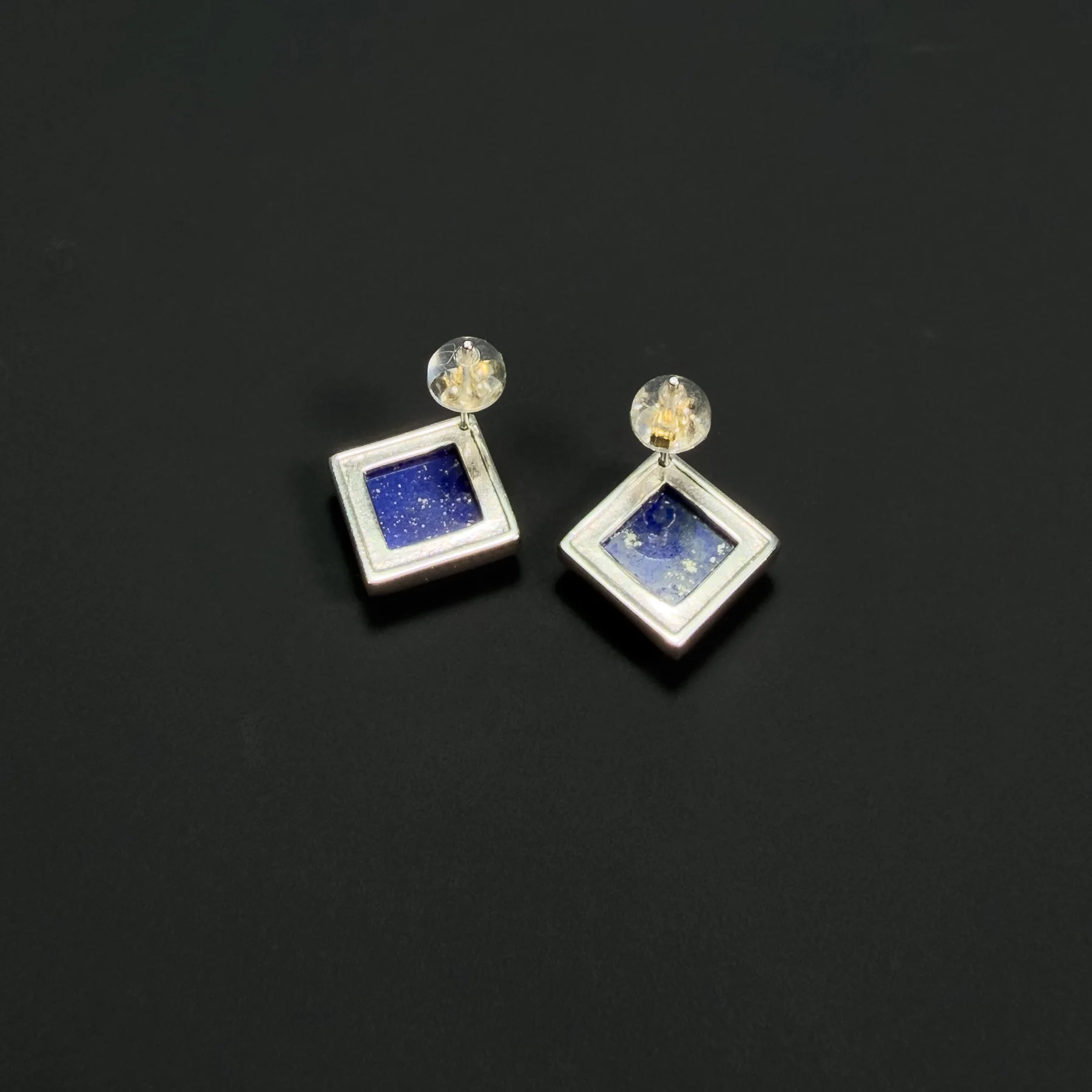
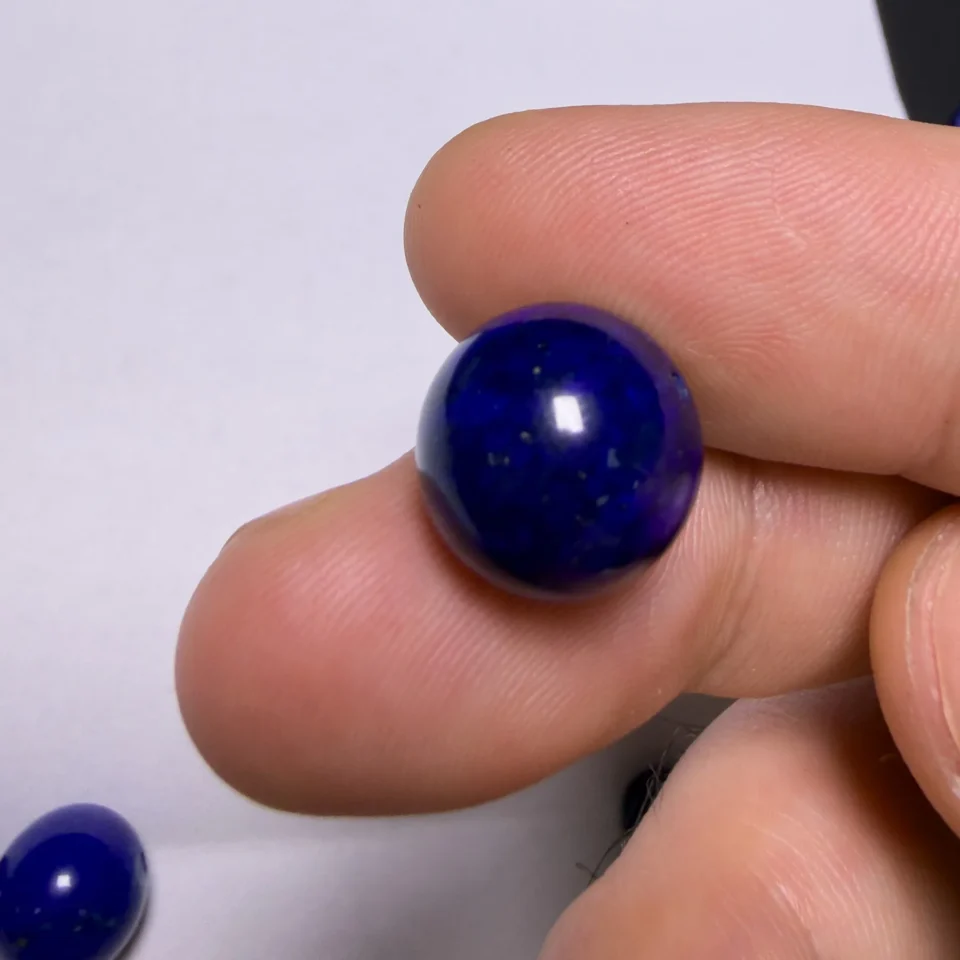
Lapis lazuli usually carries white calcite and golden pyrite alongside its blue. The faces of these two stones show very little of either: a deep, quiet blue with a fine, almost glaze-smooth polish. Up close you may still notice faint lighter texture or a tiny fleck of gold.
The pair is matched for a similar blue tone. These stones are not identical in their natural markings, and matching does not mean they are free of calcite or pyrite. If you want both ears to read as a similar deep blue at a normal viewing distance, that is what the matching is for.
For how blue tone, calcite and pyrite are judged in lapis more generally, see our lapis lazuli quality guide.
What the thin frame and the dome do
At about 0.75 mm, the bezel forms a slim outline rather than a broad metal surround: of the roughly 11.5 mm along each side, about 10 mm is lapis. The blue fills nearly the whole shape, and the silver mainly defines the edges, sharpening the straight sides and the corners without adding ornament. There are no prongs, side stones or engraved details.
The domed top is polished, not faceted. Lapis is opaque, so it does not sparkle the way a transparent faceted gem does. Instead, the polished curve shows smooth surface highlights that move as you turn your head, set against the opaque deep-blue body of the stone.
Choosing by size and style
Two numbers describe each stud, both measured along one side of the square: about 10 mm for the lapis face and about 11.5 mm including the bezel. Use the larger figure when comparing with studs you already own, since it includes the silver frame. A side length is not interchangeable with a round stud’s diameter: a square and a circle with the same measurement do not cover the same area. To picture it, draw a square with sides of about 11.5 mm and turn it onto one corner. Earlobes and piercing positions differ, so how much of the lobe it covers will vary.
These studs are for someone who wants one clear blue focal point at each ear, small, geometric and restrained, rather than a statement earring or a mix of stones and metals. More styles are gathered in our lapis lazuli earrings collection.
Care
Put the earrings on after perfume, lotion and hair products have dried. Wipe the lapis and silver with a soft, dry cloth after wear. Avoid soaking, ultrasonic cleaners and chemical dips, and store the studs apart from harder jewelry so the domed surfaces are not scratched. Sterling silver can darken over time; a silver polishing cloth used on the frame only can bring back its brightness.




Reviews
There are no reviews yet.