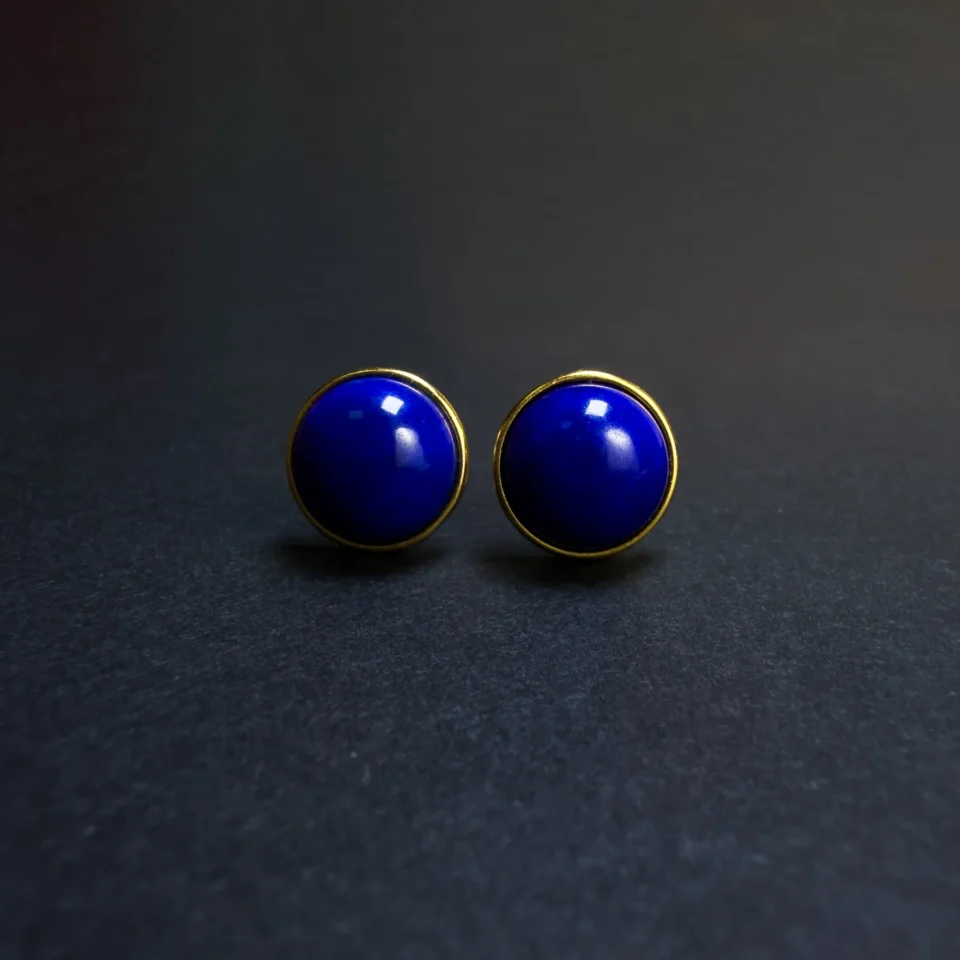
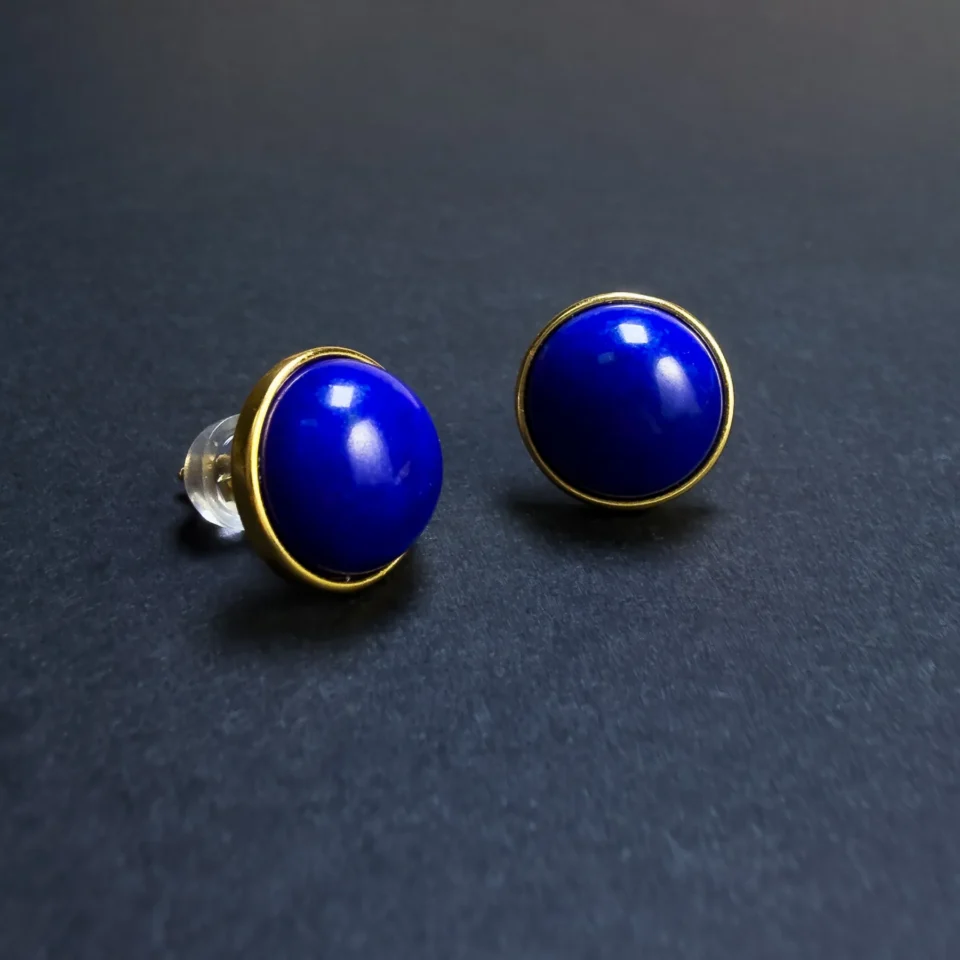
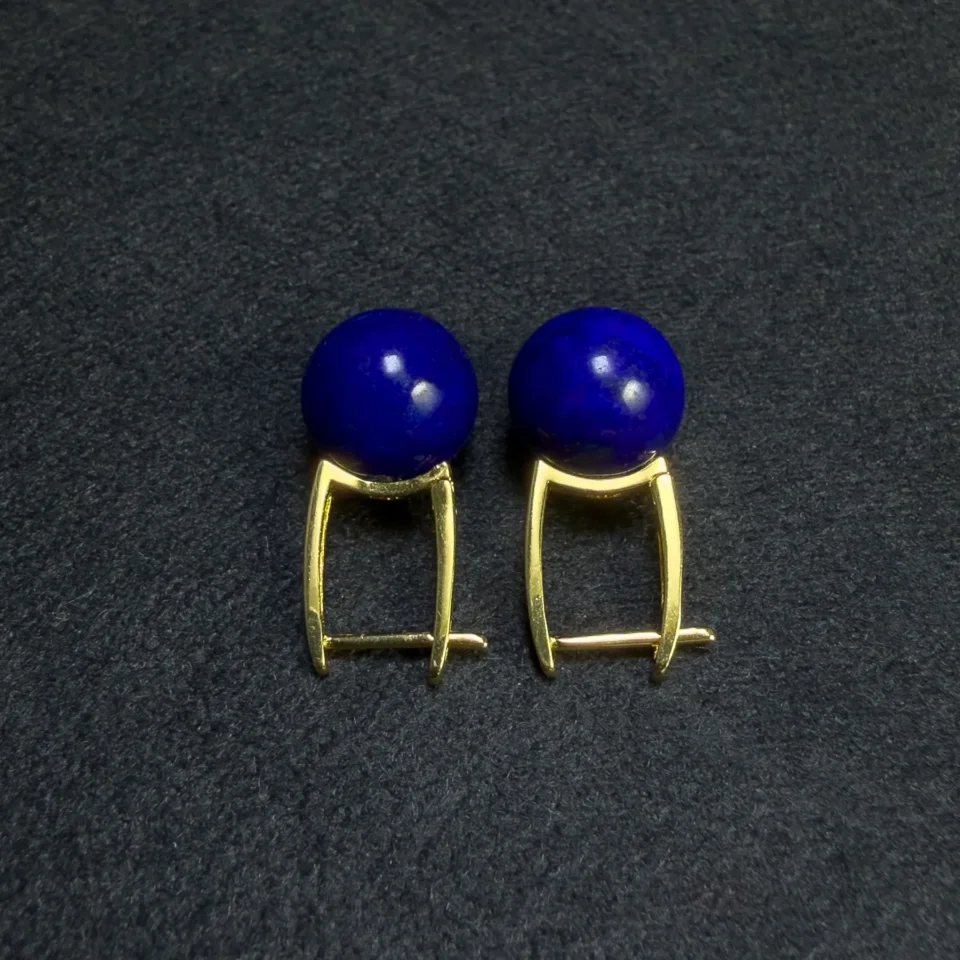
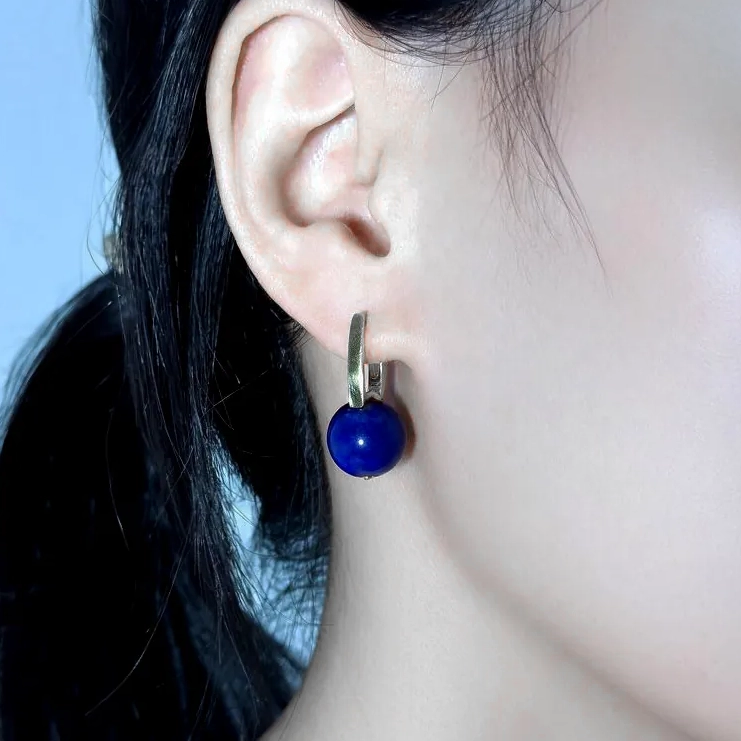
“Deep blue lapis” is a useful color description, but it is not an official GIA grade. GIA describes fine lapis as highly saturated blue to violetish blue, generally medium to dark in tone. The key point is that deep does not simply mean darker. Fine deep-blue lapis still looks clearly blue and saturated in ordinary light.
From our own sourcing experience, we judge deep blue lapis by the blue first, then by how much visible calcite and pyrite interrupt it, how fine the texture looks after polishing, and how consistently the color matches across a finished strand.
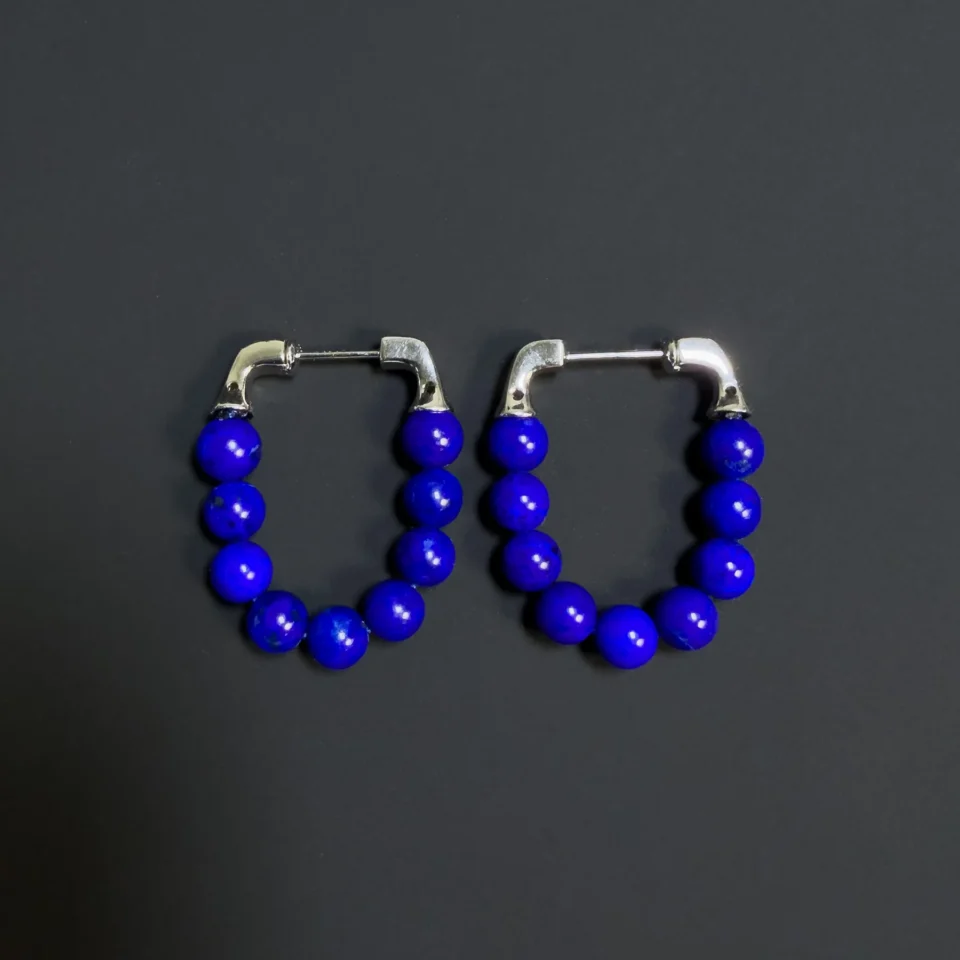
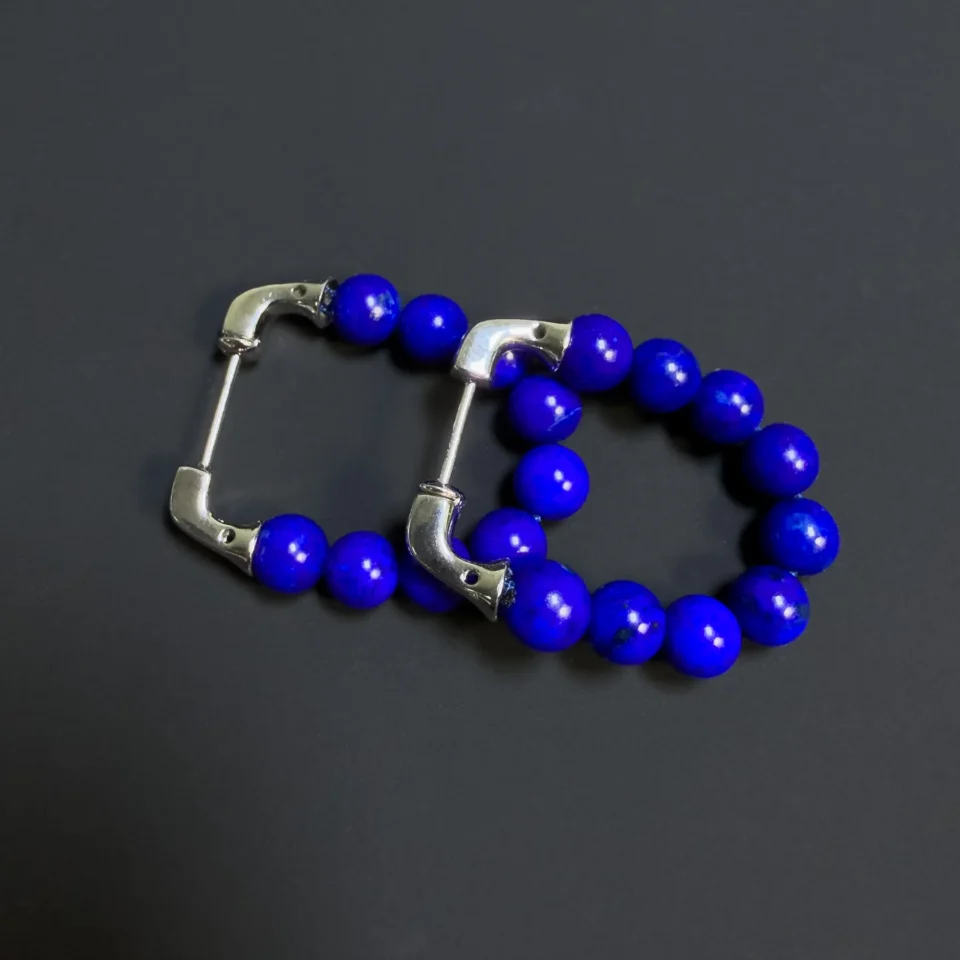
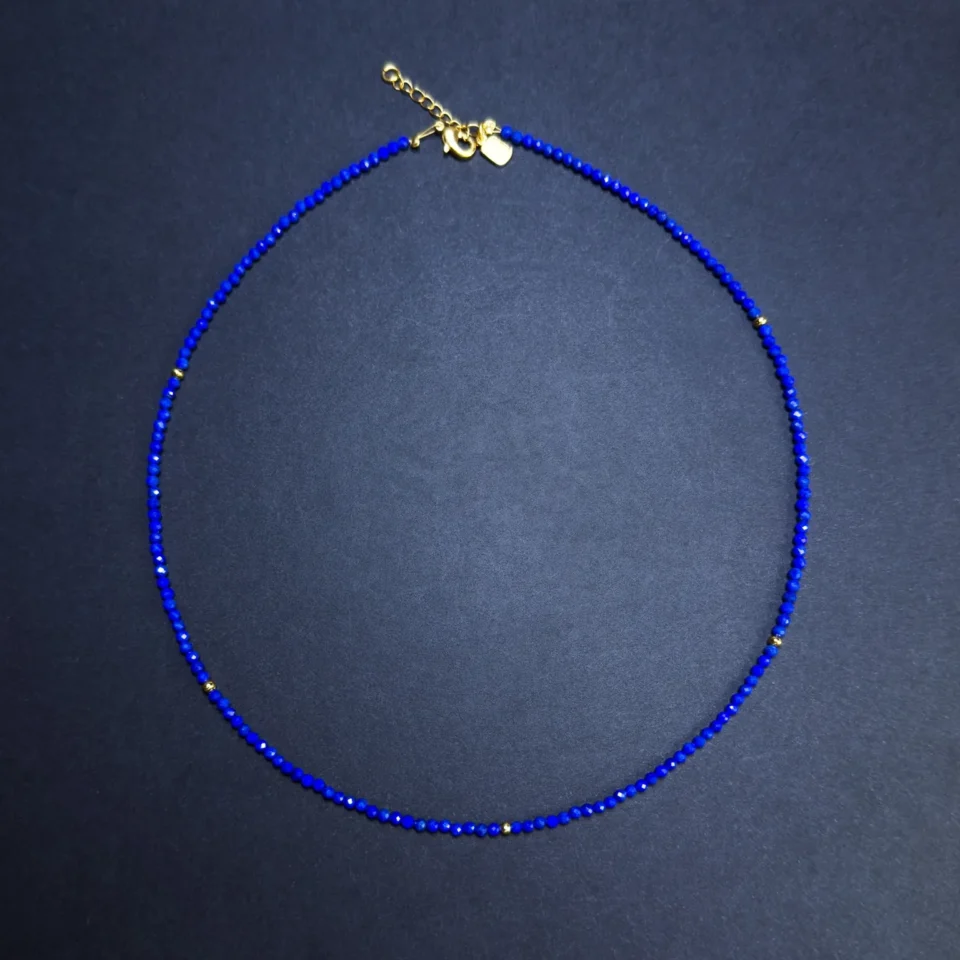
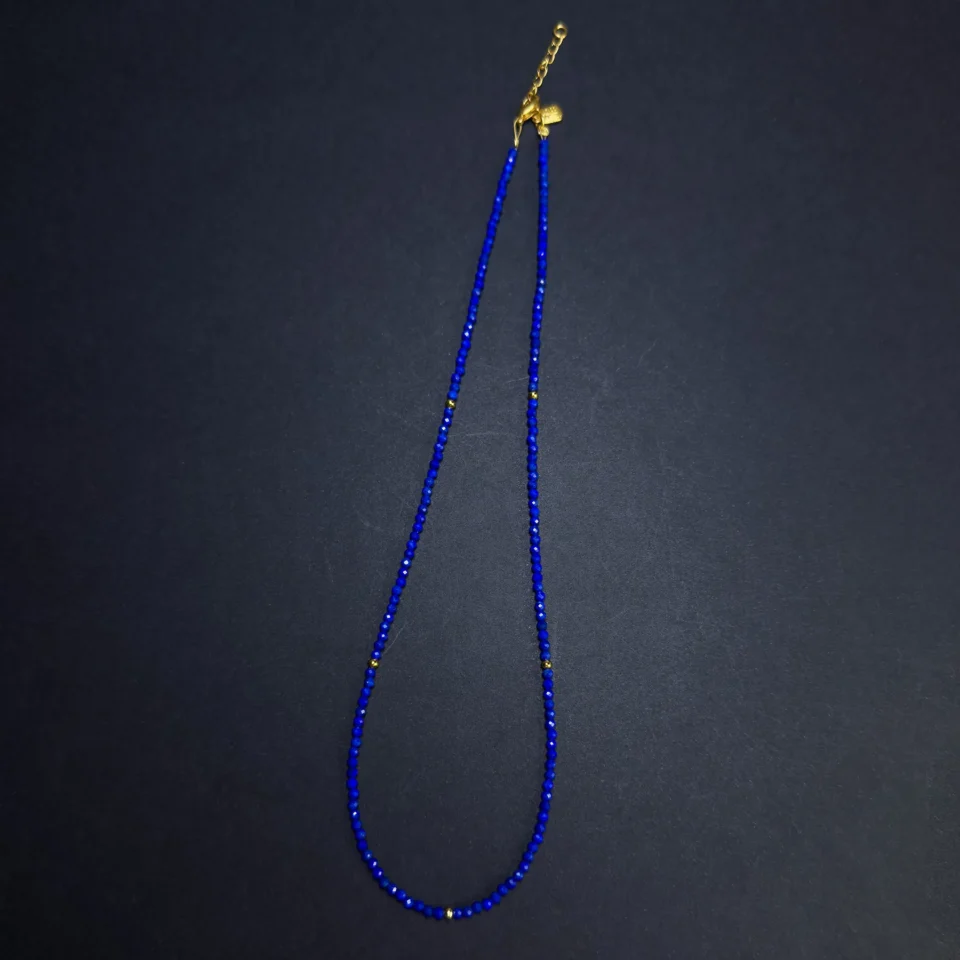
All of the deep blue lapis shown in this article was photographed from actual material we have handled. The stones shown here are natural-color lapis lazuli and have not been dyed.
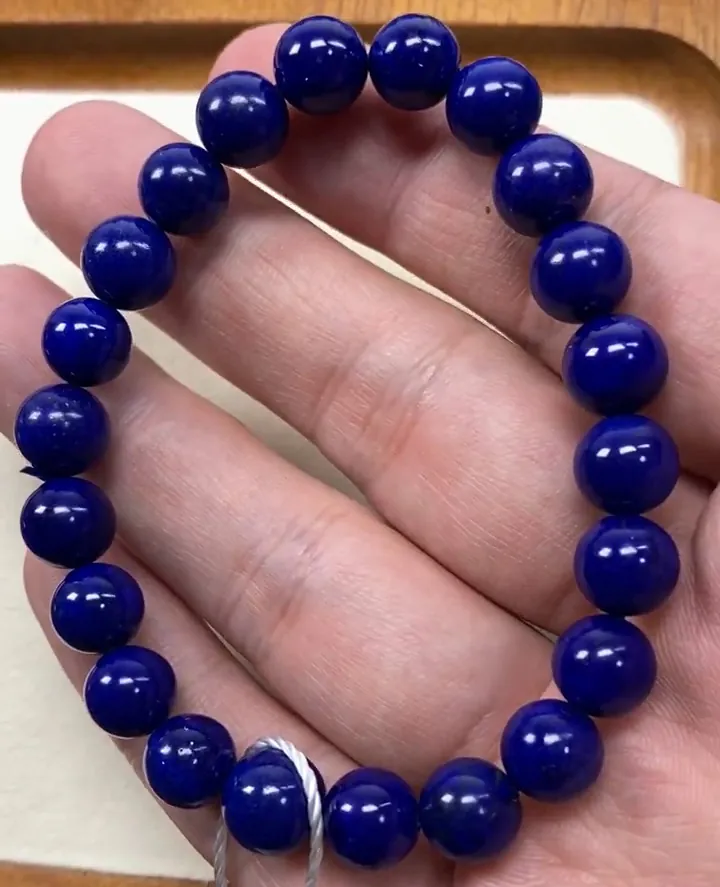
Deep Blue Is Not the Same as the Darkest Blue
Color depth is only one part of the picture. A stone can be very dark and still look flat, grayish or almost black. Another piece can be slightly lighter but much more saturated and vivid. That is why the better question is not “Which one is darkest?” but “Which one has the strongest, cleanest blue?”
This matches GIA’s quality language: the most prized lapis is not described as the darkest possible blue, but as intense, uniform, medium-dark to dark blue or violetish blue. GIA’s Quality Factors page also emphasizes that visible calcite and excess pyrite can lower quality even when the material itself is dark.
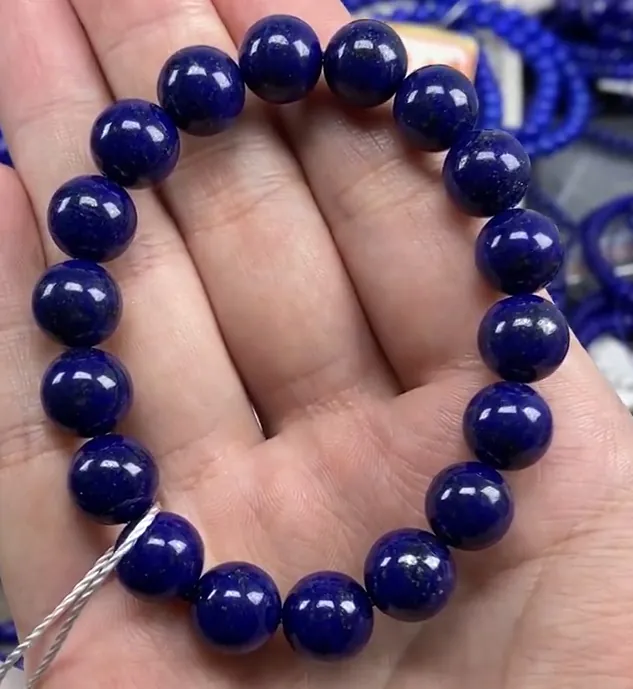
Deep Blue, Royal Blue and Midnight Blue Are Descriptions, Not Universal Grades
Terms such as deep blue, royal blue, midnight blue and indigo are widely used to describe lapis color, but they do not have universal laboratory boundaries. GIA evaluates lapis lazuli but does not assign it a formal color grade. One seller’s “deep blue” can therefore look different from another seller’s material.
For the broader color range of lapis, see our guide to lapis lazuli color. This page stays focused on how to judge deep-blue material rather than repeating the full color spectrum.
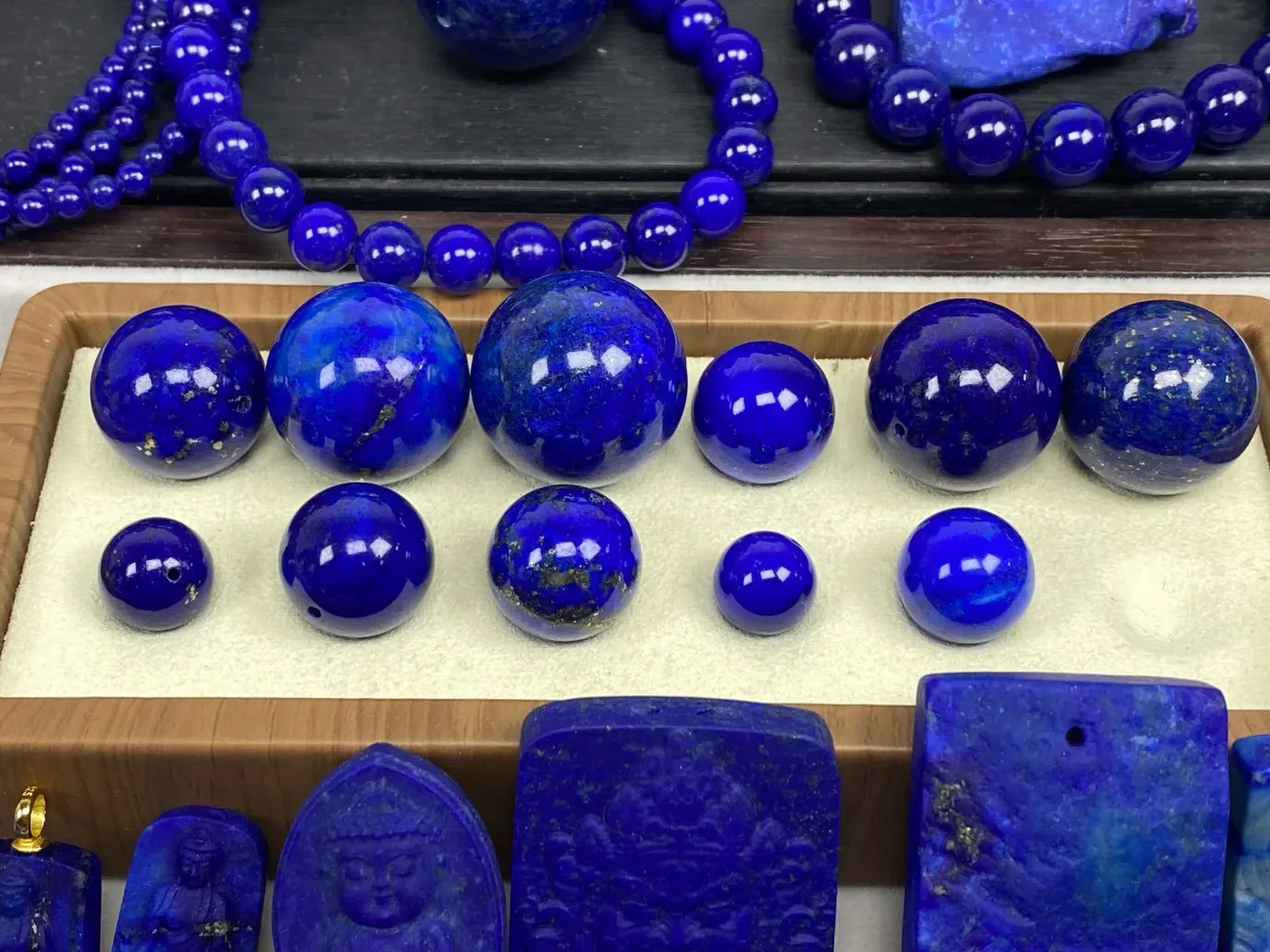
Does Deep Blue Automatically Mean High Quality?
No. Deep blue is an important starting point, but it is not the whole quality judgment. A dark stone can still contain obvious white calcite, heavy pyrite, uneven patches, a coarse-looking body or weak polish.
In fine jewelry material, we prefer the blue to stay visually dominant. A small amount of attractive pyrite can work with the blue, but large metallic areas or pale calcite can break up the color. GIA likewise notes that the finest lapis can have a uniform bodycolor with no visible calcite and little or no visible pyrite.
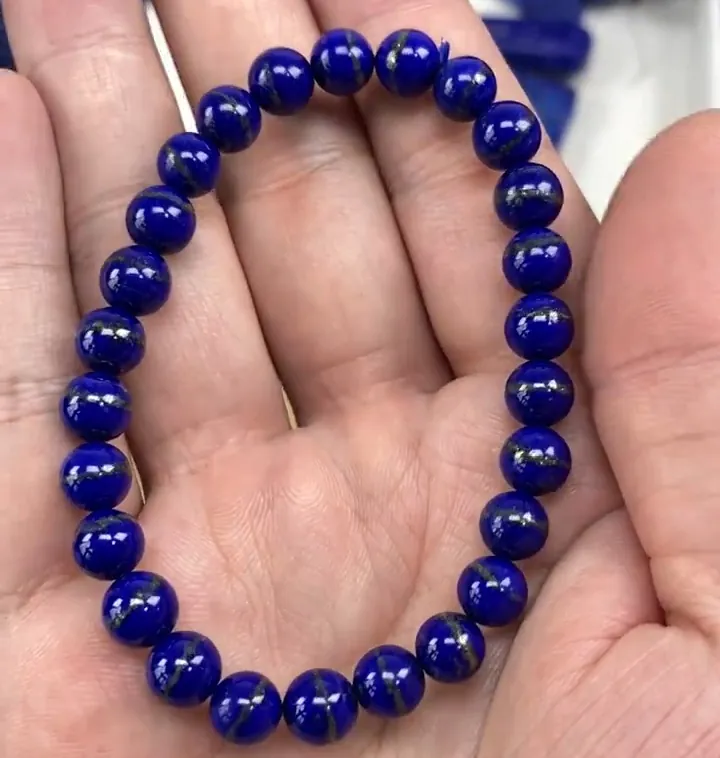
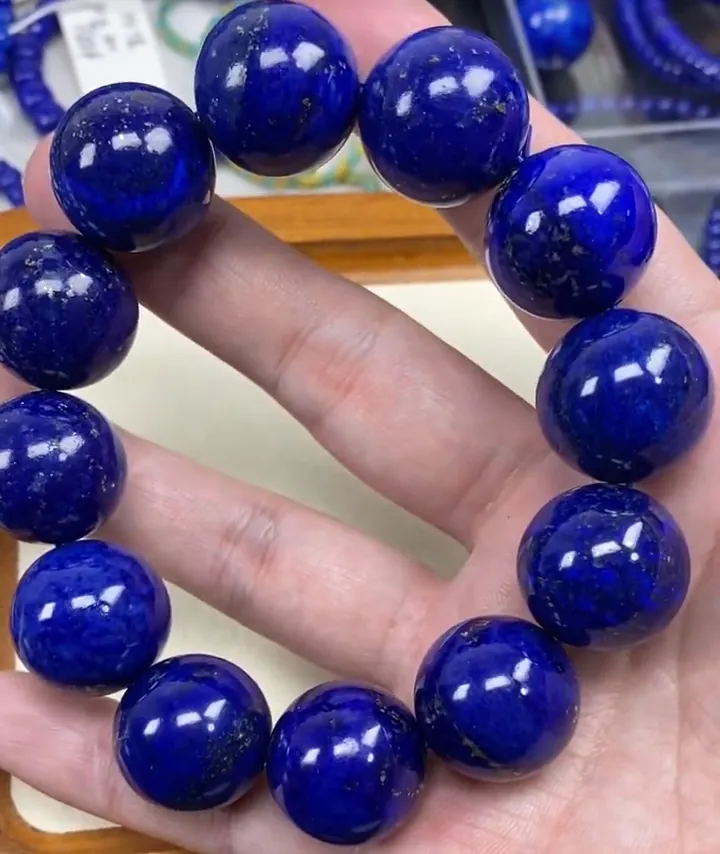
What Fine Deep Blue Lapis Looks Like to Us
When we select deep blue lapis for lapis lazuli jewelry, we prefer saturated blue that remains obvious in normal viewing, very little visible pale matrix, a fine-looking and compact body, a smooth coherent polish, and good color consistency from piece to piece. For beads, matching is a separate quality factor: a single good bead is easier to find than an entire strand that holds the same blue.
That judgment comes from our own hands-on sourcing and selection experience. It is not a GIA grading system, but it reflects the practical way we compare real material for jewelry.
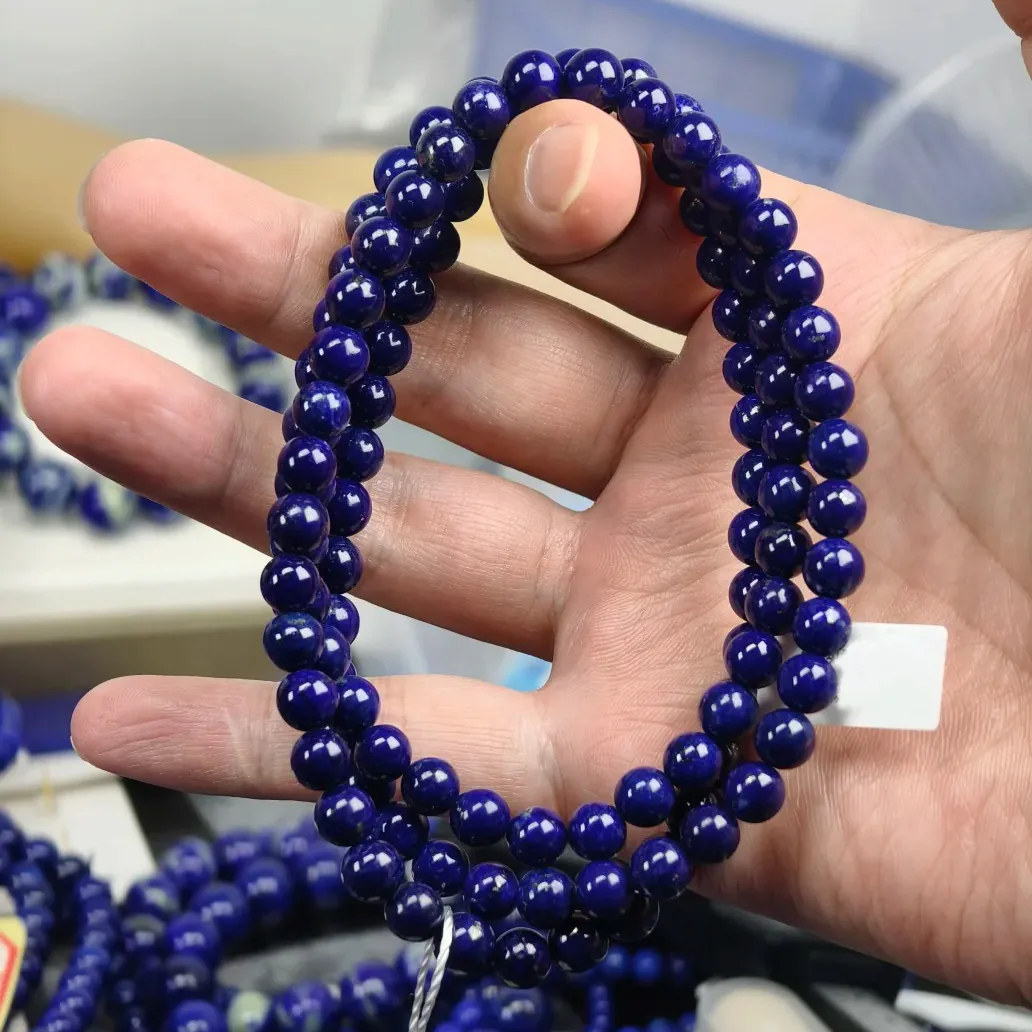
Why Deep Blue Lapis Can Look Different in Photos
Deep blue lapis is especially sensitive to lighting, exposure and background. Under some lighting, a very dark blue bead can look almost black; under brighter or more neutral light, the blue becomes easier to see. The same material can therefore look noticeably different between a product photograph and the stone in hand.
This is one reason we do not judge deep blue from one dark photograph alone. When buying online, look for more than one view and, if color is important, ask to see the material under neutral bright light.
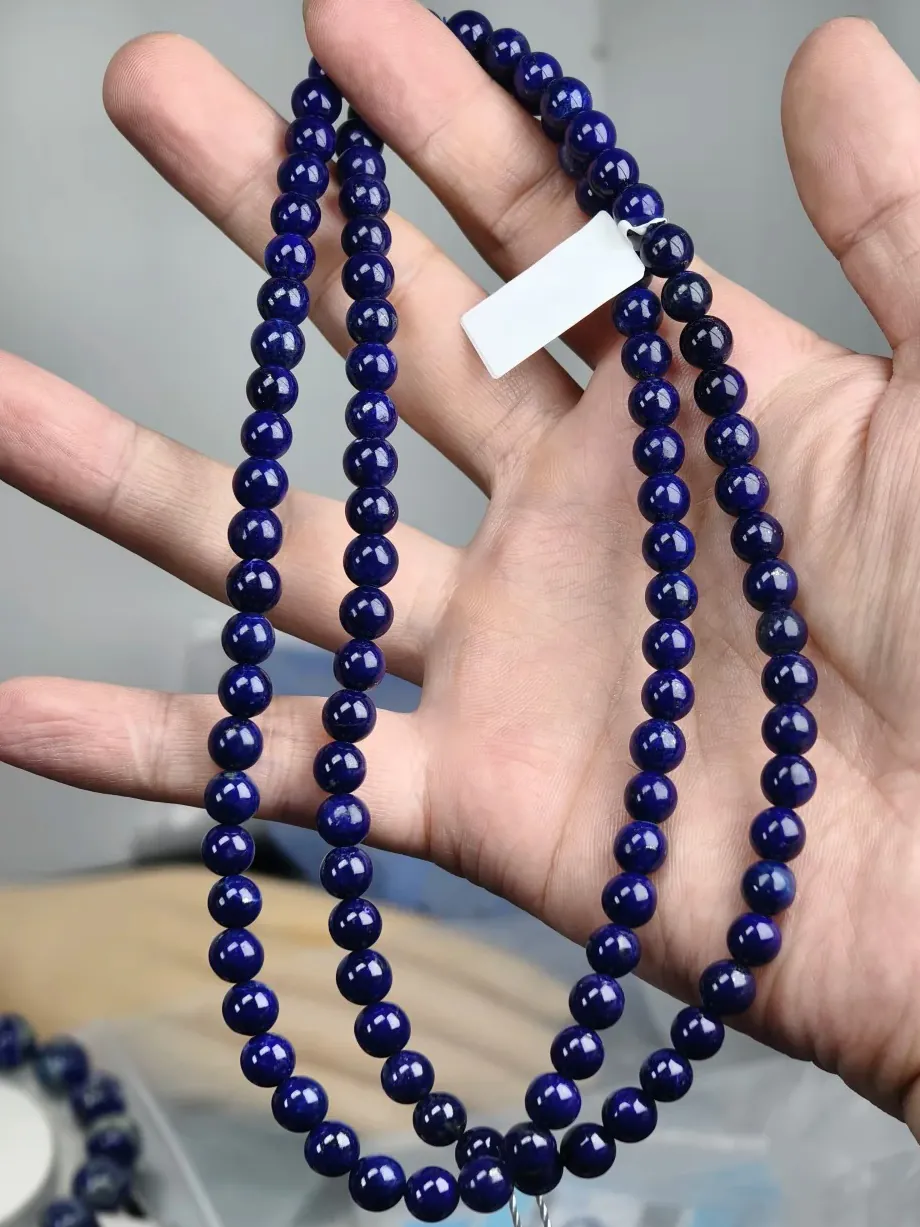
Can Deep Blue Lapis Be Dyed?
Yes, lapis can be dyed to improve color and conceal calcite. GIA also notes that undyed material may be impregnated with wax or oil to improve color and luster. A deep-blue appearance by itself therefore does not prove that the color is untreated.
From our experience in the lapis trade, dyeing can be very difficult to identify from photographs alone, especially when the material is already a strong blue. A convincing product photo is not proof that the color is natural. When buying lapis online, check whether the seller clearly states that the material is natural-color and undyed. If this is not stated, ask before purchasing.
If treatment status matters to the purchase, ask for disclosure. For higher-value material, professional gemological testing is more reliable than judging treatment from a photograph.
What to Look for When Buying Deep Blue Lapis
For a practical buying check, look at the blue first: is it saturated and clearly blue, or only dark? Then check how even the color is, how much visible calcite and pyrite interrupt it, whether the texture looks fine after polishing, and whether a bracelet or necklace is well matched. If price is part of the decision, see our lapis lazuli worth guide for a visual comparison of quality and value factors.
Do not rely on color alone. Look for a clear seller disclosure such as “natural-color” or “undyed”, especially when the lapis is an unusually deep, even blue.
If the material is so dark that it starts to look black in some lighting, see our black lapis guide for the difference between very dark natural-looking blue, market descriptions and treated material.
Deep blue is most compelling when the blue remains saturated. Darkness alone is not the goal.