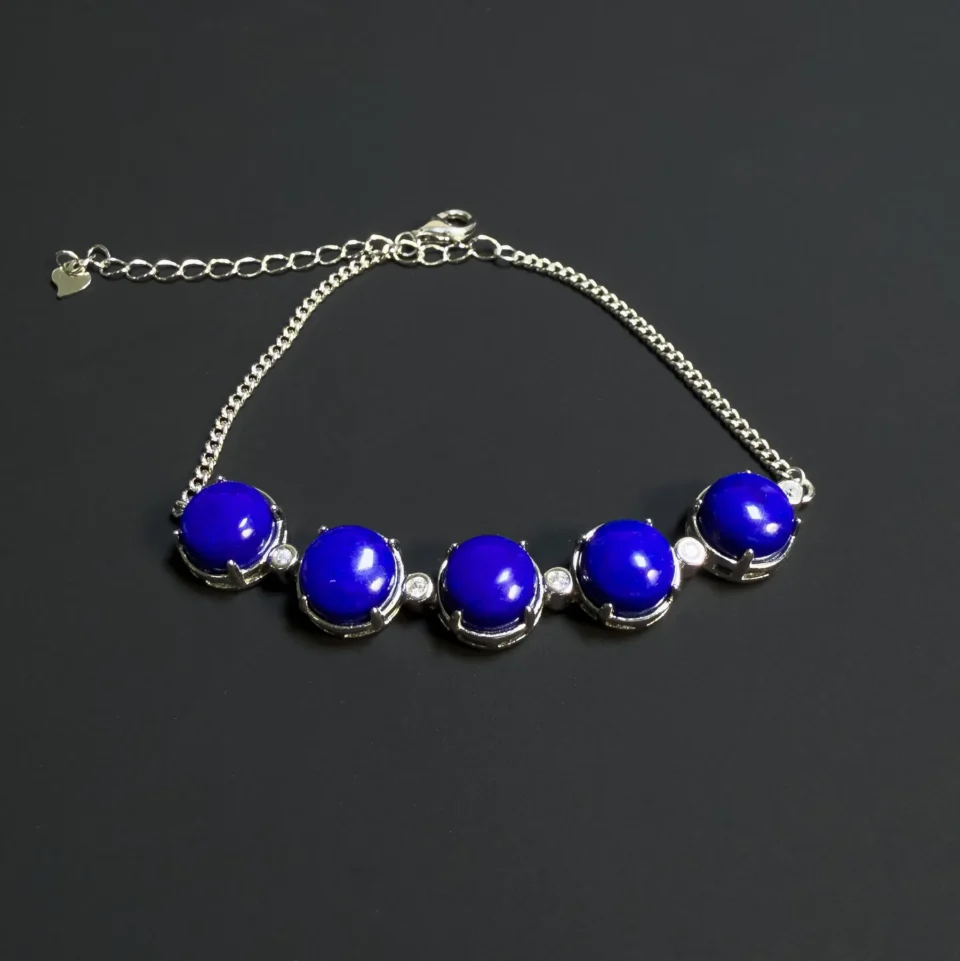
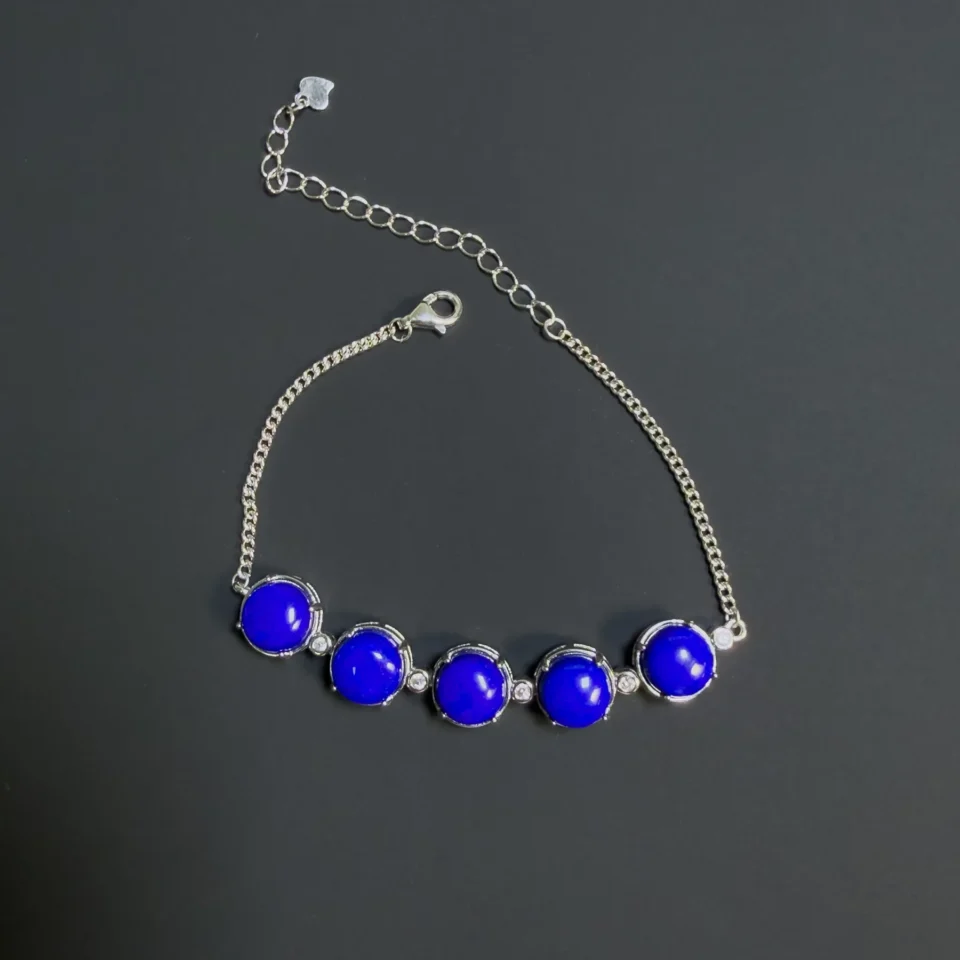
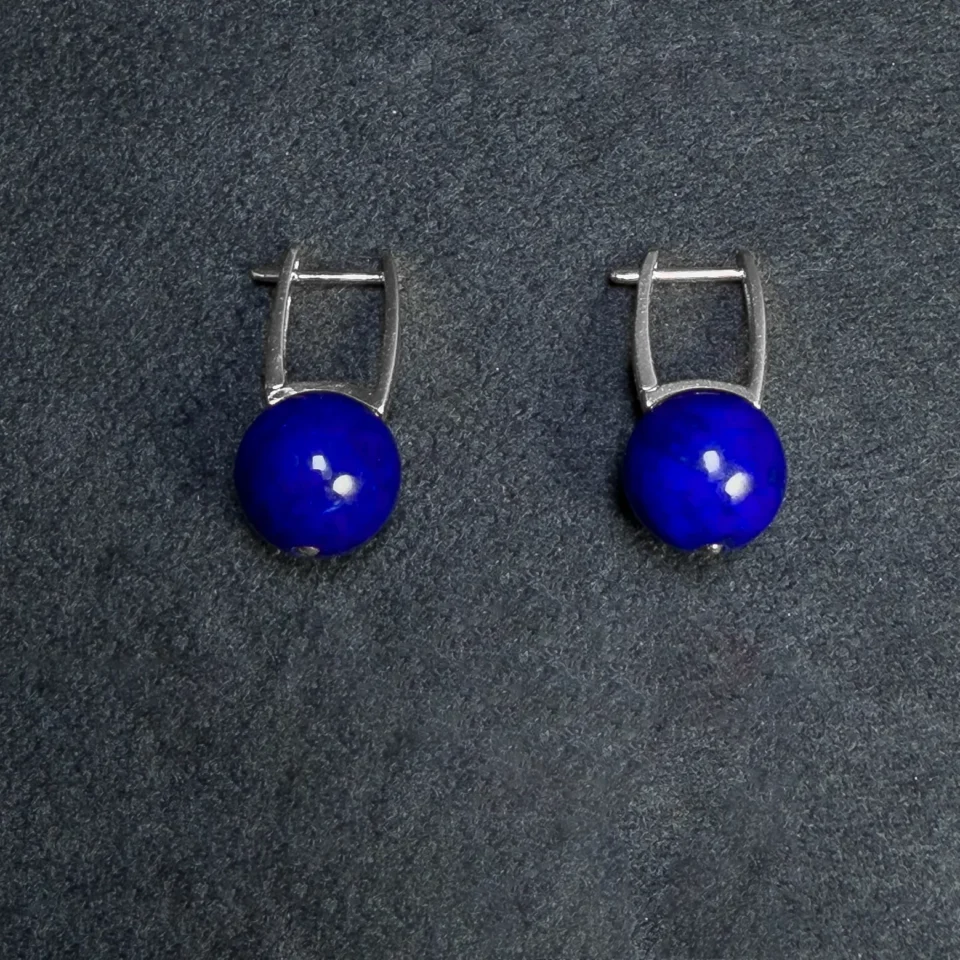
If by “lapis with gold” you mean the metallic gold-colored areas inside the stone, they are pyrite, not actual gold. Lapis lazuli is a rock made from several minerals, most commonly including lazurite, calcite and pyrite. GIA identifies the golden metallic-looking spots in lapis as pyrite.
The amount of pyrite can vary from almost none to fine scattered flecks, veins, clusters or large metallic patches. That variation matters because more “gold” does not automatically mean better lapis. The blue still has to remain the main visual feature.
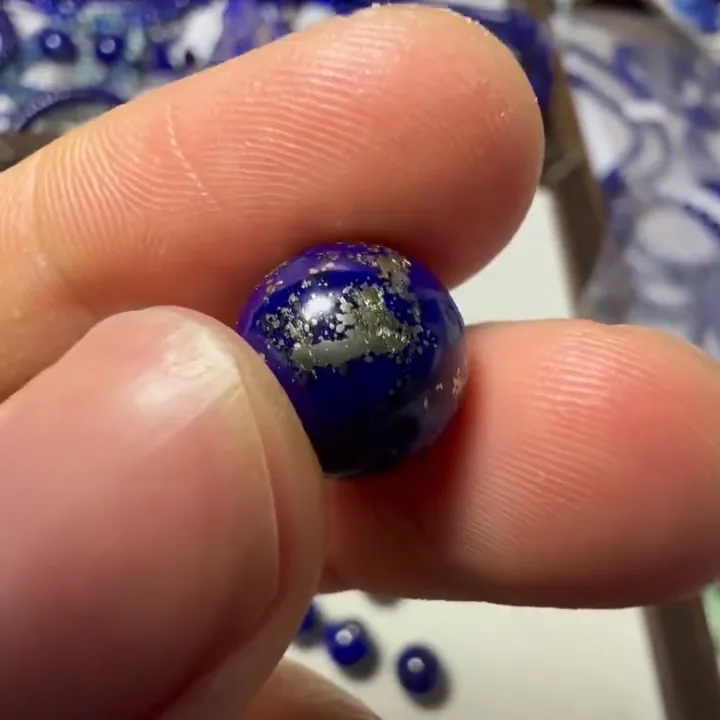
Does Real Lapis Lazuli Need Gold Flecks?
No. A genuine lapis can have visible pyrite, very little pyrite, or no obvious pyrite at all. GIA notes that the finest lapis can have a smoothly uniform blue bodycolor free of visible pyrite and calcite, while small, attractively distributed pyrite can also occur in fine material. GIA’s lapis quality guide makes the distinction clear.
So visible pyrite is not required to prove that a stone is lapis, and the presence of metallic flecks alone should not be used as proof of authenticity.
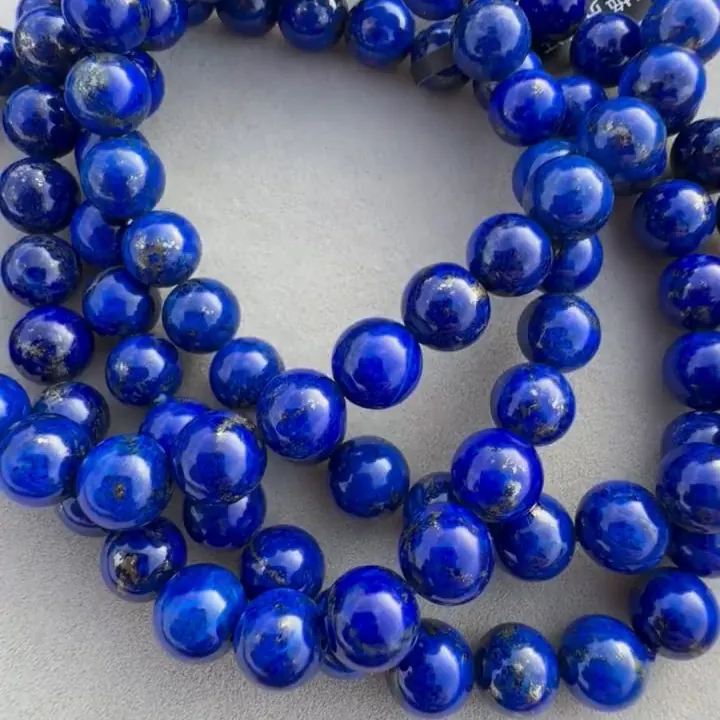
Does More Gold Make Lapis More Valuable?
Not by itself. In conventional lapis quality evaluation, the blue is more important than the amount of pyrite. GIA notes that small pyrite flecks can be attractive and do not necessarily lower value, but an excess of pyrite can make lapis look duller or greener. The question is not “How much gold can I see?” but “Does the pyrite improve the blue, or compete with it?”
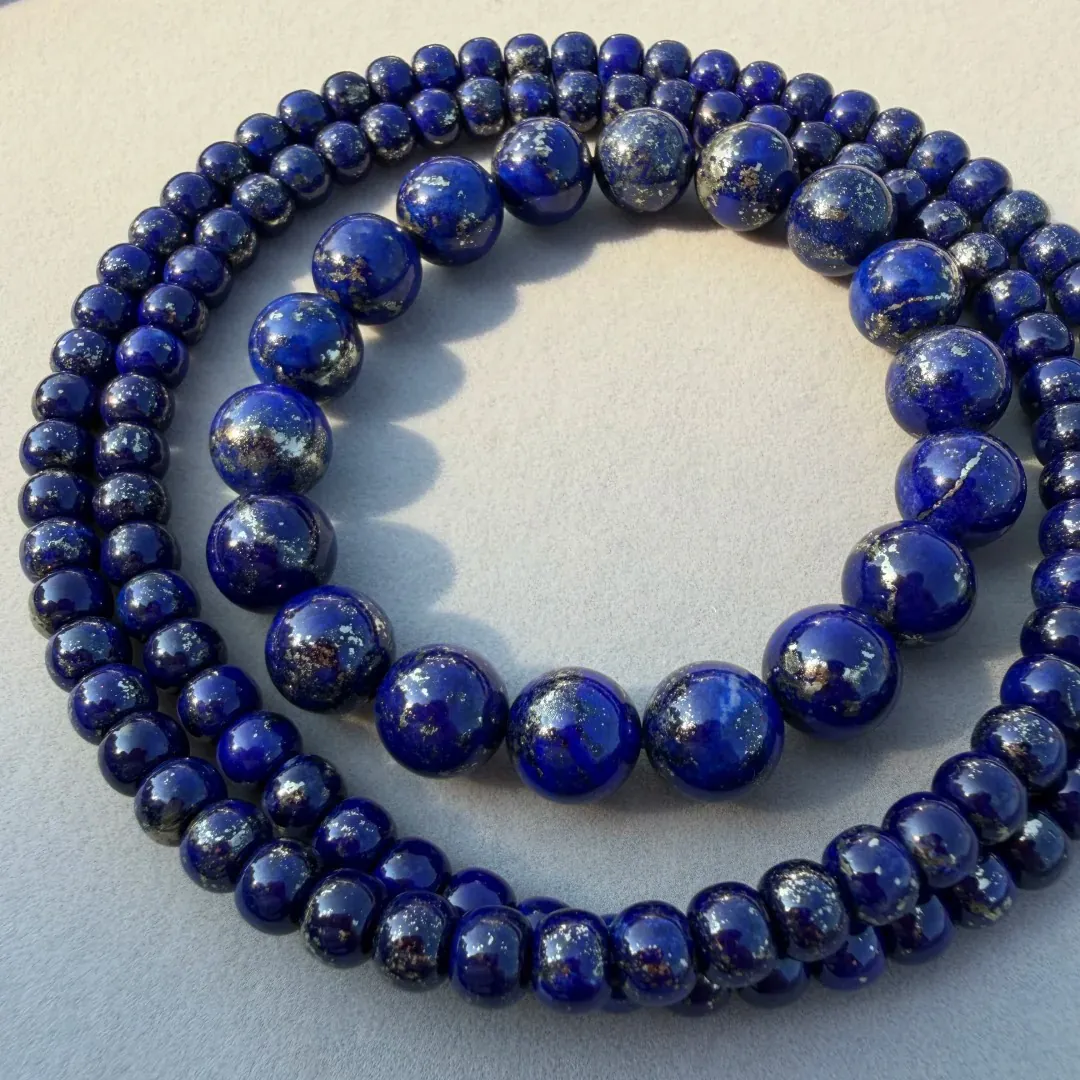
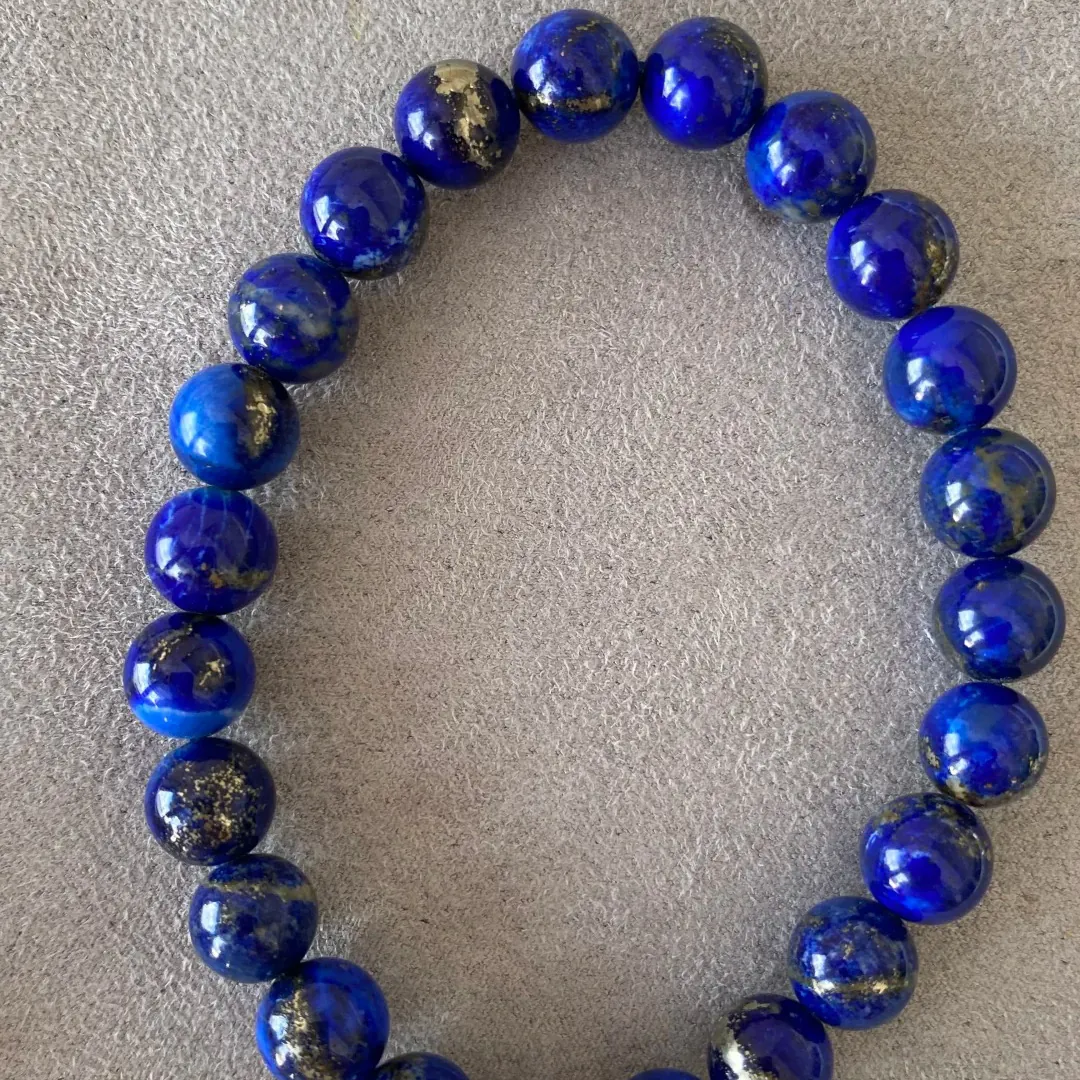
From our own sourcing experience, we look first at the quality and continuity of the blue. Then we judge the pyrite by its size and distribution, together with visible calcite, texture, polish and overall balance. Large metallic patches can be visually dramatic, but they usually move the material away from the clean, blue-dominant look we prefer for fine jewelry.
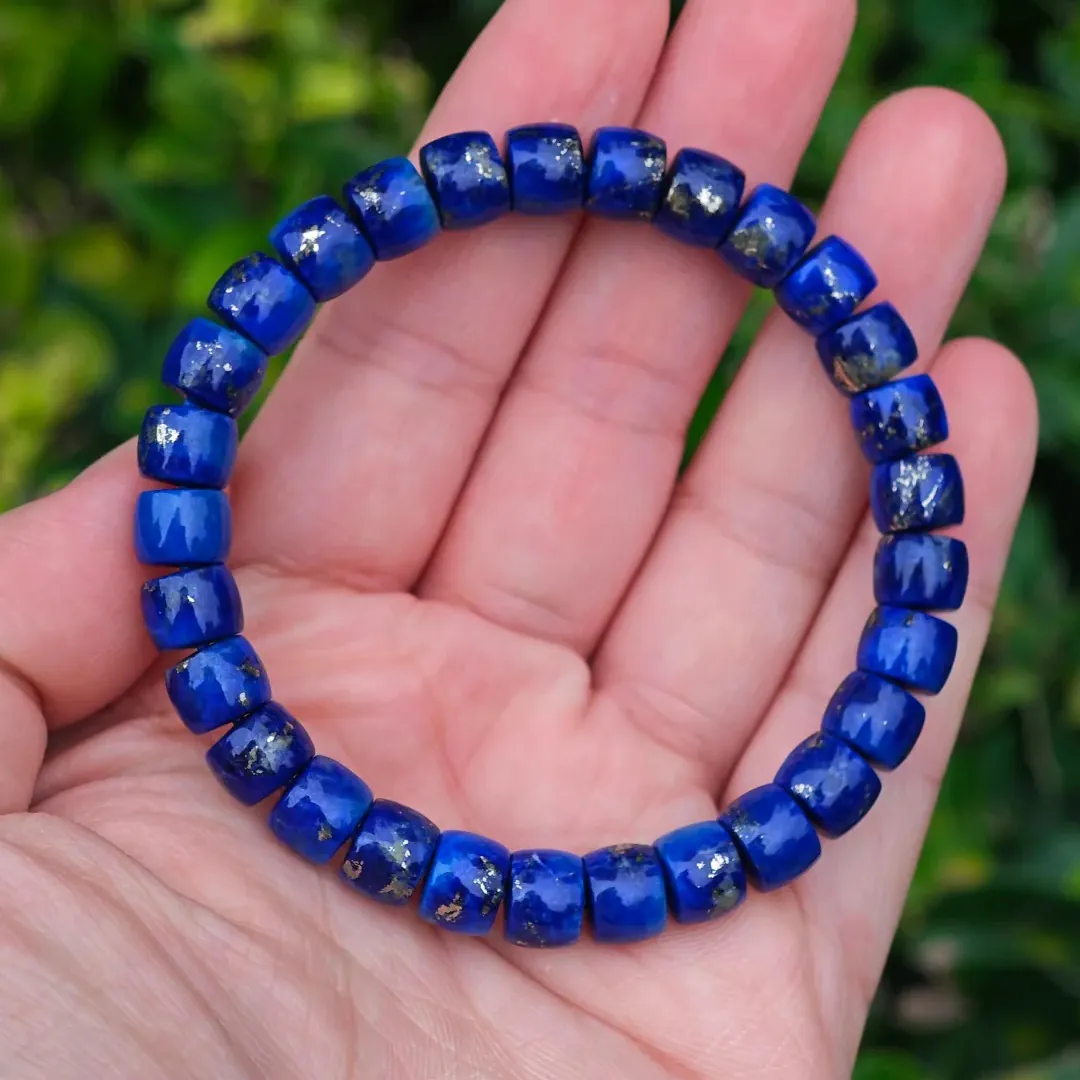
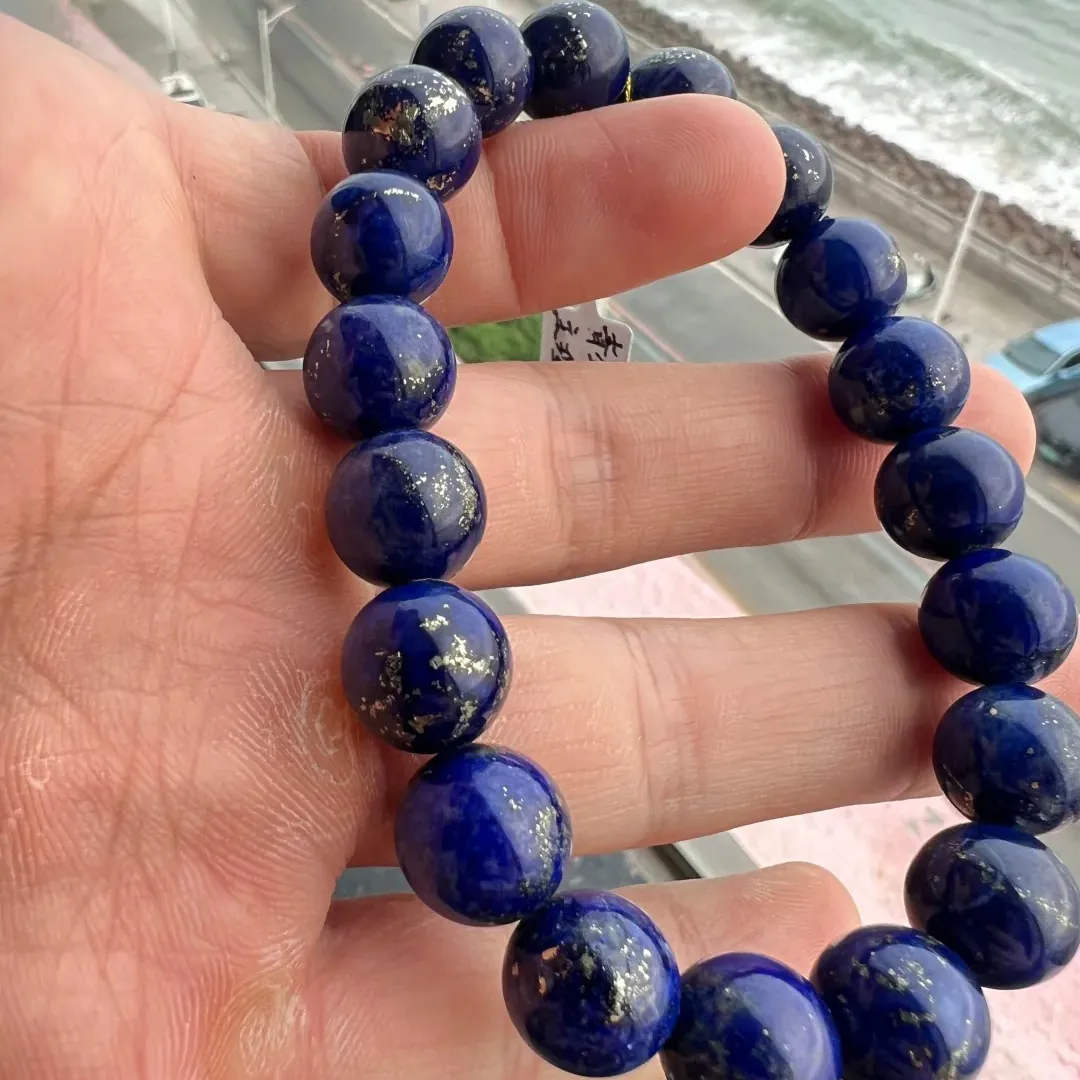
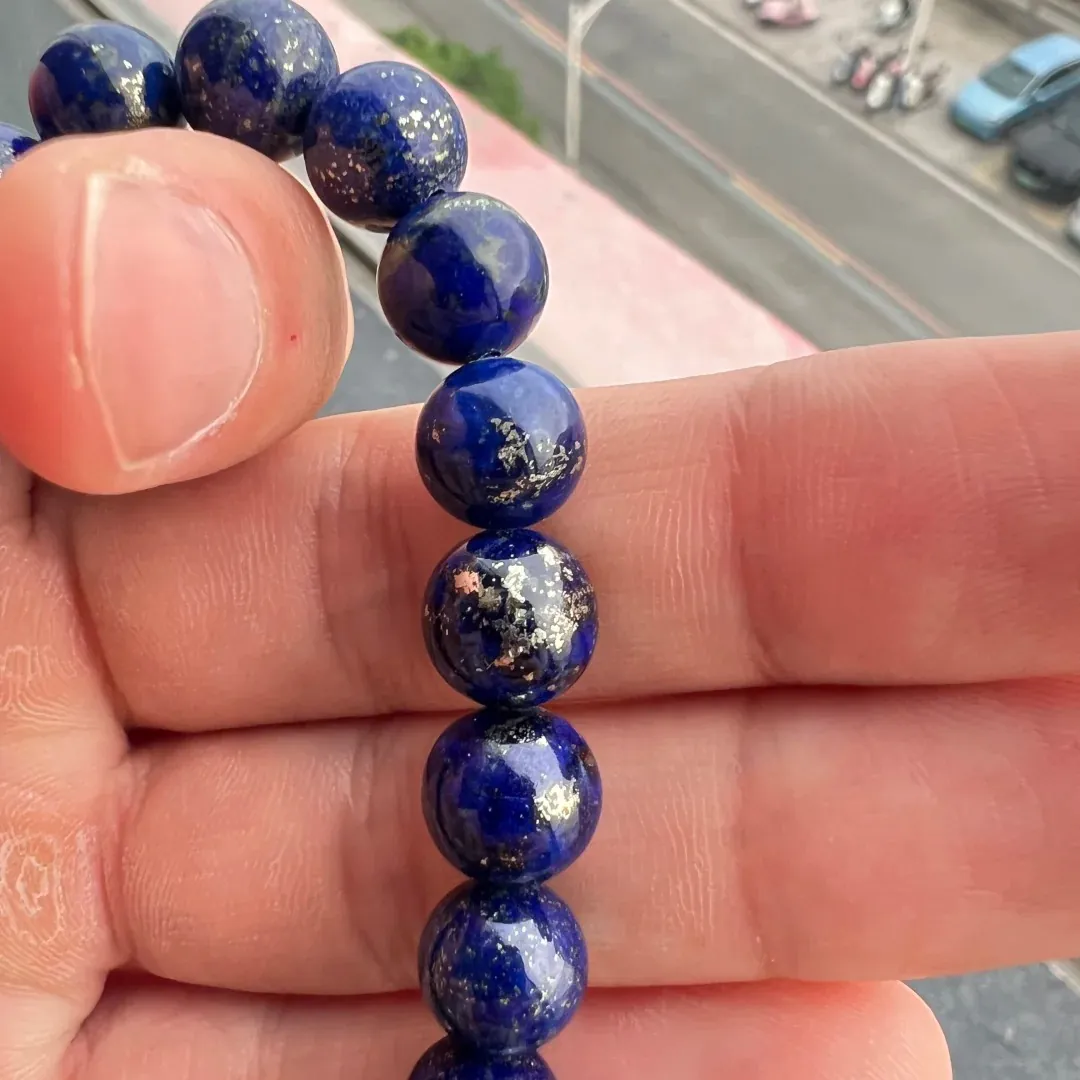
What Pyrite Distribution Looks Like in Real Lapis Beads
Pyrite is not distributed in one standard pattern. In real bead lots it can appear as small flecks, short veins, compact clusters or broad metallic patches. These differences are easier to understand in photographs than in grading words.
How We Judge Lapis With Visible Pyrite
When we compare pyrite-bearing lapis for jewelry, we do not assign value by counting gold-colored spots. We look at whether the blue remains rich and visually dominant; whether the pyrite is fine, balanced or patchy; how much visible calcite is present; whether the material has a fine-looking texture; how well it takes a polish; and, for beads, how consistently the pieces match.
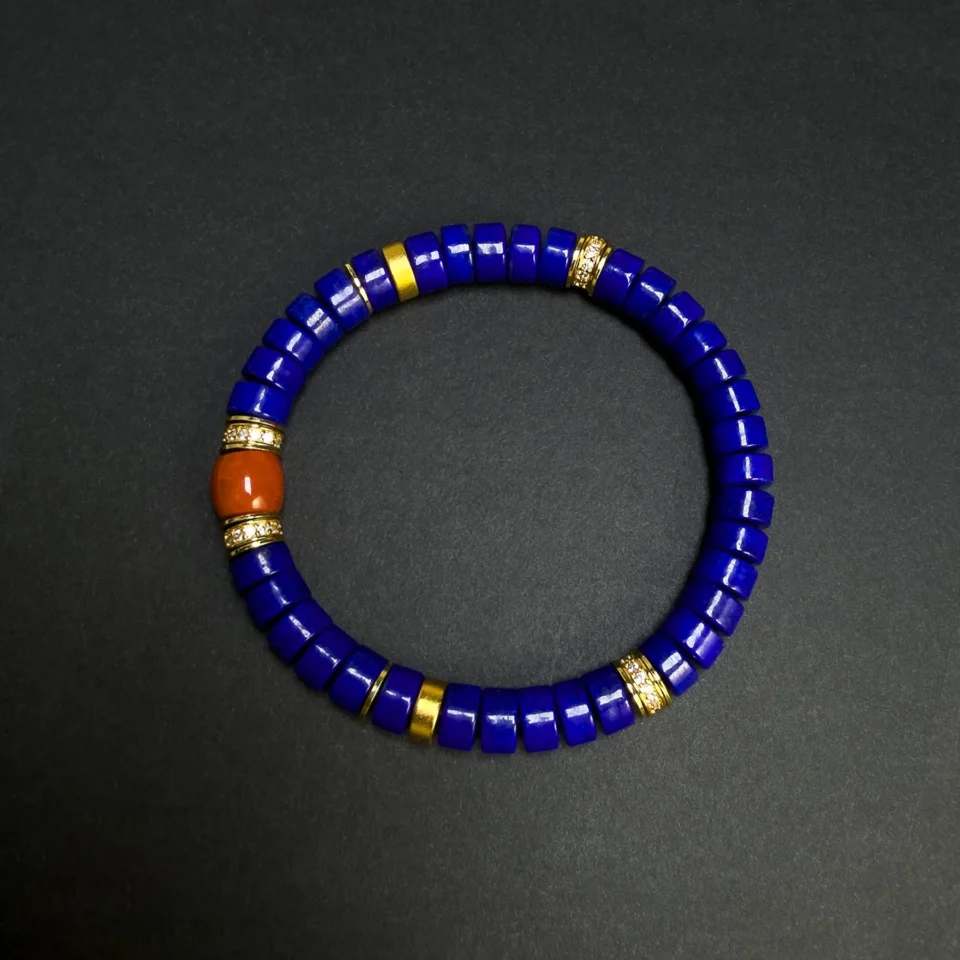
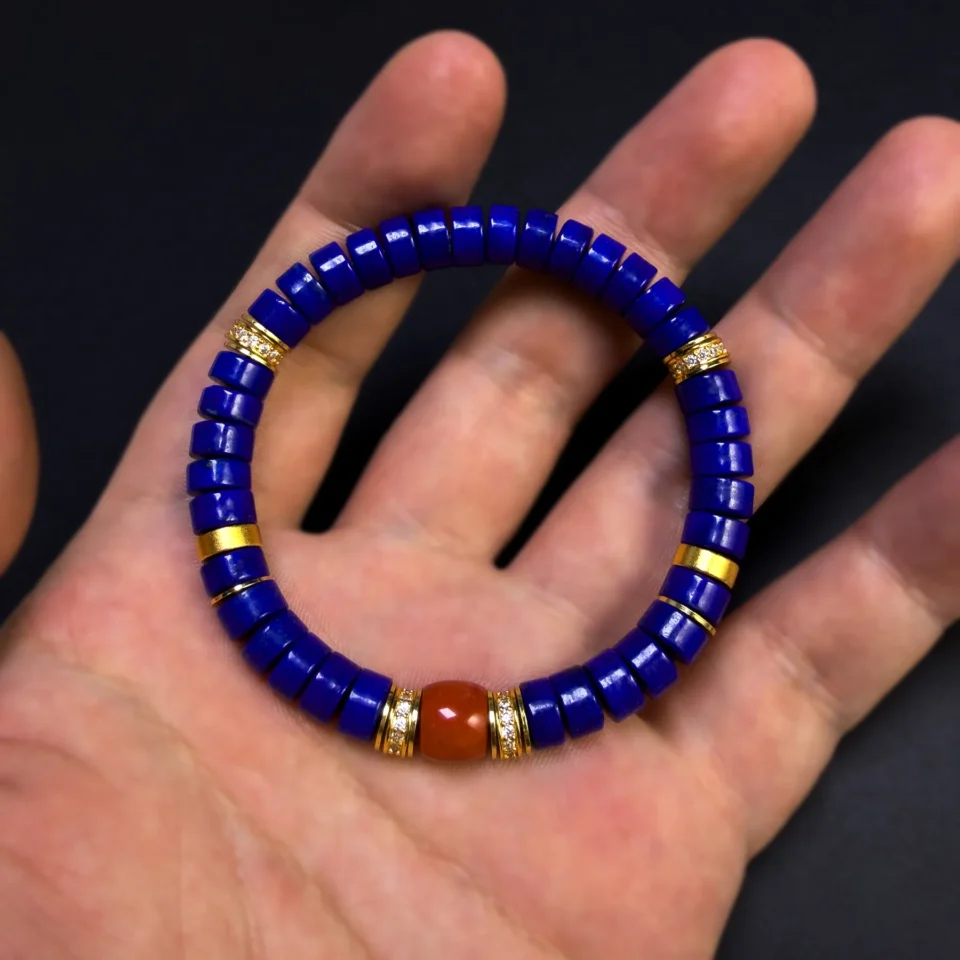
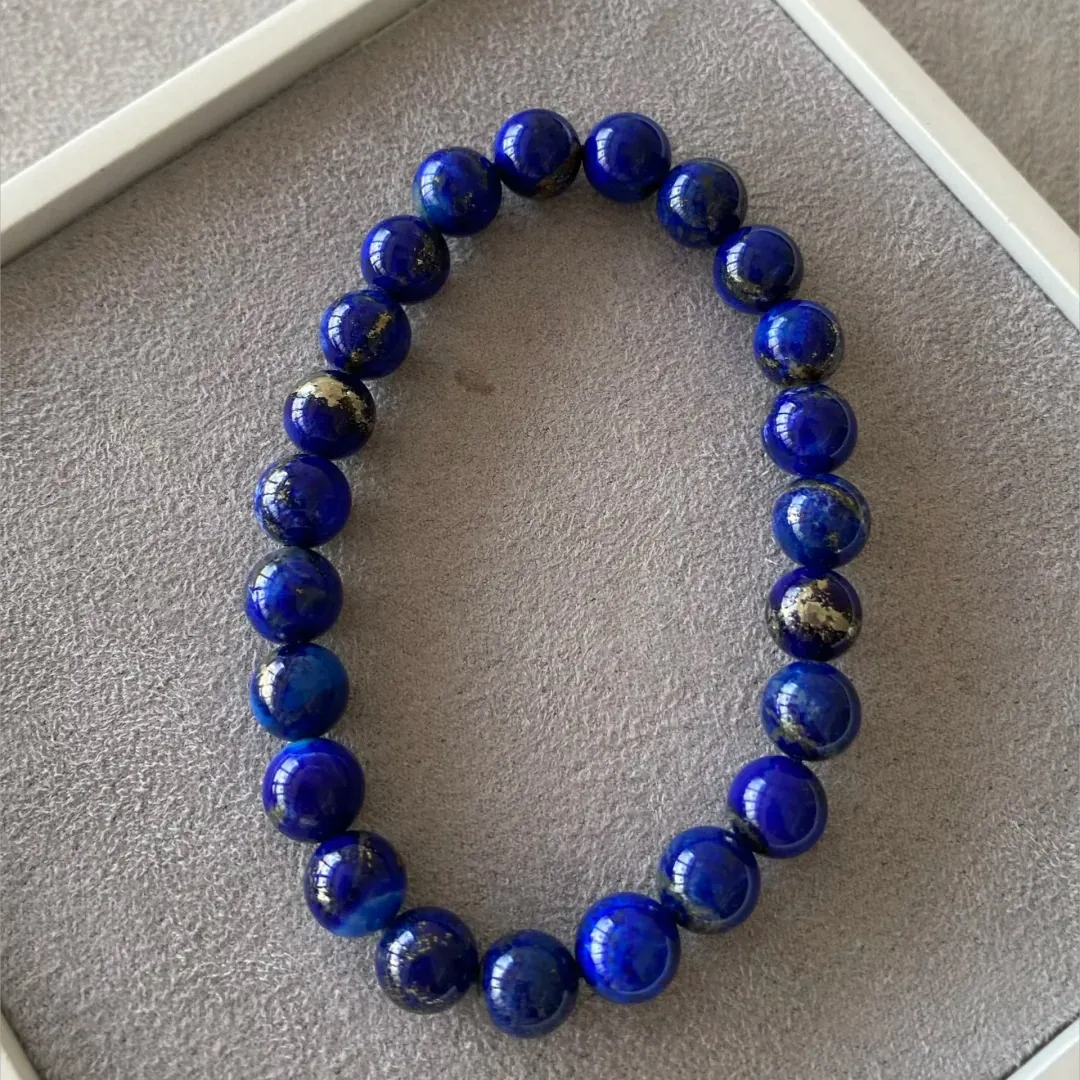
This is also why two bracelets with similar bead size can have very different values. For a broader visual guide to how blue, calcite, pyrite, texture and polish affect price, see our lapis lazuli worth guide.
When “Lapis With Gold” Means Gold Jewelry
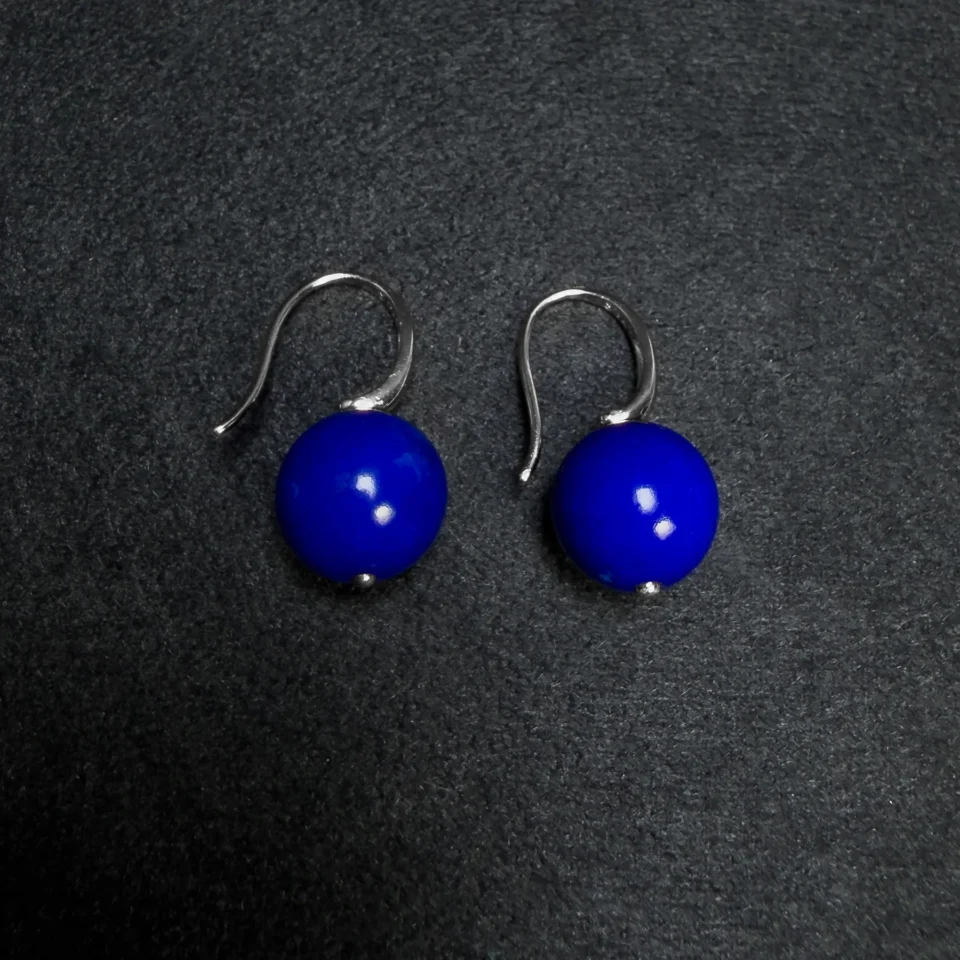
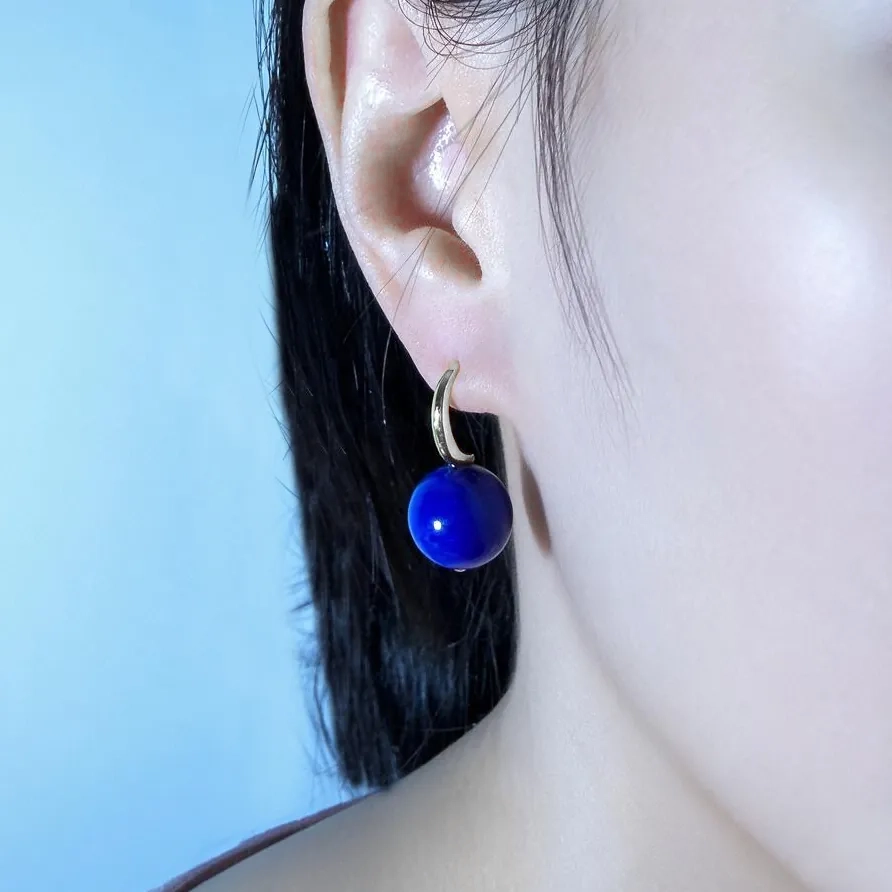
In lapis lazuli jewelry listings, “lapis with gold” can also mean lapis set in actual gold or a gold-colored metal. That is separate from the pyrite inside the stone. Check whether the jewelry is solid gold, gold-filled, vermeil, plated or simply gold-tone rather than assuming the metallic material is the same as the natural pyrite in lapis.
Deep blue lapis pairs well with warm yellow gold, and small pyrite accents can visually echo the metal around it. For more on the color range of lapis and how different blues work in jewelry, see our guide to lapis lazuli color.
The “gold” naturally visible inside lapis is pyrite, not gold. Fine pyrite can be attractive, but more is not automatically better. Judge the blue first, then judge how the pyrite works with it.