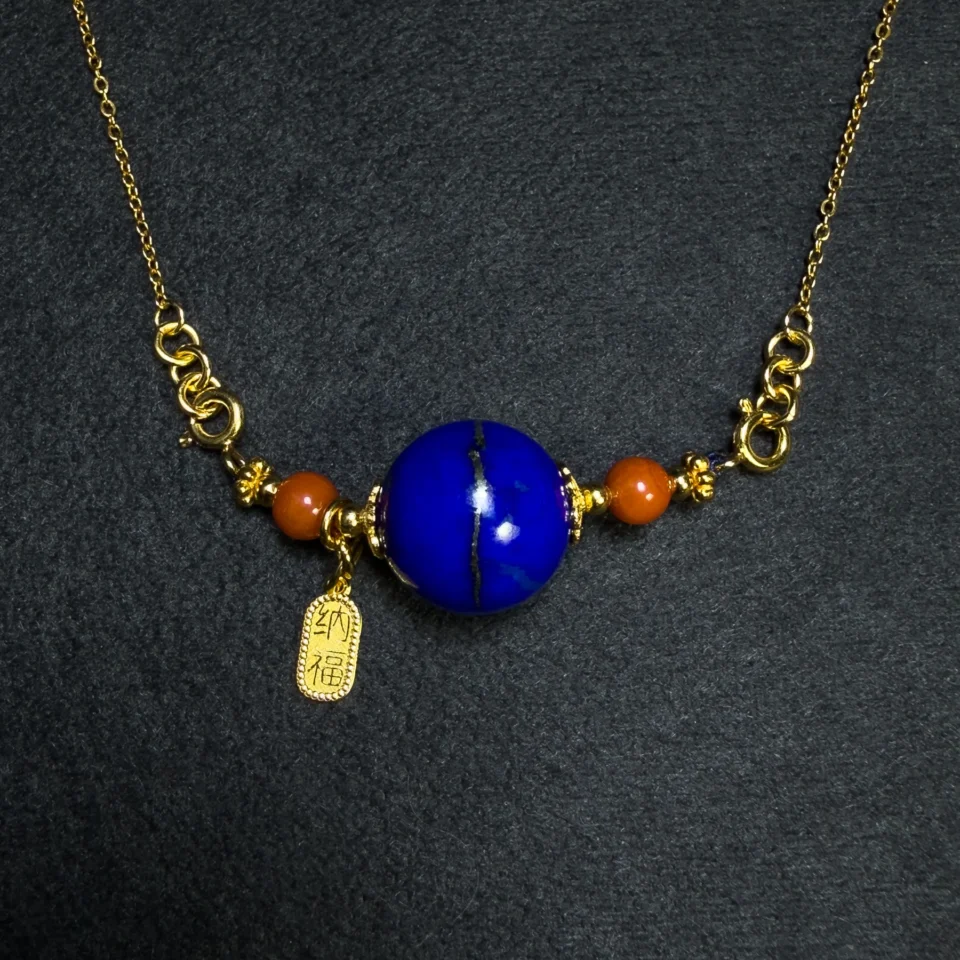
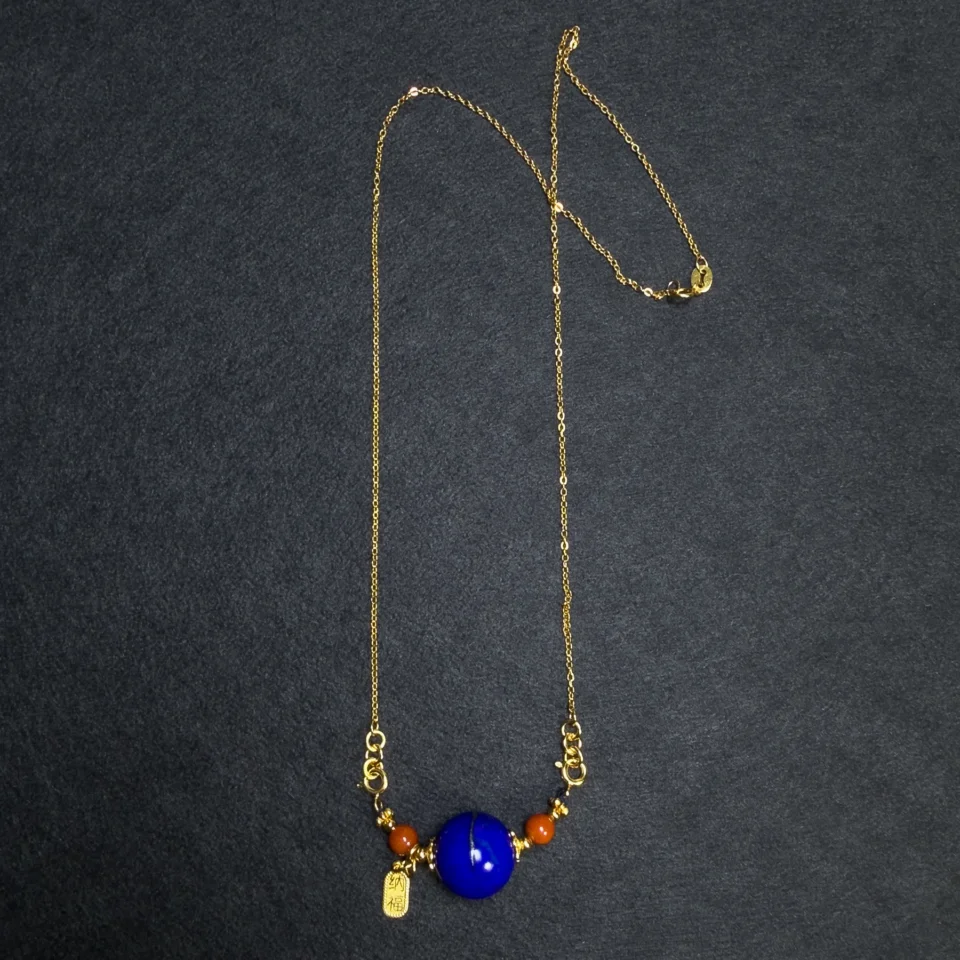
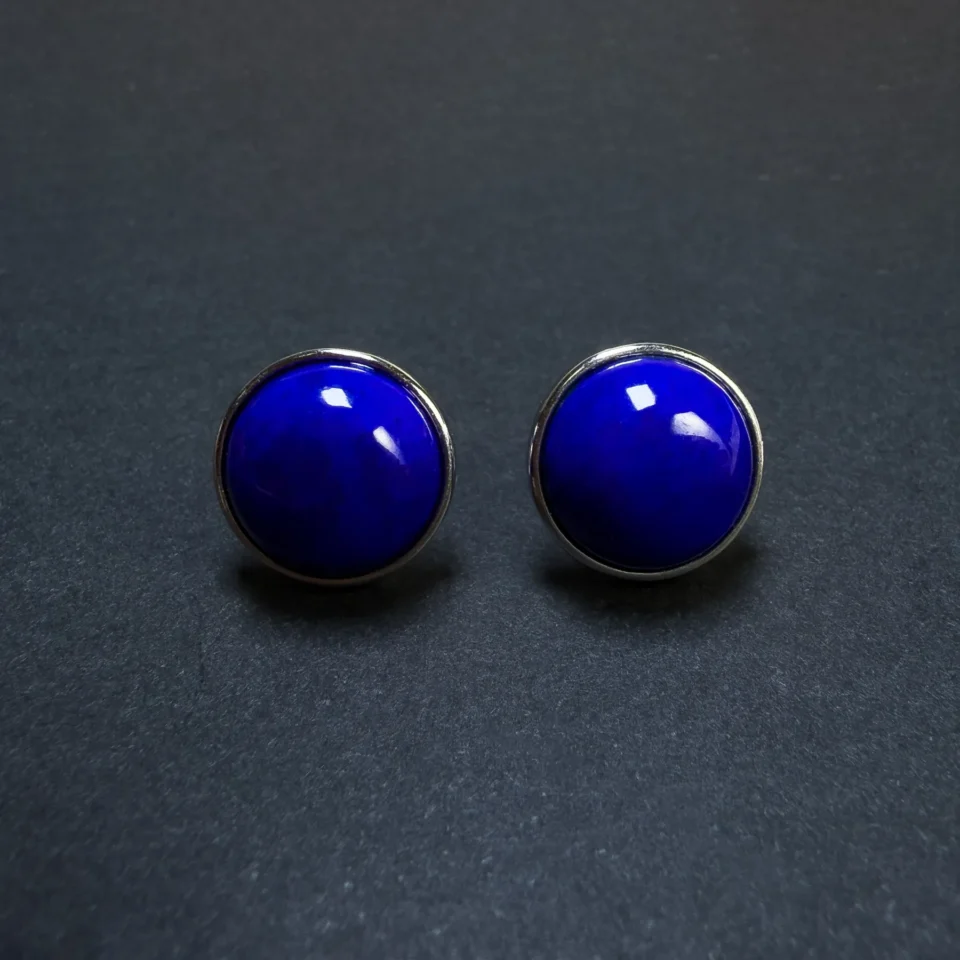
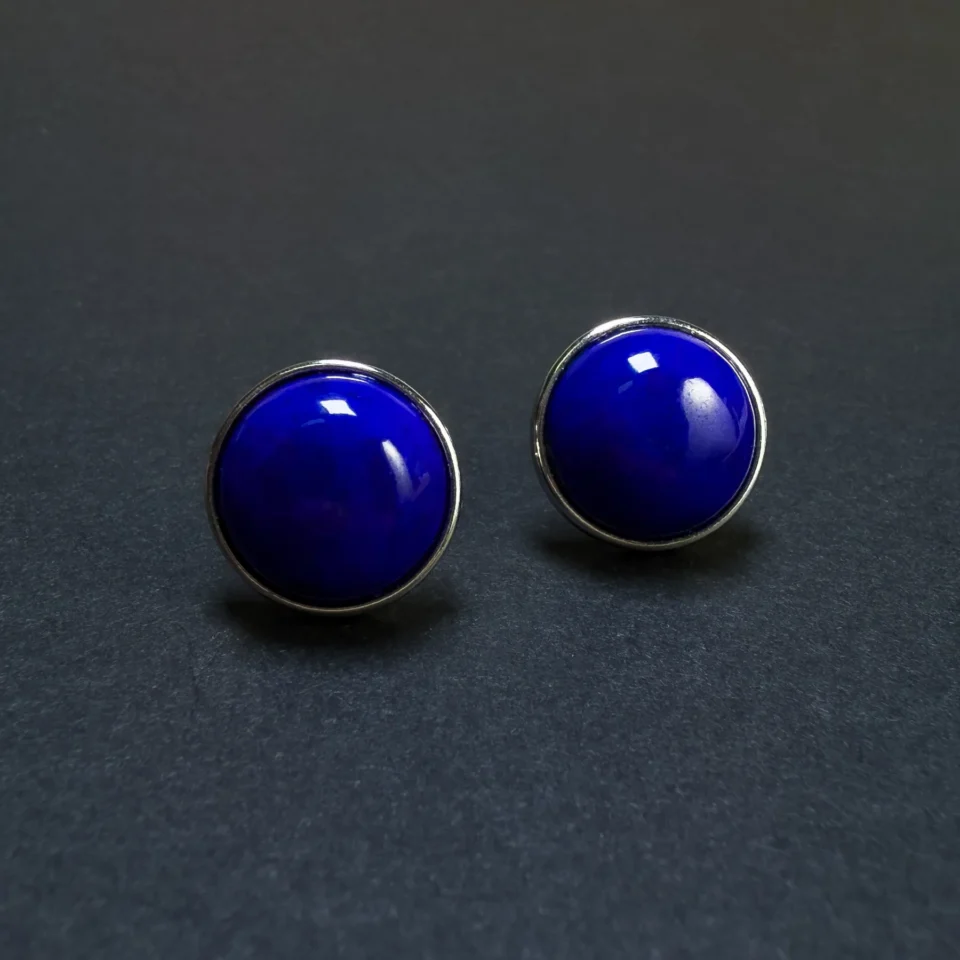
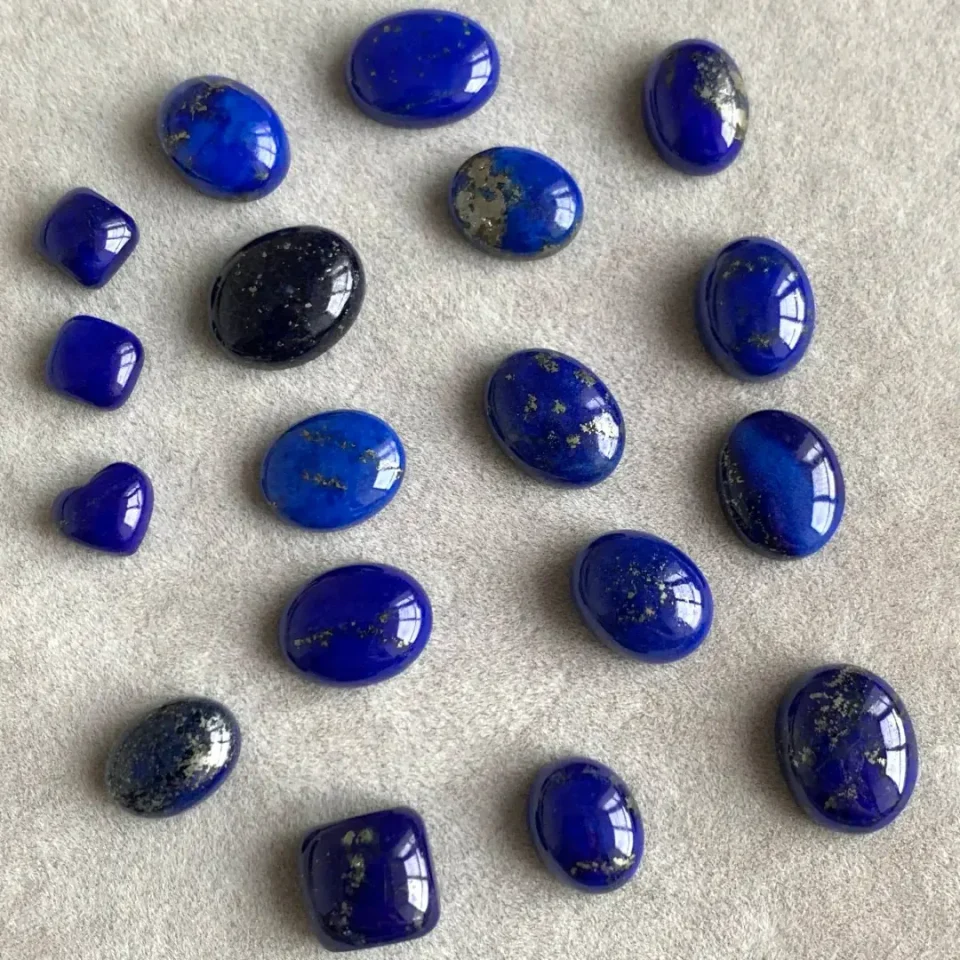
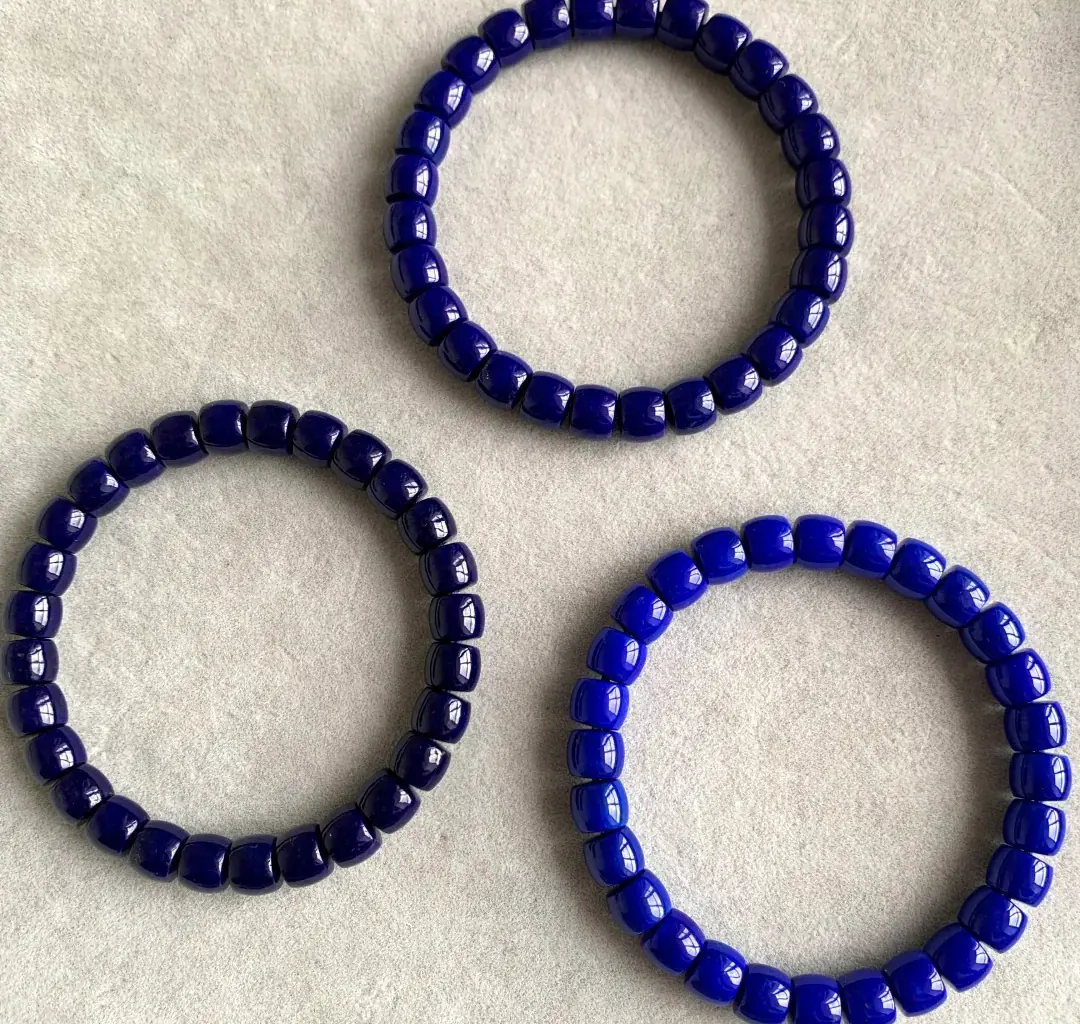
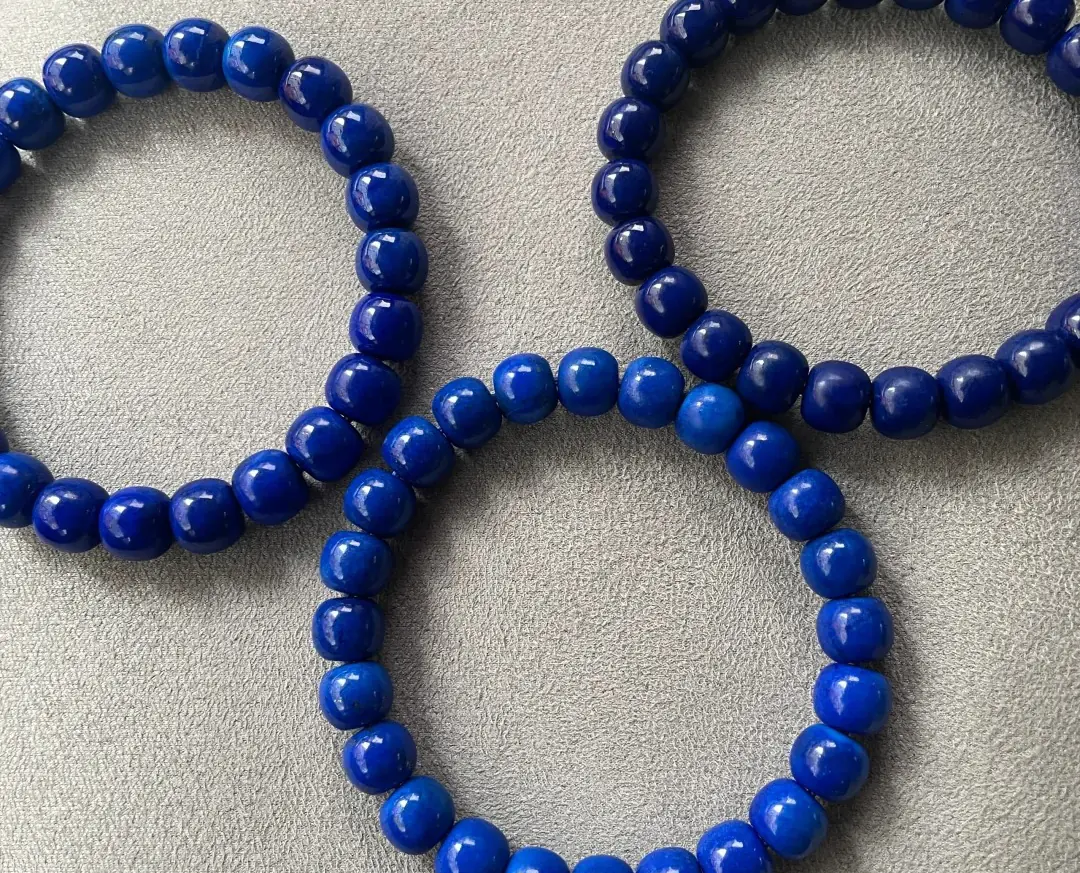
Blue lapis lazuli can range from lighter or slightly greenish blue to intensely saturated royal, deep, and violetish blue. But when choosing lapis lazuli, darker does not automatically mean better.
Color is one of the most important quality factors, but it should be considered together with saturation, visible calcite, pyrite, color consistency, treatment, polish, and—in finished jewelry—how well multiple stones are matched.
For buyers, the most useful question is therefore not simply “Is this lapis dark blue?” but:
Does the piece have a rich, saturated blue, with an overall color and natural variation that you find attractive?
What Colors Can Blue Lapis Lazuli Be?
Lapis lazuli is famous for blue, but there is no single “lapis blue.”
According to the Gemological Institute of America (GIA), lapis lazuli can range from slightly greenish blue through royal and deep blue to violetish blue. Highly valued material generally has a strongly saturated medium-to-dark blue or violetish-blue appearance.
You may encounter descriptions such as:
- light blue
- medium blue
- royal blue
- deep blue
- midnight blue
- violetish blue
- greenish blue
Terms such as “royal blue” and “deep blue” are useful visual descriptions, but they should not be confused with a universal laboratory grading scale.
This is important when shopping online. Two sellers may both describe their stones as “royal blue,” while the actual color, saturation, calcite content, and overall appearance may be quite different.
What to look at instead
Rather than relying only on a color name, compare:
Hue — Does the blue lean slightly greenish, neutral, or violetish?
Tone — Is it light, medium, or very dark?
Saturation — Does the blue look rich and vivid, or gray and dull?
Uniformity — Does the color remain reasonably consistent across the stone or jewelry piece?
What Is the Best Blue Color for Lapis Lazuli?
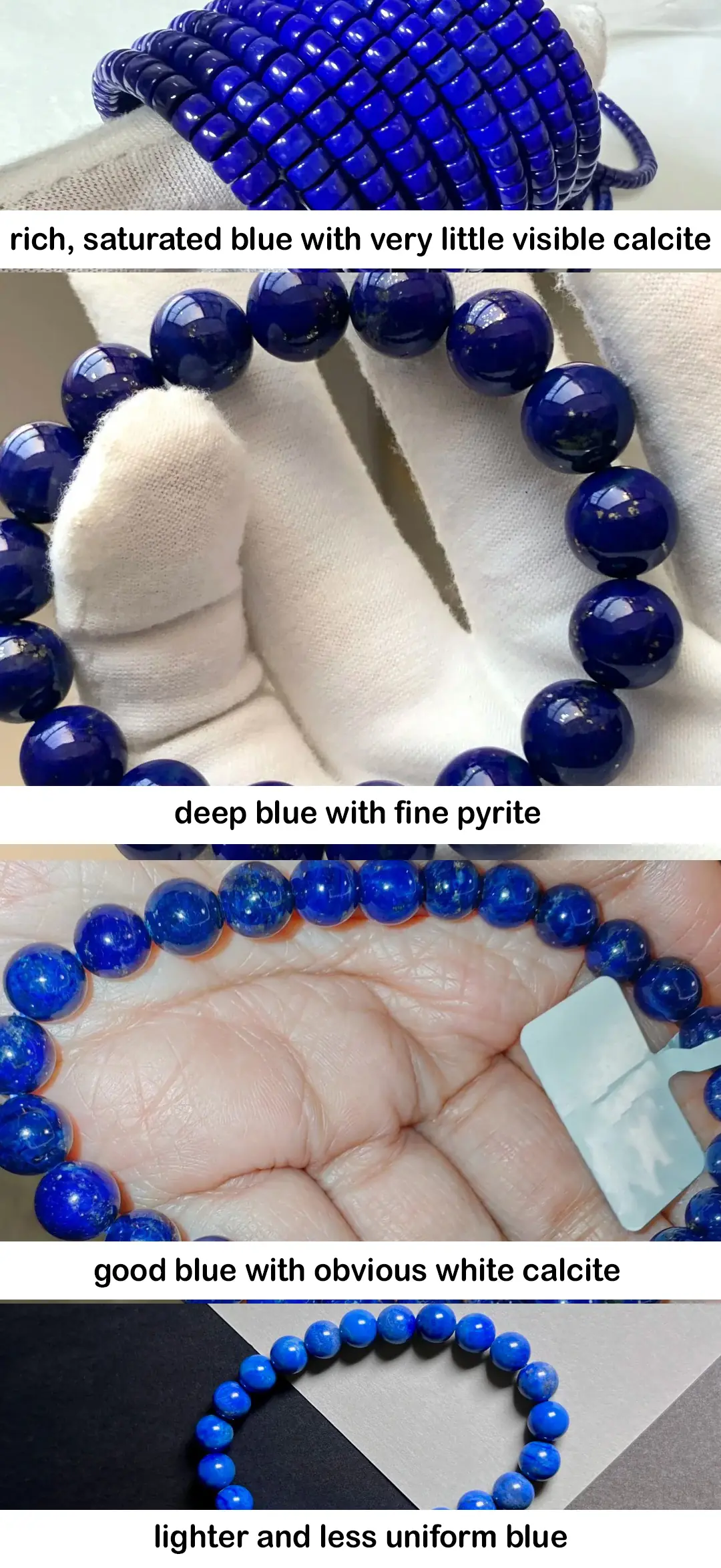
GIA identifies color as the most important quality factor for lapis lazuli. The most prized material typically shows an intense, relatively uniform medium-to-dark blue or slightly violetish blue, with little or no visible white calcite.
But there is an important distinction between gemological quality and personal preference.
Some people prefer an uninterrupted field of rich blue.
Others love small gold-colored pyrite flecks because they create a subtle star-like appearance.
Both can be visually beautiful.
The more useful principle is:
A darker stone is not automatically a better stone.
A lapis lazuli piece can be very dark while still appearing dull, grayish, greenish, heavily mottled, or overwhelmed by mineral inclusions.
Likewise, a slightly lighter but highly saturated and beautifully matched blue can look far more refined in finished jewelry.
What this means when looking at real jewelry
Do not judge an entire bracelet or necklace by the single best bead shown in a close-up photograph.
Instead, look at the piece as a whole.
That distinction matters because:
natural does not automatically mean high quality.
A stone can be completely genuine and still belong to a lower commercial quality range.
Pyrite, Calcite and the Appearance of Blue Lapis Lazuli
Two features cause a great deal of confusion when people first examine lapis lazuli:
gold-colored flecks and white areas.
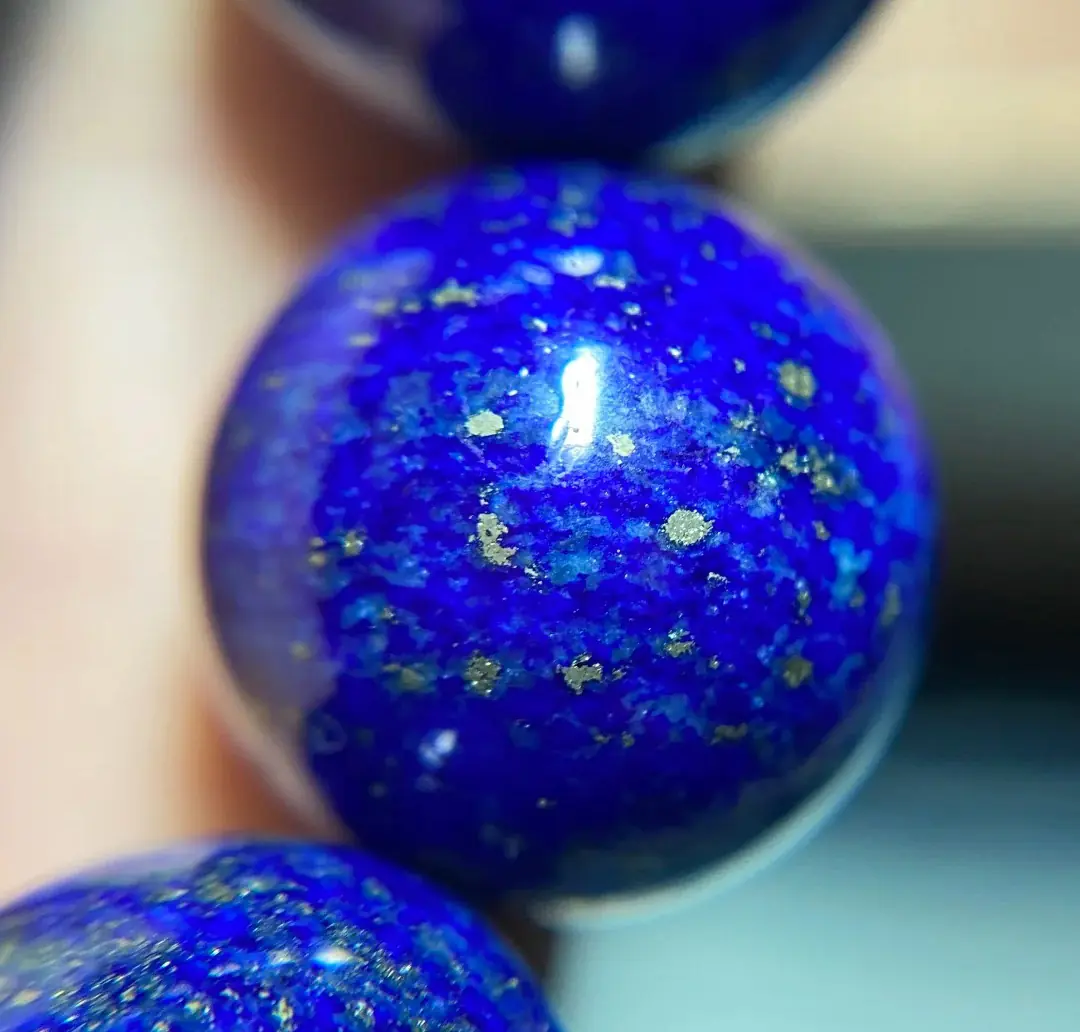
Gold-colored flecks are usually pyrite
The metallic gold-colored particles commonly seen in lapis lazuli are generally pyrite, not actual gold.
Small, attractively distributed pyrite particles do not necessarily reduce the value of lapis. GIA notes that high-quality lapis can still contain small amounts of well-distributed pyrite.
But this does not mean:
more gold flecks = better lapis.
Large concentrations of pyrite can interrupt the blue body color and affect the overall appearance.
White areas are commonly calcite
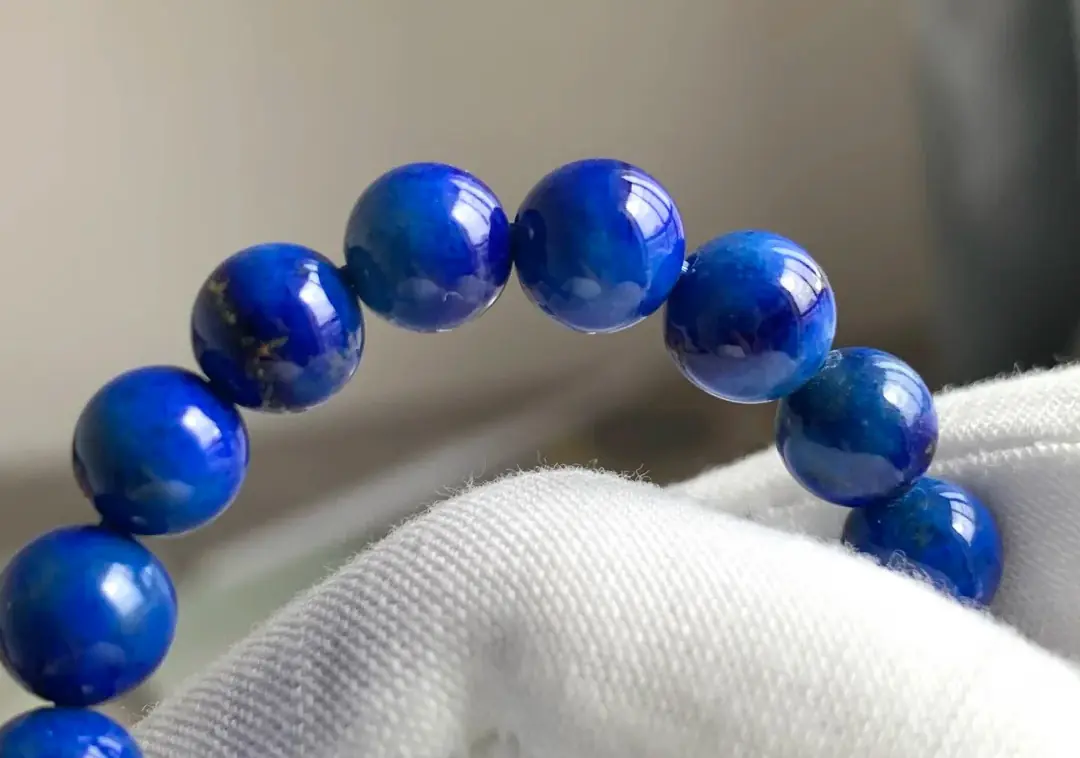
White streaks, patches, or spots are commonly associated with calcite, another natural component of lapis lazuli.
Their presence does not automatically indicate fake lapis.
However, obvious calcite generally reduces the commercial value of material when a clean, highly saturated blue appearance is desired. GIA similarly identifies visible calcite as an important quality consideration.
The important lesson is simple:
Authenticity and quality are not the same question.
White calcite can be natural.
Pyrite can be natural.
But the amount and distribution of each can still influence how a finished piece looks and how it is valued.
What We Look for When Selecting Blue Lapis Lazuli for Jewelry
Gemological information tells us what lapis lazuli is.
Jewelry selection adds another question:
How does the material actually look once several stones are worn together?
This becomes especially important with lapis lazuli bracelets, lapis lazuli necklaces, and lapis lazuli earrings.
1. Color Consistency
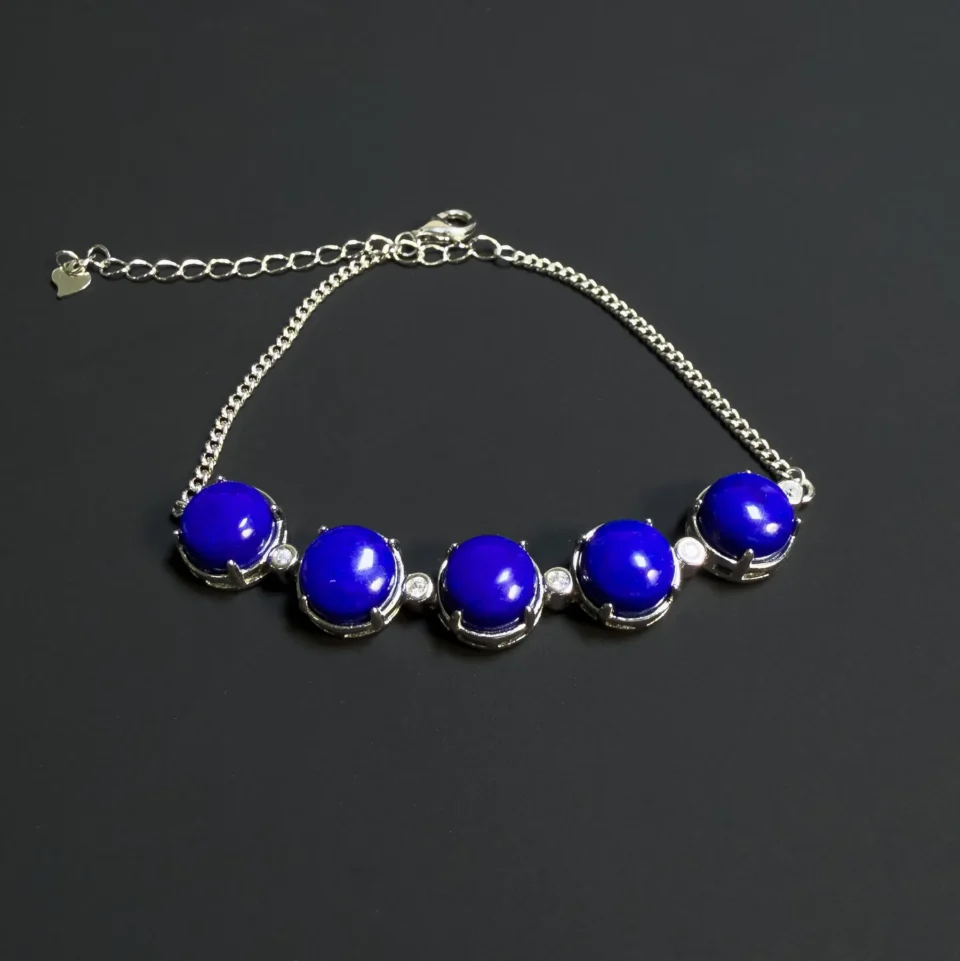
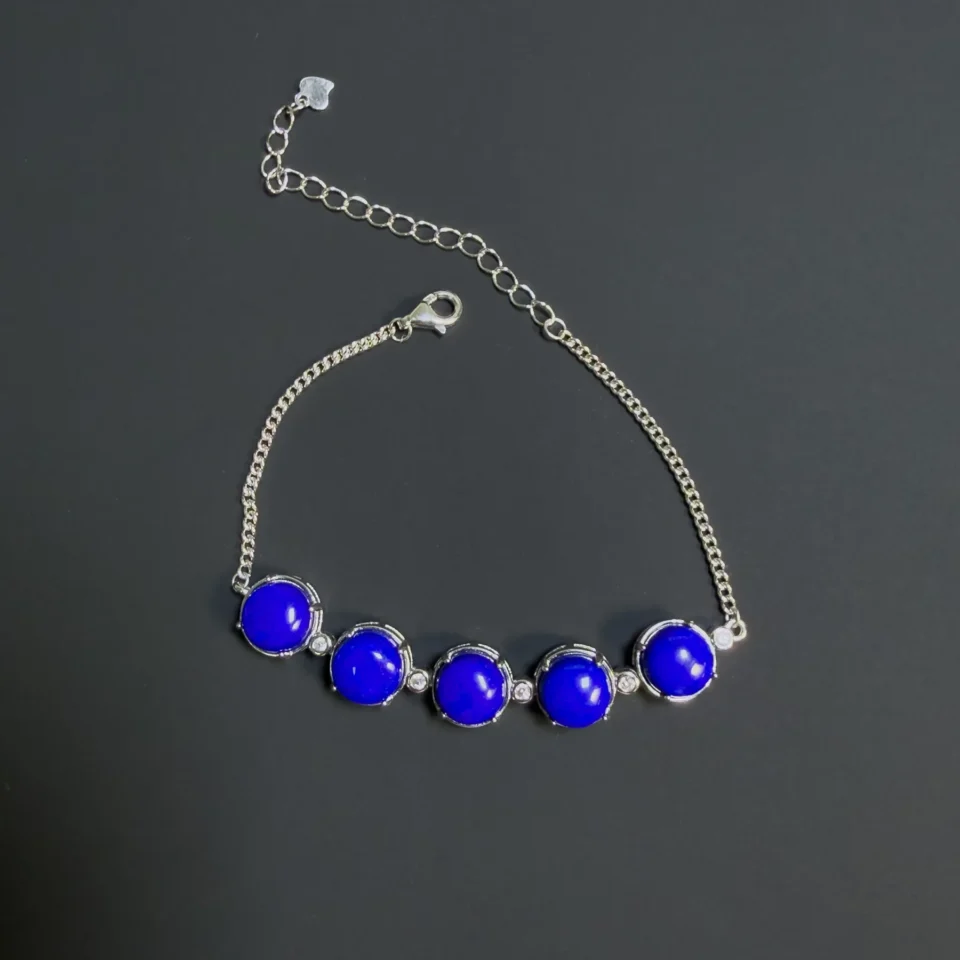
A beautiful individual bead does not automatically create a beautiful bracelet.
Imagine a bracelet in which most beads are rich deep blue, but several are noticeably lighter, grayer, or heavily marked with calcite.
Each bead may be natural lapis lazuli, yet the finished bracelet can still appear visually inconsistent.
That is why we look at both:
individual stone quality
and
the overall color relationship between stone.
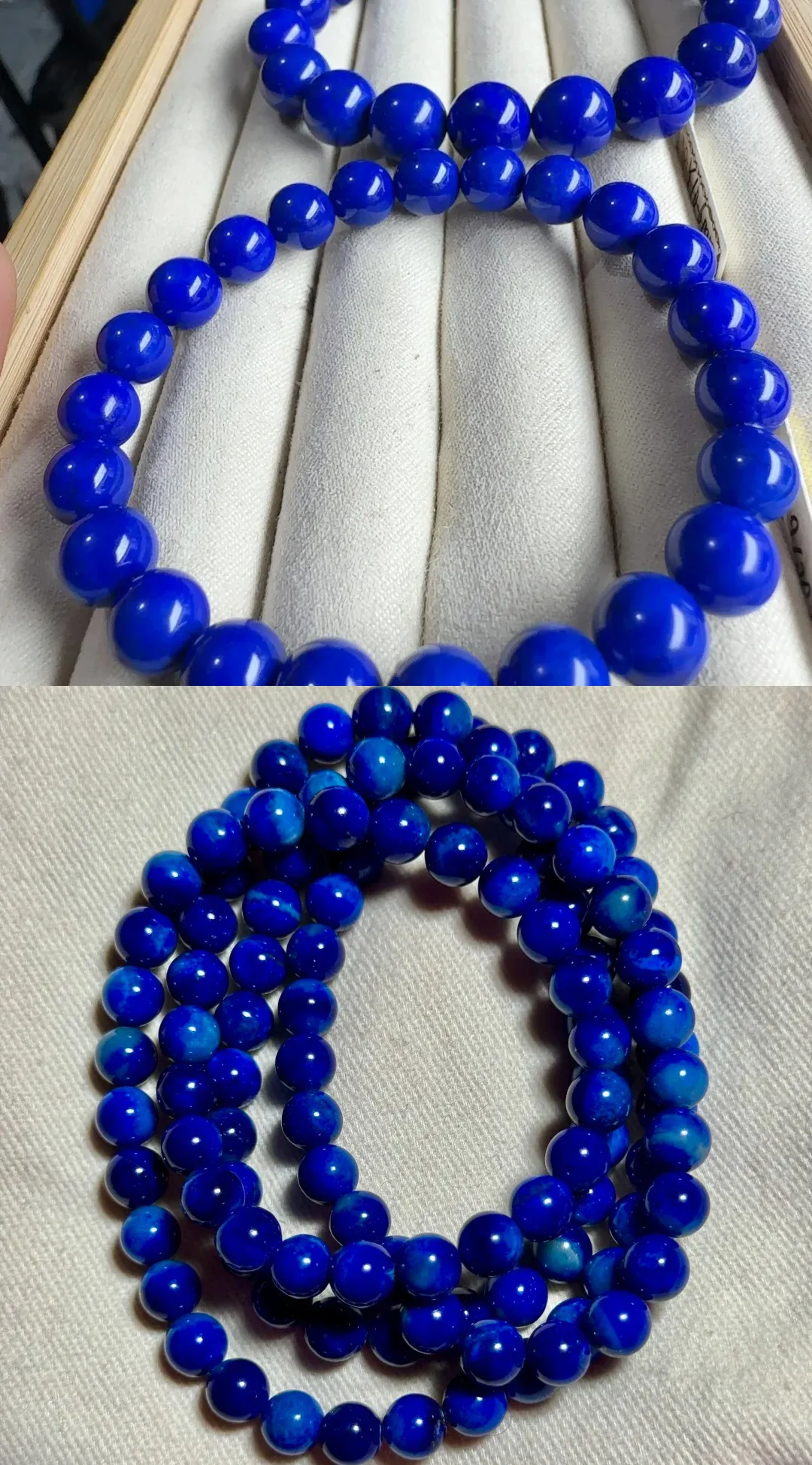
Bracelet A: relatively consistent blue
Bracelet B: noticeable variation between beads
2. Matching Matters
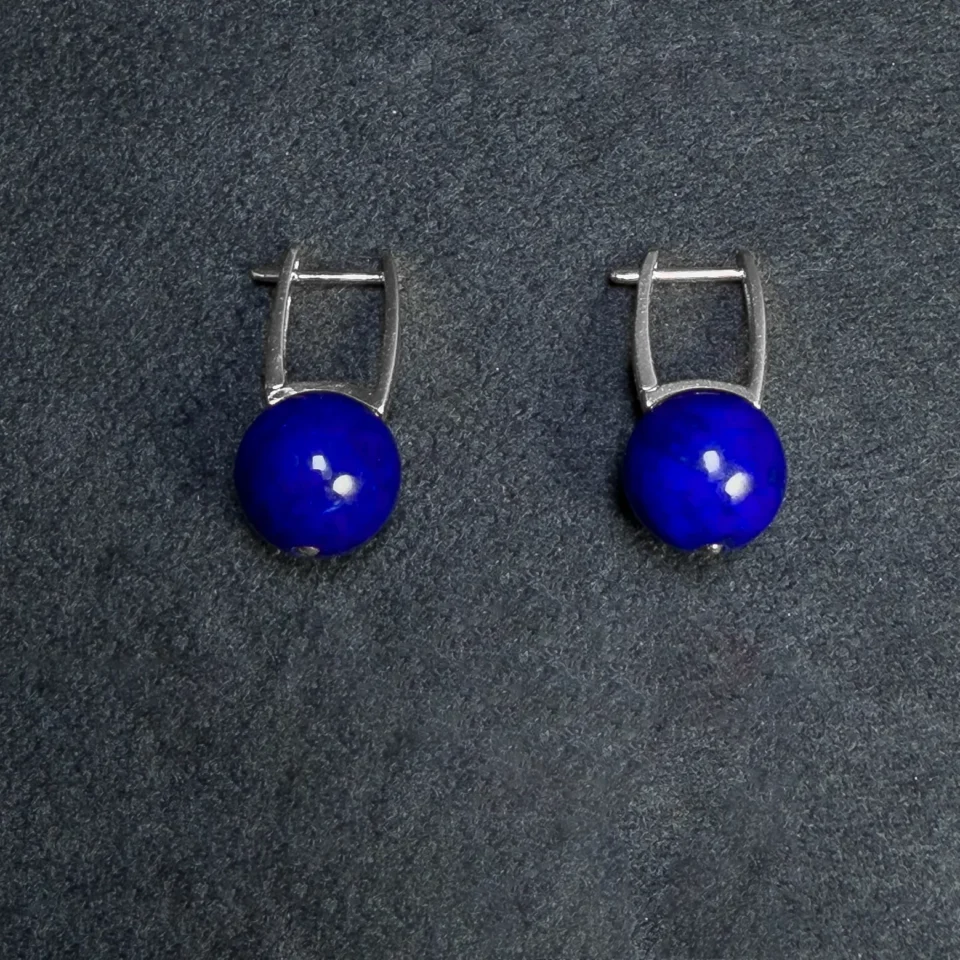
Matching becomes particularly important for earrings.
Natural stones do not need to look as though they came from a printing machine. Small variations are part of their character.
But a pair should usually feel visually balanced.
When comparing two lapis stones, look at:
- blue tone
- saturation
- visible calcite
- pyrite distribution
- size
- shape
- surface finish
A pair can have minor natural differences while still looking intentionally matched.
3. Polish Changes What You See
Color is not the only thing affecting the appearance of blue lapis lazuli.
Surface finishing matters too.
A well-polished piece can show the depth and saturation of blue more clearly, while a poor surface finish may look chalky or uneven.
This is particularly noticeable on larger beads, cabochons and pendants because more surface area is visible.
When shopping online, zoom in far enough to examine the surface rather than judging only the overall blue color.
4. Larger Stones Reveal More Natural Variation
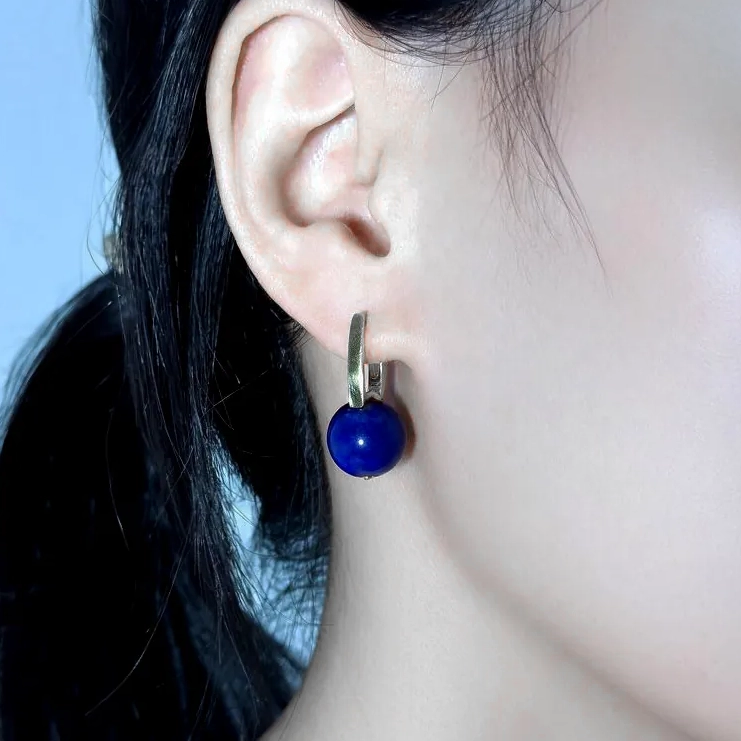
Small earrings or accent stones may show mainly their overall blue impression.
With a large pendant or large bead, mineral variation becomes much easier to see.
Pyrite, calcite, color zoning, polish, and subtle tone changes become part of the design.
This does not mean larger stones must be perfectly uniform.
It means the buyer has more material to evaluate.
For a large blue lapis lazuli pendant, a detailed close-up photograph is therefore much more useful than a distant lifestyle image alone.
Can Very Bright Blue Lapis Lazuli Be Natural?
Yes.
Natural lapis lazuli can show a remarkably rich and highly saturated blue color.
A bright or deep blue appearance by itself does not prove that the stone has been dyed.
At the same time, treatments do exist.
GIA reports that some lapis lazuli is dyed to improve its blue color or reduce the visual effect of calcite. Wax or oil may also be used to improve color or surface appearance.
That means two oversimplified rules should both be avoided:
“Very blue lapis must be dyed.”
and
“Deep blue lapis must be untreated.”
Neither conclusion can reliably be made from color alone.
What should a buyer do?
If treatment status matters to you, look for clear seller disclosure.
For a particularly valuable piece where treatment or identity is important, professional gemological testing provides stronger evidence than appearance alone.
Avoid destructive internet “tests” involving scratching, burning, acids, or aggressive solvents. They can damage the jewelry and still may not give you a reliable answer.
How to Choose Blue Lapis Lazuli Jewelry Online
You do not need to become a gemologist to make a more informed purchase.
Start with six practical checks.
1. Look at the whole piece
Do not rely only on one macro photograph of the best-looking stone.
For a bracelet or necklace, inspect the entire strand.
2. Compare the blue
Look for a color you personally find attractive, then consider saturation and consistency.
Do not assume that the darkest stone is automatically the best.
3. Zoom in on pyrite and calcite
Determine how much white calcite and gold-colored pyrite is actually present.
Ask yourself whether those features enhance or interrupt the appearance you want.
4. Check the matching
For bracelets, necklaces and especially earrings, look at whether the stones work together visually.
5. Look for treatment information
“Natural lapis lazuli” and “untreated lapis lazuli” are not automatically the same claim.
If treatment matters, check what the seller actually states.
6. Do not buy only because of an “AAA” label
GIA evaluates lapis lazuli but does not assign it a standardized GIA quality grade such as “AAA.”
Terms such as:
AAA, AAAAA, Premium, Royal Grade, Top Grade
may be seller-defined.
The actual photographs, material description, treatment disclosure, matching and workmanship are more useful than the number of A’s in a product title.
The same caution applies to geographic trade descriptions. GIA notes that a regional adjective used to describe lapis appearance does not necessarily prove that the material actually originated in that region.
Frequently Asked Questions
What is the best blue color for lapis lazuli?
The most highly valued lapis lazuli generally has an intense, saturated medium-to-dark blue or slightly violetish-blue appearance, with little or no visible calcite. Small amounts of attractive pyrite can still be present.
Does darker blue mean better lapis lazuli?
Not automatically.
Saturation, tone, calcite, pyrite, uniformity and overall appearance should all be considered. A very dark stone that appears dull or uneven may be less attractive than a slightly lighter but vivid and beautifully matched blue.
Does real blue lapis lazuli have gold flecks?
It can, but it does not have to.
The gold-colored flecks typically seen in lapis lazuli are pyrite. Fine natural lapis may contain pyrite, very little pyrite, or no obvious pyrite visible to the eye.
Can bright blue lapis lazuli be dyed?
Yes, dyed lapis exists—but naturally occurring lapis can also be intensely blue.
Color alone is therefore not enough to determine treatment. If treatment status is important, look for reliable disclosure or professional testing.
Choosing Blue Lapis Lazuli Is About More Than “Dark Blue”
Blue is the first thing most people notice about lapis lazuli.
But it should not be the last thing you evaluate.
A beautiful piece of lapis lazuli jewelry is the result of several details working together:
color, saturation, calcite, pyrite, consistency, matching, polish and craftsmanship.
Professional gemological references give us an essential foundation for understanding those qualities.
Real jewelry adds another layer.
A bracelet must work as an entire bracelet.
A necklace must look balanced from one stone to the next.
A pair of earrings needs two naturally different stones to feel visually related.
And a large pendant should be judged by the actual surface you will wear—not simply by an impressive grade name.
So when choosing blue lapis lazuli online, look beyond labels such as “royal blue” or “AAA.”
Look closely at the stone.
Then look at the entire piece.
That usually tells you far more.
Further Reading
For the mineral composition, identification and uses of lapis lazuli, see our Lapis Lazuli Crystal Guide.
For its historical symbolism, cultural associations and spiritual meaning, see our Lapis Lazuli Meaning Guide.
Professional References
Gemological Institute of America (GIA):
Lapis Lazuli Buyer’s Guide · Lapis Lazuli Quality Factors · Lapis Lazuli Description