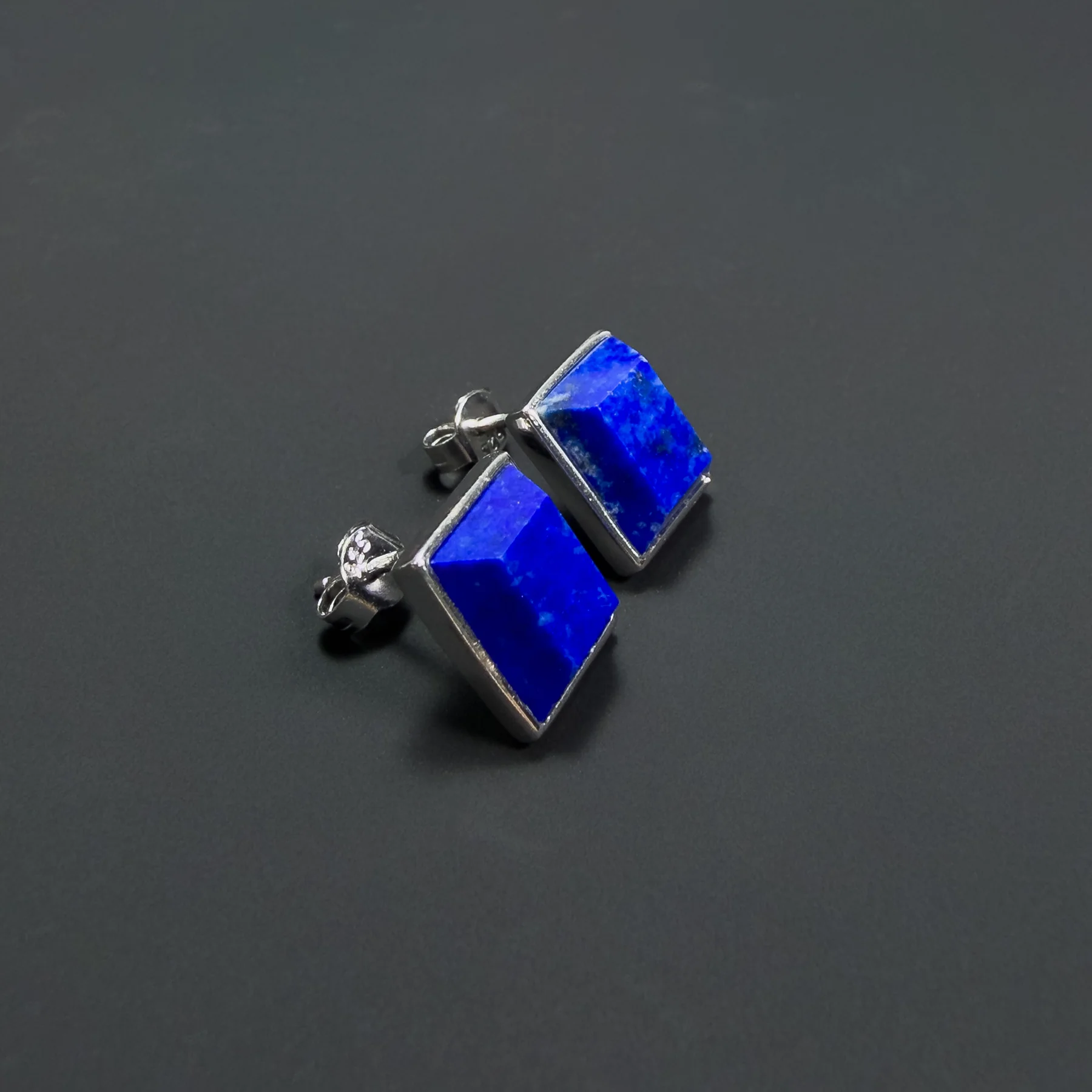
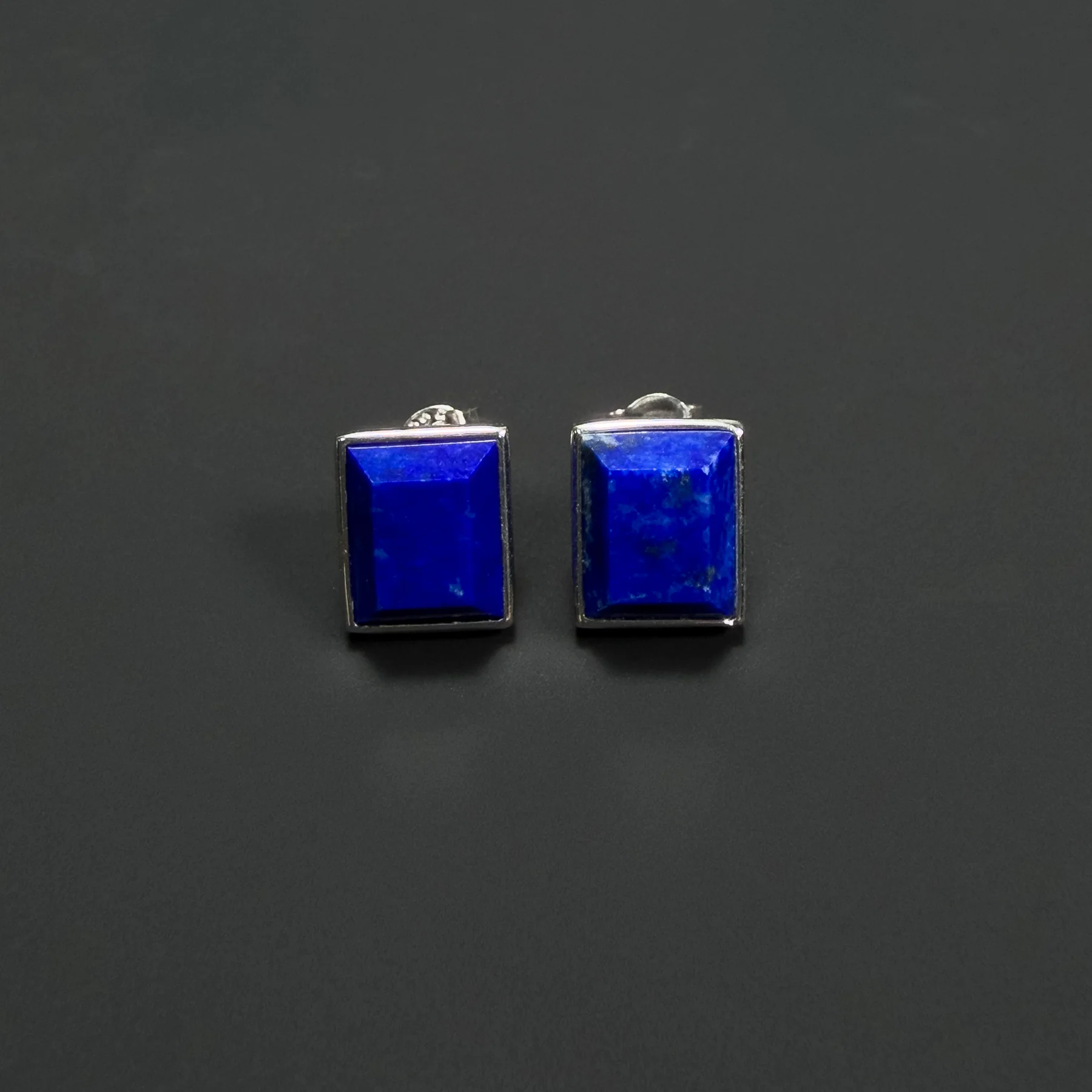
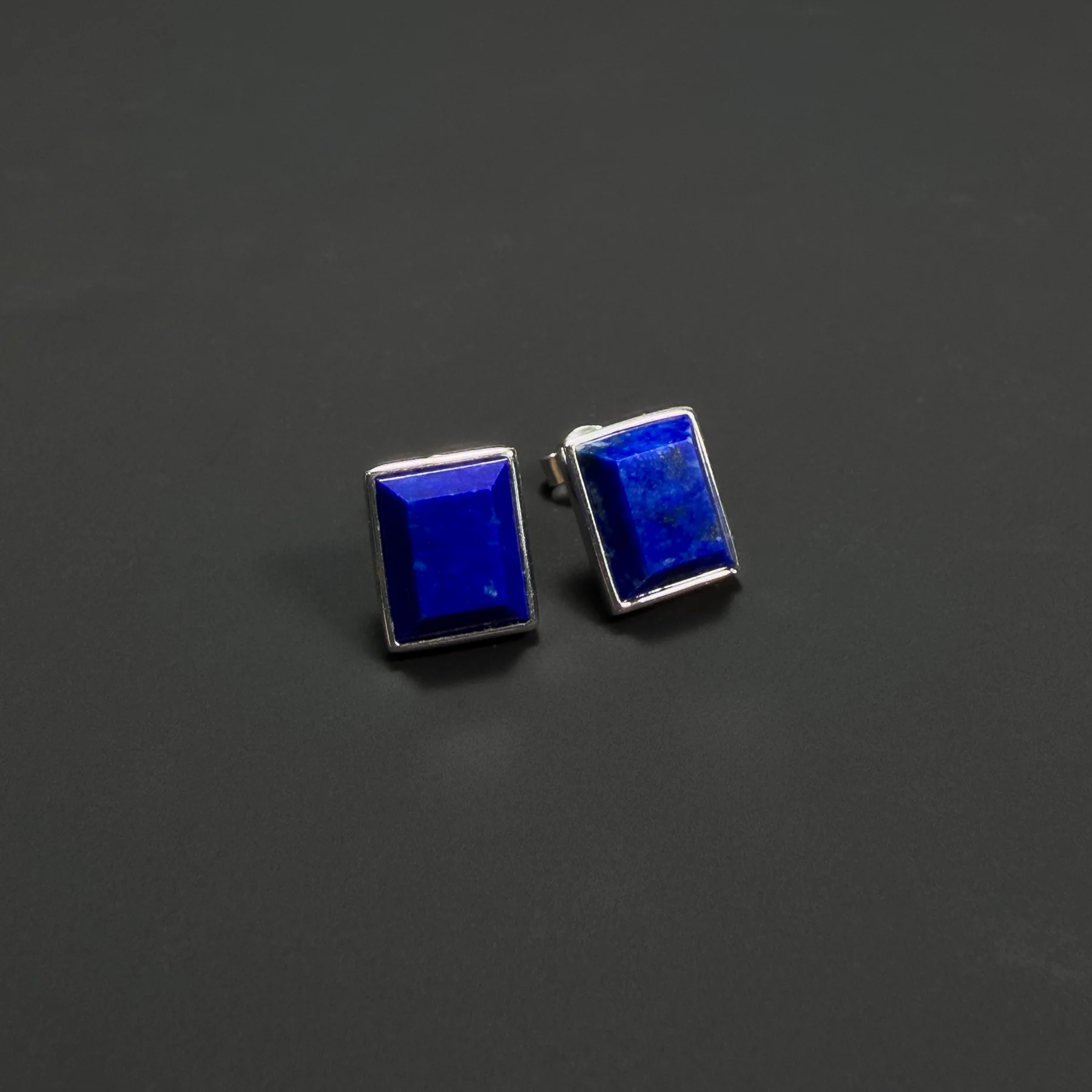
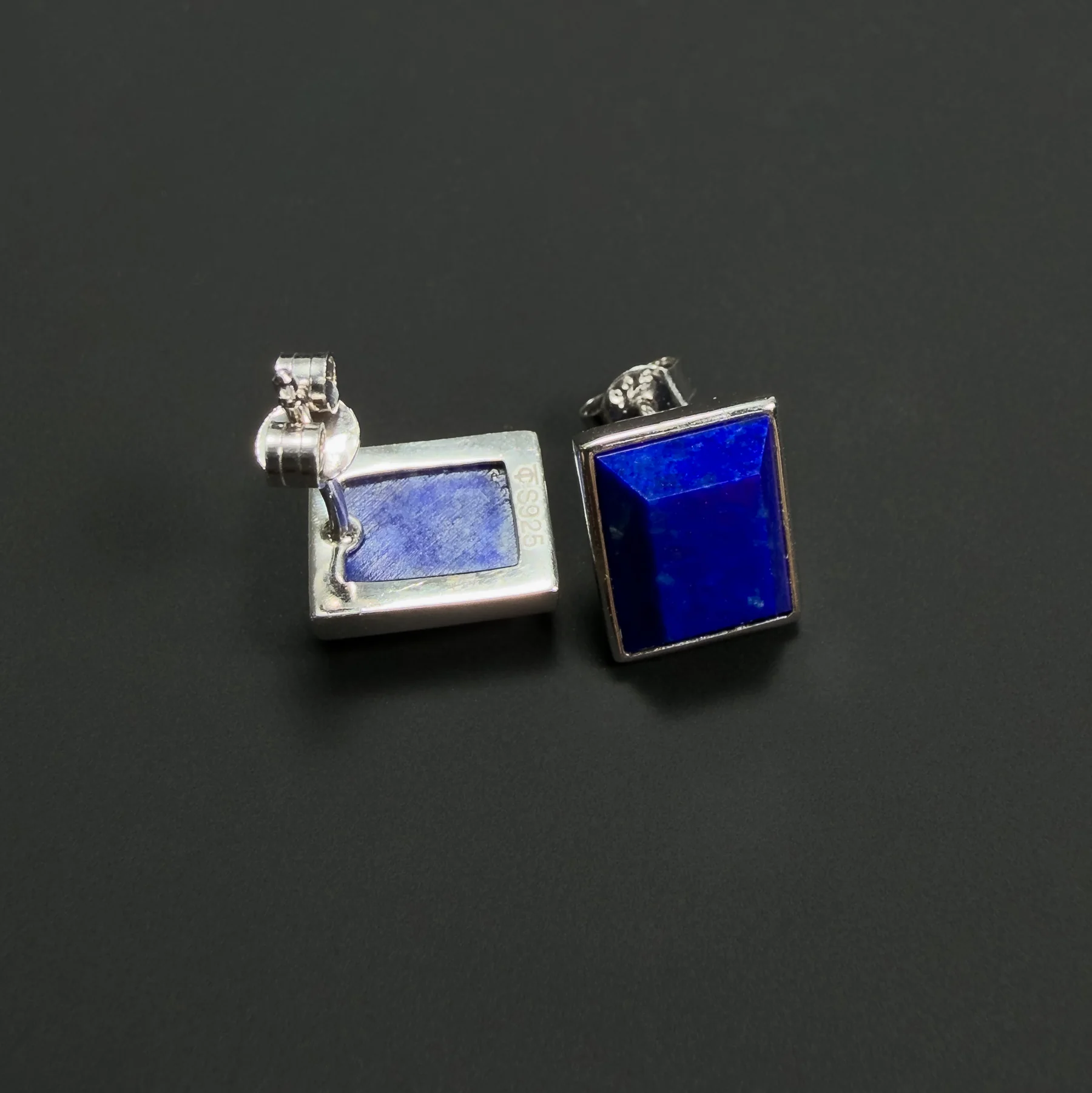
A rectangular blue face with a table and beveled sides
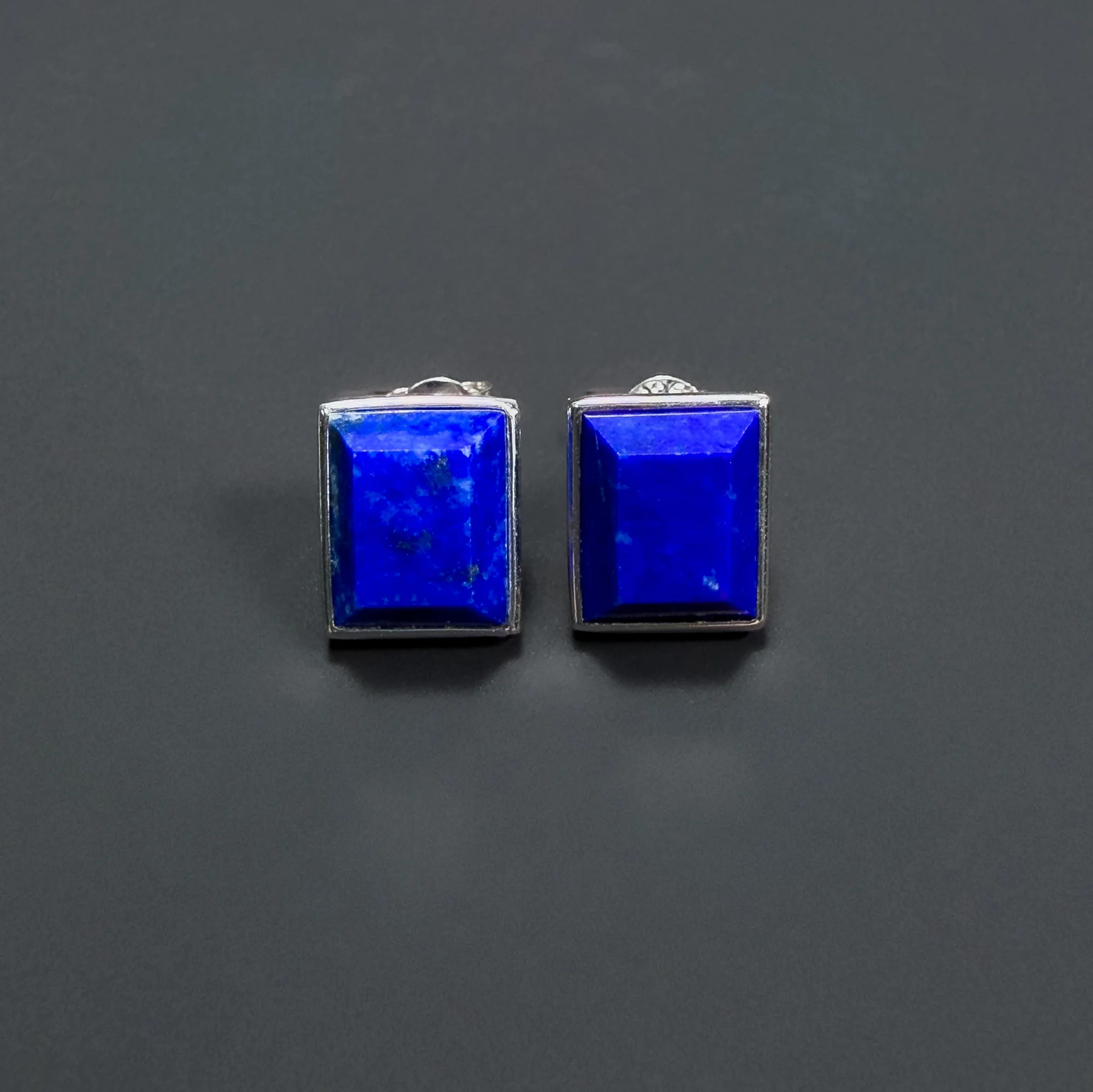
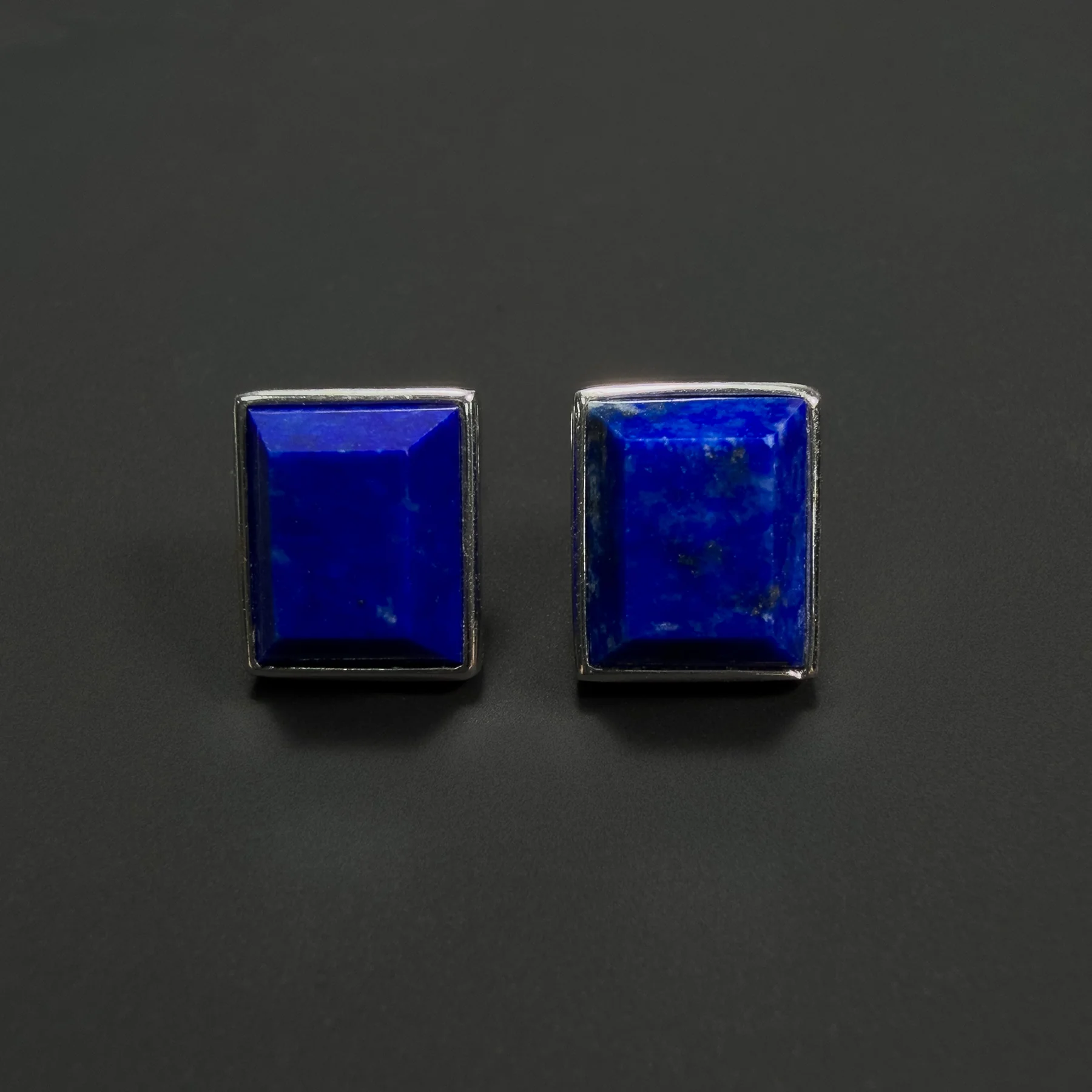
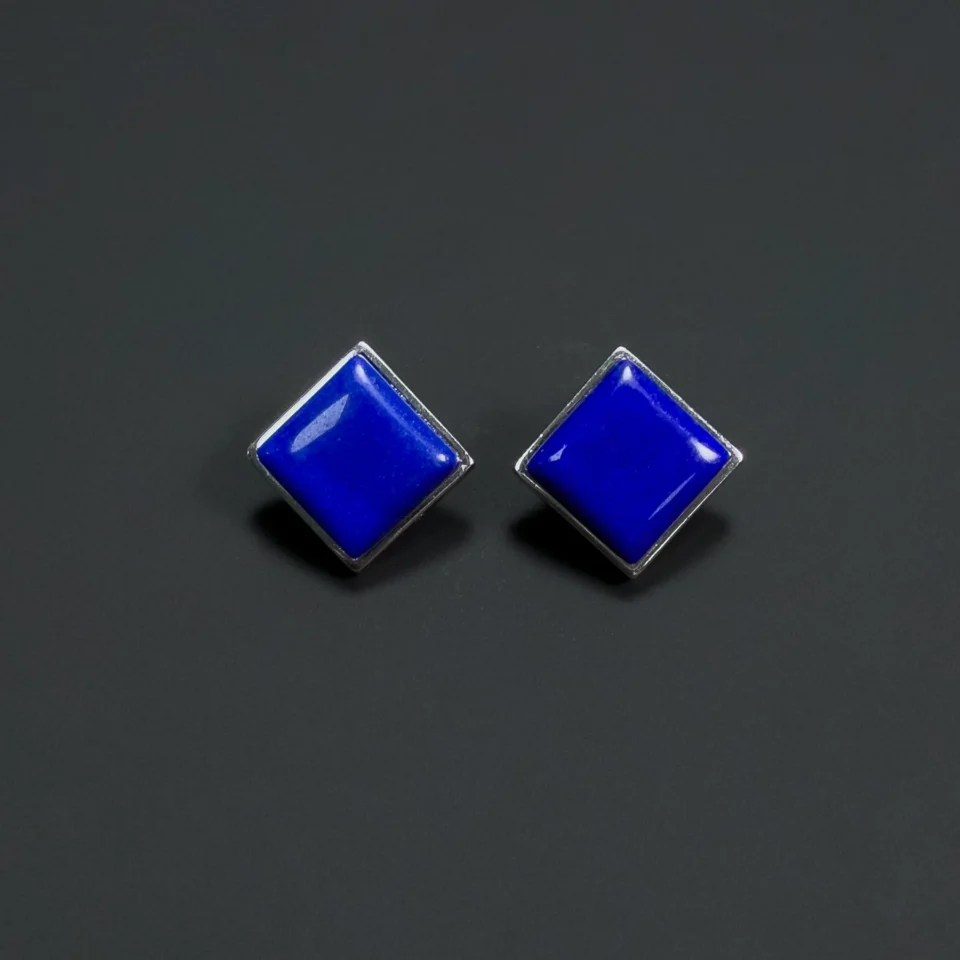
Each stud is a single natural lapis lazuli stone cut as a clear rectangle: about 8×10 mm for the gem, and about 9.3×11.3 mm including a thin S925 sterling silver full bezel. The face is not a soft dome. A nearly flat rectangular table sits at the center; four beveled slopes run from that table down to the silver frame. Light splits between table and slopes as linear highlights, so the blue reads with layered planes rather than one continuous curve.
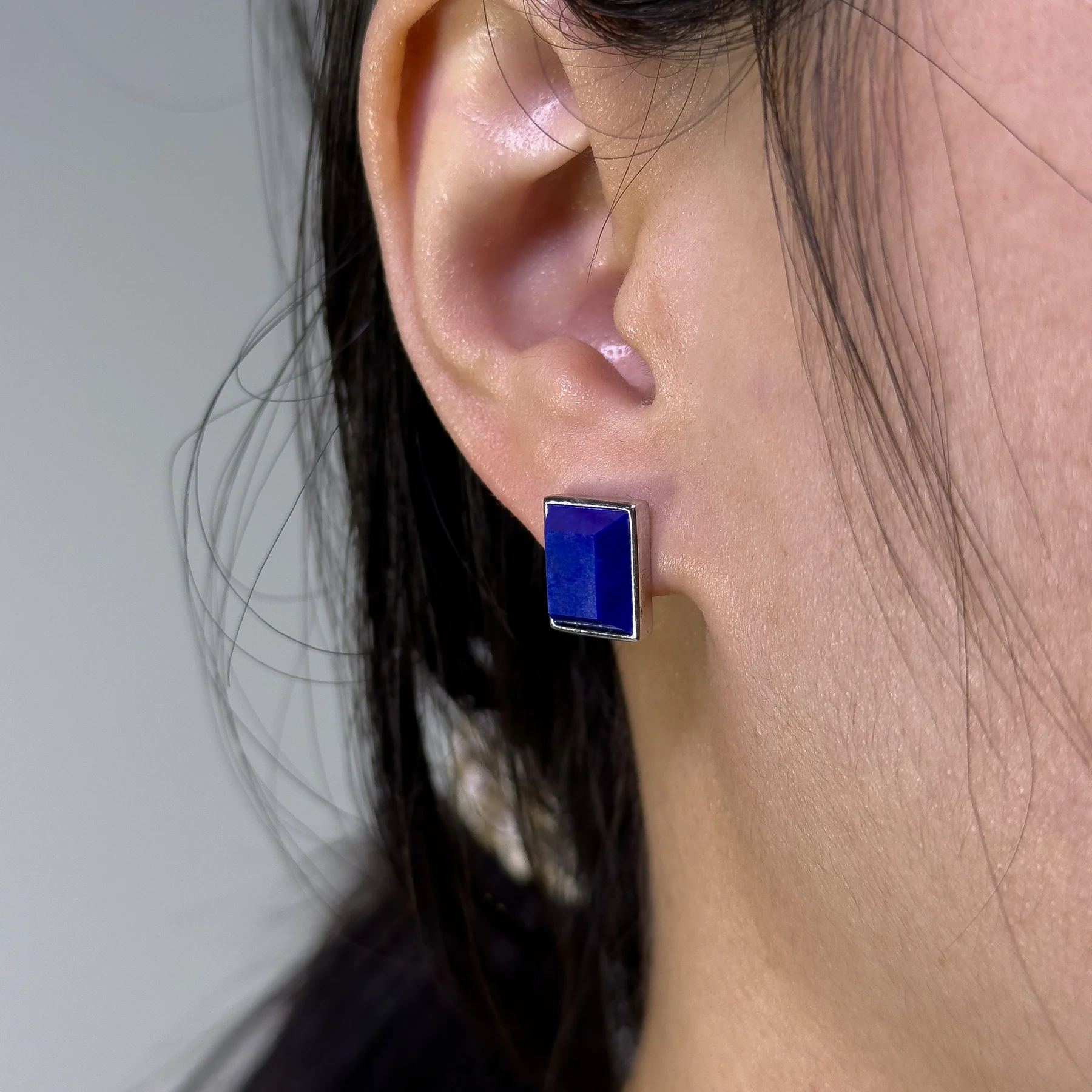
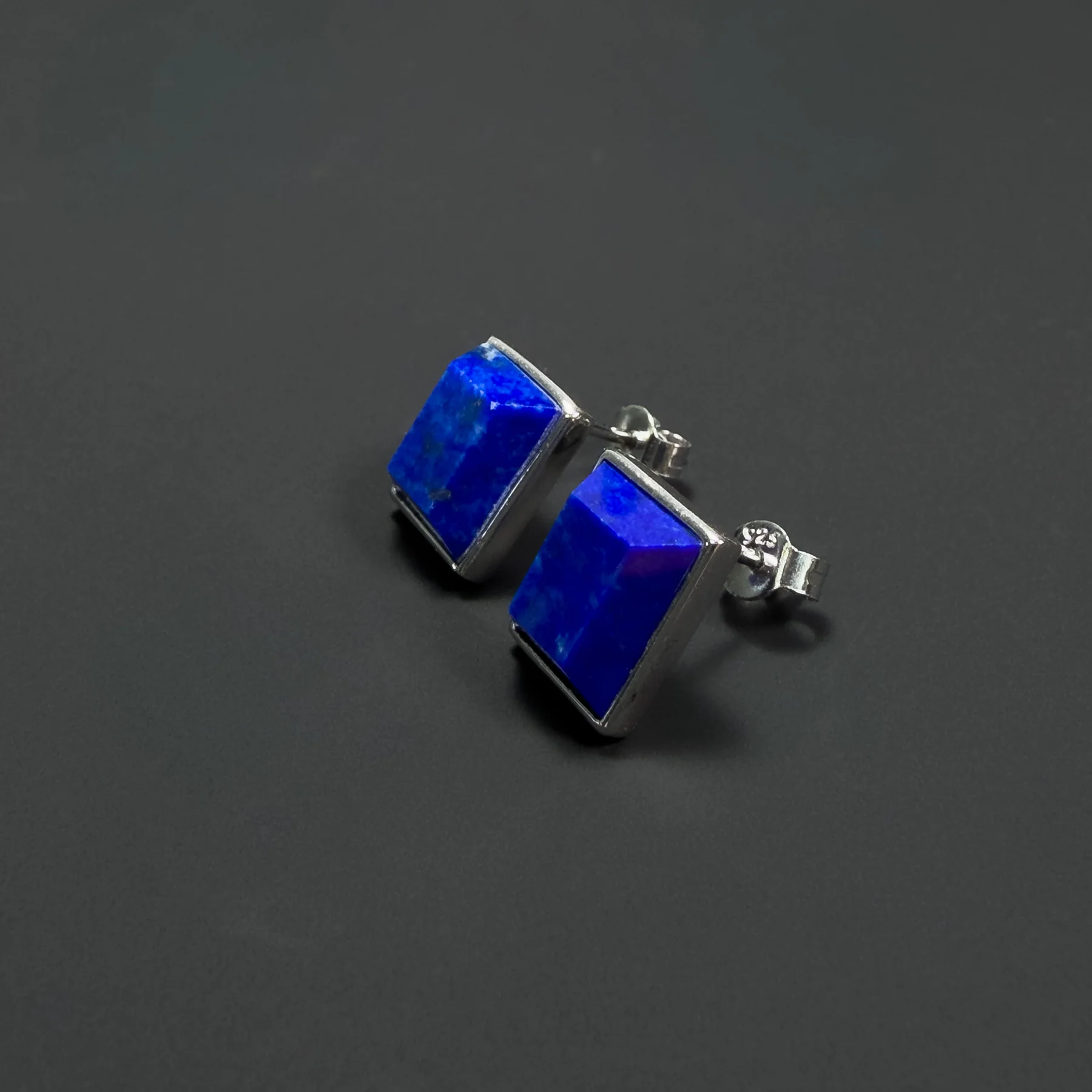
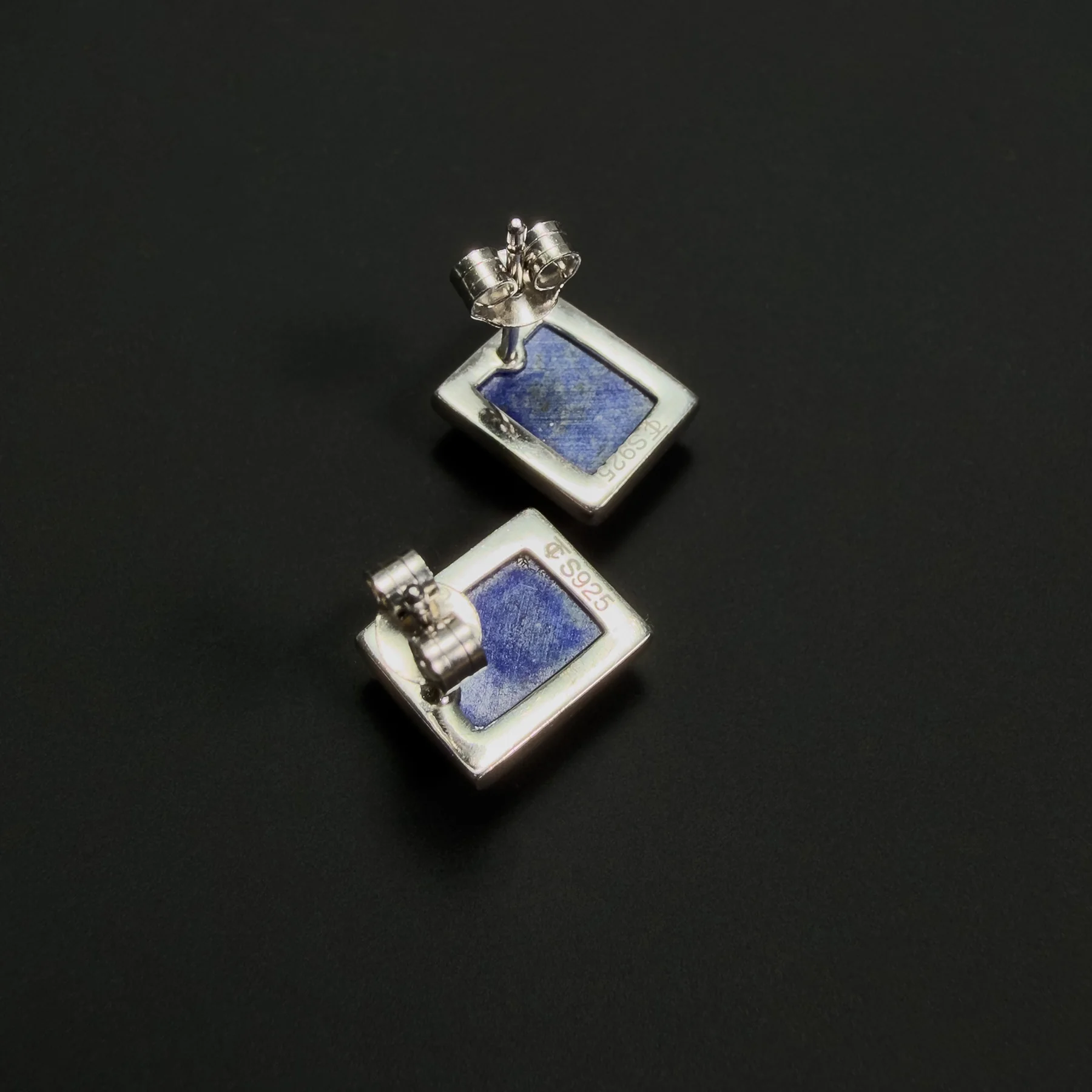
On the ear, the long side runs vertical, flush to the lobe. A straight post and push back sit at the piercing without swing or drop. An S925 hallmark is visible on the back; through the open back of the silver frame, the natural texture of the lapis can also be seen.
Why this cut differs from a soft cabochon—or from transparent sparkle
A soft-dome cabochon shows one polished curve and a highlight that slides as you turn. Here the geometry is flat planes: table plus four slopes, so light breaks into crisp edge lines instead of one moving gloss. Lapis is opaque, so those planes do not create the flash-through sparkle of a transparent faceted gem—you see blue body color with crisp edge light where table and bevel meet. Choose this form for that layered geometric read at a small stud scale; choose a soft cabochon when you prefer a single smooth dome or a round outline.
Vertical wear—and how that differs from a square on its corner
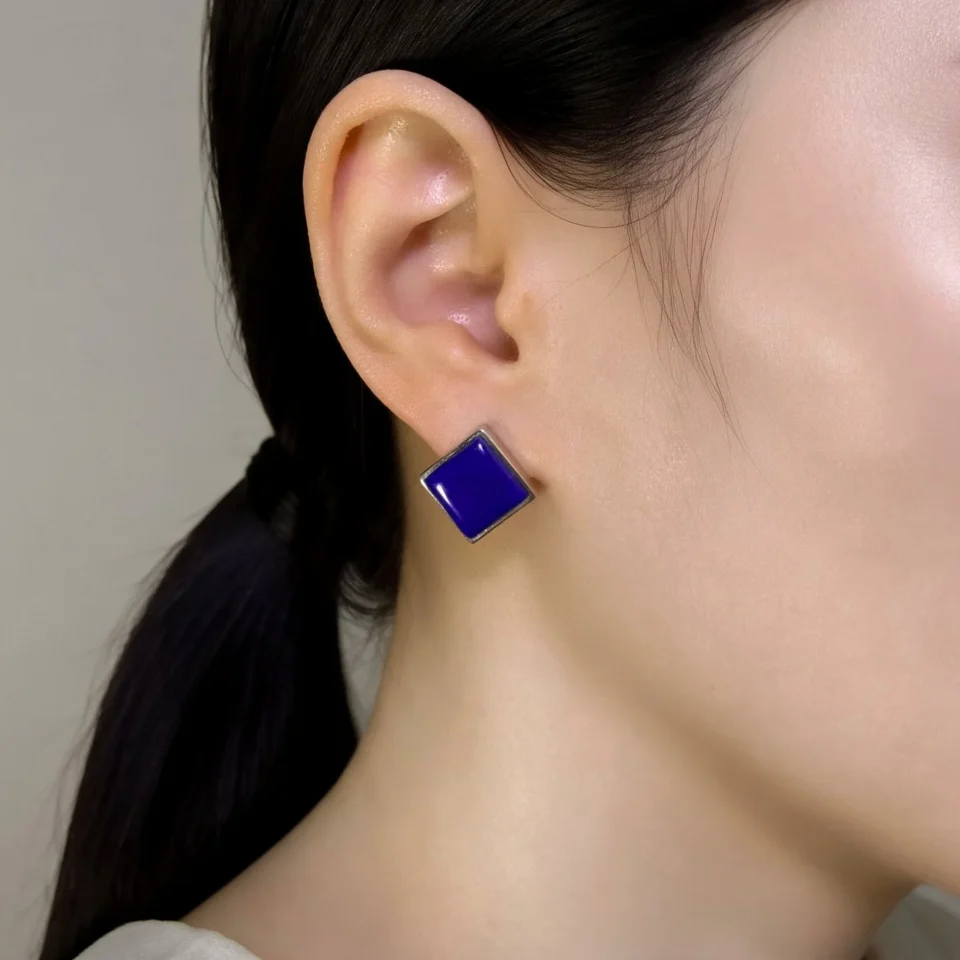
These studs are worn with the long sides upright, edges roughly parallel to the jawline—not turned onto a corner. Our square lapis lazuli stud earrings use a soft-domed cabochon about 10 mm across each side, a thin ~0.75 mm S925 bezel (~11.5 mm with frame), and about 45° corner-up wear only. Vertical rectangles emphasize height along the lobe; a square on its corner emphasizes angled points. Choose this pair for a taller upright blue block; choose the square stud for a square outline rotated onto its corners.
How to choose among this stud, bar studs, cube drops, and round bezels
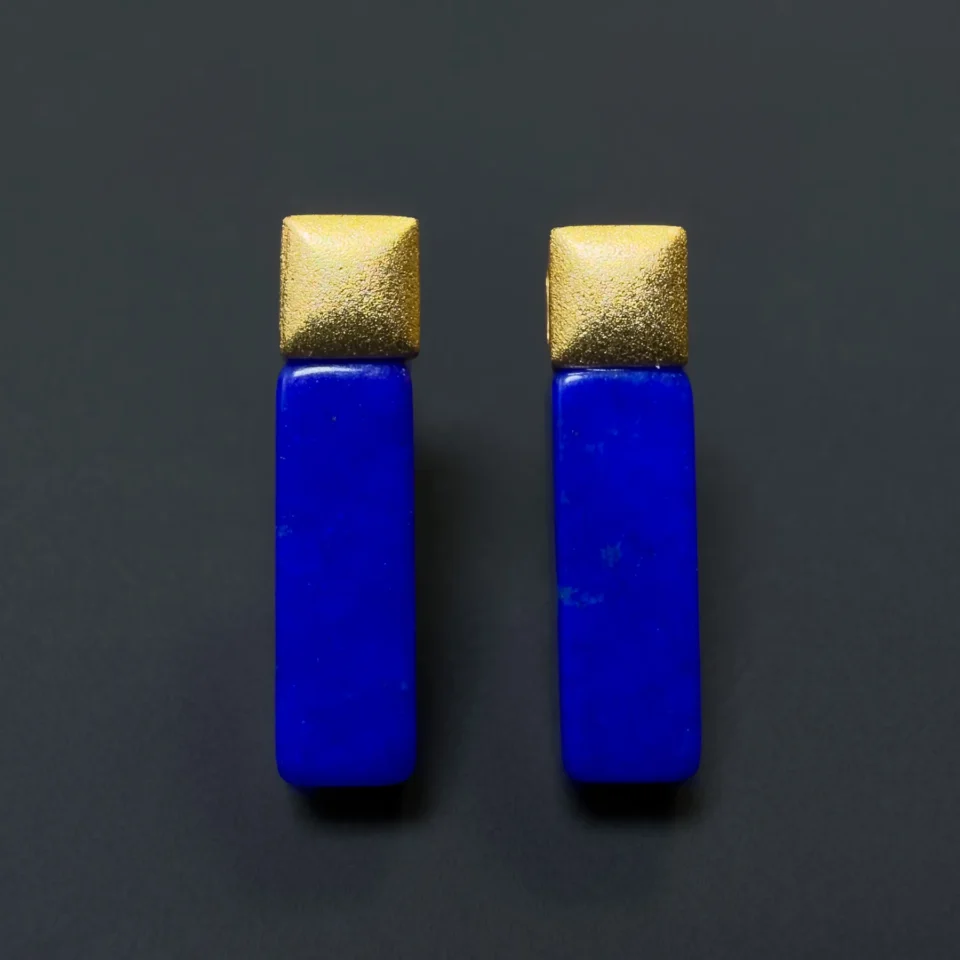
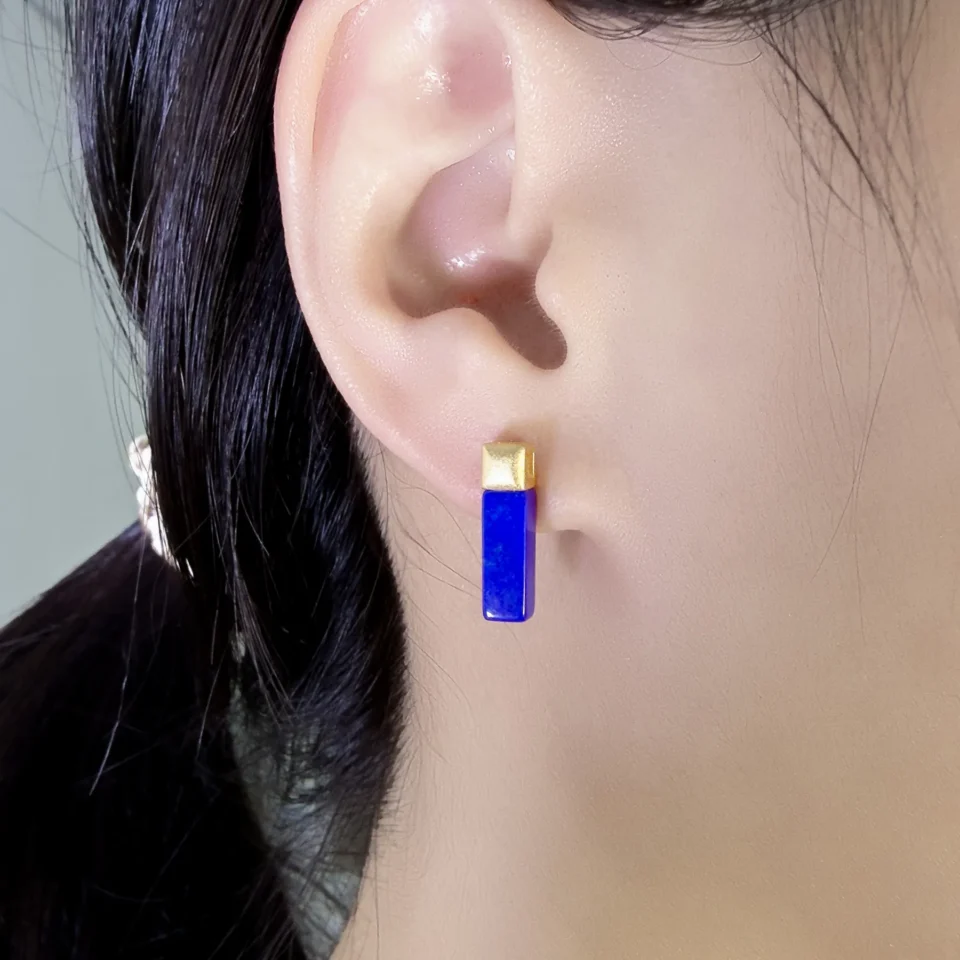
Compared with our lapis lazuli bar earrings—also a stud, not a hanging drop—the bar uses a longer, narrower stone about 4×12 mm (overall about 4×16 mm) under a matte gold-plated S925 square top. This pair uses a wider about 8×10 mm rectangular face with a table and four beveled slopes in a thin S925 silver full bezel, with no gold-plated top. Choose the bar for a slim vertical line and a gold-toned stud head; choose this pair for a wider faceted blue rectangle framed in silver.
Compared with our lapis lazuli cube earrings, these stay flush at the piercing. The cube design suspends an about 6 mm cube from a slim silver bar for an articulated drop about 20 mm overall. Choose the cube for a small hanging geometric accent; choose this pair when you want the blue face to sit still against the lobe.
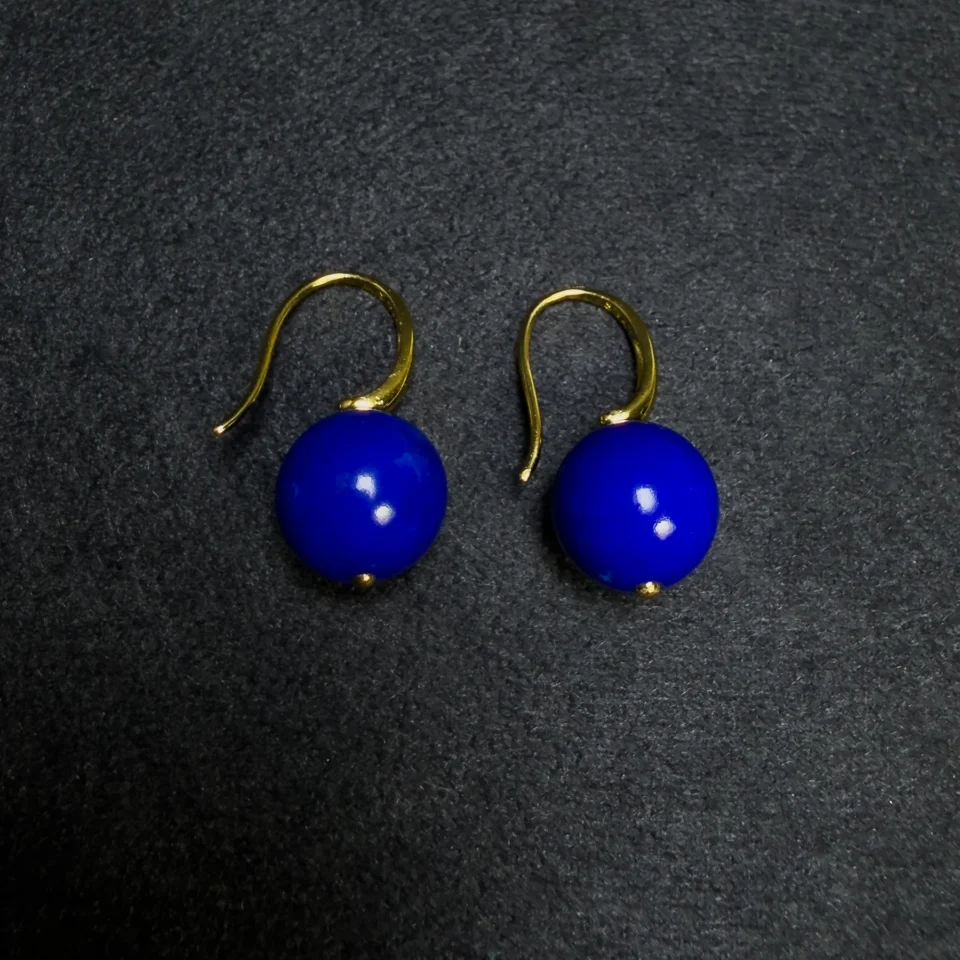
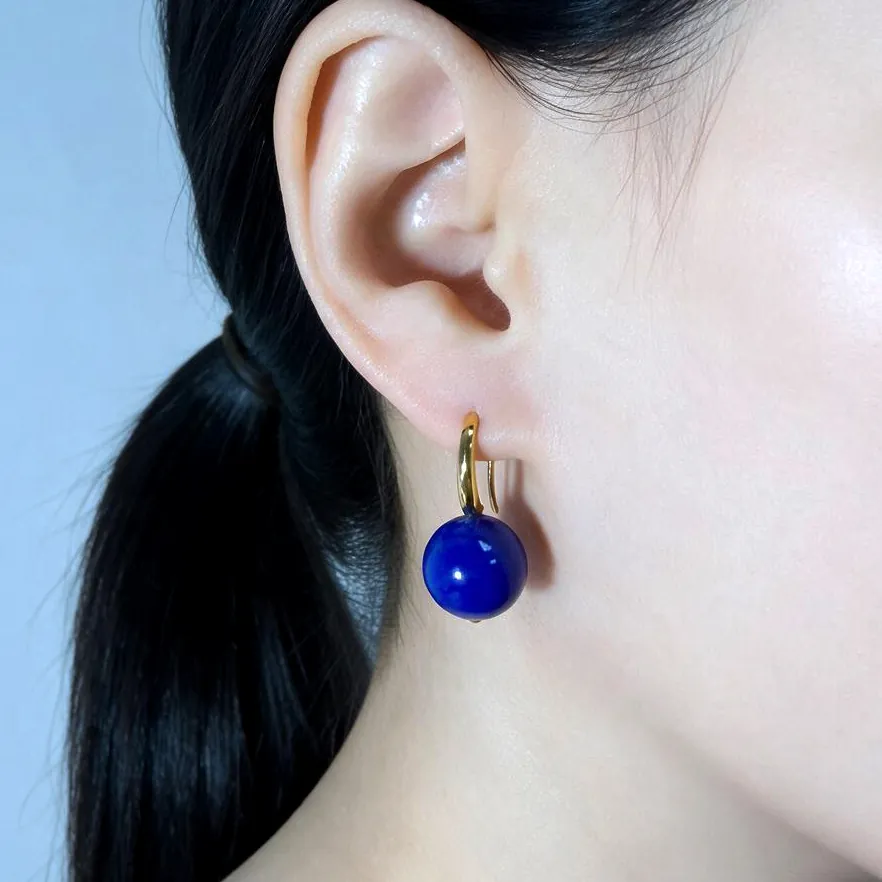
Compared with round bezel-set studs about 10–12 mm across, the outline here is four straight sides and sharp corners rather than one continuous circle. Metal on this pair is full S925 silver bezel, post, and back. Choose round bezels for a soft continuous contour; choose this pair for a rectangular architectural face.
Royal blue, pale marks, and what the pair shows
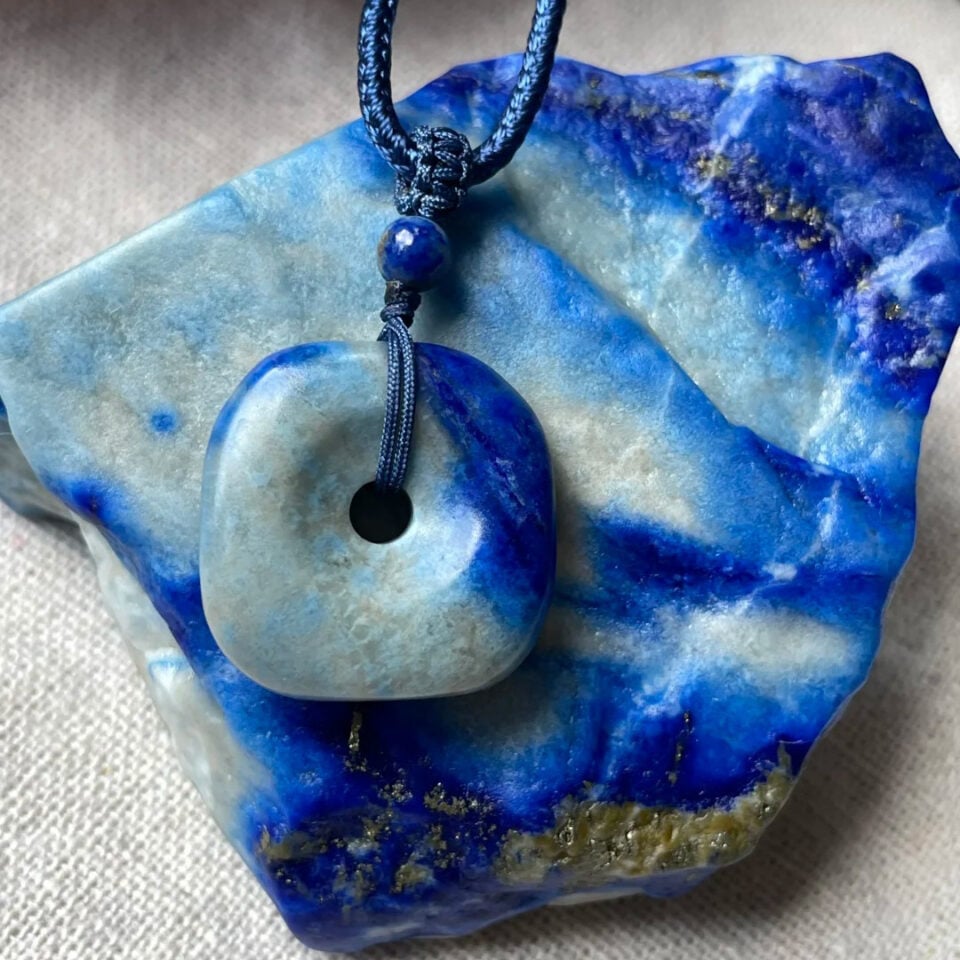
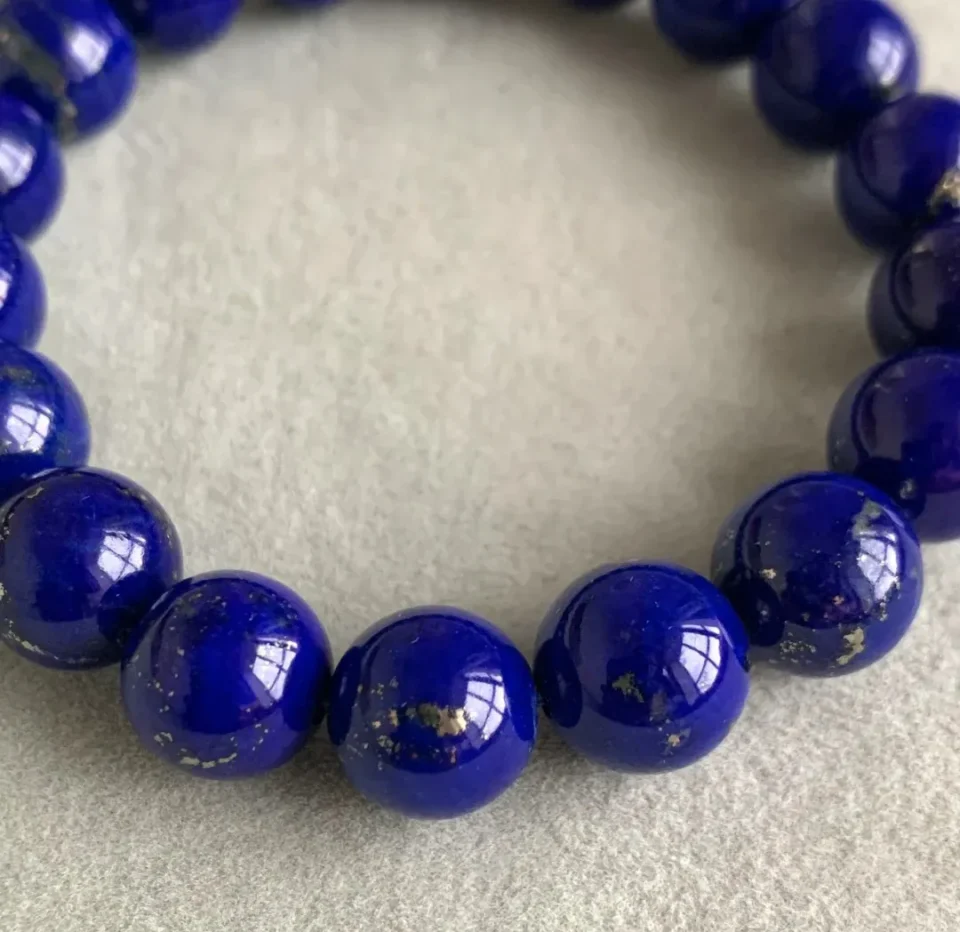
Natural lapis lazuli commonly carries white calcite and golden pyrite with its blue. The faces of this pair show a saturated royal blue with a little pale mottling and fine pyrite flecks. One stone may read cleaner and deeper; the other may show more mottling or gold sprinkles—ordinary micro-variation when the two sit side by side.
Matching for a pair means both earrings share a similar blue depth at a normal viewing distance. It does not mean the faces are identical, or free of calcite or pyrite. If you want both ears to read as a similar deep blue in everyday wear, that is what the pairing is for. For how blue tone, calcite, and pyrite are judged in lapis more generally, see our lapis lazuli quality guide.
What the thin bezel does
The S925 sterling silver bezel is a slim full frame with no prongs. Of the roughly 9.3×11.3 mm outline, most of the face is lapis; the silver mainly defines the rectangular edge and holds the stone. There are no side stones or engraved surface details on the front. The open back shows the rear of the stone and the S925 mark; that is a practical check, not a separate design story.
Choosing by size and style
Use two measurements when comparing: about 8×10 mm for the lapis face and about 9.3×11.3 mm including the bezel. Use the larger figure against studs you already own, since it includes the silver frame. A rectangle’s width and height are not interchangeable with a round stud’s diameter—the same number does not cover the same area. To picture it, draw a rectangle about 9.3 mm wide by 11.3 mm tall and place it upright on the lobe.
These studs suit someone who wants one clear rectangular blue focal point at each ear—geometric, flush, and restrained—rather than a statement drop, a slim bar line with a gold-plated top, or a mix of beads and hoops. More earring formats are gathered in our lapis lazuli earrings collection.
Care
Put the earrings on after perfume, lotion, and hair products have dried. Wipe the lapis and silver with a soft, dry cloth after wear. Avoid soaking, ultrasonic cleaners, and chemical dips, and store the studs apart from harder jewelry so the faceted faces are not scratched. Sterling silver can darken over time; a silver polishing cloth used on the frame only can bring back its brightness.
Reviews
There are no reviews yet.